Tag Archives: stocks

ETFs To Play 3 Undervalued Sectors

Though a mountain of woes punctured the U.S. market momentum in the first half of 2015 with the S&P 500 barely adding gains thanks to global growth worries, rising rate concerns and specifically the strength of the dollar, the second half looks to be shaping up in a great way. Greece worries have tailed off as the nation somehow managed to strike a debt deal with its international lenders, in turn soothing the nerves of global investors. Back home, the all-important Q2 earnings season got off to a strong start with Finance sector – the backbone of any economy – living up to expectations. All these once again fueled up the market with the Nasdaq registering consecutive record highs in mid-July and the S&P 500 trading at just 0.3% discount to its all-time high hit in May due to the massive rally we’ve seen since for the last six years. So, one might wonder if any value sector is left at all. A value play is especially required given the disappointing earnings string from a few tech bellwethers that has made investors jittery. No doubt, with all the major indices trading at around all-time highs, it is hard to find value plays at home. But for those investors fervently looking for undervalued sectors, there are still a few hidden treasures out there. While several indicators are used to examine any stock or sector’s valuation status, price-to-earnings ratio or P/E has been the most widespread. We have identified three sector picks having the lowest forward P/E ratio for this year’s earnings in the pack of 16 S&P sectors classified by Zacks and detail the related ETFs to play those sectors’ undervalued status. Auto – First Trust Nasdaq Global Auto ETF (NASDAQ: CARZ ) The U.S. automotive industry is accelerating with rising income, persistently lower energy prices, a low interest rate environment, and growing consumer confidence. All these drove auto sales 4.4% higher to 8.52 million units in the first half of 2015, signifying the best six months in a decade. And if this was not enough, auto sales are likely to hit 17 million in full-year 2015, a level never touched in the last 15 years. Despite strong fundamentals, the sector has a P/E ratio of 10.8 times for 2015 and 9.3 times for 2016, the lowest in the S&P universe, as per the Zacks Earnings Trend issued on July 16. Investors should note that the P/E of auto industry trades at 41.3% discount to the current year P/E of S&P and 43.6% discount to the next year P/E. The space is down 4.5% so far this year which says that it is time to turn its loss into your gains. Investors should note that there is only a pure play CARZ in the space that provides global exposure to nearly 40 auto stocks by tracking the Nasdaq OMX Global Auto Index. CARZ has a Zacks ETF Rank #2 (Buy) and is up 1.2% so far this year (as of July 20, 2015). Finance – Vanguard Financials ETF (NYSEARCA: VFH ) The financial sector has set an upbeat tone this earnings season. Several factors including fewer litigation charges, effective cost control measures, loan growth and investment banking activities have given Q2 earnings a boost and made up for still-the low interest rate environment which has long been bothering the sector’s revenue backdrop. Investors should also note that the Fed is preparing for an interest rate lift-off which will pave the way for financial stocks and the related ETFs going forward. The space has a current-year P/E of 14.3 times, a 22.3% discount to the S&P while its next year P/E stands at 13.1 times, a 20.6% discount to the S&P 500’s 2016 P/E. The space has added 2.2% so far this year (as of July 20, 2015). While there are plenty of financial ETFs, investors can take a look at Zacks #1 (Strong Buy) ETF VFH. This $3.48-billion ETF holds a broad basket of over 550 stocks in its portfolio. The fund is up 3.7% so far this year. Transportation – iShares Dow Jones Transportation Average Fund (NYSEARCA: IYT ) This one could be a risky bet as the sector is out of favor right now, having retreated big time from the year-to-date frame (down over 12%). A strong dollar is taking a toll on the profits of big transporters, but other drivers including stepped-up economic activities and cheap fuel are still alive and kicking. This raises optimism on the transportation sector going forward. Actually, transportation stocks gave a havoc performance last year having advanced over 25%. Thus, probably overvaluation was the concern which pushed the space in the bear territory. The current and the next year P/Es for the sector are 13.2 and 12.6 times, a 28.3% and 23.6% discount to the S&P 500, respectively. One way to play this trend is with iShares Dow Jones Transportation Average Fund, which tracks the Dow Jones Transportation Average Index and holds 20 stocks in its basket. The fund has a Zacks ETF Rank #3 (Hold) with a High risk outlook. Original Post
Investing Beyond The Borders

By Charissa Cashin, Director Fund Product Management and Development – Principal Funds After World War II, the U.S. became the world’s undisputed economic leader. American investors looking for a wide range of opportunities needed to look no further than their own back yards. Investing outside the U.S. was seen as unnecessarily risky. But today, even with the Greece-triggered euro commotion and the China stock market turmoil, those who think international investing is too risky should keep the following in mind. In China, India, and Brazil alone, the growing middle classes have propelled these economies to the size of the industrialized “G7” countries. By 2050, these countries are predicted to make up nearly half of world output, far exceeding the G7. While America undoubtedly still has a wealth of innovative companies and market leaders, opportunities abroad are increasingly plentiful. And although international investing may not be for everyone and certainly involves some risk, ignoring the opportunities beyond our borders means passing up on the potential for additional growth. Markets outside the U.S. may offer some of the best investing opportunities available right now. Technology companies in Asia are great examples. Everyone thinks of Apple (NASDAQ: AAPL ) when they think of tech stocks, but what they don’t always realize is that a lot of its components are made overseas. Those manufacturers are making a lot of money, but they’re not as overexposed as Apple – which creates a buying opportunity. There are also good prospects for under-appreciated growth in Europe, which has a lot of global, export-oriented companies. And with the strengthening of the dollar, there may be more purchasing power for these products outside of Europe. Emerging markets may be another area of opportunity. After sub-par performance over the last few years, some of these markets may offer outstanding values. Active managers keep an eye open for values like these that can lean to uncommon buying opportunities. International investing is an important way to build diversification in your portfolio. That’s because international equities don’t always move in the same way as domestic equities. When international equities are up, for instance, domestic equities may be down – and vice versa. This kind of potential for low correlation can help reduce a portfolio’s overall volatility. Add to that the potential for growth available internationally, and you have some very good reasons for considering investments beyond the U.S. borders.

What Greece And China Teach Us About Investing

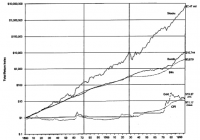
By Andy Rachleff It’s been a crazy couple of weeks for the investing world. China’s stock market – after one of the biggest run-ups of any market in history – has suffered a 40% collapse in just a few weeks. Greece has teetered on the brink of default, and still may or may not exit the euro. The U.S. has drawn up a major new deal with Iran, oil is down sharply, and Indian stocks are rallying like mad. What should an investor do? In a word: Nothing. If there’s anything that the day-by-day machinations of the market teach us, it is that slow and steady wins the race. The Incredible Mean-Reverting Nature of Stock Returns Investors have long known that staying the course is one of the most important things to do. Some of the best research on this topic comes from the so-called “Wizard of Wharton” – University of Pennsylvania professor Jeremy Siegel. In his New York Times bestselling book, ” Stocks for the Long Run ,” Siegel looked at the performance of equities from 1802 through 1997, the year the book was first published. His findings were astonishing: Despite the day-to-day volatility that we all feel, the actual long-run returns of stocks are remarkably consistent. Here’s how Siegel summarized his findings: ” Despite extraordinary changes in the economic, social, and political environment over the past two centuries, stocks have yielded between 6.6 and 7.2 percent per year after inflation in all major subperiods. The wiggles on the stock return line represent the bull and bear markets that equities have suffered throughout history. The long-term perspective radically changes one’s view of the risk of stocks. The short-term fluctuations in market, which loom so large to investors, have little to do with the long-term accumulation of wealth. ” His last line bears repeating: ” The short-term fluctuations in market, which loom so large to investors, have little to do with the long-term accumulation of wealth. ” Siegel found that almost no matter what period you looked at, stocks delivered about 7% after inflation. The Civil War, World War I, World War II, even the Great Depression (marked by the second black vertical line) were hiccups compared to the overall trend. The pattern repeats in other countries, including those that have experienced catastrophic collapses. World War II, for example, sheared 90% off the value of German equities… but German stocks completely rebounded by 1958, rising 30% per year, on average, from 1948 to 1960. They went on from there to new highs. Averaged out over the long haul, their return is a consistent 6.6% real return… a figure that continues through this day. The same is true for Japan, the UK, and all other markets that Siegel has studied; in the short run, volatility, but in the long run, profits. Can’t We Just Side-Step the Disaster Spots? Of course, the best possible outcome would be to steer clear of pullbacks, selling when markets are about to collapse and buying when they start to recover. This is the marketing pitch used by virtually every active manager in the world, and it is intuitively compelling. “Greece has been a disaster for years,” you can’t help but think. “Surely, if I had been paying attention, I would have sold and avoided its recent fall.” “China’s stock market was clearly a bubble,” you ponder. “The economy is slowing; reforms are stagnating; any idiot would have sold out before things got bad!” Unfortunately, the data shows that even highly-paid professionals are bad at sidestepping these pullbacks, and everyday investors are worse. As mentioned repeatedly on this blog, every piece of significant data shows that the vast majority of active mutual fund managers underperform the market over any meaningful period of time. Despite all their highly-paid analysts and fancy data services, they can’t beat a broad-based index. But the dirty little secret is, as bad as professional money managers are at beating the market, retail investors – on average – do worse. In a major study published in February 2015 , Morningstar looked at the difference between the average return of mutual funds and the actual returns that investors enjoyed. The data is brutal: While the average U.S. equity mutual fund returned 8.18% for the decade ending December 31, 2013, the average dollar invested in U.S. equity funds returned just 6.52%. For international equity funds, the situation was worse: an 8.77% return for the average fund, but a 5.76% return for investors. (click to enlarge) John Reckenthaler, the vice president of research at Morningstar, explained what was happening in Barron’s last year. “The problem,” the magazine wrote, summarizing his comments, “is that investors tend to get in and out of an asset class at the wrong time.” In other words, we tend to buy high and sell low. The problem is worse in the more volatile asset classes, ostensibly because we’re more likely to panic. (It’s not just Morningstar. DALBAR conducts an annual study that looks at the same effect over rolling twenty-year periods. Its last finding shows that investors underperformed the market by 4.2% per year over the past twenty years.) Don’t Buy What They’re Selling The reason we don’t hear much about the power of long-term investing – and the truth about the futility of trading – is that long-term investing is boring and it’s cheap. The financial media thrives by encouraging you to panic, and large parts of the financial industry make money only when you act. Big moves sell newspapers, and high trading activity means commissions for online brokers. The only people who don’t profit from that activity are investors themselves, because as it turns out, we can’t predict the future. Even as we finalize this post, Greece is possibly stabilizing, Chinese stocks have evened out and the crisis-du-jour involves gold. Did you see that coming? Do you know what comes next? It’s hard to stare down a significant market correction and stick to your plan. When the US government shut down in September 2013 during the budget showdown, we saw a large number of clients refrain from continuing to add deposits. They paid handsomely for missing out on the rebound. If you invest regularly, harvest your losses and rebalance your portfolio, you’ll end up benefiting from market corrections in multiple ways. It won’t be easy. But over the long haul, it will really pay off. For more on this topic please read: Stay the Course, Even While You’re Down There’s No Need to Fear Stock Market Corrections Invest Despite Volatility Disclosure Nothing in this article should be construed as a tax advice, solicitation or offer, or recommendation, to buy or sell any security. While the data Wealthfront uses from third parties is believed to be reliable, Wealthfront does not guarantee the accuracy of the information. The analysis uses information from third-party sources, which Wealthfront believes to be, however Wealthfront does not guarantee the accuracy of the information. There is a potential for loss as well as gain. Actual investors on Wealthfront may experience different results from the results shown. Andy is Wealthfront’s co-founder and its first CEO. He is now serving as Chairman of Wealthfront’s board and company Ambassador. A co-founder and former General Partner of venture capital firm Benchmark Capital, Andy is on the faculty of the Stanford Graduate School of Business, where he teaches a variety of courses on technology entrepreneurship. He also serves on the Board of Trustees of the University of Pennsylvania and is the Vice Chairman of their endowment investment committee. Andy earned his BS from the University of Pennsylvania and his M.B.A. from Stanford Graduate School of Business.