Tag Archives: setpageviewname

Bond Fund Choices For Retiree Portfolios
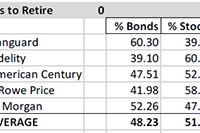
Summary Most retirees need/want some of their portfolio allocated to bond funds. For those with “about right” total assets for retirement, institutions recommend bond allocation of 40% to 60%. Numerous factors will tend to keep intermediate and long-term interest rates “lower for longer”. The middle of the bond yield curve is probably the best place to be. Corporate bonds and municipals make more sense than Treasuries for most individual accounts. Many retirees or near retirees need help deciding how to allocate between bonds and stocks, or how to prepare for a productive discussion about allocation and security selection with their advisor. This is intended to help those investors with the bond fund element of the decision. Fund Allocations: This table shows institutional recommendations for asset allocation for investors in the withdrawal stage of their financial lives, and with assets approximately sufficient for their needs (not great excess assets and not great deficiency – relative to lifestyle costs). Adjusting for Your Circumstances: According to the experts, retirees should be at or between these bond/stock allocation limits: 60/40 and 40/60. That allocation makes the global assumption that retiree assets are “just about right” – not way too little, or “way more than needed”. If assets are “way too little”, then retirement postponement, part-time work, and/or proportional reductions in standard of living is probably necessary; and the 60/40 to 40/60 allocation probably still makes sense. If assets are “way more than needed”, there are two reasonable alternatives to the 60/40 to 40/60 allocation. One alternative is to be more conservative, because the gradual loss of earning power in a heavy fixed income portfolio is seen as an acceptable trade-off to have a smoother ride. The other alternative is to be more aggressive – probably by investing “sufficient” assets in the 60/40 to 40/60 allocation, and then investing the balance in equities to grow the overall portfolio. Historical Results of 11 Bond/Stock Allocation Risk Levels: Using our 11 levels of allocation, experts recommend that you be in what we have labeled “Balanced-Conservative”, “Balanced Moderate” or “Balanced Aggressive”. This chart shows the 39-year historical returns for all 11 allocation levels, including mean return, best return and worst return, as well as the returns statistically expected at +/- 1, 2 and 3 standard deviations from the mean (roughly representing these probability ranges: 67%, 95% and 99.7%). This chart shows the returns of each allocation over multiple short and long-term periods. This chart shows the calendar year returns for 2008 through 2014 for each allocation. US Bond Funds Don’t Come In Just One Flavor, or Have One Outcome: Once you decide on the bond allocation level that makes sense, you might then want to consider what type, duration and quality of bonds to use. The allocation data above assumes aggregate US bonds (which has morphed over time as the relative level of government and corporate issuance changed, and as the relative levels of maturities have changed). You may wish to lock-in more predictably to a type or duration or quality for your portfolio, or to manage the mix as you see fit, instead of taking whatever the aggregate provides. You can do that with funds. Given that, let’s look at some of your choices: Corporate and Municipal Bonds Typically Best For Individuals: Corporate bonds or muni bonds are most likely to be suitable for you. Treasuries are generally best for tax-exempt investors (pensions, foundations, and foreign governments), while corporate and municipal bonds, with higher after tax returns are generally best for individuals. Corporate high yield did very well after the crash, but that party is over, and they have been faltering as of late, since the yield spread to Treasuries had reached a very low level. High-yield bonds have a high correlation with stocks and are not good counter cyclical diversifiers. Long-term corporates have done best as rates fell, and will continue to do well if interest rates decline, but will do poorly if rates increase. Short-term corporates have contributed least to return, and probably have more downside risk than normal, due to the Fed planning to exit QE by gradually raising short-term rates. Intermediate-term bonds are probably best bet. The muni charts are for nominal returns, which you have to gross up for your tax bracket. They have been more consistent in their returns, and their high-yield bonds have not suffered as corporate high yields have done – making them less correlated with stocks than high-yield corporate bonds. Yield, Duration and Quality Metrics for Bond Fund Types: Here are some metrics for the specific bond funds shown in the charts above. These two tables show yield, duration, quality, and quality composition of each representative fund. How Interest Rate Changes Impact Bond Prices: Here is how changes in interest rates impact bond values: Which Way Are Rates Likely to Go Near-Term? Some big names expect intermediate and long rates to decline, and short rates to rise, but not to historical “normal” levels. The inflation crowd expects rates to rise due to inflation. The anti-Fed crowd expected rates to rise when Fed bond buying ceased, but that did not happen. Most experts last year forecasted rising rates (I bit on that), but we were wrong. The “lower for longer” crowd (including Bill Gross, Jeff Gundlach and Robert Shiller) point out these factors: US Treasury rates are the highest among major developed market issuers – creating demand for our bonds, which raises prices and lowers yields. US currency is the strongest at this time among major currencies – creating demand for our bonds, which raises prices and lowers yields. Aging Baby Boomers, who have most of the money, are net savers (formerly net borrowers) reducing demand for loans, which tend to reduce bank offered rates, and they want to own bonds, raising prices and lowering yields. Aging Baby Boomers, are reaching for yield, and will rotate out of dividend stocks into bonds as rates rise, dampening rate increases. US corporations approach saturation debt, with lower net issuance, reducing supply vs. demand, which raises prices and reduces rates. Federal deficits are declining, which lowers Treasury issuance, reducing supply vs. demand, which raises prices and reduces rates. Municipal issuance is down, lowering supply vs. demand, raising prices and reducing rates. Why Foreign Money Will Flow to US Bonds: Here is data showing how much higher US rates are than German and Japanese rates, for example: Speculators, who believe the dollar will remain strong, can borrow in Germany or Japan in local currency, and use the money to buy US bonds and make a nice spread similar to the spread that banks make on their deposits. That increases Treasury prices and lowers yields. What Does The Treasury Yield Look Like Now? Here is where the US Treasury yield curve stands today (the black line). You can see that the yield on the long end of the curve has been declining, while the short end of the curve has been rising. Rates are far below the 2007 level (gray line), but are not expected to get back to that level any time soon. How Are The Pros Viewing The Path of Very Short-Term Rates? How far will the short end rise? Here is the Fed Funds futures curve, which forecasts a 1.9% short end 2 years from now. If the intermediate-term Treasuries stay as they are, the yield curve above would be flat, but that is some time away. It is unknown whether intermediate rates will rise to keep the curve steep or whether it will go flat. This forecast suggests that short-term bonds are probably not good opportunities. They do little good if rates stay the same, and they suffer if rates rise. Conclusion: Even for aggressive investors, some small allocation to bonds has historically improved total return and risk/reward. Knowing about the range of bond fund options, and how various bond allocations relate to your specific circumstances is an important step in setting up a retirement portfolio. There is a lot more to think about than what is presented in this short article, but for a huge number of retirees or near retirees, this is something they still have to get under their belt before they manage their own money, or prepare themselves for a productive discussion with their investment advisor. Disclosure: The author and clients have some of these funds in their portfolios in varying degrees based on individual specific circumstances. General Disclaimer: This article provides opinions and information, but does not contain recommendations or personal investment advice to any specific person for any particular purpose. Do your own research or obtain suitable personal advice. You are responsible for your own investment decisions. This article is presented subject to our full disclaimer found on the QVM site available here . Disclosure: The author has no positions in any stocks mentioned, and no plans to initiate any positions within the next 72 hours. (More…) The author wrote this article themselves, and it expresses their own opinions. The author is not receiving compensation for it (other than from Seeking Alpha). The author has no business relationship with any company whose stock is mentioned in this article. Additional disclosure: Disclosure: The author and clients have some of these funds in their portfolios in varying degrees based on individual specific circumstances.
The History Of The Global Equity Portfolio

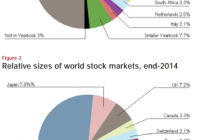
One of the nice things about thinking of the world in macro terms is that you are less inclined to fall victim to a fallacy of composition. That is, in the financial world we tend not to think in terms of aggregates so we often extrapolate personal or localized experiences into broader concepts which often results in mistakes. The most common economic fallacy of composition is thinking that if you save more then you’re better off, therefore everyone else should save more. This obviously can’t be true at the aggregate level because if everyone saved more then everyone would have less income. Likewise, in “the markets” we often think of “the market” as being something like the S&P 500 (or worse, the Dow 30) when the reality is that the “stock market” is a global market that is much broader than the S&P 500. And the financial markets are much broader than the stock markets. I got to thinking about all of this as I was going through the Credit Suisse Global Investment Returns Yearbook ( see here ). They had this fabulous chart of the dynamism of the global equity market over the last 100+ years: This chart is interesting because it shows a number of things. First, the USA was once a relatively small slice of the total market cap of outstanding stocks. Second, the reason the USA has performed so well over the last 100 years is, in large part, the result of a massive capture of market share by US corporations. This has huge implications for portfolios going forward. There is, in my opinion, a strong likelihood that the USA will lose market share to foreign firms as emerging markets become the growth engine of the world and the US economy matures and slows. So a slice of global equity market exposure not only makes sense for broad diversification, but also when considering a strategic allocation towards potentially higher growth regions. This image also shows how important it is to be dynamic and forward-looking in your portfolio to some degree. John Bogle recently made headlines for stating that a US investor shouldn’t be invested abroad. I’d be willing to bet if Bogle had been in the UK in 1899 talking about his portfolio preferences, he would have said a UK investor should stay fully invested in the UK. Why even bother investing in an emerging market like the USA? I am sure that investing in the USA back then looked fairly silly to a foreign investor. That was obviously a huge mistake. The point is, the future composition of the outstanding mix of global financial assets will change and investors who shun forecasting and some degree of necessary dynamism in their portfolios are very likely to generate returns that will be based on recency bias and extrapolative expectations (expecting the future to look like the past). One of the big lessons from history is that the future rhymes, but it rarely repeats. And a little bit of intelligent forecasting about what the future might look like could go a long way to helping your portfolio in the future. Are you Bullish or Bearish on ? Bullish Bearish Neutral Results for ( ) Thanks for sharing your thoughts. Submit & View Results Skip to results » Share this article with a colleague

Ford Vs. Tesla

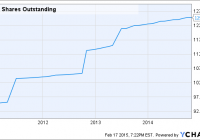
Summary I am not particularly bullish – slightly bearish, in fact – on the auto industry, but I see a relative value play between Ford and Tesla. Ford had a very solid 2014 and should build on that in 2015, barring a macro economic downturn. Tesla ended 2014 on a low note and will continue to bleed money into 2015 and beyond. A pair trade could be a low-risk way to play F and TSLA and largely mitigate the risk of economic distress. Earlier this month, I began a new mock portfolio here on Seeking Alpha: the Pairs Trade Portfolio; today I continue it with trades on Ford (NYSE: F ) and Tesla (NASDAQ: TSLA ). A pair trade is a market-neutral hedge in which an investor essentially pits one company against another. Getting a return on a pair trade is not dependent upon a particular stock rising or falling necessarily, but dependent upon the relative price moves between two stocks (or other financial instruments). I won’t go into details about the hows and whys of pair trading here, as I have already described the theory in detail in a previous article. Please take a look at the link for more information on why pair trades might be a good investment. Previous articles with pair trades for the portfolio: The Auto Industry The industry is extremely sensitive to the global economy as a whole. By and large, people don’t have a pressing need to buy a car and the purchase can normally be put off for months and even years and therefore in tough economic times car sales plummet. I think that notion of “purchase delay” has never been more true than now due to the fact that automobiles are more reliable now than ever. Because of the auto industry’s reliance on a good economy, I’m actually somewhat bearish to neutral on auto companies right now. I predict the global economy will underperform expectations over the next couple of years (at least) with an excellent chance of stock market crashes and recessions. I wrote a piece about the top 7 economies – that account for 74% of world GDP – in an article titled ” The Ingredients For An Imminent Bear Market Are In Place ” in which I noted why I felt that US equities, in particular, were due for a fall. So, why am I buying Ford and shorting Tesla for my Pairs Trade Portfolio? Well, because the whole point of a pair trade is to make an investment that takes out the uncertainty of outside events. By buying Ford and selling Tesla, I am making a bet on Ford vs. Tesla and that is all. If Ford stock drops to $8 per share and Tesla drops to $50, I’ve made money. If I am completely daft about the state of the economy and Ford moves to $30 while Tesla moves to $300, then I’ve still made money, though obviously not as much as I would have being solely long. The phrase “market-neutral hedge” is critical when talking about a pair trade. Again, if the reader has lingering questions about it, please click on the link near the top of this article for more information. And now onward to discussion of the two companies. Ford’s Prospects I consider Ford to be the best risk/reward choice of the automakers for a number of reasons, but three big ones come to mind immediately: Lower gas prices means more large vehicle sales and the higher profits that go with them. Ford rules in the pickup arena and 2015 could be a banner year for F-150 sales given low gas prices along with a redesign of the truck. Asia/Pacific sales. Cheap valuation. As for pickup sales, Ford is still the king and will likely stay that way throughout 2015. In January 2015 , Ford sold over 54,000 F-Series trucks compared to 36,000 Chevy Silverado sales. It appears that the public is responding well to the revamped F-150 and I expect it to be the best selling vehicle in the US for the 34th year in a row in 2015. I want to go into the Asia/Pac region in a bit more detail as I consider that region to be extremely important in the long run. I wrote about it in a previous article on Ford, saying that: Ford is executing well in Asia Pacific, which is the region with the most growth potential for the next decade (at least). However, keep in mind that Asia Pacific is not currently a large component of Ford’s business. Units sold in the Asia Pacific region represented about 21% of the total units sold for the company in Q1 2014. However, the revenues by region are as follows: Asia Pacific: 7.8% of the company total; North America: 60.4% of the company total; Europe: 22.9% of the company total. Those numbers were from Q1 2014. Today I am looking at Ford’s most recent investor presentation and I see many highlights pertaining to the region including: Asia/Pac employment increased 25% from 2013 to 2014; China market share increased from 4.1% to 4.5% (Y/Y); Record profit in Asia/Pac in 2014; Revealed new global Explorer and the all-new Everest for Asia/Pac; Over 1 million units sold in Asia/Pac in 2014. Clearly, Ford’s strategy in Asia is working well and the company is picking up profits in the region at a record pace. The growth prospects are enormous in that region and it is one that I will continue to keep my eye on. Finally, the valuation of Ford is cheap based on analyst expectations . The stock’s forward P/E for 2015 and 2016 is at 10.0 and 8.7, respectively. I’ve already noted that I am still not fully bullish on Ford because I think those estimates don’t take into account the risk of a serious miss. But it is worth noting the price of the shares based on those analyst expectations. There is solid upside to the stock based on earnings alone if macro events don’t derail it. Tesla Prospects I’ll stick with the Asia theme to start off and note that in January 2015, Tesla sold about 120 cars in China. That linked article also notes that “Musk has previously said he expected China sales could rival those in the United States as early as 2015.” The shortfall is important not just because Tesla’s market in China is non-existent, but also it shows just how incredibly off the mark Musk was in his prediction. If there is one common theme amongst the Tesla stockholders, it is the unshakable belief in the “Temple of Elon.” He is not infallible. As for China, Tesla has, to date, wasted its time and money on the country since 2013 (when orders began there) as it has basically nothing to show for its efforts. Moving on to some financial considerations, the company is spending money at an alarming rate. For example: The company spent $970 million in capital expenditures in 2014 while the 2013 capex was $264 million. A poor Q4 performance saw it post a loss of over $100 million – the loss was nearly $300 million for the full year. The company burned through a considerable amount of cash in Q4: $465 million. Long-term debt and “other long-term liabilities” increased from $881 million in 2013 to $3.069 billion in 2014. In addition to the added debt, Tesla is diluting its stock steadily in order to fund operations (the large steps upward) and pay management (the slower, grinding upward slopes): TSLA Shares Outstanding data by YCharts We can clearly expect to see more dilution and more debt in for the next several years in order to fund operations, capex, and compensation. Elon Musk predicted GAAP profitability in 2020 and I estimate that (if and only if all goes well) Tesla will show solid positive cash flow a year or two before that. Until then Tesla will need a lot of additional financing. There’s nothing wrong, per se, for a company to spend lots of money, incur debt, and even dilute its stock. However, when a company does those things and has a stock price that is (still) quite high and full of expectations, the bar is set extremely high for that company to execute. In other words, Tesla better be spending all that money wisely. Some Valuation Comparisons Ford’s market cap is about $62 billion and Tesla’s cap is about $25.5 billion and thus Ford is valued at just under 2.5 times that of Tesla. Some of the charts comparing the two companies are actually comical, but I think they illustrate my point well. First, the difference in revenue: F Revenue (TTM) data by YCharts Ford has about 45x the revenue of Tesla. Tesla is growing revenue much faster than Ford, but is so far behind its more established rival. The cash from operations: F Cash from Operations (TTM) data by YCharts Tesla has bounced up and down from negative to positive and back to negative again as the company struggles to limit the bleeding. I showed Tesla’s dilution above, now let’s see Ford’s shares outstanding: F Shares Outstanding data by YCharts There is a bit of upward creep there over the last few years, but it is minor – especially compared to Tesla. None of the above charts should be of any surprise to an investor in either company, but I think they do serve to show us the amount of faith that Tesla investors have. For the company to be valued at 40% of Ford means that an incredible amount of success is priced into the stock. In my opinion, TSLA should be no more than 10% of Ford. Conclusion At this point, a lot of things have to go right for TSLA stock to be worth the price it currently commands. The company will add more debt and it will dilute the stock further. Not only must Tesla continue to grow revenues and deliver cars at a rapid pace, but it must soon start to give us a glimpse of a profitable future. Moreover, Tesla is about to encounter ramped up competition in its EV space. General Motors (NYSE: GM ) has announced the development of a 200-mile range electric car that should directly compete with Tesla’s Model 3, set to debut in 2017. I have no doubt that many, if not all, major manufacturers will be making similar announcements of long-range EVs throughout 2015, including Ford (heck, maybe even Apple). At some point in the not-too-distant future, carmakers will have multiple EVs in the stable including luxury and sport models. How can TSLA stock stay, or indeed rise from, the level it is at when the company will no longer be unique? Ford, for its part is reasonably predictable, at least relative to Tesla. The stock does not move quite “…as peacefully and leisurely as a python digesting a Valium addict.” (Tom Robbins from Skinny Legs and All ), but it does trade, in the main, based on fundamentals instead of sentiment and hope. The company has a long history of success and should continue to grow and expand its success into new locations and with new models, including EV models. Ford (and all established car makers) has the advantage of being able to invade Tesla’s market whenever and however it chooses. Ford can and will make EVs that compete more directly with Tesla than they do now and when a big company like Ford moves into a small company’s space, there is a tendency for bad things to happen to the smaller company. The Portfolio At 8 p.m. Eastern Time on February 17 I’m buying F and shorting TSLS in my Seeking Alpha portfolio. Here is what the mock portfolio looks like so far after three pair trades (note that I plan on adjusting, adding, and updating this for years): A wee profit! Nice to see, although fairly meaningless this early in the game. Be sure to click “follow” if you would like to get real-time alerts on my future articles. Disclosure: The author has no positions in any stocks mentioned, and no plans to initiate any positions within the next 72 hours. (More…) The author wrote this article themselves, and it expresses their own opinions. The author is not receiving compensation for it (other than from Seeking Alpha). The author has no business relationship with any company whose stock is mentioned in this article.