Tag Archives: setpageviewname

MORT: An ETF Yielding 10% That Is Worthy Of Replicating

Summary MORT offers investors exposure to several mREITs, but the portfolio only holds 25 total mREITs. An investor planning on a long term investment could find significantly better performance by negotiating with a brokerage for free trades. If I were building an ETF for mREITs, I would make some major changes to the allocation. If you’re contemplating investing in the mREIT industry, you should know that there are significant benefits to diversification as each mREIT has a different strategy. One way for investors to achieve that level of diversification is to buy the Market Vectors Mortgage REIT Income ETF (NYSEARCA: MORT ). The ETF offers investors a fairly solid dividend yield and some diversification between mREITs, but as an mREIT analyst I’m not blown away with the investment opportunity. Challenges for MORT The first challenge is that the ETF is trading at a premium of about .4% to the NAV. That’s a large enough premium for investors to be wary of investing. Since inception, the average premium to NAV has been .06%. I don’t see any reason for investors paying a .4% premium to believe that they will recoup the premium when they sell shares. The second challenge is that investors planning to hold shares indefinitely have a superior option. The ETF only holds 25 securities. If investors are dedicated to building an income portfolio from mREITs, they can contact a few brokerage firms and arrange an offer to receive a substantial volume of free trades for opening an account there or moving an existing account to the brokerage. If the investor puts in the time to arrange an account with free trades, they have the opportunity to buy up the holdings without paying the .4% premium. Of course, investors may recognize that the work required to set up the new account would be substantial and the return on their time wouldn’t be that attractive. The return on time wouldn’t be that bad If investors are serious about building a large mREIT portfolio and holding it for a long time, the work of managing the portfolio is fairly simple. The investors would simply need to determine if they wanted dividends reinvested or not and check the appropriate box. There would be no other need to manage the portfolio, which makes it very desirable for long term investors to avoid the substantial expense ratio. The expense ratio The Market Vectors Mortgage REIT Income ETF charges investors a net expense ratio of .41%, but has a gross expense ratio of .60%. Some analysts will tell investors that they should only be concerned with the net expense ratio of an ETF. In the short term, it is reasonable to assume that the costs that are relevant to investors are the costs they are paying to have the ETF managed. For investors looking for a long term holding, the gross expense ratio provides an indication of where the expense ratio might go in the future. I checked the prospectus to look at the terms for maintaining the net expense ratio. The expense ratio is contracted through September 1st, 2015. After that point, it is expected to continue at .41% until the Fund’s Board of Trustees acts to discontinue all or part of the limitation to the expense ratio. That gives me confidence that the expense ratio will be limited to .41% until it ceases to be. Basically, the expense ratio is stuck at .41% until it changes. Let’s say the returns on the mREIT industry are actually decent over the next 20 years and we see values (with dividends reinvested) rising by a 9% annual growth rate. An investor holding the individual stocks with no expense ratio would see their investment climb to 560.44% of the starting value. The investor paying the expense ratio of .41% per year would have their portfolio value climb to 519.75% of the starting value. In my opinion, that is a fairly substantial difference in the ending values of the portfolio. While saving .4% on the initial investment may not be worth negotiating a deal for free trades may not be worth it to save .4%, it should be worth it when the ending portfolio value is growing by over 7.8%. My views You can put me down for bearish if I’m comparing the performance of MORT to the performance of the mREIT industry. You can put me down for thoroughly bullish if I’m comparing the investment to holding cash for a decade. Returns should be positive, but I would expect them to fall short of a reasonable index for measuring the performance due to the expenses. Holdings The following chart shows the top 10 holdings of the portfolio by market value. They represent over 72% of the total value of the ETF. (click to enlarge) If I were building a mortgage ETF, I would lower the weight on Annaly Capital Management (NYSE: NLY ). I would still include it for diversification, but weighting the mREITs by market cap is far from an optimal strategy and doesn’t produce the highest risk adjusted returns. The best weighting system possible for the mREITs would be to have a portfolio manager that is extremely familiar with the mREITs going through each mREIT and considering their exposure to interest rate and credit risk factors. Then an entire portfolio of mREIT companies could be designed to avoid excessive concentration of risk factors that could have been effectively diversified. That would require an enormous amount of work, but would be worthwhile for an enormous ETF tracking mREITs. That may be part of the problem; a market cap of $116 million leaves MORT substantially less liquid than many of the mREITs it is holding. It also means the .41% expense ratio is only providing gross fees of under $500,000. Given that the ETFs will have administrative and trading costs in management, it may be difficult for a fund to provide returns to the sponsor while also paying an expert to design the exposures and to reevaluate those exposures on an annual basis. If a major producer of ETFs like Vanguard or Schwab decided to get into this space, I believe they could put together that combination of mREITs and generate a large enough volume of assets under management to provide a suitable return. Comparing MORT to REM Another option for investors in this space is the iShares Mortgage Real Estate Capped ETF (NYSEARCA: REM ). My views on REM are not substantially different from my views on MORT. REM is offering investors a .48% expense ratio on both gross and net, so higher than MORT currently but without a scheduled increase. It should be noted that the scheduled increases are often delayed, so it is unclear which ETF will have a lower expense ratio a year from now. When it comes to the holdings of the two mREITs, I would consider REM’s portfolio to be slightly more attractive because it holds 38 companies (relative to 25 for MORT) and it has a lower allocation to the top equities. At the present time, I think the ETFs that are available may be superior to investor blindly picking a single holding. However, the high expense ratios and concentration in the largest mREITs make each ETF less desirable as a long term holding. Investors planning on a very long term holding should become familiar with the industry and build their own portfolio. Conclusion I would expect positive total returns for shareholders of MORT over a long time period, but I would expect dramatically better performance by an investor that focused on buying and holding positions in the underlying stocks. If I was designing this portfolio, I would probably overweight holdings like Blackstone Mortgage Trust (NYSE: BXMT ) since their portfolio has substantial diversification benefits . Then I would overweight Dynex Capital (NYSE: DX ) and CYS Investments (NYSE: CYS ) for having internal management teams that are better aligned with shareholder interests. I’d keep American Capital Agency (NASDAQ: AGNC ) as a heavy weight despite the external management structure because the team has a solid track record of success. I wouldn’t overweight Annaly Capital Management despite the large market cap because the mREIT combines an external management agreement with a CEO that has a short track record at the helm and negative returns over the few years she has been leading the mREIT. Disclosure: The author is long DX. (More…) The author wrote this article themselves, and it expresses their own opinions. The author is not receiving compensation for it (other than from Seeking Alpha). The author has no business relationship with any company whose stock is mentioned in this article. Additional disclosure: Information in this article represents the opinion of the analyst. All statements are represented as opinions, rather than facts, and should not be construed as advice to buy or sell a security. Ratings of “outperform” and “underperform” reflect the analyst’s estimation of a divergence between the market value for a security and the price that would be appropriate given the potential for risks and returns relative to other securities. The analyst does not know your particular objectives for returns or constraints upon investing. All investors are encouraged to do their own research before making any investment decision. Information is regularly obtained from Yahoo Finance, Google Finance, and SEC Database. If Yahoo, Google, or the SEC database contained faulty or old information it could be incorporated into my analysis.
Cheap Stock With A High Yield Or High Yield With A Cheap Stock? How About Both?

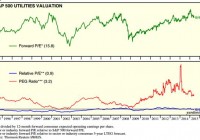
TECO Energy is valued at a substantial discount to its peers based on its forward PEG ratio. TECO Energy offers a current yield of 5.02%. The stigma of its discontinued coal operations along with a dismal dividend growth profile is holding back share prices, but should change with its renewed focus on regulated assets. Are you a value buyer looking for peer undervaluation or are you looking to garner higher income from your invested capital, or a little bit of both? If so, TECO Energy (NYSE: TE ) should be of interest. TE is trading at a comparatively large discount to its anticipated growth rate for the utility sector and the current yield is 5.02%. One measure of fundamental value is the PEG ratio, or price to earnings to earnings growth. Utilities are always on the top of the PEG valuation scale due to slow growth and outsized yields. In most sectors, fair valuation is usually considered at 1.0 for large caps and 1.2 for smaller caps. Over 1.2 is considered overvalued and below 1.0 is undervalued. For utilities, however, it is not uncommon for the PEG ratio to be over 3.0. The PEG ratio for utilities is best used for peer comparisons. One tool that has been used since the early 1970s is the forward PEG ratio, or fundamental valuation based on anticipated 5-yr growth rates and forward earnings estimates. The forward PEG has been one of my personal uppermost due diligence considerations since researching stocks using Value Line in the local library way, way before the internet. The reference librarian got to know me pretty well. However, I digress. Yardeni.com offers an interesting chart of the forward PEG for the utility sector going back 20 years, as represented by the S&P 500 Utility Sector. Below is the chart of the current forward PEG ratio (green line), relative sector P/E to the S&P 500 forward P/E (blue line), and the current forward PEG ratio (red line): (click to enlarge) The current utility sector forward PEG is 3.2 and the average forward P/E is 15.8, reflecting a sector-anticipated growth rate of 4.9%. Enter TECO Energy. The company is going through a transition by selling its coal mining operations to focus solely as a regulated natural gas and electric utility. Its geographic coverage is Tampa Electric (700,000 customers) and Peoples Gas (350,000 customers) in Florida and recently acquired New Mexico Gas (513,000 customers). Earnings per share guidance by management in 2015 is in the $1.08 to $1.10 range, with 2016 consensus estimates of $1.18 to $1.22. Progression in estimates is based on an expansion of its regulated asset base of between 4% and 7%, recent Florida rate case approval with agreed rate increases until 2018, and an allowed ROE in the favorable 10.25% range. TE’s earnings growth rate is offered at between 9.0% and 11.5%, and substantially above the sector average of 4.9%. TECO is trying to sell its coal producing assets in Virginia, Kentucky, and Tennessee. Held as a discontinued asset since third quarter 2014, TECO Coal LLC had a buyer for $80 million in cash and potential future payments of $60 million based on performance targets. However, with the current financial stress of the coal industry, the buyer was unable to acquire the necessary financing and the sale did not close earlier this month. Last week, TE announced a new buyer had stepped in with a 30-day close schedule, but neither terms nor buyers were disclosed. For all intents and purposes, these assets have been written down and the immediate benefit to shareholders from the sale will be a one-time cash inflow of between $0.20 and $0.50 a share. Historically, the coal business has been a large segment of earnings, representing upwards of 30% of net income. As recently as 2011, coal generated over $50 million in income, and coal could be counted on to supply earnings per share of between $0.25 and $0.40 annually. Using the lowest 2016 earnings estimates of $1.13 and the lower project growth rate of 9%, TE’s forward PEG would be 1.7, substantially below the 3.2 of the sector. The current valuation of TE at $17.80 equates to a sector-average forward P/E of 15.7. The undervaluation is based on a much higher growth rate profile. TE’s current yield is 5.02% and represents a substantial income advantage to the sector average 3.5% yield. TE falls in the top tier of utility dividend payers for yield, but offers the disadvantages of a high payout ratio and very low historic dividend growth. While earnings growth is expected to be above average, until the payout ratio declines from around 87% last year to a more comfortable 65% to 70%, investors should not expect dividend growth above a mere nominal level. For example, 3-yr TE dividend growth is 1.3% and 5-yr dividend growth is 1.9%. The best investors should expect over the next three years is inflation-matching dividend growth. However, the current yield of 5.02% should pique the interest of income seekers. Historically, natural gas utilities offer some of the lowest yields in the sector. Using Hennessey Natural Gas Utility Fund (MUTF: GASFX ) and a few of the more popular gas utility stocks as proxies, the representative yield could be between 2.1% and 3.3%. With 50% of customer count from its gas utilities, TE’s yield is comfortably above these averages. Management has generated returns on invested capital in excess of sector average. With peer-average in the 4.5% to 5.0% range, TE’s 5-yr average ROIC is 6.0%, and 3-yr average ROIC is 5.5%. However, their cost of capital is high at 5.7%, according to ThatsWACC.com. TECO could be either an acquirer of smaller utilities, such as its purchase of New Mexico Gas, or as a candidate in the continuing march of utility consolidation. Until the stigma of coal is washed from investors’ memory, TE will trade based on its yield and not its growth prospects. If management delivers on its regulated growth platform, today’s share price and corresponding yield could be looked at as being both cheap and high yield. Author’s Note: Please review disclosure in Author’s profile. Disclosure: The author has no positions in any stocks mentioned, but may initiate a long position in TE over the next 72 hours. (More…) The author wrote this article themselves, and it expresses their own opinions. The author is not receiving compensation for it (other than from Seeking Alpha). The author has no business relationship with any company whose stock is mentioned in this article.

E.ON – Strategically Positioning Itself For A Green Future

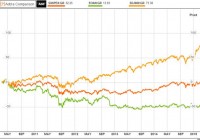
Positioning themselves strategically; inflection point in stock price. Geographical exposure to accelerating green energy trends. Preferred pick amongst large-cap European utilities. E.ON ( OTCQX:EONGY ) reported a record annual loss for 2014 as it took impairment charges associated with writing off its Italian and Spanish businesses as discontinued assets in its FY14 results on 11th March. These divestments are part of a refocusing its core businesses and portfolio optimization. E.ON’s announced in Dec 2014 that it will divest carbon interests and look to refocus business on renewables, smart grids and energy efficiency in a bold move to reposition itself in an industry strongly influenced by green energy trends. The European Union has set a target of 20% for the share of energy consumption to come from renewable energy sources by 2020, with each member state agreeing to a national target outlined in the 2009 EU Renewables Directive. Initial doubters of the credibility of the commitment have been proved wrong with the steady progress made by member nations. By 2012 the EU achieved 11.0% share of energy consumption generated from renewables . E.ON is particularly exposed to these trends as its home market is Germany which has undergone a transformation since the 2011 Fukushima crisis. It has set itself a target of generating 80% of electricity from clean sources by 2050 . Furthermore, technological advances in renewables have seen the costs of generating renewable energy falling, particularly for solar energy. This the shift towards renewable energies looks set to continue and we believe E.ON’s recently announced new strategic positioning will bring long term benefits to the company and its shares. Within Europe, E.ON has exposure to the regions that appear to be most affected by trends towards green energy. The company’s earnings are mainly generated from Germany with the UK and Sweden the other largest sources of earnings within the EU. Germany and Sweden generated ~24% and 60% of their electricity consumption from renewables in 2012. Furthermore, the UK government has been supportive of new green energy projects approving a number of projects in recent years as it tries to meet EU targets for 2020. In 2014, E.ON grew EBITDA by 20% in wind and solar and overall 18% of EON s EBITDA came from renewables . This looks set to continue as they stated they would pursue disciplined capex with > 70% of 2015 capex in Wind, Solar, Distribution Networks & Customer Solutions. The recent new refocused strategy and its exposure to countries in Europe that provide more favorable conditions for renewable energy growth should benefit the company in the medium to long term. E.ON has stated its preference towards wind and solar energy. Positioning towards renewables not only aligns it to wider energy regulation but also to technological trends. UBS stated in a report published in 2014 it believes solar and smart grid technologies will be at the forefront of wider change in power generation . It emphasizes “Solar is at the edge of being a competitive power generation technology” and that “power is no longer something that is exclusively produce by huge, centralized units owned by large utilities”. The falling cost of renewables technologies has coincided with the expected rise of the electric car and improvements in battery technologies. UBS predict a 50% reduction in the cost of batteries by 2020. This will allow homeowners to own battery packs to store energy and power their electric vehicles. Michael Liebrich of Bloomberg New Energy Finance stated that renewable energies have become “fully competitive with fossil fuels in the right circumstances” and their competitiveness looks set to strengthen in coming years as technological advances continue. Therefore, the positioning of the business towards renewables looks smart and it should help E.ON trade on higher valuation multiples, such as P/E. Renewables trade on higher multiples compared to traditional energy business due to stagnation in these traditional businesses and the potential for growth in renewable energy along with higher profit margins. Risks during the strategic overhaul should be taken into account as there is degree of uncertainty over divestments and the valuation of the new company that will be spun-off in 2016. Divestments have continued into 2015 with the sale of its Italian coal and gas power plants and reports suggesting it is looking to sell its North Sea exploration and production assets for around $2bn. Other business risks include its exposure to Russia which generated 7.4% of EBITDA in 2013. Furthermore, gas prices which continue to stay low or trend downwards will affect company earnings as E.ON repositions its business model. Analysts appear divided on whether EON’s transformation is too radical and whether the strategy will be successful. The stock has underperformed the wider European market and Stoxx 600 Utilities index over the last 5 years due to its poor performance, see graph below. It is valued attractively given this underperformance and current poor ROA at 0.96x P/B (cf sector 3.2x) with EV/EBITDA of 4.2x . Its dividend yield is 3.9%, slightly higher than the sector with a pay-out ratio of 60% which is easily defendable given a reasonable net debt to EBITDA ratio of 2.4x. It has also announced it will keep a fixed dividend to bridge the transition to its spin-off. (click to enlarge) The big question is can a traditional utility reinvent itself as a green energy services power house. We believe they can and implementing the strategy earlier than its competitors will allow E.ON to position itself competitively within a transforming industry. Its aims to decarbonise its services at a faster rate should be attractive to investors and raise it from current low stock valuation multiples. Furthermore, the less capital intensive its business becomes the greater the cash flows it will generate and the more it will be able to boost investment and shareholder returns in the future. Renewable energy is shaping the utilities sector and we believe E.ON’s recent strategic overhaul positions it perfectly to benefit. Editor’s Note: This article discusses one or more securities that do not trade on a major U.S. exchange. Please be aware of the risks associated with these stocks. Disclosure: The author has no positions in any stocks mentioned, and no plans to initiate any positions within the next 72 hours. (More…) The author wrote this article themselves, and it expresses their own opinions. The author is not receiving compensation for it (other than from Seeking Alpha). The author has no business relationship with any company whose stock is mentioned in this article.