Tag Archives: setpageviewname

PIMCO Versus DoubleLine CEFs: Which Are Better?
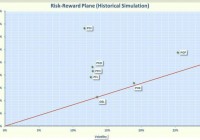
Summary PIMCO multi-sector CEFs outperformed DoubleLine over a 3-year period, but DoubleLine was best over the past year. PIMCO and DoubleLine multi-sector CEFs were not very correlated with one another. High premium funds, like PGP and PHK, have had relatively poor performance. As a retiree seeking income at a reasonable risk, I have allocated a significant portion of my portfolio to bond funds. I do not have the time or requisite knowledge to select suitable individual bonds, so I purchase professionally-managed Exchange Traded Funds (ETFs) or Closed-End Funds (CEFs). The ETFs are typically passive funds that track an index while the CEFs are actively managed. In the current environment of potentially risking rates, my preference is to invest in CEFs where the manager has the flexibility to reduce interest rate sensitivity by revamping their bond portfolio and diversifying away from indexes. Two of the most popular firms offering bond CEFs are Pacific Investment Management Company, better known as PIMCO, and DoubleLine. PIMCO had some rough times last year when “bond king” Bill Gross quit to take a position at Janus Capital. Allianz, PIMCO’s parent company, bled over 5 billion in market cap in a panic sell-off shortly after Gross left. However, it is still generally recognized that PIMCO has an excellent staff with deep experience in the bond market. Jeff Gundlach launched DoubleLine Capital in December 2009. With the departure of Gross from PIMCO, Gundlach has been crowned by many as the new “bond king.” Both PIMCO and DoubleLine have great reputations, so I decided to compare the multi-sector CEFs offered by these two companies to assess which company has had the “best” performance. There are many ways to define “best.” Some investors may use total return as a metric, but as a retiree, risk is as important to me as return. Therefore, I define “best” as the fund that provides the most reward for a given level of risk and I measure risk by the volatility. Please note that I am not advocating that this is the way everyone should define “best;” I am just saying that this is the definition that works for me. PIMCO Multi-Sector CEFS These funds are actively managed and their holding may change without prior notice. The funds typically use a combination of leverage and derivatives to enhance distributions. This strategy can generate above average income but can also run into trouble, like the 2008 bear market, where many of the PIMCO CEFs had substantial losses. The multi-sector bond CEFs are summarized below. PIMCO High Income Fund (NYSE: PHK ). On Wednesday, September 24, 2014 (the day before Gross announced his decision to leave PIMCO), this CEF was selling for a whopping 47% premium. This was not unusual since this fund typically sold at premiums of 50% or more. The premium has now dropped to about 42%; still large but well off the highs. The portfolio consists of 298 bonds, partitioned among corporate (39%), asset backed (28%), municipal (13%), loans (12%), and Government (5%). The effective leverage-adjusted duration is 4.2 years. The fund utilizes 26% leverage and has an expense ratio of 1.2%. The fund has an extremely high distribution of 13.7%, with no return of capital (ROC) over the past year. Note that in 2008, the price dropped 45% and in 2012, the fund hit another rough patch as the price only increased by 4.8% even though the Net Asset Value (NAV) soared over 40%. This divergence in 2012 was because the premium sharply declined from 70% to “only” 35%. PIMCO Income Strategy Fund (NYSE: PFL ). This CEF sells at a discount of 6%, which is unusual since the fund typically sells at a premium. Over the past 3 years, the fund has sold at an average premium of 2.4%. The fund holds 231 bonds allocated among corporate (43%), asset backed (24%), Government (12%), and loans (9%). The effective leverage-adjusted duration is 3.1 years. The fund utilizes 27% leverage and has an expense ratio of 1.2%. It has a distribution of 10%, with no return of capital. In 2008, the fund lost about 50% in both price and NAV. PIMCO Income Strategy Fund II (NYSE: PFN ). This CEF currently sells at a discount of 3.4%. In 2010, the fund strategy was revamped to decrease the focus on floating rate loans and enable the managers to invest in a wider range of fixed income assets. This is a sister fund to PFL and invests in securities with durations in the low-to-intermediate range. The effective leverage-adjusted duration is 3.2 years. The portfolio holds 260 securities partitioned among corporate (40%), asset backed (29%), Government (9%), and loans (9%). The fund utilizes 23% leverage and has an expense ratio of 1.2%. The distribution is 9.6%, with no return of capital. PFN was hit hard in 2008, losing over 50% in both NAV and price. This fund also struggled in 2013, with the price declining by 1%. PIMCO Global StockPLUS & Income Fund (NYSE: PGP ) . This CEF currently sells for a huge premium of 48% but this is a large drop from 52 week average premium of 67%. Over the past 5 years, the average premium has been 63% but on occasion, the premium has dropped to 30%. This fund utilizes an innovative approach by investing in S&P 500 and MSCI EAFE futures as well as bonds. The fund may also employ an equity index option strategy to increase income. The bond portion of the portfolio is focused on asset backed (46%) and corporate bonds (26%). The fund utilizes 38% leverage and has an expense ratio of 2.3%. The effective leverage-adjusted duration is only 1.2 years. The distribution is a high 11.6%, with no ROC over the past year. In 2008, the fund lost almost 50% in NAV and the price declined by 37%. The price of the fund also had losses in 2011 and 2014. PIMCO Income Opportunity Fund (NYSE: PKO ). This CEF currently sells at a discount of 2.5%, but over a 5-year period, this fund had an average premium of 2.6%. The portfolio has 421 holdings, allocated primarily among asset-backed bonds (43%) and corporate bonds (35%). Only about 70% of the bonds are from the USA. The fund utilizes 44% leverage and has an expense ratio of 2%. The effective leverage-adjusted duration is 3.4 years. The distribution is 9%, with no ROC over the past year. During 2008, this fund lost a little over 20% in both price and NAV but has not had a losing year since. PIMCO Dynamic Credit Income Fund (NYSE: PCI ). This CEF sells at a discount of 11.8%, which is a larger discount than the 52-week average of 8.9%. The fund was launched in January 2013, so it does not have a long history. It holds 625 securities, spread across corporate (32%), asset-backed bonds (44%) and cash equivalent (9.3%). The fund utilizes 43% leverage and has a 2.4% expense ratio. The effective leverage-adjusted duration is 3.2 years. The distribution is 9.2%, with no return of capital. PIMCO Dynamic Income Fund (NYSE: PDI ). This CEF sells for a discount of 6.7%, which is a larger discount than the 52-week average of 3.3%. This fund was launched in May 2012, so does not have a long history. It holds 397 securities, invested primarily in asset-backed bonds (68%) and corporate bonds (17%). The fund utilizes 46% leverage and has a high 3.1% expense ratio. The effective leverage-adjusted duration is 3.4 years. The distribution is 8.6%, with no return of capital. DoubleLine Multi-Sector CEFs DoubleLine funds have over $63 billion of assets under management and the founder, Jeffery Gundlach, has received many accolades from the investment community. The first DoubleLine multi-sector fund was not launched until 2013, so there was no way to assess the performance during the 2008 bear market. DoubleLine Opportunistic Credit Fund (NYSE: DBL ). This CEF sells at a discount of 1.9%, which is unusual since the fund usually sells at a premium (average premium over past 3 years was 3.7%). The portfolio has 213 holdings, most (96%) are invested in asset-backed bonds. The effective duration is 8.23 years. The fund employs 17% leverage and has an expense ratio of 1.7%. The fund has an inception date of January 2012, so it only has 3.5 years’ performance history. The fund has a distribution of 8.7% without any return of capital. DoubleLine Income Solutions Fund (NYSE: DSL ). This CEF sells at a discount of 10%, which is a larger discount than the 1-year average of 8%. The fund was launched in April 2013, so it does not have a long history. The fund utilizes 32% leverage and has an expense ratio of 2.2%. The effective duration is 6.3 years. The distribution is 9% with no return of capital. Risk versus Reward To assess the risk versus reward of these multi-sector funds over the past 3 years, I plotted the annualized rate of return in excess of the risk-free rate (called Excess Mu in the charts) versus the volatility of each of the funds. I used 1% as an estimate of the risk-free rate. The Smartfolio 3 program was used to generate the plot that is shown in Figure 1. Note that DSL and PCI were not included because they did not have a 3-year history. (click to enlarge) Figure 1. Risk versus reward over past 3 years As is evident from the figure, multi-sector bond funds have had a wide range of returns and volatilities. To better assess the relative performance of these funds, I calculated the Sharpe Ratio. The Sharpe Ratio is a metric developed by Nobel laureate William Sharpe that measures risk-adjusted performance. It is calculated as the ratio of the excess return over the volatility. This reward-to-risk ratio (assuming that risk is measured by volatility) is a good way to compare peers to assess if higher returns are due to superior investment performance or from taking additional risk. In Figure 1, I plotted a red line that represents the Sharpe Ratio associated with DBL. If an asset is above the line, it has a higher Sharpe Ratio than DBL. Conversely, if an asset is below the line, the reward to risk is worse than DBL. Some interesting observations are apparent from Figure 1. The PIMCO CEFs outperformed the DoubleLine CEFs in terms of overall returns and risk-adjusted returns. DBL had about the same risk-adjusted return as PHK. Most of the ETFs had similar volatilities except for PHK and PGP, which were substantially more volatile. This illustrates that CEFs with large premiums tend to be more volatile since the fluctuations in premium add to the overall risk. Even though PHK and PGP had large distributions, this did not translate into the best risk-adjusted return. In fact, PHK and PGP lagged the other PIMCO funds in risk-adjusted return. PDI was easily the best performer on a risk-adjusted basis. I next wanted to assess if the relative outperformance of PIMCO continued during a more recent past. I reduced the look-back period to 2 years, which allowed me to include DSL and PCI. The results are shown in Figure 2 and are similar to the 3-year data. Again, PIMCO outperformed DoubleLine. PDI continued to be the best performer. The new kid on the block, DSL, lagged. PHK and PGP still had the largest volatility. (click to enlarge) Figure 2. Risk versus reward over past 2 years As a last analysis, I reduced the look-back to the last 12 months, and the results are shown in Figure 3. What a difference a year made! Generally, the multi-sector bond funds have had a rough time over the past 12 months, with interest rate fears dragging down performance. During this period, only 4 of the ETFs (DBL, PDI, PFN, and PKO) managed to stay in positive territory. Over the past 12 months, DBL was the best performer on both an absolute and risk-adjusted basis. PGP was by far the worst performer, due primarily to the reduction in premium, which resulted in both increased volatility and decreased price performance. This illustrates the risks inherent in buying a CEF with a huge premium. DSL was in the middle of the pack. (click to enlarge) Figure 3. Risk versus reward over past 12 months Diversification To round out the analysis, I assessed the diversification associated with these CEFs. To be “diversified,” you want to choose assets such that when some assets are down, others are up. In mathematical terms, you want to select assets that are uncorrelated (or at least not highly correlated) with each other. I calculated the pair-wise correlations associated with the funds over the past two years and the results are shown in Figure 4. (click to enlarge) Figure 4. Correlation matrix over the past 2 years The figure presents what is called a correlation matrix. The symbols for the funds are listed in the first column on the left side of the figure. The symbols are also listed along the first row at the top. The number in the intersection of the row and column is the correlation between the two assets. For example, if you follow PKO to the right for three columns, you will see that the intersection with PFL is 0.550. This indicates that, over the past 3 years, PKO and PFL were only 55% correlated. Note that all assets are 100% correlated with themselves, so the values along the diagonal of the matrix are all ones. It was somewhat surprising to see the small pair-wise correlations among these funds. The only exceptions were the sister funds PFN and PFL, which were 80% correlated with each other. This means that you can gain diversification if you purchase more than one of the funds. In particular, DoubleLine ETFs have a low correlation with PIMCO ETFs. So if you cannot decide which is best, you can diversify by buying one from each investment house. Bottom Line Unfortunately, the analysis was not definitive. PIMCO outperformed over the longer term, but DoubleLine was best over the past year. I believe the PIMCO problems stemmed mainly from the selling after Gross quit, which resulted in an erosion of premiums that translated into reduced prices. Of the PIMCO CEFs, PDI was the best performer. For DoubleLine, the prize went to DBL. In today’s volatile environment, I would definitely avoid funds with huge premiums such as PGP and PHK. Disclosure: I/we have no positions in any stocks mentioned, and no plans to initiate any positions within the next 72 hours. (More…) I wrote this article myself, and it expresses my own opinions. I am not receiving compensation for it (other than from Seeking Alpha). I have no business relationship with any company whose stock is mentioned in this article.

Not If, But When – A Breakdown Of MSCI’s Decision On China’s Onshore Equity Market

Summary On June 9th, MSCI stated that onshore Chinese equities will be added to their broad-based international indices. We believe investors should consider taking a position in the onshore markets today as international investment increases and China implements policies to sustain the onshore market rally. Three issues need to be resolved before immediate inclusion can take place. MSCI, a leading provider of index solutions globally, announced on Tuesday, June 9th that onshore Chinese equities will be added to their broad-based international indices upon the resolution of three outstanding issues. We previously wrote about the potential impact of this inclusion. As an MSCI client, KraneShares, along with several dozen mutual fund families and institutional brokers, attended MSCI’s Index Review Seminar, which was held the morning after the announcement. MSCI’s message at the seminar was clear; investors need to proactively prepare for the coming changes. Changes like the one MSCI announced on June 9th are rare, but when they happen they have historically driven performance in the affected economies. For example, in 2012 MSCI announced that it would include the United Arab Emirates in its emerging market index between 2012 and 2014; when the UAE’s inclusion was implemented, the MSCI United Arab Emirates IMI Index rose 238%1. This dwarfs the 130% rise the onshore Chinese markets have achieved since the rally began in the second quarter of 20142. We believe the onshore markets still have room to grow. Beyond MSCI’s decision, the recent surge in China’s onshore markets is backed by meticulous structural developments that have been decades in the making. We have listed a few examples of these developments below: Raising Domestic Consumption China’s policy makers are prioritizing increased domestic consumption in order to alleviate export dependency to the European Union and United States. Evidence of the policy’s success can be seen in China’s Year over Year retail sales data. According to China’s National Bureau of Statistics, retail sales in May increased 10.1% to $390 billion. The numbers indicate that China is catching up to well-established domestic markets like the United States. Additionally, the strong stock market has a trickle-down wealth effect on domestic consumption allowing Chinese investors to spend more freely. Stock Investing Replaces Housing China’s household savings rate is the third highest in the world at 51% of its GDP3. This rate is 300% higher than that of the United States4. Due to limited investment options in China, housing has traditionally been one of the most popular investment vehicles for Mainland Chinese citizens, which in return supported China’s urbanization policy. With housing softening, savings are finding a new home in the stock market. In fact, 4.4 million new onshore brokerage accounts have been opened by Chinese investors this year5. Monetary Policy China’s central bank has started to ease monetary policy. There have been two interest rate cuts and several adjustments to the reserve requirement ratio, which is the minimum amount of customer deposits that commercial banks must hold in reserve before making loans. The reserve requirement ratio was cut to 19.5% this year from 20% in 20146. More bank requirement cuts and targeted monetary policy are likely as policy makers continue to support growth. However, we do not believe that there will be more interest rate cuts because China’s leadership wants to keep the renminbi, RMB, stable ahead of the International Monetary Fund’s decision on the RMB’s inclusion into its basket of reserve currencies. Unlocking Shareholder Value in State Owned Enterprise Historically, China’s State Owned Enterprises, SOEs, have been undervalued compared to their privately owned counterparts. Unlocking shareholder value in state owned enterprises is a top policy in China today. This will take the form of increased mergers and acquisitions like the recent merger of China South Railroad with China North Railroad to form CRRC, one of the largest train manufacturers globally. Removing inefficiencies should raise the return on equity for State Owned Enterprises versus their private equivalents. We envision reform to heavily emphasize traditional sectors including industrials, basic materials and energy. One Belt, One Road Recently, China implemented the One Belt, One Road policy, which links Chinese manufacturers to Europe, Asia, Africa and the Middle East through improved overland transportation linkages and maritime port and logistic facilities. This spearheaded the launch of the Asia Infrastructure Investment Bank, AIIB, to help finance this policy. Debt Deleveraging China heavily restricted Initial Public Offerings and secondary offerings in the onshore markets for several years. Chinese companies had to rely on issuing debt to raise capital due to this limiting environment. The strong performance of the stock market allows new companies to list and for legacy companies to issue new shares. Proceeds can be used to pay down debt. The MSCI decision overview As the inclusion of the onshore market into MSCI broad indices has become a matter of when not if, China’s leadership is preparing its economy for massive inflows of foreign capital. Currently, China’s Securities Regulatory Commission, CSRC, is working with MSCI to address the three pending issues. The issues center around the programs China implemented in order to phase in the opening up of its economy. China has tightly regulated quota systems to allow foreign investors access to its onshore markets. The first program China launched was the Qualified Foreign Institutional Investor program, QFII, which gives specific foreign institutions access to the onshore markets. The second program to launch was the Renminbi Qualified Foreign Institutional Investor Program, RQFII, which is issued primarily to Chinese asset managers, and has been the catalyst for the launch of onshore China funds. China is gradually shifting focus from the QFII and RQFII programs in favor of even more accessible “connect” programs. The first connect program to go live was the Shanghai-Hong Kong Stock Connect that linked the Shanghai Stock Exchange to the fully internationally accessible Hong Kong Stock Exchange. We believe the Shenzhen-Hong Kong Stock Connect program should follow soon, which will make the entire onshore market fully accessible to international investors. The three issues: Quota Allocation Process: In its announcement MSCI stated that QFII and RQFII quota is still an issue because: “Large investors should be given access to quota commensurate with the size of their assets.”7 We believe this issue will be settled in the near future because quota restrictions are consistently being loosened. Capital Mobility Restrictions: The Shanghai-Hong Kong Stock Connect has a daily limit on the amount of stocks that can be purchased, which, if reached, could leave managers without access. MSCI would like to see this limit removed. Additionally the QFII program has a weekly redemption window, which MSCI would like to see increased to a daily window. Beneficial Ownership: Unlike ETFs and mutual funds, investors in separate managed accounts own the actual underlying securities held by their custodian. MSCI wants to ensure that investors with separate accounts are confident in their ownership in Chinese stock. Before the June 9th announcement there were lingering questions around how the onshore markets would be phased in. MSCI clarified that initially 5% of the onshore Chinese equities’ free float market cap would be included into their broad indices and that this weight will be increased incrementally. At full inclusion, China’s weight within MSCI Emerging Markets would be 43.6% overall, 20.3% Hong Kong listed companies, 20.5% onshore Chinese companies, and 2.8% U.S.-listed companies7. An incremental increase of onshore equities within broader indices is a logical strategy based on the large amount of money needing to be reallocated. We previously wrote about how the lack of a formal announcement on the Shenzhen-Hong Kong Stock Connect program could be problematic for inclusion. We suspect an official announcement about the launch of this program in the next several months. Ultimately the impediments are coming down as MSCI calls the launch of the Shenzhen-Connect program “imminent” and believes “further liberalization of the RQFII program”7 is coming. China’s leadership is motivated to continue opening up its economy to international investors. Having China’s onshore markets included into international indices helps bolster this goal. We believe investors should consider taking a position in the onshore China markets today as their inclusion within broad MSCI indices – and the accompanying international fund flows – are imminent and China is enacting policies to sustain the onshore market rally. 1 Return based off the MSCI United Arab Emirates IMI Index from January 2012 to May 2014. Definition: The MSCI United Arab Emirates Investable Market Index is designed to measure the performance of the large, mid, and small cap segments of the UAE markets. With 22 constituents, the index covers approximately 85% of the UAE equity universe. 2 Return based of the MSCI China A International Index from start of market rally 3/1/2014 through 5/31/2015. MSCI China A International Index Definition: The MSCI China A International Index captures large and mid-cap representation and includes the China A-share constituents of the MSCI China All Shares Index. It is based on the concept of the integrated MSCI China equity universe with China A-shares included. 3 Source: World Bank as of 2013 4 Source: World Bank as of 2013 5 Source: China Securities Depository and Clearing Corporation as of 5/2015 6 Source: CEIC Data as of 2/5/2015 7 Source for quote – MSCI, “Results of MSCI 2015 Market Classification Review” 6/9/2015 8 MSCI as of 6/2015 Disclosure: I am/we are long KBA, KEMP, KCNY, KFYP, KWEB. (More…) I wrote this article myself, and it expresses my own opinions. I am not receiving compensation for it (other than from Seeking Alpha). I have no business relationship with any company whose stock is mentioned in this article. Additional disclosure: ©2015 KraneShares Carefully consider the Funds’ investment objectives, risk factors, charges and expenses before investing. This and additional information can be found in the Funds’ prospectus, which may be obtained here: KBA, KFYP, KWEB, KCNY, KEMP Read the prospectus carefully before investing. Investing involves risk, including possible loss of principal. There can be no assurance that a Fund will achieve its stated objectives. The Funds focus their investments primarily with Chinese issuers and issuers with economic ties to China. The Funds are subject to political, social or economic instability within China which may cause decline in value. Fluctuations in currency of foreign countries may have an adverse effect to domestic currency values. Emerging markets involve heightened risk related to the same factors as well as increase volatility and lower trading volume. Current and future holdings are subject to risk. Narrowly focused investments and investments in smaller companies typically exhibit higher volatility. Internet companies are subject to rapid changes in technology, worldwide competition, rapid obsolescence of products and services, loss of patent protections, evolving industry standards and frequent new product productions. Such changes may have an adverse impact on performance. The ability of the KraneShares Bosera MSCI China A ETF to achieve its investment objective is dependent on the continuous availability of A Shares and the ability to obtain, if necessary, additional A Shares quota. If the Fund is unable to obtain sufficient exposure due to the limited availability of A Share quota, the Fund could seek exposure to the component securities of the Underlying Index by investing in depositary receipts. The Fund may, in some cases, also invest in Hong Kong listed versions of the component securities and B Shares issued by the same companies that issue A Shares in the Underlying Index. The Fund may also use derivatives or invest in ETFs that provide comparable exposures. The ability of the KraneShares FTSE Emerging Markets Plus ETF to achieve its investment objective is dependent, in part, on the continuous availability of A Shares through the Fund’s investment in the KraneShares Bosera MSCI China A Share ETF and that fund’s continued access to the China A Shares market. If such access is lost or becomes inadequate to meet its investment needs, it may have a material adverse effect on the ability of the Fund to achieve its investment objective because shares of the KraneShares Bosera MSCI China A Share ETF may no longer be available for investment by the Fund, may trade at a premium to NAV, or may no longer be a suitable investment for the Fund. The KraneShares FTSE Emerging Markets Plus ETF and KraneShares Bosera MSCI China A Share ETF may be concentrated in the financial services sector. Those companies may be adversely impacted by many factors, including, government regulations, economic conditions, credit rating downgrades, changes in interest rates, and decreased liquidity in credit markets. This sector has experienced significant losses in the recent past, and the impact of more stringent capital requirements and of recent or future regulation on any individual financial company or on the sector as a whole cannot be predicted. These ETFs may also invest in derivatives. Investments in derivatives, including swap contracts and index futures in particular, may pose risks in addition to those associated with investing directly in securities or other investments, including illiquidity of the derivatives, imperfect correlations with underlying investments, lack of availability and counterparty risk. The use of swap agreements entails certain risks, which may be different from, and possibly greater than, the risks associated with investing directly in the underlying asset. The KraneShares E Fund China Commercial Paper ETF is subject to interest rate risk, which is the chance that bonds will decline in value as interest rates rise. It is also subject to income risk, call risk, credit risk, and Chinese credit rating risks. The components of the securities held by the Fund will be rated by Chinese credit rating agencies, which may use different criteria and methodology than U.S. entities or international credit rating agencies. The Fund may invest in high yield and unrated securities, whose prices are generally more sensitive to adverse economic changes. As such, their prices may be more volatile. The Fund is subject to industry concentration risk and is nondiversified. The KraneShares E Fund China Commercial paper ETF invests in sovereign and quasi-sovereign debt. Investments in sovereign and quasi-sovereign debt securities involve special risks, including the availability of sufficient foreign exchange on the date a payment is due, the relative size of the debt service burden to the economy as a whole, and the government debtor’s policy towards the International Monetary Fund and the political constraints to which a government debtor may be subject. In order to qualify for the favorable tax treatment generally available to regulated investment companies, the Fund must satisfy certain income and asset diversification requirements each year. If the Fund were to fail to qualify as a regulated investment company, it would be taxed in the same manner as an ordinary corporation, and distributions to its shareholders would not be deductible by the Fund in computing its taxable income. Narrowly focused investments typically exhibit higher volatility. Internet companies are subject to rapid changes in technology, worldwide competition, rapid obsolescence of products and services, loss of patent protections, evolving industry standards and frequent new product productions. Such changes may have an adverse impact on performance. The KraneShares ETFs are distributed by SEI Investments Distribution Company, 1 Freedom Valley Drive, Oaks, PA 19456, which is not affiliated with Krane Funds Advisors, LLC, the Investment Adviser for the Fund.

Fight Rising Yield With These High Yield ETFs

A flurry of strong U.S. economic indicators, especially the better-than-expected May job growth number which is one of the key gauges of the Fed policy determination, set the stage for a September timeline for the Fed rate hike. This, along with rising supplies of debt securities pushed the yield on the benchmark 10-year Treasury note to this year’s high of 2.42% on June 9. In such a backdrop, yield-loving investors might be looking for ways to beat the benchmark Treasury yield and yet enjoy decent capital gains. For them, we highlight some ETF choices that provide extra yield and might be in focus once the Fed puts an end to the rock-bottom interest rate environment. Senior Loan ETFs Senior loans are issued by companies with below investment grade credit ratings. In order to make up for this high risk, senior loans normally have higher yields. Since these securities are senior to other forms of debt or equity, senior loans give protection to investors in any event of liquidation. As a result, default risk is low in this type of bonds, even after belonging to the junk bond space. Moreover, senior loans are floating rate instruments and provide protection from rising interest rates. In a nutshell, relatively high-yield opportunity coupled with protection from the looming rise in interest rates post Fed tightening should help the fund to perform better in the second half of 2014. PowerShares Senior Loan ETF (NYSEARCA: BKLN ) The most popular and liquid fund in this space is BKLN with AUM of $5.7 billion. The fund tracks the S&P/LSTA U.S. Leveraged Loan 100 Index and holds 115 securities in its basket. It has weighted average maturity of 4.71 and average days to reset of just over 35. Though senior loans account for a hefty 83.7% of the assets, high yield securities also make up for 9% share in the basket. The product charges an expense ratio of 65 bps a year and pays out an attractive dividend yield of 3.95%. The ETF has added nearly 1% in the year-to-date timeframe (as of June 9, 2015). Preferred Stock ETFs Preferred stocks are hybrid securities having the characteristics of both debt and equity. The preferred stocks pay the holders a fixed dividend, like bonds. These types of shares normally get priority over equity shares both in case of dividend payments as well as at the time of liquidation if the company fails. Preferred stocks are thus relatively stable and usually exhibit a low correlation with other income generating assets. These products are interest rate sensitive – lesser than the bond space though – but a high yield opportunity might present them as potential bets once the Fed hikes rates. iShares S&P U.S. Preferred Stock ETF (NYSEARCA: PFF ) PFF is perhaps the biggest and the most popular name in the preferred stock ETF space. With total assets of $13.3 billion, it is one of the largest funds in this category. The ETF charges 47 basis points in fees. The fund has returned 1.83% so far this year (as of June 9, 2015) and pays out 6.09% per annum as dividends. The ETF holds 302 securities in all and eliminates concentration risk by allocating a mere 15% of its total assets in its top 10 holdings. Business Development ETFs Business Development Companies (BDCs) are firms that give loan to small and mid-sized companies at relatively higher rates and often grab debt or equity stakes in those companies. BDCs dole out high cash payments together with captivating the equity performance of the borrower. The U.S. law obliges BDCs to hand out more than 90% of their annual taxable income to shareholders. Market Vectors BDC Income ETF (NYSEARCA: BIZD ) The ETF looks to invest in a variety of BDCs which are traded in the American market by tracking the Market Vectors U.S. Business Development Companies Index. The ETF has $82.5 million in AUM. In total, BIZD invests in 29 firms with a relatively high level of concentration in the top names. Ares Capital and American Capital account for 14.6% and 9.9% of total assets, respectively. The fund yields 8.29% annually (as of June 9, 2015) and is up about 3% year to date. Originally posted on Zacks.com