Tag Archives: seeking

A New Biotech ETF Looks To Bring The Genomic Revolution To Investors
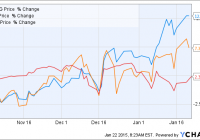
Summary The ARK Genomic Revolution Multi-Sector ETF launched last year with the goal of investing in companies that develop technologies related to extending and enhancing the quality of human life. The fund typically invests in about 40-50 names and is currently divided almost equally among all market capitalizations. The fund’s 0.95% expense ratio is currently the highest of the biotechnology ETFs. With biotechnology continuing to be the hot sector heading into 2015, we’ve seen several investment firms looking to capitalize on the trend. I’ve profiled a pair of those new biotech ETFs launched just recently here and here and another new one targeting a specific niche of the biotech universe began trading at the end of October of last year. The ARK Genomic Revolution Multi-Sector ETF (NYSEARCA: ARKG ) is from ARK Capital Management. Its primary investment objective according to the fund’s fact sheet is to identify securities that “are substantially focused on and are expected to substantially benefit from extending and enhancing the quality of human and other life by incorporating technological and scientific developments, improvements and advancements in genomics into their business. One such way this is accomplished is by offering new products or services that rely on genomic sequencing, analysis, synthesis or instrumentation.” This ETF typically invests in about 40-50 companies and isn’t necessarily looking for the next big diamond in the rough. According to the ARK Management website (which happens to update the holdings of this fund on a daily basis), the median market cap of one of its holdings is $5B. Illumina (NASDAQ: ILMN ) – the company that develops and manufactures tools for the analysis of gene sequencing – is the ETF’s current top holding but other big positions include popular names like Monsanto (NYSE: MON ), Biogen (NASDAQ: BIIB ) and even Qualcomm (NASDAQ: QCOM ). The fund doesn’t necessarily come cheap though. Its 1.45% expense ratio is currently the highest in the biotechnology ETF space easily outpacing the category average of 0.48% and the SPDR S&P 500 ETF (NYSEARCA: SPY ) ratio of just 0.09%. Management is currently capping the expense rate at its current management fee of 0.95% (administrative expenses of 0.50% are currently being waived although it’s still the highest in the sector). That’s not entirely unexpected as new funds establishing their portfolios for the first time tend to be more inefficient until the level of assets under management (currently at around $5M for this ETF currently) increases. Thanks to the continued popularity of biotechs the fund has gotten off to a fast start. Since its inception, the fund is up 13%. That’s well ahead of the iShares NASDAQ Biotechnology ETF (NASDAQ: IBB ) return of 7% and the S&P 500 return of 2%. ARKG data by YCharts Conclusion With biotechs in favor right now it’s not surprising to see niche ETFs like this popping up. The top holdings of this fund are actually fairly different from those of the Biotech Index ETF so it looks like there is some diversification potential here. The fund is off to a good start and the active management of the portfolio is a differentiator but it comes at a cost. The current expense ratio is a bit prohibitive and should be monitored to see if it comes in line with the sector average over time. Overall, investors looking for biotech exposure should consider this ETF for their portfolios. Now that you’ve read this, are you Bullish or Bearish on ? Bullish Bearish Sentiment on ( ) Thanks for sharing your thoughts. Why are you ? Submit & View Results Skip to results » Share this article with a colleague
Am I Crazy Enough To Short Volatility Here?

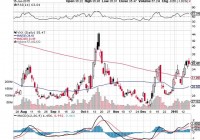
Recent volatility in stocks has presented yet another opportunity to profit. The VXX has moved up sharply after I went long and as a result, I sold my position. I’m now back to being short the VXX on a bet that the markets will calm down this week. Early last week I wrote a piece about how I had gotten short volatility and then reversed quickly after realizing the market was moving against me. That proved to be a fortunate thing to do as I missed the big move up in volatility (in the good way) by not being short. As I detailed in the linked article, I chose to get long right as I sold out of my short position via the short VXX ETF (NASDAQ: XIV ) and moved into a long position in the VIX ETF (NYSEARCA: VXX ) while hedging with covered calls. In this way, I wanted to capture huge premiums that were available on VXX call options and also take advantage of what looked like a coming move up in volatility. As it turns out, that was the way volatility moved last week and the VXX closed up huge on the week. I was fortunate enough to capture most of that move but by hedging with short calls, I did give up some potential upside. Still, being long the VXX for four trading days and hedging with calls netted me a 6% total gain in four days; not bad work if you can get it. The flip from short to long volatility certainly worked out in my favor and given the gains that I achieved in such a short time span, I carefully considered my next move for this week. In doing so, I considered where the VXX had come from and how far it had moved since having a big downturn. This is a one year chart of the VXX and what it shows, as most of us know, is that VXX tends to spike when it does go up and then fall precipitously seemingly without warning. (click to enlarge) I started shorting VXX back in October during the mini-crash that roiled stock markets and since that time, have had pretty good results getting long and short volatility at different times. The most recent spike that has driven VXX up to as high as $37 seems to be running out of steam, in this humble trader’s opinion. And therefore, I’ve decided once more get short volatility via the XIV, the ETF that provides the inverse, unleveraged return of the VXX. For reference, I sold out of the VXX at $36.63 and bought the XIV at $26.45 a few moments later. If you like, of course, you can just short VXX but that’s expensive and difficult to do so just buying XIV is much cleaner. At any rate, the decision was made to get short volatility because I feel like the fear and panic was wavering at the end of the week. Several days of markets being beaten over the head with terrible news and heavy selling tends to exhaust traders and in a world where the central banks of our nations can move markets higher simply by talking, I feel like recent history provides decent precedence from which we can derive the duration and severity of up moves in the VXX. Of course, nothing is perfect and I could be dead wrong about this move being done but in order to make some money, you’ve got to take calculated risks. For that reason, I think getting long XIV here makes lots of sense. There is no doubt that the VXX clearing its previous high from December means we’ve got a situation on our hands. There are plenty of reasons for volatility right now but what I’m betting on is that there will be at least a small reprieve from the panic. Panic, by definition, can only last for so long so a trade into XIV is a bet that the panic is ending and that normalcy will return, at least for a few days. Keep in mind that you don’t need to be right for a long time to make money on this trade; I’m essentially renting XIV until some calm returns to markets again and then it’s back out of the short volatility position. As always, please understand that trading volatility, particularly from the short side, can be quite hazardous. If some shock occurs VXX will spike and XIV will crater, leaving you with massive losses. Please understand how the ETF works and what you’re risking before taking a position. The plan right now is to stay in XIV until one of two things happens; either normalcy returns to markets and XIV moves up very nicely or I’m dead wrong and I get crushed and limp away with my losses. Either way, I think we’ll know this week which one it is and at that point, I’ll reassess which side I want to play on the volatility front. In my first volatility article of 2015 I mentioned I’d keep you abreast of my thoughts and any moves I ended up making and I’m trying my best to do that; please remain engaged in the comments sections because we’re all learning together and sharing thoughts and ideas and I love it. Good luck out there.

Arctic Cold Brought Up UNG – For A Short Time

Summary Colder-than-normal weather brought up the price of UNG. EIA still estimates this year’s natural gas price to remain lower than last year’s. This week’s extraction from storage is estimated to be higher than the 5-year average. The recent news of possible Arctic weather in the coming week pushed up back up the price of United States Natural Gas (NYSEARCA: UNG ) to pass $16 at one point. Since then, however, its price resumed its descent. The price of UNG ended last week at $15.69 – representing a 4.6% gain, week over week. Despite the recent rally in UNG, it’s still 16% down in the past month. The cold snap drove up the U.S. consumption by nearly 7%, week over week. Most of this gain was in the residential/commercial sectors. Despite the low prices of natural gas, the U.S. natural gas output is still up by roughly 10% for the year. If prices were to remain low, however, this could eventually curb down the growth rate in the natural gas output in the coming quarters. But the main issue revolves around the potential changes in the demand for natural gas mainly in the residential/commercial sectors. Over the next couple of weeks, the temperatures mainly in the Northeast and Midwest are projected to be lower than normal. In the west coast temperatures are expected to be higher than normal. Conversely, this week, the current outlook for the heating degrees days shows lower than normal levels. Nonetheless, it seems that the low temperatures are likely to keep driving up the demand for natural gas for heating purposes. Let’s turn to the latest from the natural gas storage. Last week’s Energy Information Administration update showed a 236 Bcf extraction from storage – this was 46 Bcf higher than the 5-year average. But it was also 51 Bcf below last year’s extraction. Source: EIA This week’s extraction from storage is likely to be, again, higher than the 5-year average. Keep in mind, last week’s deviation from normal temperatures was, on average, -4.29. The lower-than-normal temperatures may result in higher than normal withdrawal. Even though the changes in storage provide an indication for the changes in the demand and supply for natural gas on a weekly scale, as I pointed out in the past, the relation between the prices changes in UNG and shifts in storage tend to have a low correlation. This is mostly on a week-to-week examination. On broader scale, however, lower extractions from storage tend to keep UNG down and vice versa. Looking forward, if the extractions from storage were to remain roughly 10% lower than the 5-year average, this could bring the natural gas storage in line with the 5-year average by the time the injection season commences. This is shown in the chart below. Source: EIA The EIA also estimates that the natural gas inventories will be roughly in line with the 5-year average by the end of March 2015. On a yearly scale, the EIA still expects natural gas prices to remain low in 2015 – the annual average price is estimated at $3.44; this is roughly 22% lower than the average yearly price in 2014. The uncertainty in the weather forecasts in the next couple of weeks could lead to big swings in the price of UNG – as was the case in recent weeks. Nonetheless, if temperatures don’t fall below current estimates, this could result in UNG resuming its descent. For more see: Has the Weakness in Oil Fueled the Decline of UNG?