Tag Archives: seeking-alpha

Is China A Building Block In Your Portfolio?
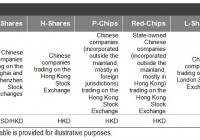
By Ellen Law After China’s stock plunge in Q3 2015, many investors have had two different views toward China. The bearish camp avoids buying Chinese stocks, as they think the Chinese market is volatile, and that the earlier stock market bubble has not fully burst when it comes to the problems of shadow banking, margin lending, and an overheating property market. The bullish camp holds a different view, claiming that Chinese stocks are cheap now and that the panic sell-off had been exaggerated. It claims that the valuation of China is getting lower, which presents a potential buying opportunity, especially for long-term investors. No matter which view you take, either bearish or bullish on China, one cannot simply ignore China, considering its size and importance in the world economy and long-term economic growth. For this reason, it may not come as a surprise that some indices and investment products were launched for a pure play in China after the recent sell off, such as the S&P China 500, which seeks to track all Chinese share classes, including A-shares and offshore listings. Alphabet Soup of Chinese Share Classes To capture the complete Chinese story, investors may invest in different Chinese share classes. However, Chinese share classes are often seen by foreign investors as being quite complex. A-, B-, H-, L-, N-, and S-shares are just like the different letters mixed in alphabet soup. In reality, only a handful of share classes, namely A-, H-, and N-shares, represent around 99% of the total market capitalization of the Chinese equities market. A-shares are Chinese companies trading on the Shanghai and Shenzhen exchanges in renminbi. International access to these domestic shares has been limited, but they have become more open due to the market liberalization supported by the Chinese government. H-shares are similar to A-shares, but they trade on the Hong Kong Stock Exchange in Hong Kong dollars. They are open to international investors without any restriction. N-shares are Chinese companies trading on the New York Stock Exchange and NASDAQ in U.S. dollars. Some of them are fast-growing internet and technology stocks, such as Alibaba (NYSE: BABA ) and Baidu (NASDAQ: BIDU ). For the list of Chinese share classes, please refer to Exhibit 1. Liberalization of China’s A-Share Market It is worth noting that the historically restricted A-share market has now been made more readily available to international investors, and thanks to the launch of the Qualified Foreign Institutional Investor (QFII), Renminbi Qualified Foreign Institutional Investor (RQFII), and Shanghai-Hong Kong Stock Connect (Stock Connect) programs, both QFII and RQFII allow approved applicants to access to the A-share market via a quota system. The total QFII and RQFII quotas have reached $78.97 billion and RMB 419.5 billion ($66.3 billion), respectively.[1] The Stock Connect is a significant measure that links the Shanghai and Hong Kong stock exchanges, allowing mainland Chinese investors to purchase selected eligible shares listed in Hong Kong, and, at the same time, letting foreign investors (both institutional and retail) buy eligible Chinese A-shares listed in Shanghai. The Stock Connect is expected to expand to the Shenzhen stock exchange soon, since both the Hong Kong and Shenzhen bourses have said the launch preparations had been completed and were waiting regulatory approval. [1] State Administration of Foreign Exchange, data as of Oct. 29, 2015. Disclosure: © S&P Dow Jones Indices LLC 2015. Indexology® is a trademark of S&P Dow Jones Indices LLC (SPDJI). S&P® is a trademark of Standard & Poor’s Financial Services LLC and Dow Jones® is a trademark of Dow Jones Trademark Holdings LLC, and those marks have been licensed to S&P DJI. This material is reproduced with the prior written consent of S&P DJI. For more information on S&P DJI and to see our full disclaimer, visit www.spdji.com/terms-of-use .

Buy Dominion Resources For A Nice Dividend And High Analyst Price Targets

Merrill Lynch has a price target 17% above current price of $67.9. Analysts are getting generally more positive on utilities after a year of relative underperformance. The company is one of the safest investments in the market right now. In his now legendary book, The Intelligent Investor, Benjamin Graham writes that the goal of a conservative investor is to look for investments that are likely to provide safety of principle and an adequate return. His disciple, Warren Buffett has put it slightly differently saying, “The first rule of investing is don’t lose money. The second rule is don’t forget the first rule.” Utility companies in general are a good place to look for this type of conservative investment, and it doesn’t get any safer than Dominion Resources, Inc. (NYSE: D ). D is one of the nation’s largest utilities with a market cap of over $40 billion and rock solid fundamentals. In addition to the company’s great fundamentals is the fact that analysts are lining up with price targets higher than the current price across the board. Merrill Lynch recently set a price target of $80 a share. While this is one of the higher targets, the mean target among a relatively large sample of 17 brokers isn’t far off at $78. Both of these figures provide generous upside to the stock, especially for a utility company that usually trades within a tight range. Research firm Guggenhiem also rates the stock a “buy”. D recently posted quarterly YoY earnings growth of 12% with a profit margin of almost 15%. This is a much higher margin than the industry average of 8-10%. With a forward P/E of 17, the company looks fairly valued. While 17 is slightly higher than average for a utilities company, in this case the higher multiple reflects the high quality of the company. As mentioned above, there aren’t very many utility companies that have 12% margins are growing the bottom line by 15%. This helps to make the 3.7% dividend sustainable. The company’s ROE of 14.54% is also quite strong for a utilities company, so it appears as if D is outperforming the industry pretty much across the board. As if all of the above weren’t enough to convince the conservative investor in the value of D as a safe long term bet, the stock has been picked as a top dividend stock by the Dividend Channel’s “DividendRank” report . The lowest the stock has traded in the last 52 weeks is $64 a share, which is only $4 below the current price, which is a technical indicator that points to short term upside. So by almost any measurement the stock is either fairly valued or undervalued. I rank the stock a strong “buy” for the investor looking for long term safety of principle and an adequate return. And of course we can collect the nice dividend while we wait.

Bet On European Economic Recovery With This New ETF

Ongoing policy easing and hopes for further stimulus (if need be) have put the spotlight on the Euro zone stocks and related ETFs. Since available funds are tacking on gains and assets on a potential economic recovery, issuers are putting out all the stops in rolling out more and more innovative Europe-based funds. Most recently, WishdomTree launched the WisdomTree Europe Local Recovery Fund (BATS: EZR ) , which better reflects the European growth prospects on corporate profile. Let’s dig a little deeper and find how one can wager on the potential bounce in the European economy by this ETF (read: ETF Strategies for 2H ). EZR in Focus The fund seeks to provide exposure to the European companies susceptible to economic growth prospects in the Euro zone and that generate over 50% of their revenues from Europe. Thus the fund may benefit from the ongoing economic recovery and rising purchasing power in the Euro zone. By tracking the WisdomTree Europe Local Recovery Index, the fund fulfills its objective. This strategy results in the fund holding 212 stocks in its basket, which are quite well diversified across the portfolio. The top 10 names form roughly 15% of total assets, with just 2.22% allocated to the top fund holding – Total SA. (NYSE: TOT ), BASF SE ( OTCQX:BASFY ), Allianz SE ( OTCQX:AZSEY ) and BNP Paribas ( OTCQX:BNPQY ) are some of the other top holdings of the fund. However, there seems to be some sector concentration in the fund as the top three sectors – Financials, Industrials and Consumer Discretionary- alone occupy four-fifth of total fund assets. Energy and Information Technology have the lowest allocations in the fund. Capitalization-wise, the fund has a mixed approach with about 35% of weight invested in small and mid caps each, while the remaining 30% goes to large-cap stocks. While France and Germany have roughly 25% allocation each in the fund, Italy occupies about 16% and Spain has 9.42%. The fund charges 48 basis points as fees making it a relatively middle-of-the-road product in terms of costs in the European ETFs space. How Does It Fit in the Portfolio? The newly launched ETF can be a good choice for investors looking to gain exposure to the pure possibilities of the Euro zone. This is especially true given that these companies are closely tied to the European economy and generate a huge bulk of their revenues from the domestic market and thus remain less susceptible to euro depreciation (read: 3 European ETFs Rebounding Sharply ). Notably, Euro zone is presently undergoing a QE stimulus and the European central bank has recently hinted at the beefing up of the ongoing monetary policy, if growth slackens further. These measures are expected to spur bank lending, boost activities and battle low inflation within the Euro zone. ETF Competition The broad European equities fund space is teeming with a number of ETFs such as the Vanguard FTSE Europe ETF (NYSEARCA: VGK ) , the SPDR Euro Stoxx 50 ETF (NYSEARCA: FEZ ) , the iShares MSCI EMU ETF (NYSEARCA: EZU ) and the iShares Europe ETF (NYSEARCA: IEV ) . However, aforementioned ETFs are mostly large-cap in nature and thus can’t be direct competitors to this newbie ETF EZR. Since large-caps only take about one-third of its portfolio, small-cap Europe ETFs including the SPDR STOXX Small Cap ETF (NYSEARCA: SMEZ ) and the WisdomTree Europe SmallCap Dividend Fund (NYSEARCA: DFE ) are likely to pose as threats. In fact, country and sector specification-wise, EZR and SMEZ share many similarities. The newly launched fund is cheaper than DFE – which charges 58 basis points as fees but it is slightly costlier than SMEZ which charges 45 bps in fees. Also, given the greenback strength in the wake of looming policy tightening and euro depreciation, this un-hedged ETF might see tough times ahead. Otherwise, we expect EZR to be successful among risk-averse investors as capitalization-wise, its spectrum is diversified. So, several risk-fearing investors who seek to gain true exposure to the Euro zone but dread the volatile nature of the smaller-capitalization might find EZR’s midway approach lucrative. Link to the original post on Zacks.com