Tag Archives: seeking-alpha

Why I’m Now More Of A Buffett And Munger Type Investor

Summary Why I changed from Graham to Buffett and Munger. The importance of low hanging fruit in investing. What Growth as an Investor Really Is. Why You Need to Improve Risk Management. I’ve changed. How? It’s the same evolution that a lot of people have followed. Originally I focused purely on Ben Graham’s criteria and net nets. The beauty is that Graham’s techniques are easy to understand and follow because there is a lot of quantitative factors. Here’s one example of a Graham checklist you can study and follow. Graham came out with this back in his early days while running the partnership with Jerome Newman. ## Graham’s 10 Point Checklist An earnings-to-price yield at least twice the AAA bond rate P/E ratio less than 40% of the highest P/E ratio the stock had over the past 5 years Dividend yield of at least 2/3 the AAA bond yield Stock price below 2/3 of tangible book value per share Stock price below 2/3 of Net Current Asset Value (NCAV) Total debt less than book value Current ratio great than 2 Total debt less than 2 times Net Current Asset Value (NCAV) Earnings growth of prior 10 years at least at a 7% annual compound rate Stability of growth of earnings in that no more than 2 declines of 5% or more in year end earnings in the prior 10 years are permissible. ## Why It’s Important to Change for the Better It’s important to “adapt” your own version of this checklist because times have changed and this 10 point checklist may not work as well as it used to. And like a lot of people that have adapted and changed away from a pure quantitative approach towards buying quality assets, I have too. Buffett is the most obvious example here because he followed Graham’s investment style during his early partnership days until he met Charlie Munger. Of course, Buffett’s focus is now exclusively on buying quality businesses due to the size of Berkshire Hathaway, the compounding required to keep up growth and the special deals Buffett can strike up. But what’s the reason so many people morph from a Graham investor to more of a Buffett and Munger style of investing? My changes were made based on the need to keep things simple, chase low hanging fruit and improve risk management. Graham certainly did all these things, but when combining my temperament with Graham methods, I started digging myself into a hole without knowing it. So I changed. ## Keep Things Simple and Chase Low Hanging Fruit First The truth is that simple ideas and investments are not sexy. Some investments are so easy and obvious that people think it’s a dumb idea. Or, that low hanging fruit type investments have low upside so it’s not worth the investment. Being an early investor in Uber (Pending: UBER ) is much sexier than being an early investor to AT&T (NYSE: T ). The Fitbit (NYSE: FIT ) IPO is a clear indicator of how people want to be in on the next big thing. You get bragging rights if you say you got into the Fitbit IPO. You get more recognition from friends. You can talk and speculate about what the company is going to do to jet you to your next million. But I hold Amerco (NASDAQ: UHAL ). The parent company of U-Haul DIY moving trucks and storage. The investment thesis is simple. Their DIY truck rental business has a huge moat which is close to a monopoly. They own a ton of real estate for its storage business. They are family owned with large insider ownership. The bad family fights are behind them. They do not focus on quarterly performance or what Wall Street expects them to do. Their financials aren’t the easiest to understand because of the different parts and their focus on reinvesting for the long term. I used to think that I had to find complex stocks. That my goal was to find 1,000% potential returns. That would be awesome, but my focus was way off. I was reaching for the golden shiny apple at the top of the tree when there were very good apples hanging in front of my nose. I was simply ignoring them because it didn’t seem complicated enough. Well, here’s a note I received the other day. You should stop relying on your spreadsheet models and being so promotional with your website – it hinders your ability to analyze and think as an investor. I’ve followed you for quite a while, and you haven’t grown much in the past few years. – Anonymous I don’t know about you, but I’m perfectly content with having the skill to quickly know which stocks to pass on and which ones to dig into further. I’d rather know when something is overvalued or undervalued instead of just chasing a stock and falling in love with the story. Take it from Seth Klarman; Many investors are able to spot a bargain but have a harder time knowing when to sell. One reason is the difficulty of knowing precisely what an investment is worth. An investors buys with a range of value in mind at a price that provides a considerable margin of safety. As the market price appreciates, however, that safety margin decreases; the potential return diminishes, and the downside risk increases. Not knowing the exact value of the investment, it is understandable that an investor cannot be as confident in the sell decision as he or she was in the purchase decision. – Seth Klarman A 50 page complex stock analysis is not growth. Increased activity is not growth. Growth as an investor is knowing what to buy and when to buy. Growth is being able to pounce on a deal when it’s obvious. Growth is knowing how you react in certain situations preventing yourself from falling victim to it each time. Growth is being able to sit still and wait for an elephant to shoot instead of trying to shoot every rabbit. And all this comes from keeping things simple instead of trying to do too much. Graham did the same thing. Being such a savvy businessman and investor, Graham knew that he didn’t have to complicate things. He cut out the fat in investing and used discipline and simple ideas to generate his returns. ## Keeping Things Simple from a Baseball Perspective I’m a Seattle baseball fan which is painful. The team has been the definition of mediocrity for the past decade, but one of baseball’s best hitters is Seattle’s very own Edgar Martinez . In case you’re not a baseball fan, know that baseball is a game of failure. Most professional players can’t hit the ball more than 70% of the time. If you can hit the ball at least 3 out of 10 times throughout your career, you are considered elite. Edgar Martinez falls into this category. But what makes him so special? Two current hall of fame pitchers, Pedro Martinez and Randy Johnson, as well as future hall of famer Mariano Rivera have gone on the record saying that they thought Edgar Martinez was the best and toughest batter they’ve faced. Was it his homerun power? No. He had 309 and is no. 125 on the all time list. Was it his speed? No. He was slow due to an injury. It was simply because he was so disciplined, knew himself and limited mistakes that made him so difficult to get out. In recent interviews by Edgar, his approach was to keep things simple even when the stakes were high. Instead of trying to hit the game winning home run, his method was to stick to the basics, not get out and to keep the ball in play. Does that sound familiar? Edgar Martinez was happy with low hanging fruit by maintaining focus on the bigger picture – keeping the game alive in key situations even with a single. Edgar Martinez focused on protecting the downside and letting the upside take care of itself. Edgar Martinez didn’t go all out on one pitch that could blow up his team’s chance of winning. Edgar Martinez style of play wasn’t sexy and why he hasn’t been inducted into the hall of fame. Edgar Martinez is the baseball version of the investor I want to be. That means controlling the things that I can. Things like understanding how the stock fits within my overall investment objective calculating a valuation range to know when to act or not defining an entry price and exit strategy making better decisions with portfolio allocation ## The Need to Always Improve Your Risk Management Risk can be viewed differently between people, but when you boil it down, people don’t want to lose money. As Howard Marks puts it, I don’t think most investors fear volatility. In fact, I’ve never heard anyone say, “The prospective return isn’t high enough to warrant bearing all that volatility.” What they fear is the possibility of permanent loss. I too fear permanent loss of capital. The key to investing is knowing how to survive. That means at times playing conservatively, cutting losses when necessary and keeping a large portion of one’s portfolio out of play. – George Soros As I took up being a Graham first investor, one bad trait that I found myself creating was the focus on upside. Graham never emphasized the upside so this was purely a bad side effect created by myself. While focusing on the upside, I’ve made plenty of bad mistakes that come along with it. Trying to do too much all the time Over allocating on positions that I should have made much smaller Consuming too much information without putting the time to process it Fear of missing out on something Trying to pick up pennies in front of a bulldozer and the list goes on But one day, it finally sunk in. I finally knew and experienced what it meant to limit the downside. Protect the downside. Worry about the margin of safety. – Peter Cundill And another gem from Klarman. Interestingly, we have beaten the market quite handsomely over this time frame, although beating the market has never been our objective. Rather, we have consistently tried not to lose money and, in doing so, have not only protected on the downside but also outperformed on the upside. – Seth Klarman For me, that meant becoming a more Buffett and Munger investor. Slowing down my agendas and giving myself more time to think and process the information on hand. Look for strong moats. Look for good management. Look for businesses that I can hold for a long time without losing sleep over. I’ve changed for the better. Have you? Disclosure: I am/we are long UHAL. (More…) I wrote this article myself, and it expresses my own opinions. I am not receiving compensation for it. I have no business relationship with any company whose stock is mentioned in this article.
Duke Energy – Repositioning Business

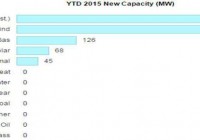
Summary Company’s share repurchase plan will grow its future EPS and expand its ROE. DUK’s strong growth prospects cast a positive outlook on its cash flow position, which means more upside for dividends. Analysts are bullish on the company’s future growth prospects and have projected future sales base growth of 4.72%. In recent quarters, Duke Energy (NYSE: DUK ) has been repositioning its business around regulated business operations by repatriating cash from the international segment and selling its competitive business assets. The company is moving ahead with its intelligent strategic growth plans that involve getting an extended, regulated renewable energy generation asset base; such plans will benefit the company in the long run, as DUK’s revenue and cash flow growth will improve, which will reduce shareholder risk. Owing to the company’s strong strategic growth prospects, I believe its future cash flows will remain strong to support its shareholder-friendly dividend payment policy. The company offers a dividend yield of 4.35%, and its dividend growth is expected to improve in future. DUK’s Strategic Growth Drivers Remain Intact In the past few years, given the increasing environment protection concerns, utility companies have directed their focus on increasing their renewable energy generating resources. In fact, research data indicates that year-to-date, the overall new energy generation capacity of the U.S. Utility Industry is significantly comprised of renewable sources such as solar, wind and natural gas, as shown in the chart below. (click to enlarge) Source: Cleantechnica.com Following this industry norm, DUK is actively seeking all available opportunities to expand its renewable energy generation asset base. In fact, the company has invested more than $4 billion in several green energy projects over the last decade. But to further accelerate its dependence on renewable energy generation sources, DUK has recently accelerated investments in several solar, biomass and natural gas energy generation projects, which are expected to yield the company almost 6000MW by 2020. The company has recently presented a case before state regulators in order to seek permission to use swine waste for biogas production at two of its sites. If DUK’s proposal to purchase swine waste for biogas production gets past regulatory restrictions, the company will achieve half of its 2020 goal of producing 6000MW. And as far as solar energy generation sources are concerned, currently, DUK is running several solar energy generation operations in Canada and Latin America, and to further extend its reliance on the solar facility, the company is planning to get a solar power generation base in Florida. According to the plan, it will install at least a 500MW solar power generation fleet in Florida by 2024, which will increase the overall solar power generation capacity of Florida State by three-folds. I believe this new solar power plant in Florida will not only speed up DUK’s process of adopting solar energy generation technology, but will also improve its ability to better serve the rising power generation demand in Florida. Moreover, the company has highlighted that it will use almost $1.1 billion cash reserves to convert its North Carolina-based 12.8GW coal-fired power plant into a natural gas plant, as part of its plan to have a large, regulated, renewable energy generation asset base. Although the conversion might take four-to-five years, I believe that with the complete retirement of the coal-powered plant into a natural gas plant, DUK will have increased the chances of making huge investments to build additional gas pipelines by entering into a new joint venture, which will help the company serve more service territories with its expanded natural gas generation operations. Since both solar and natural gas generation operations are part of DUK’s regulated asset base, I believe these increased growth investments in both operations will better the company’s future revenues and will provide stability to its cash flow base. Moreover, with the recent sale of its non-regulated Midwest assets, DUK has affirmed its focus on increasing its regulated asset base. Moreover, using the Midwest Assets sale proceeds of $2.8 billion , the company has initiated a share repurchase plan of $1.5 billion , which I believe will better DUK’s EPS growth in the near term. Furthermore, the company’s management has affirmed that the rest of the proceeds will be used for repayment of debt. Given the fact that the company’s capital spending is also high due to ongoing growth projects, I believe the sale of Midwest assets is an intelligent step by DUK, as it is aimed at improving the company’s credit outlook and strengthening its balance sheet position. In addition, DUK’s plan to access $2.7 billion of unremitted international business earnings in the next 8 years will positively affect the company’s performance. In 2015, the company plans to repatriate $1.2 billion from its international business. The $2.8 billion in cash proceeds from the sale of the Midwest assets and expected cash repatriation from international business will allow the company to fund its planned growth investment, and eliminate the need to issue equity until 2017, which will positively affect its EPS. On the other hand, the company recently recommended full excavation of 12 more coal ash basins in North Carolina, bringing the total number of basins that the company is expected to close in the state to 24. Earlier, the company stated that the cost of complying with the North Carolina Coal Ash Management Act is estimated to be approximately $3.5 billion. However, as a result of the excavation of 12 more coal ash basins, I believe the estimated cost for excavation will increase going forward. I believe the company will provide an updated cost estimate during the 2Q15 earnings call, therefore, I recommend investors to keep track of the upcoming earnings call. Cash Returns Another important stock price driver for DUK is its policy of returning cash as dividends to its shareholders. In fact, the company’s healthy dividend payments under its attractive dividend payment policy have earned it a current dividend yield of 4.35% . Moreover, DUK’s regular dividend hikes have earned it a current dividend growth rate of 2% per year, whereas its earnings have been growing in a range of nearly 4%-to-6%. Given its increased focus on getting an extended regulated asset base, DUK’s future cash flows will become more stable, which makes me believe that the company will continue to grow future dividends, in-line with the earnings growth level, which will boost its investor confidence and will better its stock price performance. The following chart shows DUK’s dividend per share payments in the past two years; also, the chart includes my estimates for future dividend payments. (*Note = Dividend per share from 2015 onwards have been calculated by Equity Watch) (click to enlarge) Source: Company’s Yearly Earnings Reports & Equity Watch Estimates Risks The company will remain exposed to the risk of sudden changes in regulatory restrictions. In addition, any laxness exhibited by DUK’s management during the execution of its planned and currently running strategic growth projects might hamper its future growth potentials. Furthermore, unforeseen negative economic changes, foreign currency headwinds and adverse weather conditions are key risks that might restrict its stock price performance in the years ahead. Conclusion The company’s on-track strategic efforts, including getting a broader, renewable energy generating, regulated asset base with hefty growth investments in several energy generation projects make me bullish on the stock. Moreover, DUK’s recently announced share repurchase plan, well supported by the sale of Midwest assets, will grow the company’s future EPS and will expand its ROE. Furthermore, DUK’s strong growth prospects cast a positive outlook on its cash flow position, which means more upside for the company’s dividends. Analysts are also bullish on the company’s future growth prospects, and have projected future sales base growth of 4.72% , well above the industry median of 2.15%. In addition, analysts’ earnings growth rate forecasts are also strong, as shown in the chart below. Due to all the aforementioned factors, I am bullish on DUK. (click to enlarge) Source: Nasdaq.com Disclosure: I/we have no positions in any stocks mentioned, and no plans to initiate any positions within the next 72 hours. (More…) I wrote this article myself, and it expresses my own opinions. I am not receiving compensation for it (other than from Seeking Alpha). I have no business relationship with any company whose stock is mentioned in this article.

Backtesting – A Cautionary Example

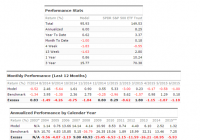
Independent research, long/short equity, dividend investing, ETF investing “}); $$(‘#article_top_info .info_content div’)[0].insert({bottom: $(‘mover’)}); } $(‘article_top_info’).addClassName(test_version); } SeekingAlpha.Initializer.onDOMLoad(function(){ setEvents();}); My previous article detailed backtest results for the ETFReplay.com portfolio. Aggregate, risk-adjusted results since 2004 were impressive when compared to a 60/40 Vanguard mutual fund. However, results over the past 2-3 years lagged the benchmark. The test below was conducted using Portfolio123 (“P123″). It uses a similar ranking system to the ETFReplay 6/3/3 system but has a few seemingly “minor” differences: The P123 begins with a similar basket of ETFs, the only difference is the P123 system ranks 15 ETFs instead of 14, with the PowerShares DB Agriculture ETF (NYSEARCA: DBA ) as the extra ETF. The starting date for the P123 test is 12/10/03, which differs from the ETFReplay start date of 1/1/2004. The P123 system rebalances every 4 weeks, instead of at the end of each month. The ETFReplay test assumes equal holdings each month (i.e. rebalancing back to equal weight each month at no cost) while P123 lets positions run so holdings may become unbalanced over time. The P123 test uses the next days closing price of each ETF for the transaction price, compared to the ETFReplay system which uses the same days closing price when each ETF is ranked. Finally, and perhaps most importantly, the P123 test accounts for slippage with each transaction, which reduces returns. The slippage for each transaction is calculated based on the average trading volume for each ETF. This is a conservative method for calculating ETF slippage. After accounting for these differences, we see the P123 test shows significantly lower results (as an aside, the benchmark for this test was the SPDR S&P 500 Trust ETF ( SPY)): Tables and charts courtesy of Portfolio123 (click to enlarge) (click to enlarge) However, if we assume zero slippage results improve dramatically. Total and annualized return are significantly higher yet we still see different returns and risk metrics than the ETFReplay test. This can be attributed to a slightly different pool of ETFs, and different rebalancing dates/methodology: (click to enlarge) (click to enlarge) The point of this exercise is not to disparage backtests or historical results. Rather, it shows the importance of considering trading costs as well as how changes in test parameters can impact results. Focus on making your tests robust. Run them through multiple time frames with different assumptions and be mindful of data-mining. Finally, be conscious of trading costs and fees! Many brokers now offer commission free ETFs, but taxes and trading slippage can take a big bite out of returns. Disclosures: None Share this article with a colleague