Tag Archives: seeking-alpha

iShares To Shut Down 18 ETFs

iShares, the biggest issuer of ETFs, has planned to shut down 18 funds from its lineup. The closures reflect a lack of interest in these products in an investment world with more than 1,700 U.S. listed ETFs. The products to be closed have a combined AUM of $227 million and will be liquidated by August 21. All these funds are quite unpopular, as all have AUMs of under $50 million. Among the ones to be closed, the iShares FTSE China (HK-Listed) Index ETF (NASDAQ: FCHI ) is the most popular with an asset base of $36.3 million, followed by the iShares MSCI Emerging Markets Eastern Europe ETF (NYSEARCA: ESR ) with an AUM of $29.2 million. Most of the products to be closed down offer exposure to international stocks. Some of these include the iShares MSCI All Country Asia ex-Japan Small Cap Index ETF (NASDAQ: AXJS ) , the iShares MSCI Australia Small Cap Index ETF (BATS: EWAS ) , the iShares MSCI Canada Small Cap Index ETF (BATS: EWCS ) , the iShares MSCI Hong Kong Small-Cap ETF (NYSEARCA: EWHS ) and the iShares MSCI Singapore Small-Cap ETF (NYSEARCA: EWSS ) . Others with an international focus are the iShares MSCI Emerging Markets EMEA Index ETF (NASDAQ: EEME ) , the iShares MSCI Emerging Markets Growth Index ETF (NASDAQ: EGRW ) and the iShares MSCI Emerging Markets Value Index ETF (NASDAQ: EVAL ) . Apart from these, the issuer has also planned to shut down some sector specific funds including the iShares MSCI All Country Asia Information Technology Index ETF (AAIT ), the iShares MSCI Emerging Markets Consumer Discretionary Sector Index ETF (NASDAQ: EMDI ) , the iShares MSCI Emerging Markets Energy Sector Capped Index ETF (NASDAQ: EMEY ) , the iShares FTSE EPRA/NAREIT Asia Index ETF (NASDAQ: IFAS ) and the iShares FTSE EPRA/NAREIT North America Index ETF (NASDAQ: IFNA ) . The i Shares Financials Bond ETF (NYSEARCA: MONY ) , the iShares Industrials Bond ETF (NYSEARCA: ENGN ) and the iShares Utilities Bond ETF (NYSEARCA: AMPS ) are the three debt funds which will also face shutdown. The above closures will shrink the offerings of iShares by about 6% to 299, according to XTF, as mentioned in an article by Barron’s . BlackRock (NYSE: BLK ) – the parent company of iShares – said that the decision was “based on an ongoing process to review its product lineup and ensure it meets the evolving needs of its clients.” The closures clearly highlight the survival of the fittest funds and a healthy process to eliminate the unpopular and unwanted funds. In fact, the ETF industry recently witnessed its 500th closure of ETFs and ETNs. Nonetheless, even following the 18-fund closure, iShares will still have a large number of U.S. listed ETFs under its umbrella, with the iShares Core S&P 500 ETF (NYSEARCA: IVV ) being the most popular with an asset base of $68.7 billion. Link to the original article on Zacks.com

Has CEFL Done As Badly As It Looks?

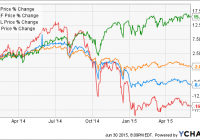
Summary CEFL’s share price has reached all-time lows. After accounting for reinvested dividends, CEFL’s total return doesn’t seem all that bad. If we exclude the two “rebalancing months” at the turn of this year, CEFL has actually done pretty well. Introduction The UBS ETRACS Monthly Pay 2xLeveraged Closed-End Fund ETN (NYSEARCA: CEFL ) is a 2X leveraged fund of close-ended funds [CEF] that sports a juicy 21.8% yield, according to Lance Brofman’s recent article . However, recent events have caused CEFL’s share price to fall to an all-time low since its inception in Dec. 2013, something that is frequently mentioned in the comment streams of articles on CEFL. The following chart shows the price return of CEFL compared to two other funds from Jan. 1st, 2014 to May 31st, 2015 (the reason for this date range will become apparent later). The YieldShares High Income ETF (NYSEARCA: YYY ) tracks the same index, the ISE High Income Index, as CEFL, but is unleveraged. The PowerShares CEF Income Composite ETF (NYSEARCA: PCEF ) is also a fund-of-CEFs but it tracks a different index. The broader U.S. market SPDR S&P 500 Trust ETF (NYSEARCA: SPY ) is shown for comparison. YYY data by YCharts As can be seen from the above chart, Jan. 1st, 2014 to May 31st, 2015, CEFL declined by -16.1%, which is approximately twice that of YYY at -8.45%, whereas PCEF declined by only -2.02%. SPY had a price return of 15.66%. Undoubtedly, CEFL’s price-only action has been ugly. Effect of reinvesting dividends What if dividends are accounted for? The following chart shows the total return of the same four funds, i.e. with dividends reinvested. YYY Total Return Price data by YCharts We can see from the above graph that if dividends are accounted for, CEFL’s total return becomes positive, at +7.89%. YYY had a total return of +3.81% over this period, while PCEF had a total return of +9.70%. SPY’s total return was +18.21%. Effect of last year’s rebalancing shenanigans As I have written about previously ( I , II , III ), CEFL/YYY holders were seemingly shafted during the index’s annual rebalancing event in Dec. 2014. The CEFs that were to be added to the index exhibited unusual increases in both price and volume, whereas the CEFs that were to be removed from the index exhibited unusual increases in volume but decreases in price. This apparent “frontrunning” caused CEFL/YYY to sell low and buy high, resulting in significant losses for the funds (and ergo, its investors) upon rebalancing. Moreover, CEFL/YYY continued to underperform in Jan. 2015 as the newly-added CEFs, whose prices were artificially inflated to aberrant levels, exhibited mean reversion. All of this discussion can be found in greater detail in my previous articles linked above. The following chart shows the monthly total returns for the four funds from Jan. 2014 to May 2015. Data were obtained from Morningstar . (As of time of writing, monthly return data for Jun. 2015 were not yet available). We notice that from the above chart that YYY/CEFL had their worst performances in Sep. 2014 and Dec. 2014. However, to get a better feel for the effect of rebalancing, the following chart shows the monthly returns for only YYY and PCEF (as both are unleveraged), with the difference being drawn as a line. From the above chart, the effect of the rebalancing shenanigans on YYY/CEFL becomes clear. Although YYY showed the lowest absolute performances in Sep. 2014 and Dec. 2014, the two months where it underperformed most on a relative basis (compared to PCEF) were Dec. 2014 (-2.48%) and Jan. 2015 (-2.78%), i.e. the two months associated with the rebalancing event. Given that both YYY and PCEF are CEF fund-of-funds, this underperformance lends further credence to my hypothesis that YYY/CEFL holders were significantly disadvantaged by the rebalancing event. Total return profiles with and without rebalancing shenanigans From the monthly return data, I reconstructed the total return profiles for the four funds from Jan. 2014 to May. 2015. Note that the final total return percentages for the funds are within 1% of the numbers reported by YCharts shown above (see second chart of this article), indicating that the reconstruction methodology I used was reasonably accurate. Now, let’s pretend we were living in an alternate universe where YYY/CEFL holders were not shafted by the rebalancing event. To model this, I changed YYY’s monthly returns for Dec. 2014 and Jan. 2015 to be the same as PCEF’s (since both are fund-of-CEFs), and made CEFL’s monthly returns for those two months twice that of YYY’s. The following chart shows the reconstructed total return profiles for the four funds. Wow! What a difference two months makes! Instead of languishing with a +7.4% total return from Jan. 2015 to May. 2015, CEFL jumps to the top of the pack with a total return of +18.3%, edging out even SPY. An alternative approach is to assume that the months of Dec. 2014 and Jan. 2015 never happened . The following chart shows the reconstructed total return profiles for the four funds, except that Dec. 2014 and Jan. 2015 are skipped. In other words, the monthly total return for Feb. 2014 was applied to value of the funds at end-Nov. 2014. Similar results are observed with the two rebalancing months skipped. CEFL again comes out on top with a 23.2% total return, beating SPY by nearly 2%. Additionally, the two graphs above both show that once we account for rebalancing shenanigans using either of the two approaches, YYY and PCEF have very similar total returns, which might be expected because both funds screen for high-yielding CEFs for inclusion. Discussion and conclusion In many comment streams of articles regarding CEFL, many commentators opine that CEFL is a broken product due to its poor price performance, not to mention its high fees and inclusion of return of capital [ROC]-paying CEFs. While it is true that CEFL’s price has declined by 20% since inception and is currently at all-time lows, its total return, which includes reinvested dividends, has been positive. (This is true even when accounting for CEFL’s horrendous performance in Jun. 2015, which was not included in this analysis). Moreover, this article showed that a significant part of YYY/CEFL’s underperformance can be explained by the rebalancing shenanigans that occurred in Dec. 2014, followed by further underperformance in Jan. 2015 as the artificially-inflated CEFs in the index reverted to the mean. Accounting for those two rebalancing months using either one of two approaches resulted in a vastly improved total return profile for CEFL that was superior even to that for SPY over the period of Jan. 1st, 2014 to to May 31st, 2015. Additionally, we showed that YYY and PCEF had very similar total return profiles once those two rebalancing months were accounted for as well. Based on this analysis, I would conclude that CEFL is not an inherently broken product – except for its current rebalancing mechanism. My opinion is that UBS should really do something about the rebalancing protocol to ensure that CEFL/YYY holders do not get ripped off again this year. As for myself, I will be selling all of my CEFL in early December or even before that, and watch events unfold from afar. Further analysis on the constituents and properties of CEFL can be found in my three-part series “X-Raying CEFL”. Disclosure: I am/we are long CEFL. (More…) I wrote this article myself, and it expresses my own opinions. I am not receiving compensation for it (other than from Seeking Alpha). I have no business relationship with any company whose stock is mentioned in this article.
Smarter Than Smart Beta?

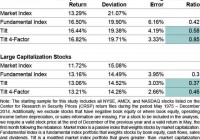
Summary Fundamental Indexation, one popular “smart beta” equity strategy, handsomely outperformed a market-weighted index during the 40 years to December 2014. There is a very pronounced tilt to value in Fundamental Indexation, which weights stocks according to accounting fundamentals rather than by market capitalization. We find that combining market price-based information with fundamental information in a quantitative multi-factor portfolio produces better risk-adjusted performance than either the market or fundamental index. Smarter than Smart Beta? In recent years, smart beta has entered the lexicon of the mutual fund industry and is used to describe certain quantitative investment strategies that aim to beat passive indexes. One of the most popular smart beta strategies is called fundamental indexation. We recently conducted a comprehensive examination of a fundamental indexation strategy using the last 40 years of data and compared this approach to that of two alternative quantitative approaches. The results from the study were revealing. Key findings are outlined below. Fundamentals and Value So what is fundamental indexation? Whereas a traditional passive index such as the Russell 1000 weights stocks by market capitalization, a fundamentals-based index weights stocks according to their accounting fundamentals. So for example, in a market-cap based system, if Apple accounts for 4% of the market cap of the Russell 1000 Index, then it will be assigned a 4% weight. Then, the manager of a fundamental index will increase or decrease Apple’s weight in his index depending on information drawn from Apple’s balance sheet, income statement and statement of cash flows relative to the same accounting information for the other Russell 1000 companies. Proponents of fundamental indexation argue that market-cap weighting will tend to inherently favor high-priced stocks (recall the effects on market-weighted indexes of the tech bubble of the late 1990s) and discriminate against stocks that might be temporarily undervalued. Indeed, the fundamental indexes we constructed in our study for both small cap and large cap stocks handily outperformed their benchmark market indexes during the 40-year period, with lower volatility than the indexes (see “Fundamental Index” in Exhibit 1 below). For this study we assigned index weights, tilting to high fundamentals-to-price stocks (e.g., high book value-to-price), based on the same four accounting factors typically used by fundamental indexers: book equity, along with five-year averages of revenues, operating income before depreciation, and dividends. When we decompose our fundamental indexes, not surprisingly we find a pronounced tilt to value compared to their market cap-oriented indexes, which (given the historical premium for investing in value stocks) helps to explain the excess returns. (click to enlarge) Listening to the Market So far, so good. Now let’s move on to our two alternative approaches, both of which incorporate not only fundamental information but also valuation- or price-based information from the market. In our mind, one weakness of relying exclusively on accounting fundamentals is that they’re stale information (i.e., reported with a lag time). Typically a few months out of date, they also ignore prices and expectations in the market (see Exhibit 2). For a specific example of what I’m talking about, consider the case of Lehman Brothers in the fall of 2008. Lehman started the fourth quarter of 2007 with about $20 billion of book value and, even on the eve of bankruptcy in the fall of 2008, still had close to $18 billion of book value. But by this time the firm’s stock price had collapsed as Lehman was consumed in the financial crisis. A smart beta strategy such as fundamental indexation would not only ignore information in the market price but, because it’s focused solely on the fundamental of book value, would actually signal to double down and buy more Lehman stock. (click to enlarge) So in constructing our two alternative portfolios, we start with the market index and then tilt towards stocks with high fundamental-to-price ratios. For the modified market index (“Tilt” in Exhibit 1), we start with the market index then make tilts using price-scaled information (i.e., fundamental divided by price) from the same four fundamentals that we used in the Fundamental Index. Note that the return and volatility figures for Tilt are very similar to those of Fundamental Index, but that the tracking error and information ratios (NYSE: IR ) are much improved, particularly in the case of small caps. For this study, we chose the IR to measure risk-adjusted portfolio performance (the formula is IR= (Portfolio return – Index return)/Tracking Error). Briefly, tracking error measures divergence from the market index, which by definition has a tracking error of zero (a lower tracking error is better). The IR essentially captures how intelligently different the portfolio’s return is relative to the index (the higher the IR, the better). One reason many portfolio managers and analysts look closely at tracking errors and IR comparisons is due to investor behavior-investors typically seek to beat a market index consistently (a skill that eludes most active fund managers), but get scared if returns swing around wildly and differ dramatically from those of the index. Finally, we studied a four-factor model (“Tilt 4-Factor” in Exhibit 1) that incorporates information from the following four firm characteristics: value, profitability, asset growth, and momentum (for a quick review of factor-based investing, please see my most recent column: ” The Factor-Based Story behind Successful Growth Funds “). Note that this approach combines three so-called slow-moving factors (value, or book equity-to-price; profitability; and asset growth, to which we assign a negative tilt) derived from financial statements with the fast-moving factor of momentum, which reflects price changes for stocks over trailing 12-month periods. We find that this approach, with better factor diversification (e.g., signals from momentum as well as value), produces the best risk-adjusted performance of all, with slightly better returns and lower volatility than for the Fundamental Index and dramatically higher information ratios-twice as high in the case of the small cap stock portfolio. To us, this speaks of the allure of quantitative multi-factor investing, wherein a portfolio manager can combine multiple quantitative insights and improve on a market-based index over extended investment periods. If you would like to learn more about the research I have described in this column, I invite you to read our original study: ” Decomposing Fundamental Indexation .” Conclusion We decomposed fundamental indexation, a leading smart beta investing strategy, during a 40-year period. We find that this modified index has a strong value bent and does indeed outperform the market index by several measurements. But we also find that two alternative portfolio strategies that incorporate market price information generate even stronger risk-adjusted performance results. Disclosure: I/we have no positions in any stocks mentioned, and no plans to initiate any positions within the next 72 hours. (More…) I wrote this article myself, and it expresses my own opinions. I am not receiving compensation for it. I have no business relationship with any company whose stock is mentioned in this article.