Tag Archives: seeking-alpha

BGH: High Yield, Short Duration – Is This The Place To Be Right Now?

2014 was unkind to Babson Capital Global Short Duration High Yield Fund. It appears to be getting back on its feet. While high yield is risky overall, staying short is a safer way to play the space. Babson Capital Global Short Duration High Yield Fund’s (NYSE: BGH ) net asset value, or NAV, fell nearly 13% last year. However, its started to stabilize this year. Which shows the risks of high yield, but doesn’t tarnish the potential benefit of staying short term. If you are looking for a high yield fund, but are worried about low interest rates, you might consider taking a look here. What’s in a high yield? I recently took a look at a couple of high yield closed-end funds , or CEFs, with broad investment mandates. Essentially, the two finds I compared, BlackRock Corporate High Yield Fund (NYSE: HYT ) and Dreyfus High Yield Strategies Fund (NYSE: DHF ), both have notable leeway when it comes to their portfolio selections. That’s not the case at BGH . Sure, it can invest around the world, but its average duration has to come in at three years or less. Why is that relevant? Because shorter duration bonds tend to be less impacted by changes in interest rates. So with interest rates near historic lows, if you are concerned about the impact of a rising yield environment, you’d want to stay toward the shorter end of the duration spectrum. HYT’s “model” duration was around five years at the end of the first quarter. DHF’s average duration was a touch over three years. BGH’s was a little under two years. Looking at this from a big picture perspective , this means that if interest rates were to increase by one percentage point, BGH’s value would be expected to decline by around 2%. DHF would fall by around 3% and HYD 5%. If rates fell, the opposite would happen, with BGH gaining less than the others. So, if you are concerned about interest rates going up but are still looking for a high yield fund, a short-term option like BGH might be worth a quick review. Short history That said, I looked at BGH because a reader requested it. The fund’s IPO was in late 2012, so it’s fairly young and doesn’t have much of a track record to go off of (less than three years). That doesn’t tarnish the value of its short duration focus, but it does mean the fund hasn’t been tested by time. So that’s a grain of salt you’ll need to take if you decide to invest here. However, it’s worth noting that last year was a tough one on the fund largely because of its exposure to oil companies ( recently around 20% of assets). With oil prices declining some 50% in the back half of 2014, it’s not surprising that BGH saw its NAV decline nearly 13% last year. That drop spoiled what was looking like a solid history. The fund IPOed with an NAV of roughly $23.80 per share. That had increased to nearly $25.25 by the start of 2014 only to drop to $22 by the end of the year. It remains around that level today, after having dropped even further at the start of 2015. There’s two takeaways here. First, this is a high yield fund, so even a short duration can’t offset the risk of investing in the debt of financially weak companies. (Note that HYD saw a similar NAV drop.) Two, the downdraft, at this point, appears to be over. So watch the NAV to see if management can get it to start moving higher again. This is, literally, the first time BGH has dealt with notable adversity. What else is worth knowing? Like many competing high yield CEFs, BGH makes use of leverage to enhance returns. Right now leverage stands at nearly 25% of assets. That helps boost yield, since BGH’s borrowing costs are lower than the interest it receives on its investments. And leverage can enhance returns if bond prices go up-but can also augment losses if bond prices decline. So leverage cuts both ways. Keep this in mind as it increases volatility even for a fund with a short duration. Leverage, however, also increases costs since the fund has to pay interest expenses. In fact, BGH is not a cheap fund to own, with an expense ratio of more than 2%. That may be fine with yield-hungry investors, however, since the fund’s yield is around 10%. But if you are looking for a cheap fund to own, this isn’t it. Without a longer history, it’s too soon to tell if 2014’s poor showing was an aberration. But certainly such a high yield gets increasingly hard to justify when the NAV is falling. However, return of capital doesn’t appear to be an issue yet since the fund avoided that type of distribution in 2013 and 2014. So, so far, BGH should probably get the benefit of the doubt here. Just keep in mind that a fund with a 10% yield is likely to be giving you all of your return in the form of distributions. That, in turn, makes it harder to grow NAV. While bonds are all about the income, a long-term trend of a declining NAV will most likely lead to distribution cuts at some point. So it is really important to watch BGH to see what happens on the NAV side of things from here. That remains true even though the fund is trading hands at a 10% discount to NAV. Indeed, that’s only a bargain if net asset value can recover from downdrafts like the one experienced in 2014. Too early for most At this point, I’d say BGH is a little too young for my tastes. I see value in its short duration peg, which might interest investors who want high yield exposure but want to limit interest rate risk. However, without a lot of history to go on (and one good year followed by one bad year in its short life), it’s hard to get a read on the value this fund would have in a portfolio. Disclosure: I/we have no positions in any stocks mentioned, and no plans to initiate any positions within the next 72 hours. (More…) I wrote this article myself, and it expresses my own opinions. I am not receiving compensation for it (other than from Seeking Alpha). I have no business relationship with any company whose stock is mentioned in this article.
ETFs To Safeguard Your Portfolio Against A Market Crash

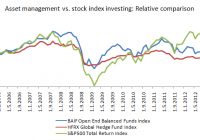
Summary In the current highly dynamic and uncertain global market environment, many investors are looking for safe havens where they can place their money and have a restful sleep. Hedge funds might be suitable investment vehicles, as they are well-known for their focus on risk adjusted returns. Highland Capital Management recently launched three new ETFs tracking various hedge fund strategies, which might serve as a good enhancement of almost every investment portfolio’s statistics. Amid U.S. stock indices near historical highs, the slowing Chinese economy, geopolitical tensions between Russia and the Western world, Japan trying to revert the course of its economy by an unprecedented program of quantitative easing and the culminating Greek crisis, more and more investors are seeking absolute rather than alpha returns. Absolute returns are a domain of hedge funds that employ sophisticated strategies and advanced investment instruments in order to deliver positive returns, regardless of the market conditions. Hedge funds are often incorrectly compared with stocks and are often criticized for their underperformance during periods of strong equity markets growth. However, they are unappreciated by the majority of investors during times of pronounced market corrections and crashes, which is when they tend to suffer much smaller losses than stock indices do. The 2008 financial meltdown was not an exception. The graphs below capture relative performance of hedge funds represented by the HFRX Global Hedge Fund Index, actively managed open-end balanced UCITS compliant funds represented by the BAIF Open End Balanced Funds Index and a portfolio of bluechips represented by the S&P 500 Total Return Index. As you can see from the graphs, hedge funds and actively managed funds are considerably less volatile investments and can therefore serve as ideal investments for conservative investors who want to primarily protect their capital and avoid significant changes in value over time. Nevertheless, in the current highly dynamic and uncertain global market environment, absolute return products should also have a place in every medium risk investment portfolio. Not only do they perform better than short-dated government bonds and term deposits, but thanks to low correlation with other asset classes and comparatively high risk adjusted returns, they also improve general statistics of almost any investment portfolio. Moreover, investments into hedge funds are no longer available solely for high-net-worth individuals. Thanks to ETFs, there is basically no minimal investment and lock-up periods are not an issue. Besides the largest and most liquid ETF tracking overall hedge funds performance – the IQ Hedge Multi-Strategy Tracker ETF (NYSEARCA: QAI ) – three new hedge funds replicating ETFs recently came to market. The first of them, The Highland HFR Global ETF (NYSEARCA: HHFR ), similarly to QAI, tries to mimic the performance of traditional multi-strategy hedge funds that incorporate fixed income and shorting as well as long equity positions. Hence, we could suppose high correlation with QAI. However, after taking a closer look at top holdings of both funds, serious doubts about the similarity arise. QAI’s Top Ten Holdings Name & Ticker Weight (%) Vanguard Total Bond Market Index Fund (NYSEARCA: BND ) 19.13 SPDR Barclays Convertible Securities ETF (NYSEARCA: CWB ) 18.19 iShares Core U.S. Aggregate Bond ETF (NYSEARCA: AGG ) 17.77 iShares iBoxx USD Investment Grade Corporate Bond ETF (NYSEARCA: LQD ) -11.05 Vanguard Short Term Bond Index Fund ETF (NYSEARCA: BSV ) 9.01 PowerShares Senior Loan Portfolio (NYSEARCA: BKLN ) 8.67 iShares Russell 2000 Growth ETF (NYSEARCA: IWO ) 6.46 PowerShares DB G10 Currency Harvest Fund (NYSEARCA: DBV ) 4.84 iShares 1-3 Year Treasury Bond ETF (NYSEARCA: SHY ) 4.42 iShares Russell 2000 Value ETF (NYSEARCA: IWN ) -4.31 Data Source: QAI’s latest Fact Sheet Note: Minus before weight means short position HHFR’s Top Ten Holdings Name & Ticker Weight (%) LinkedIn Corp (NYSE: LNKD ) 3.58 R.R. Donnelley & Sons Co (NASDAQ: RRD ) 3.43 Sungard Data Systems 3.04 Kinetics Concept 3.03 Hertz Corp (NYSE: HTZ ) 3.03 Chrysler (Pending: CGC ) 3.02 Allergan Inc (NYSE: AGN ) 3.02 Univision Comm 3.01 First Data Corp (Pending: FDATA ) 3.00 DirectTV (NASDAQ: DTV ) 2.59 Data Source: HHFR’s website While more than a half of QAI’s holdings are bond ETFs, Highland Capital Management’s HHFR actually consists mostly of equities. The other two funds track different hedge fund strategies. The Highland HFR Equity Hedge ETF (NYSEARCA: HHDG ) consists of traditional hedged equity strategies that can both go long and go short on selected securities. And the last one, the Highland HFR Event-Driven ETF (NYSEARCA: DRVN ), capitalizes on a discipline in the hedge fund community that takes advantage of pending corporate events or other near-term catalysts for revaluation, albeit upward or downward. Despite the post-crisis run-up on global equity markets, I think investors should thoroughly consider how their portfolios will thrive in the upcoming years. Now might be the perfect time to hedge long-only portfolios a little bit. Disclosure: I/we have no positions in any stocks mentioned, but may initiate a long position in QAI over the next 72 hours. (More…) I wrote this article myself, and it expresses my own opinions. I am not receiving compensation for it (other than from Seeking Alpha). I have no business relationship with any company whose stock is mentioned in this article.

VQTS: A Large Cap Investment That Protects Itself

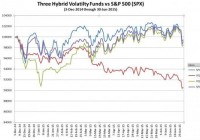
In my opinion the UBS ETRACS S&P 500 VEQTOR Switch ETN ( VQTS) is the best exchange traded product for solving the essential conundrum of the stock market: how to run with the bulls without getting eaten by the bears. The algorithms in VQTS are tuned to outperform the other hybrid volatility funds like the Barclays ETN+ VEQTOR S&P 500 Linked ETN ( VQT) and the VelocityShares Volatility Hedged Large Cap ETF ( SPXH) during good times and to be competitive during the bad times. We don’t have much trade data since UBS only introduced VQTS on December 3rd, 2014. It stumbled in its first month of trading, but then recovered during the first half of 2015-now lagging SPX by only 0.5% since its inception. All of the hybrid volatility funds dynamically allocate assets into the S&P 500 (SPX), VIX futures, and cash depending on market conditions. VQTS is the first fund of this type that invests all of its assets into the S&P 500 when the market’s overall volatility is low. This avoids the costs of hedging when the market is least likely to go down-during the long upward stretches of bull markets. In comparison, two similar funds, Barclays’ VQT and the PowerShares S&P 500 Downside Hedged Portfolio ETF ( PHDG) both have at least 2.5% of their assets allocated to long volatility-and that small amount significantly drags down their returns during bull markets. The chart below compares the simulated performance of VQTS compared to SPX, VQT, and SPXH from early 2006. VQTS defines low volatility as being historical volatility less than 10% using the higher of two exponentially weighted moving averages on volatility. If realized volatility climbs above 20% VQTS starts holding cash and volatility securities (2/3rds cash, 1/3rd volatility) in addition to the large cap S&P 500. The table below shows the range of asset allocations as realized volatility increases. VQTS Asset Allocations Realized Volatility (exponentially weighted) Equity % Volatility % Cash % 0% to 10% 100% 0% 0% 10% to 20% 90% to 80% 3.3% to 6.7% 6.7% to 13.3% 20% to 30% 80% to 70% 6.7% to 10% 13.3% to 20% 30% to 40% 70% to 60% 10% to 13.3% 20% to 26.7% 40% to 50% 60% to 50% 13.3% to 16.7% 26.7% to 33.3% 50% to 60% 50% to 40% 16.7% to 20% 33.3% to 40% 60% to 70% 40% to 30% 20% to 23.3% 40% to 46.6% 70% to 80% 30% to 20% 23.3% to 26.7% 46.6% to 53.3% 80% to 90% 20% to 10% 26.7% to 30.0% 53.3% to 60% In October 2008 the realized volatility as computed by VQTS’ algorithms peaked at 82% When not fully allocated to equities VQTS takes a long or short position in VIX futures depending on the curvature of the futures’ term structure. The term structure is the curve that’s formed if you plot VIX futures’ price vs time to expiration. The decision to go long or short is determined by the comparison between the slope of the two nearest to expiration futures (1st and 2nd) and the slope of the 4th and 7th month futures. I’ve marked up the chart below from vixcentral.com to illustrate the calculation. VQTS’ curvature calculation is similar, but not identical to the more familiar designations of contango and backwardation for futures’ term structures. In general VQTS will go long volatility if the term structure is in backwardation (futures prices less than spot), and short volatility if the curve is in contango. This approach would have worked well in the past, profiting from the fast rise of volatility as a crash / big correction develops, and then switching to be short volatility as volatility mean reverts. The chart below shows the simulated performance of VQTS during the 2008/2009 crash. VQTS experienced around a 20% drawdown in the fall of 2008 before rallying to a year end gain of +13%. Many strategies that backtest well on historical data do not perform well once they go live, but as I noted at the beginning of this post VQTS has already shown that it can approximate the S&P 500 during periods of low volatility-the condition the market is in 75% of the time. VQTS’ drawdowns during crashes and corrections are likely to be significant, but VQTS’ strategy of going long volatility during panicky periods and short volatility during the recovery should continue to work well as a way to power through downturns. VQTS is still a small fund with only $25 million in assets, so investors are hesitant to invest in it, but since the S&P 500 and VIX futures are its underlying securities its liquidity is excellent. Bid/ask spreads have been reasonable-in the 6 to 7 cent range (0.3%). Over time I expect its assets to grow into the $500 million range of its closest competitors, VQT and PHDG. Everyone knows this bull market will end, the tough part is guessing when. With VQTS you can ride the bull and be prepared for the inevitable bad ending. Disclosure: None