Tag Archives: seeking-alpha

China’s Bubble: How To Profit
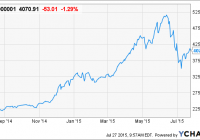
Summary The Shanghai index fell more than 8% today, marking the greatest loss in almost a decade. Investing in China has always been notoriously difficult for foreigners. Fortunately, there are a small handful of inverse ETF’s that allow foreign investors to possibly profit off the Chinese downturn; this article will offer a brief overview of these companies. Introduction One of the few people to get rich in the 1929 crash was a man named Jesse Livermore, or ‘boy plunge’, who made over $100 million during a period when almost everyone else in the industry went broke. In 2006, hedge fund manager John Paulson made one of the most famous bets in Wall Street history when he bet millions against the sub-prime housing market using credit default swaps, which quickly turned him into a billionaire. Did the Chinese stock market just create the next big short-selling opportunity? There is a lot of media coverage with respect to the ‘China Bubble’, however, I could not find anything that offered an overview of the best way to capitalize off of the bubble for the Western investor. This article will offer a brief overview of the performance of the Chinese stock market, but will not go into as much detail as this has been covered before; instead, the focus of this article will be on how to possibly benefit from an overvalued stock market bubble. The China Bubble ^SS000001 data by YCharts Last month, China finally started a much anticipated turn around in their overheated stock market. Much of this fall was in the Shanghai index, which has a lot of the more expensive tech stocks, with very high P/E ratios. Most investors have little to no experience about investing in China as government policies have historically made this difficult, up until loosening of said policies within the last few months. Furthermore, the Chinese government plans to possibly place restrictions on foreign short-selling of Chinese securities, which has further confounded the picture for foreign investors. China’s stock market has been rising without anything slowing it down for several years now; most notably, within the last year the Shanghai index has absolutely exploded by more than doubling in value. It’s important to note that within the last six months, a large number of retail investors have entered the picture in China, seemingly under the premise that the Chinese markets could never go down; this has led to prices surging, especially on the Shanghai index, as many of these poorly educated investors spent money haphazardly. This has led to the stock price deviating significantly from the fundamentals, and created a bubble. A couple of weeks ago that bubble started to burst as the Shanghai index went from above 5000 to 3500; this stall seemed to have stabilized after the Chinese government announced loosening of margin requirements, halted the trading of certain corporations, and facilitated massive amounts of promised investments from large corporations until the Shanghai index hit 4500. This seemed to create some stabilization pressure as the Shanghai index fought to stay above 4000; today the Shanghai index fell more than 8% for it’s largest drop in almost a decade. The Fundamentals The strongest belief that I have with regards to investing is that your decisions should be based on 99% fundamentals, and 1% reading chart trends. Every day I am perplexed by the masses of people who spend hours looking at charts, technical indicators, and ‘doji’s’, without once pulling up the latest quarterly report, reading the news, and crunching the numbers. I don’t understand people that solely make their investment decisions based on how other people chose to buy or sell that stock, over a certain period of time in the past. The 1% of your effort that you should spend on reading charts, is specifically ideal for this type of situation. We know the market is overvalued, yet we don’t know when people will come down to reality. In short, I think that it makes sense to ignore the momentum of a stock and base decisions purely on the fundamentals; however, when it comes to make a riskier short bet it seems logical to look for the momentum indicator to confirm a decision based on the fundamentals. This is because one’s losses are finite in a long, but theoretically infinite in a short. Looking at the fundamentals for China can be quite terrifying. The most touted metric in the media seems to be the absurd price to earnings ratios that are emerging. Furthermore, the average P/E seems to be skewed as there are a large number of banks that are trading at 12 P/E, while technology stocks are trading in the mid 60’s. How to Invest Against China? Most investors tend to purchase stocks in their own currency, and on exchanges in their own country. This is because most people generally feel more comfortable investing in their own currency because they don’t want to deal with the unknown variables such as exchange rates. Also, we tend to get an over proportionate amount of news, and tend to learn more about our own economy, making us more confident to invest. People tend to invest in areas they know more about, which is why amateurs investors tend to invest in fields they work in, or may have an expertise in. This is of course generally a good idea, as you don’t ever want to invest in something before you fully understand a company. I will admit that I am far from an expert in Asian markets, and when I do pay attention to Asia I tend to focus on the macroscopic picture, rather than individual companies. I think hat the vast majority of Western investors think along the same lines, and find it confusing to invest in any one company in Asia. Fortunately, there are exchange traded funds (ETFs) that makes the job a whole lot easier. I’ll go over some of them below. Based on my research I was able to find 3 ETFs that short the Chinese markets, some of them using leverage; this article will offer a brief overview of all three. I think it is important to understand how an ETFs like these work, as it can be quite hard to understand. All of these ETFs are daily inverse ETFs, and therefore should closely match the corresponding index for one day. However, for the leveraged ETF’s, they tend to look much different than the actual index due to the compounding effect of leverage. For example, with a triple inverse ETF, the index could lose 90% of its value in one day, then double the next, resulting in you losing all of your money. It’s important to understand how quickly one can lose or make money with this environment. With the extraordinary manipulation of the Chinese markets, this can be an extremely dangerous trade. The ETFs CHAD data by YCharts ProShares Short FTSE China 50 ETF (NYSEARCA: YXI ) and ProShares UltraShort FTSE China 25 ETF (NYSEARCA: FXP ) The Proshares Short China 50 FTSE is an ETF which is designed to correspond to the inverse of the China 50 FTSE, while the Proshares Ultrashort China 50 FTSE corresponds to twice the inverse. The China 50 FTSE includes the 50 largest stocks on the Hong Kong Stock Exchange, which has almost half of their investments in the finance sector, with under 4% in technology. The table below made available by Proshares outlines their asset distribution. Keep in mind that this index has not been the focus of attention recently. Direxion Daily FTSE China Bear 3x Shares ETF (NYSEARCA: YANG ) The Direxion Daily China Bear 3X Shares ETF is essentially the Proshares ETF on steroids; for the investor with nerves of steel, one can return three times the inverse of the China 50 FTSE. This is the most leveraged Chinese ETF available, but again it corresponds to the top 50 most liquid companies in China, and would not necessarily be the most profitable in the event of a collapse. Direxion Daily CSI 300 China A Share Bear 1X Shares (NYSEARCA: CHAD ) The Direxion Daily CSI China A Bear 1x Shares most recently added Chinese bear ETF, and it directly corresponds to the most controversial index: The China A shares. Chinese A shares are ordinarily restricted to Chinese citizens, and are traded on the Shanghai and Shenzen Stock Exchange; foreign investors must go through the Qualified Foreign Institutional Investor system. Fortunately, we can still take advantage of the situation through CHAD! Although this is not a leveraged ETF, it corresponds to the most volatile part of the Chinese stock market, and may be the most likely to produce the most profit in the event of a downturn. Conclusion Although I still believe that the Chinese markets are inflated, the government intervention makes this far too speculative for me; I bought all three of these ETFs right before the crash last month, and settled them a couple of weeks ago to play it safe. However, for the more aggressive investor, there are still ways to profit off the potential collapse of the Chinese markets. Disclosure: I/we have no positions in any stocks mentioned, and no plans to initiate any positions within the next 72 hours. (More…) I wrote this article myself, and it expresses my own opinions. I am not receiving compensation for it (other than from Seeking Alpha). I have no business relationship with any company whose stock is mentioned in this article. Additional disclosure: Used to own all three but sold a couple of weeks ago.
DXGE: The Euro Advantage

DXGE is a relatively new fund with solid returns since its inception. DXGE is weighted towards cyclicals in the best performing EU economy. The fund utilizes a U.S. Dollar hedge to protect against Euro volatility. There are several good ways to invest in Europe through individual country ETFs or by NYSE-ARCA listed European companies. One recent listing is the WisdomTree’s Germany Hedged Equity ETF (NASDAQ: DXGE ) . The German economy is, by far, the best performing industrial EU economy. The Euro has been weakened by extraordinary quantitative easing and by the continuing Greek debt impasse. A weak Euro benefits the German export economy greatly; however, currency volatility can work against an economy, too. Even hedging a portfolio will not eliminate currency risks entirely, but properly managed it will dampen volatility. In particular, it might ‘buy a little time’ for the investor to react should currency volatility suddenly work against a portfolio. According to WisdomTree: The Index and the Fund are designed to provide exposure to equity securities in Germany, while at the same time hedging exposure to fluctuations between the value of the U.S. dollar and the Euro . Germany has a $3.6 trillion dollar economy, 6th largest by World Bank GDP purchasing power parity calculations, with 2015 estimated 1.8% annualized growth and 15th per capita PPP-GDP at $44,469.00. According to the Deutsche Bundesbank Monthly Report , the economy grew 0.3% in the first quarter, down from the previous quarter’s reading of 0.7% but rebounded in the second quarter: … The German economy has recovered more quickly than expected from the cyclical lull in the middle of last year… …Bundesbank economists write that the economy has returned to a growth path underpinned by domestic and foreign demand… …Although foreign trade is currently being hampered by dampening global dynamics, it is simultaneously being buoyed by the euro’s depreciation and the strengthening economic recovery in the euro area. …In this setting, Bundesbank economists estimate that growth of 1.7% in Germany’s real gross domestic product (GDP) this year could be followed by a rise of 1.8% in 2016 and 1.5% in 2017. In calendar-adjusted terms, this would be equivalent to expansion rates of 1.5% in 2015 and 1.7% in both 2016 and 2017… In other words, in spite of all the issues in Europe and Asia, the German economy is still expected to grow. (click to enlarge) The top ten holdings should give the investor a good grasp of Germany’s global corporate dynamic. Of the fund’s top ten holdings 15.959% are automotive companies . The largest holding is Daimler AG ( OTCPK:DDAIY ) at 6.4195%; Daimler has 279,972 employees in production facilities in Europe, North and South America, Asia and Africa. Bayerische Motoren Werke ( OTCPK:BAMXY ) follows at 5.47505% of the top holdings; BMW employs over 100,000 in 14 countries. Lastly is Volkswagen ( OTCQX:VLKAY ), at 4.06418% of the top weighted companies, with 592,586 employees in 31 countries. (Data from WisdomTree) Financials comprise two of the top ten holdings accounting for 18.825%. Allianz ( OTCQX:AZSEY ) is a global financial services company, employing 147,000 in over 70 countries; accounting for 5.96224% of the fund. Muenchener Rueckversicherungs ( OTCPK:MURGY ), at 4.06405%, promotes itself as a global ‘one stop’ primary and re-insurer with 43,000 employs world-wide. Industrials have two companies in the top ten holdings. BASF ( OTCPK:BFFAF ), at 5.11571%, is a diversified manufacturer of both industrial and consumer products with 112,000 employees globally. Siemens ( SIE ), 5.10539%, manufactures industrial equipment, provides financial solutions for industrial customers and also has a consumer products division. Siemens employs over 343,000 in 300 countries. Industrials account for 19.191% of the top ten holdings. There’s an important point to be made here. Since a large portion of manufacturing and services are located outside of Germany, it’s reasonable to assume that if cost reductions are necessary they will be spread out globally. Thus work force reductions, if needed, can be widely distributed, minimizing the impact on local economies. The most telling statistics are the weightings which favor an expanding economy. Cyclicals such as Consumer Discretionary, Financials and Materials, account for a combined 51.42%. Cyclically sensitive sectors such as Telecom Services, IT, and Industrials, account for a combined 28.31%. Lastly, defensive holdings such as Consumer Staples, Utilities and Health Care, account for a combined 20.27%. In total, over 75% of the most heavily weighted holdings are cyclicals or semi-cyclical. Germany’s largest exports are: Autos at 11.22% of all exports; Vehicle Parts, 4.12%; Medicaments, 3.64% and Aerospace, 2.44%. It should also be noted that Engine Parts are 7th at 1.09%; Delivery Trucks, 12th at 0.90% and Transmissions, 13th at 0.87% of all exports. This is indicative of final auto assembly completed outside of Germany. Among the top export partners are: France at 8.81%; United States, 8.14%; China, 6.35%; United Kingdom, 6.21% and Netherlands, 5.84%. (click to enlarge) (Data from OEC) Of those top ten export destination, two present a serious problem. First is the continuing conflict in Ukraine, for which Germany is the leading moderator for a resolution. Russia’s top imports from Germany are automobiles, vehicle parts and machinery. Next is China which has been experiencing slowing growth. China imports automobiles, vehicle parts, aerospace products and machinery. Combined, Russia and China account for 18% of German industrial exports. (click to enlarge) The German export economy has an advantage by the weak Euro. Hence, German companies should reflect quarter over quarter earnings growth which in turn should reflect in equity market gains. Also job and wage growth, consumer spending and other domestic metrics should fare better than the EU as a whole in an uneven global economic environment. (click to enlarge) The fund holds $405,900,000 of assets in 78 equity holdings, as well as a short-long currency forward contract hedge. The ETF itself has 13,550,000 shares outstanding with a recent market price of 29.52 and a Net Asset Value of $29.96, thus trading at a discount to the NAV of about 1.49%. The average daily trading volume is approximately 140,487 shares. There are two competing currency hedged funds; three have nearly equal positive one year returns, one of which is the WisdomTree Fund. Three others have negative year returns. The table below compares the annualized returns of the Deutsche X-trackers MSCI Germany Hedged Equity ETF (NYSEARCA: DBGR ) and the iShares Currency Hedged MSCI Germany ETF (NYSEARCA: HEWG ). Note that WisdomTree uses its own underlying Germany Hedged Equity Index , while the X-Tracker and iShares utilize the MSCI Germany Hedged Index Fund (Mkt) 1 Month 3 Months Year to Date 1 Year 3 Year WisdomTree DXGE -3.55% -7.67% 15.86% 9.81% Incepted 10/17/13 X-Trackers DBGR -3.74% -8.21% 12.19% 10.36% 12.40% iShares HEWG -4.22% -8.58% 10.88 9.89 Incepted 1/31/14 In conclusion, this is a well-constructed single country focused fund, hedged against Euro weakness, with particularly good potential while the weak Euro gives its exports a price advantage. Disclosure: I/we have no positions in any stocks mentioned, and no plans to initiate any positions within the next 72 hours. (More…) I wrote this article myself, and it expresses my own opinions. I am not receiving compensation for it (other than from Seeking Alpha). I have no business relationship with any company whose stock is mentioned in this article. Additional disclosure: CFDs, spreadbetting and FX can result in losses exceeding your initial deposit. They are not suitable for everyone, so please ensure you understand the risks. Seek independent financial advice if necessary. Nothing in this article should be considered a personal recommendation. It does not account for your personal circumstances or appetite for risk.

Will The Fed And China Bring GLD Back Up?

Summary The FOMC will convene again next week. China has been stocking up on gold in the past few years. Will China’s strong demand for the yellow metal save GLD? The U.S. GDP for Q2 will also be released this week. Will it move the price of GLD? The recent plunge in the price of SPDR Gold Trust (NYSEARCA: GLD ) brought the gold ETF to its lowest level since 2010. The weakness of China’s economy, the expectations of a rate hike by the Federal Reserve, the recovery of the U.S. dollar , and the general bearish sentiment in the commodities markets are keeping gold down. Even the recent news of the high growth in China’s gold accumulation hasn’t stopped the price of GLD from falling. Let’s examine some of these issues with respect to the general direction of GLD. The Fed and GLD The bets around the first rate hike of the Federal Reserve continue. For now, the market still places very low odds on a rate hike in September: the implied probabilities are only 19% — slightly higher than back in late June, albeit this probability is still low; for the October meeting the odds are 36% and for December the odds are 56%. St. Louis Fed President Bullard recently stated that the odds of a rate hike in September are actually better than even. Also, the Fed inadvertently published that staff economists also expect a rate gain this year. In any case, a rate hike, even just 0.25%, will have more of an impact on the market expectations, which could drive further down the price of GLD. In a related story, the San Francisco Fed released a paper , in which the current U.S. inflation does not signal a statistically significant deviation from the inflation target, considering the high monthly volatility in inflation estimates. This paper is optimistic about the progress of U.S. inflation that will eventually rise to the Fed’s target of 2%, even though it wasn’t able to bring inflation to this level over the past three years. This week, the FOMC will convene again. The FOMC isn’t expected to change its policy in the upcoming meeting, but it will show if the FOMC members are turning more dovish and getting ready for liftoff in September. One factor, among several, that could impact members’ decision about the timing of the rate hike is the upcoming GDP report for the second quarter. The current expectations are for the GDP for Q2 to show a growth rate of 2.7% — any negative surprise of lower growth rate could reduce the odds of a rate hike anytime soon and tilt the scales back to the doves in the Fed. China stocking up on gold China has finally revealed the amount of gold it has been stocking up in the past several years. The amount of gold rose from 1,054 tons back in April 2009 to 1,658 tons in June 2015 – 57% increase during the entire period or an average annual gain of around 8%. This puts China as the fifth biggest hoarder of gold among all countries. China also bought gold at a faster pace than any other country. This accumulation rate seems impressive, but a more detailed examination reveals the country has also increased its foreign exchange reserves during that period from a net worth of $2,008 billion to around 3,609 billion as of June 2015 for an 84% growth. But even if we were to consider the net value of gold, which also grew during that period (back in April 2009 gold price was $890 per ounce) then the value of China’s gold reserves from its foreign exchange reserves only inched up from 1.4% to 1.5%. So it remained relatively flat. In other words, the country hasn’t increased its share of gold from total foreign reserves. Moreover, China is already facing too many problems in keeping up the high surplus in its current account to further grow its foreign reserves. China’s economic growth is on shaky ground and so relying on China to drive GLD’s price back up to its former glory days may be questionable at best. Despite the negative sentiment related to the gold market, GLD could surprise and make short-term recoveries, especially if the FOMC were to present a more dovish statement and the U.S. GDP comes in short of market expectations. Even so, it will need a real change in the direction of the U.S. economy for the FOMC not to raise rates this year. Finally, as long as the FOMC considers normalizing its monetary policy in the coming months, GLD’s long-term outlook doesn’t seem positive. For more please see: Gold’s Flash Crash – What Happened to My Precious (Metal)? Disclosure: I/we have no positions in any stocks mentioned, and no plans to initiate any positions within the next 72 hours. (More…) I wrote this article myself, and it expresses my own opinions. I am not receiving compensation for it (other than from Seeking Alpha). I have no business relationship with any company whose stock is mentioned in this article.