Tag Archives: pro

Closed-End Funds: What IS A Sustainable Yield?
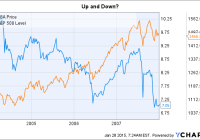
Summary CEFs are great at paying distributions for those seeking income. That said, some CEFs appear to be “too good” at this increasingly desirable trait. What is a sustainable distribution and when should you worry? Try this case study on for size. Closed-end funds, or CEFs, are great at providing investors income, something that most other pooled investment vehicles don’t do as well. However, there’s a fine line between providing investors a nice yield and drawing down net asset value, or NAV, to sustain what might really be an unsustainable distribution. If you are looking to buy and hold a CEF, at what point should you worry about the yield? A tale of two managed distributions How much is too much? That’s a tough question to answer across the entire closed-end fund universe because CEFs do so many different things in so many different ways. For example, a high-yield bond CEF’s distribution is inherently different from a short-term municipal bond CEF’s distribution. And both are different from a stock CEF’s distribution. So, the first thing to consider when looking at CEFs is to make sure you are comparing apples to apples. And that includes taking into consideration such things as leverage and option strategies. That said, let’s look at two funds that are exactly the same in all respects. Fund One has a 10% managed distribution policy, whereby it pays out 2.5% of its NAV every quarter. Fund Two has a 6% managed distribution policy, paying 1.5% of its NAV every quarter. What do the distributions look like? Over a four-year period in a generally rising market, Fund One’s NAV started out at $9.13 a share and ended at $8.07 a share. Over that span, it paid $0.15 a share from income it received, $2.85 from capital gains, and $0.54 from return of capital. Despite the fact that the broader market was heading generally higher over the span, Fund One lost over $1.00 a share in NAV. True, it paid investors handsomely via distributions, but its distribution policy was leading to a shrinking NAV. Fund Two, meanwhile, over a four-year span with a generally rising market, watched its NAV rise from $4.21 a share to $5.35. Over the four years it paid out $0.84 in distributions from income, nothing from capital gains, and $0.44 in return of capital. But, the NAV increased by a touch over $1.00 a share. Note that the market was moving generally higher through both four-year spans. In other words, Fund Two was able to grow its NAV at a time when you would expect it to be growing its NAV – something that Fund One didn’t achieve. The big reveal! The biggest difference between Fund One and Fund Two was their distribution policies, because both funds are the Liberty All-Star Equity Fund (NYSE: USA ). The first set of data came from January 2004 to December 2007, when it had a 10% distribution policy in place. The second set of data came from January 2009 to December 2012 when the fund had shifted to a 6% distribution policy. That move took place in early 2009 . USA data by YCharts USA data by YCharts I chose those end dates specifically because I wanted to track generally rising markets and avoid the disastrous performance the fund had in 2008. In that year, the fund’s NAV fell from $8.07 a share to $4.21. Distributions in 2008 were $0.07 from income and $0.58 from return of capital. Essentially, almost 90% of that year’s distribution was return of capital. It was a rough year for almost all investors and investments, to be sure. And Liberty All-Star Equity Fund wasn’t alone in dipping into capital to maintain its distribution. However, it isn’t a coincidence that the managed distribution plan was adjusted a year later in 2009. According to the fund’s board of directors, The change was adopted primarily to better align the Fund’s distribution rate with historical equity market returns. What does that mean? Historically, the stock market has returned roughly 10% or so a year, on average. If a CEF pays out 10% of its NAV every year, it is, essentially, returning everything that an investor might reasonably expect it to make – every year. That requires the CEF to beat the market in order to increase NAV. Fall short and the NAV will fall, which is pretty much what happened for “Fund One.” If, instead, the target is 6%, the CEF has a cushion. It can fall short of the market’s long-term average return and not eat into NAV when it pays distributions. Moreover, if it does better than 6%, it can actually grow its NAV over time. This is the benefit that “Fund Two” enjoyed above. To be fair, the markets in both periods were very different. And the fund uses a collection of outside mangers, which change over time. So there are factors beyond the distribution policy that impacted performance in both periods. However, this is as close as I think you can get to apples and apples in the investing world. It depends Of course this is just one example from what is, generally speaking, an unremarkable fund. For example, Liberty All-Star Equity Fund underperformed the S&P 500 Index by roughly three percentage points over each of the trailing 3-, 5-, and 10-year periods through year end 2014 on a total return basis (which includes distributions), according to Morningstar. But, it provides food for thought when looking at CEFs with big yields. You need to ask yourself if the level is sustainable over time. That’s particularly true for distributions that are at the complete discretion of the board of directors. In fact, target percentages are easier to deal with in some ways because they will, inherently, adjust up and down as the fund’s NAV and performance change over time. Good years you’ll get more, bad years you’ll get less. A static distribution based on what is, essentially, the board’s whim, will result in increasingly larger yields when the market is heading south and can set up dividend cuts. Of course, there are a host of other factors involved in deciding what CEFs to buy and which ones to avoid. Premiums and discounts, asset class, investment policy, etc. But, if you are looking for income, Liberty All-Star Equity Fund is a good case study in the difference that distribution choices can have on NAV. When all is said and done, the moral of the story is to think long and hard before you simply chase a yield in CEF land.
Will The Fed Bring Down SLV?

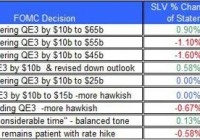
The FOMC’s statement was released on January 28. The price of SLV could come down once the FOMC starts to raise rates. The concerns over the global economy aren’t likely to change the FOMC’s view about raising rates this year. The recent decision of the FOMC didn’t stir up the silver market as shares of iShares Silver Trust ETF (NYSEARCA: SLV ) slightly declined on the day the statement was released. But, the sentiment of the recent statement may suggest the FOMC is still on its road to raise its cash rate in the coming months, which could curb down the recent rally of SLV. Let’s review the latest from the Fed and the potential ramifications of its policy on SLV. The recent FOMC meeting concluded with little changes to the wording of the statement. The FOMC reiterated its stance about being patient over its next rate hike: The Committee judges that it can be patient in beginning to normalize the stance of monetary policy. The FOMC still remains bullish about the U.S. economy mainly when it comes to the labor market – this is partly due to the fall in oil prices. Nonetheless, the FOMC estimates inflation could fall further in the near-term albeit rise back up to its target in the medium-term: Inflation is anticipated to decline further in the near-term, but the Committee expects inflation to rise gradually toward 2 percent over the medium-term as the labor market improves further and the transitory effects of lower energy prices and other factors dissipate. (click to enlarge) Source of data: FOMC’s site and Bloomberg The reaction to the recent decision wasn’t too harsh at first and the price of SLV only slightly declined. The following day, however, SLV tumbled down. In most of the meetings in 2014, the reaction of silver prices to the FOMC statement was mostly negative, because the FOMC’s policy kept turning more hawkish. Lower inflation doesn’t seem to persuade investors that the FOMC is reconsidering not to raise rates later this year. For now, the inflation is likely to keep coming down. Even the 5-year inflation expectations have slowly come down in recent months. (click to enlarge) Chart taken from FRED As you can see, the inflation expectations for the next five years are still not far off the Fed’s 2% target. This figure could decline further in the coming months as low oil prices are likely to pressure it down. But, the Fed still estimates that over the mid-term the inflation will remain around the 2% range – inline with its target. But, the main issue remains whether the drop in U.S. inflation in the near-term and the concerns over the global economy could be enough to persuade FOMC members to push forward the first rate hike and subsequent raises. The progress of the global economy – while it does influence FOMC members’ decisions – isn’t a major factor when it comes to the two mandates the FOMC has – inflation and jobs. When it comes to both cases, the FOMC’s objectives are on the right path. (click to enlarge) Chart taken from FRED This, however, doesn’t include the progress in U.S. wages – they remain relatively low and haven’t picked up in recent months. The little progress in wage could be a factor to tilt the scale towards keeping the Fed’s cash rate low for a longer time than currently estimated. Many still estimate that the FOMC will move forward and raise its cash rate this year. Moreover, most of the FOMC’s voting members also estimate the cash rate will be raised this year – according the December FOMC statement. Finally, it’s worth noticing that unlike the December meeting, in the recent meeting there weren’t any dissenters to the decision. This could be another indication that no major changes were made to rock the boat. If the FOMC remains bullish on the U.S. economy and won’t let the recent drop in U.S. inflation to change its view, then this could mean a rate hike in the coming months. This decision could start to pressure up U.S. treasury yields and thus bring back down the price of SLV. Moreover, the ongoing recovery of the U.S. dollar, which is likely to be boosted by a rate hike, could also adversely impact the price of SLV. In the meantime, even though the price of SLV rose by over 14% during the month, the demand for the silver ETF didn’t rise – the silver holdings of SLV are still around 319 million ounces of silver, which represent a 3.1% drop, year to date. The FOMC’s minutes will be released next month and could provide more insight behind the recent policy meeting. But, until the FOMC starts to raise rates, the concerns over the global economy and the drop in U.S. treasury yields could keep the price of SLV from plummeting again and erasing its gains from earlier this year. For more see: Will Higher Physical Demand for Silver Drive Up SLV?

Gold-In-Euro-Terms ETF Capitalizes On ECB’s QE Plan

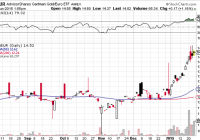
Summary Gold is falling after ECB’s bond purchasing plan. Stronger USD is weighing on gold. However, bullion investors can use a euro-denominated gold ETF to hedge the depreciating value of the EUR. Gold exchange traded funds rose on a knee-jerk reaction Thursday, following the European Central Bank’s aggressive bond-purchasing plan, as traders anticipated a rise in inflation. However, investors soon realized that the ECB actions would benefit the dollar or weigh on USD-denominated bullion. The SPDR Gold Trust ETF (NYSEArca: GLD ) has increased 10.3% year-to-date but was down 0.9% Friday and again Monday. Gold strengthened Thursday after traders assumed the ECB’s quantitative easing would flood the market with cash and induce inflationary pressures, but many soon realized that the money created were euros and not dollars. Since the ECB’s announcement, the euro continued to depreciate toward an 11-year low against the U.S. dollar. Consequently, the stronger USD should hurt gold as it becomes costlier for foreign traders to acquire USD-denominated assets. “What you saw was uncertainty about what the ECB was going to do-I think that’s what lifted gold higher. But I think now that this is all going to kind of settle down,” Anthony Grisanti of GRZ Energy, said on CNBC . “I don’t understand why you would think something that would strengthen our dollar would strengthen gold at this point.” Alternatively, gold ETF traders can take a look at the AdvisorShares Gartman Gold/Euro ETF (NYSEArca: GEUR ) , an actively managed ETF tracking gold in euro terms. While GLD dipped Friday, GEUR gained 1.2%. “Holding gold in a non-U.S. dollar denominated currency may help to limit the downside risk during stressed market environments where the U.S. dollar becomes a safe haven store of value,” according to AdvisorShares . Some gold investors quickly picked up on the GEUR trade as well, with the Gold/Euro ETF trading volume up to 65,000 late Friday, or more than 10 times its average daily volume, according to Morningstar data. Looking at the futures market, COMEX gold traded down 0.7% to $1,291.6 per ounce late Friday, whereas Euro Spot gold rose 0.5% to €1,151.1 per ounce. AdvisorShares Gartman Gold/Euro ETF (click to enlarge) Full disclosure: Tom Lydon’s clients own shares of GLD.