Tag Archives: pro

Don’t Discount Bill Ackman
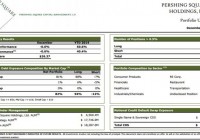
Originally Published on January 28, 2015 Bill Ackman wears an almost punchably smug expression. He looks as if he thinks that he is the smartest guy in any room. All the more grating is the fact that, in most rooms, he is right. He has reasons to be smug, having just came off of his best year ever, returning over 40% to his investors. Anyone can invest alongside him via Pershing Square Holdings (PSH). It costs $24.26 as of this writing which is over an 8% discount to its NAV per share of $26.43. Here are additional details from last month (including a slightly more dated NAV): (click to enlarge) Top positions include Allergan (NYSE: AGN ), Air Products (NYSE: APD ), Canadian Pacific (NYSE: CP ), Restaurant Brands International (NYSE: QSR ), Platform Specialty (NYSE: PAH ), Howard Hughes (NYSE: HHC ), and Zoetis (NYSE: ZTS ). Do such investments as managed by Ackman deserve a substantial discount? Evidence suggests that they do not. Ackman’s largest position, AGN, has been a spectacular success. That outcome is due to Ackman’s efforts to get it sold to Valeant (NYSE: VRX ). Pershing/VRX’s joint efforts led Actavis (NYSE: ACT ) to sign a definitive merger agreement with AGN. Ackman’s cost basis is about $129 per share on purchases that began in February of last year. He has made about $2.7 billion on this investment thus far. While much of this opportunity has already been captured there is still a double digit annualized net return on the spread between the AGN market price and the deal’s consideration. Target / Acquirer Tickers Parity Spread Return Allergan / Actavis AGN / ACT $230.09 $7.74 13% It appears that everything Ackman did with regards to AGN was perfectly legal. While AGN claimed that he violated securities laws, such a claim was a corporate defense designed to fend off an unsolicited bid. In 2014, Ackman successfully fended off insider trading accusations in court, entrenched management in a takeover battle, and the capital markets with spectacular outperformance. While we are endlessly reminded that past performance does not guarantee future results, it is a good indication that Pershing Square deserves a premium instead of a discount. What are PSH’s competitors in the world of conveniently available access to top hedge fund managers? Two are reinsurers, David Einhorn’s Greenlight Capital Re (NASDAQ: GLRE ) and Dan Loeb’s Third Point Re (NYSE: TPRE ). GLRE trades at a premium of almost nine percent and TPRE trades at a premium of almost four percent. If PSH trades up to an average of these two premiums, it would constitute a gain of over 16% from today’s price. While it is likely that all three fund managers would strenuously object to this characterization, they are peers of one another and have earned similar premiums. But more than anyone else, Ackman makes his own luck. You can share in that good luck by buying PSH. Disclosure: The author is long AGN, QSR. Additional disclosure: Chris DeMuth Jr is a portfolio manager at Rangeley Capital. Rangeley invests with a margin of safety by buying securities at deep discounts to their intrinsic value and unlocking that value through corporate events. In order to maximize total returns for our investors, we reserve the right to make investment decisions regarding any security without further notification except where such notification is required by law.
USO: Don’t Be Fooled By Minor Corrections

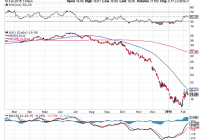
Summary After months of straight declines, oil prices seemed to bounce back starting in February. An increase in the RSI, though encouraging, is still not indicative of a broader correction. The 50-day moving average seems to be a resistance line. Oil production is still increasing. Since topping around June, oil prices have been in a steady and precipitous decline. Though the reasons have been speculated upon (mainly the debate is whether this is caused by low demand or high inventory), what is more important for speculators in the oil market is where prices are going. Around the beginning of February, prices have reversed their long and persistent decline by finally showing a rally. While this gives hope to many investors, especially those who bought oil companies hoping for a quick recovery, there are signs that there is still more pain to come. RSI and Technical Expectations (click to enlarge) To follow oil prices and technical indicators, I have shown a chart of the United States Oil Fund (NYSEARCA: USO ). A clear downtrend is apparent starting in June and continuing all the way to January. Since last month, the decline slowed noticeably, and starting in February, there is a decent correction forming. While the recent price increase is a case for optimism, a closer analysis reveals that the bear market may not be hibernating quite yet. Firstly, in bear markets, RSI tends to oscillate between 10 and 60. RSI is currently at around 50, and for real hope that this market is over, a value over 60 has to be there. Secondly, the most recent prices are showing that the 50-day moving average is unable to be surpassed, as USO hit that value, but then retraced after touching it. That said, a breakout is still possible, but with RSI hitting a wall below 60 and the price retracing at the 50-day moving average, the bear market is still well in place. Minor corrections are a part of bear markets, and this minor correction seems like exactly that, not a breakout. Fundamental Expectations The biggest factor that analysts are looking at right now is oil production. Once production finally decreases, we may then finally see the price of oil increase. While rig count can give a clue about production, it is not itself production, and production can still increase while rig counts are falling. Thus, the recent analysis by Citigroup ought to be concerning for any oil investors. It recently stated that: Despite global declines in spending that have driven up oil prices in recent weeks, oil production in the U.S. is still rising, wrote Edward Morse, Citigroup’s global head of commodity research. Brazil and Russia are pumping oil at record levels, and Saudi Arabia, Iraq and Iran have been fighting to maintain their market share by cutting prices to Asia. The market is oversupplied, and storage tanks are topping out. The same article noted that prices could fall as low as $20 per barrel. Clearly, these analysts are not buying this recent correction, nor should you. The low prices are here, and they are not going anywhere quite yet. Should We Trust Citigroup’s Analysis The question then becomes whether Citigroup is offering valid analysis, or is simply trying to change market sentiment to its benefit. To answer this question, I looked at the U.S. Field Production of Crude Oil offered by the EIA. (click to enlarge) The large increase in production since 2010 is obvious. The question now is whether US producers have taken steps to cut production now that oil prices have fallen so dramatically. To this end, a graph of year-over-year changes in production is shown. (click to enlarge) Clearly up to the latest data taken, no slowdown is found. In fact, not even a loss of momentum is apparently present. Production is increasing as quickly as it ever has, and based on this data, production is still not declining. December and January may show changes, but clearly the oil industry has a long way to go if production is going to be significantly cut in response to oil prices. Summary and Action to Take Oil is definitely not for the faint of heart right now. While I am uncertain about whether prices will actually fall to $20, I am fairly confident that oil prices are not poised for a sustainable rise quite yet. I would stick clear of USO for now, though outright shorting seems like an excessively risky move. Conversely, now would be a great time to load up on oil companies that are well poised to weather this low price environment. The way I would do this is with companies that have low debt and a good coverage ratio on their dividend. Helmerich & Payne (NYSE: HP ) is a great way to play a future correction, as it has very low debt and a current yield above 4%. There are other great companies to play the correction, though even staying put would be apt until we see further evidence that prices should rise. I would wait until production starts to decrease before investing in USO. Disclosure: The author is long HP. (More…) The author wrote this article themselves, and it expresses their own opinions. The author is not receiving compensation for it (other than from Seeking Alpha). The author has no business relationship with any company whose stock is mentioned in this article.

Oxford Lane Capital: Cash Flow Jumps, But So Do Paper Losses

Summary Oxford Lane Capital announces sharp increase in cash flow since last quarter. Last year’s newly acquired CLO assets are now starting to distribute cash, tripling cash flow from one quarter ago. Meanwhile, however, the assets pumping out this additional cash have dropped in value as credit risk assets in general have dropped in recent months. So cash flow up, but NAV down. Will the market be happy or sad about this? And how will the “smart money” react? Wish I knew. Oxford Lane Capital (NASDAQ: OXLC ) announced its quarterly results just after the market close on Tuesday and there was plenty for both optimists and pessimists to react to. Those who focus on cash flow (since that’s what drives CLO distributions and the distributions from funds like OXLC that buy CLO equity) were pleased to see that OXLC’s “estimated distributable net investment income” which is the cash flow that funds its 60 cents a quarter dividend, was $1.01, three times the level of last quarter, and 25% higher than it was a year ago when the fund decided to both raise its dividend and pay out a special one. The increased cash flow is no surprise, since OXLC raised considerable new equity a year ago, invested it in new CLO equity and has been waiting for that newly purchased equity to start making cash distributions to the fund. It can take up to 2 quarters for newly purchased CLO equity to start making payments to its equity holders. Three months ago OXLC reported that it had about $172 million of CLO investments that were still in the pre-distribution stage, out of $330 million total assets. That’s quite a drag, and explains why the portfolio as a whole, including the non-distributing assets, had only yielded 2.9% for the preceding quarter (annualized, that’s only 11.6%). But this time around, only $90 million, instead of $172 million, is in that pre-distribution stage, out of total assets of $354 million, and the portfolio as a whole is distributing 5.0% to OXLC, which is 20% annualized. With more assets “working,” it is no surprise the cash flow available to fund distributions is higher. Next quarter should improve further, as some of the current $90 million of pre-distribution equity begins its distributions to equity holders as well. To me this augurs well for OXLC’s ability to continue to meet its current distribution, which works out to a yield of over 15%. Along with that good news, OXLC also reported that its net asset valuation (which is largely model-based since there is very little trading or market for most seasoned equity tranches of CLOs) had dropped considerably since the last quarter, from $15.54 to $14.09. Although this just reflects paper losses in the valuation of CLOs that are still pumping out the same cash they were previously, this will undoubtedly upset and perhaps even panic some OXLC holders who take seriously the NAV number (which I don’t). To summarize, the fund is pumping out more cash than ever before, but its NAV has dropped because of unrealized paper losses on the portfolio generating that increasing cash flow. One interesting thing about OXLC trading Tuesday: · During the day, before the announcement of the greatly increased cash flow, the stock jumped 25 cents. · After hours trading, after the announcement was made public, the stock dropped back 30 cents. · Which was the smart money? · My guess is that the “cash flow increase” is the more important factor, compared to the “paper loss” drop in the NAV. · Time will tell. Disclosure: The author is long OXLC. (More…) The author wrote this article themselves, and it expresses their own opinions. The author is not receiving compensation for it (other than from Seeking Alpha). The author has no business relationship with any company whose stock is mentioned in this article.