Tag Archives: pro

3 ETFs Propelled By Japan’s Recession Recovery

Japan has emerged from its recession following good but not great economic data from the last quarter of the year where the economy expanded at an annualized rate of 2.2. Many economists forecasted an expansion of 3.7 percent; however emerging from its recession is undoubtedly a step in the right direction for Japan. The two-year stimulus package currently underway has started to bring life back into a struggling Japanese economy and will likely continue to propel it forward in 2015. By Matthew McCall Japan has emerged from its recession following good but not great economic data from the last quarter of the year where the economy expanded at an annualized rate of 2.2 percent. The gain comes after contracting the two previous quarters, which sent the county into a recession (by definition). Many economists forecasted an expansion of 3.7 percent; however emerging from its recession is undoubtedly a step in the right direction for Japan. Prime Minister Shinzo Abe implemented his ‘Abenomics,’ which has consisted of the Bank of Japan injecting large amounts of money into the economy as well as buying government bonds and other assets to spur spending within the economy. Corporate profits are at record highs and the continued devaluation of the Japanese yen will help the country’s largest manufacturers increase exports. The two-year stimulus package currently underway has started to bring life back into a struggling Japanese economy and will likely continue to propel it forward in 2015. Highlighted below are three ETFs that have been affected by the positive news out of Japan in recent weeks. The iShares MSCI Japan ETF (NYSEARCA: EWJ ) follows 311 publicly-traded Japanese companies across 11 industries. The top sectors consist of consumer discretionary at 23 percent, industrials at 19 percent, and financials also making 19 percent. The top individual holdings include: Toyota Motor Corp (NYSE: TM ) with a 6.6 percent weighting, Mitsubishi Financial Group Inc (NYSE: MTU ) at 2.8 percent, and Softbank Corp ( OTCPK:SFTBY ) coming in at 2.1 percent. The ETF is down up 4 percent over the last 12 months and up 1 percent over the last six months. Since bottoming out in the first week of the New Year it is up almost 11 percent. EWJ has an expense ratio of 0.49 percent. The WisdomTree Japan Hedged Equity ETF (NYSEARCA: DXJ ) consists of 324 Japanese companies as well as 25 short currency contracts on the yen against the U.S. dollar. The strategy eliminates the exposure to fluctuations between the yen and greenback while providing exposure to Japanese equities. The top holdings in the ETF are: TM at 5.7 percent, MTU with a 5 percent holding, and Canon Inc. (NYSE: CAJ ) coming in at 3.8 percent. DXJ is up 10 percent over the last 12 months, and 5 percent over the last six months. Since bottoming out in the first week of January the ETF has rallied 11 percent. The ETF has an expense ratio of 0.48 percent. Investors should be aware that a hedging strategy could be a doubled-edged sword. The ETF will capitalize on both the rising equities and the falling yen in Japan, but on the flip side the ETF will be negatively affected by falling equities and a rising yen. The WisdomTree Japan SmallCap Dividend ETF (NYSEARCA: DFJ ) is made up of 605 small cap Japanese companies across eight sectors; with industrials at 25 percent and consumer discretionary at 24 percent being the most weighted sectors. The top individual holdings include: Kaken Pharmaceuticals Co Ltd with a 0.8 percent holding, Sanrio Co Ltd ( OTCPK:SNROF ) making up 0.7 percent of the ETF, and Nishi-Nippon City Bank Ltd coming in at 0.7 percent as well. DFJ is up 3 percent over the last 12 months and down 4 percent over the last six months. Since early January the ETF has gained 9. The ETF has an expense ratio of 0.58 percent. Disclaimer: Neither Benzinga nor its staff recommend that you buy, sell, or hold any security. We do not offer investment advice, personalized or otherwise. Benzinga recommends that you conduct your own due diligence and consult a certified financial professional for personalized advice about your financial situation. Disclosure: The author has no positions in any stocks mentioned, and no plans to initiate any positions within the next 72 hours. (More…) The author wrote this article themselves, and it expresses their own opinions. The author is not receiving compensation for it. The author has no business relationship with any company whose stock is mentioned in this article.

Southern Company: Ready To Bounce

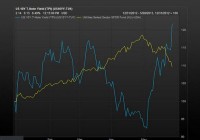
Utility stocks have gone from “hero” to “zero” in a month. Southern Company shows a historical pullback. Despite disappointing earnings, shares of Southern Company look poised to bounce from here. It’s hard to believe, I know, but the strongest sector among U.S. stocks last year was the utilities sector. The normally staid and stuffy Utilities Index returned over 30% in 2014, including dividends. Utility stocks, traditionally a safe haven for risk adverse, long-term investors, were suddenly the go-to place for a very different kind of financial animal: the “momentum stock” trader… at least for a while. All that ended in January this year. We’ve seen a substantial correction in the utilities sector so far this year, with many of the key players trading off 10% or more from their year-to-date highs. Analysts are laying blame on the strong rebound in treasury bond interest rates, which itself has been caused by the end of the Fed’s quantitative easing program (among other things). As rates climb, those looking for income and safety tend to pull money out of interest bearing stocks and put that money to work into safe havens like bonds and treasuries. This is why a chart of the 10-year yield with the utility stock index overlaid, shows a clear tendency of the two asset classes to mirror each other: [Source: MarketWatch ] I’m in the camp that counts this pullback in utilities as a great buying opportunity. Nothing has changed in the fundamentals of the underlying companies; and the lower share price makes their dividends all the more attractive. Right now, you’ll pay less for more utility yield, than at any time in the past 6 months. Among domestic utilities, there are 5 big players: NextEra Energy ( NEP , $46B), Dominion Resources ( D , $42B), Southern Company ( SO , $42B), American Electric ( AEP , $28B), and PG&E ( PCG , $26B). All 5 companies are trading around -10% below their 52-week highs. And all 5 companies have seen their dividend rates climb at least 50 basis points so far this year, making them attractive places to park cash for those looking for discounted income. My favorite among the big 5 is Southern Company . This utility company generates electricity through coal, nuclear, oil, gas, and hydro and distributes it in the states of Alabama, Georgia, Florida and Mississippi. Since peaking at $53.16 in late January as investors sought the relative safety of utilities, the stock has fallen about 14% in less than three weeks’ time, the largest pullback of the top 5. That is a move of statistical importance: it hasn’t been matched since the tail-end of the Great Recession, a time with a very different economic context. Shares are therefore ripe for a bounce from here. As of February 18th, the dividend yield of SO is 4.61%, which is currently about 110 basis points above the large-cap utilities index average. This is also the largest dividend payout among the top 5 utility companies, as the chart below demonstrates: As investors in the company know too well, at the last earnings announcement on February 4th, Southern reported quarterly revenues about 20% lower year on year, but they were, nevertheless, better than what analysts expected ( $4.1B actual vs. $3.7B expected). Quarterly earnings per share were in line with analyst estimates (0.38, adjusted for non-recurring costs, vs. 0.48 the previous year), and fiscal year 2014 showed a modest 3.7% rise in overall e.p.s., but shares still traded lower the next day by 2.6%. The reason for the selloff was that the company also lowered the range of its forward guidance; not by much, but enough to create disappointment. The causes of the drawdown in earnings were higher operating and maintenance costs, which jumped 33.4% to $1.3B, while the company’s total operating expenses for the period were over 10% higher than the prior year. There were also charges related to delays in the building of an $8 billion nuclear plant in Georgia, along with a drop in residential sales. The good news, however, is that industrial sales were up 3.3% quarter on quarter, and forward projected growth for the same is pegged at 1.7%. Both figures are much higher than industry average of 0.6%. The slowdown in retail sales, which hampered sales growth last quarter, is expected to rebound by 1.3% this next year: (click to enlarge) There are 22 Wall Street analysts who cover Southern Company. The majority of those, rate the company as either a “hold” (11) or a “sell” (10). There is only one “buy” rating on the stock (Argus). The consensus 12-month price target for SO is only $48, a mere 4.5% above current trading prices. With expectations so low, it won’t take much of a beat to generate a number of upgrades. As has been pointed out elsewhere, Southern’s management is extremely accurate in forecasting its next quarter’s earnings. In fact, Southern has not missed a forecast in ten years; and it typically predicts the narrowest guidance range in the industry. In the last announcement, the range was $0.08 on earnings of $2.80. The company nailed the top end of the range. With the guidance now lower than expected, it seems an easy task – given that track record – to show a nice upside beat. As the chart below shows, SO is in a deeply oversold condition. Shares have already completed a 61.8% Fibonacci retrenchment of its August to January run. They are also touching its 200-day moving average, which coincides with an area of former price support. The Relative Strength Index (RSI – 13) is printing a rare oversold reading below 30. All the above combine to make Southern Company a compelling buy for long-term investors, especially those looking for income. I consider shares to be attractive at this level, and I expect a rebound toward the 50-day moving average (currently: $49) over the next few weeks. If you buy the shares, you can collect the 4.6% dividend after 12 months. But in the Dr. Stoxx Options Letter, we have a way of collecting even more than that in half the time. Our put-write strategy allows us to collect a 5.5% dividend in 6 months, which annualizes to a 11% yield. This is a low-risk way of adding income to our investing capital, and if we are put the shares, we can always sell calls against the shares to lower our cost basis even further. Disclosure: The author has no positions in any stocks mentioned, and no plans to initiate any positions within the next 72 hours. (More…) The author wrote this article themselves, and it expresses their own opinions. The author is not receiving compensation for it (other than from Seeking Alpha). The author has no business relationship with any company whose stock is mentioned in this article.

Up 20% In 3 Months Since My Recommendation, Sell EUO Stakes Now

The ProShares UltraShort Euro (EUO) ETF is up 20% over the three months since I recommended it, but I’m suggesting investors close their stakes here. The factors that came against the euro are about to reverse, and I see the euro gaining strength against the dollar near-term. A favorable Greece resolution is imminent in my opinion, and the European economy is steadying. The dollar is overextended versus the euro and against other currencies and should give way now, and thus the EUO ETF’s success should end here. In mid-November, I suggested investors buy the ProShares UltraShort Euro (NYSE: EUO ). Today I’m suggesting investors close the position and take the 20% profit earned over the 3 month period. I see the factors that have worked against the euro about to reverse, so sell the EUO ETF and take your gain. Holding Period Chart of EUO +20% at Seeking Alpha If you agreed with my investment thesis on the EUO ETF shared on November 19, 2014 when I suggested investors buy the ProShares UltraShort Euro , well then you have generated a 20% paper profit in the three month holding period through the February 13 close. It’s now time to close the stake, as I am anticipating the euro will strengthen against the dollar from here. My main thesis in the aforementioned report was keyed on a potential Russian rebuttal to Europe’s hand in sanctions against it. However, the curiously timed and perhaps not coincidental drop in oil prices that occurred this winter handcuffed Russia, in my opinion. It seems to have effectively kept the cash-strapped, energy based Russian Federation from acting in the manner I anticipated it might. I speculated Russia could cut off the flow of energy into Europe in the middle of winter and harm the euro’s value against the dollar. While this is still possible, the also curiously timed recently stepped up effort by European leaders to drive a peace initiative between Ukraine and the Russian backed rebels in the East of the country is serving the same purpose, again keeping Russia from acting against Europe. Importantly, in my November report, I also said that a weakening European economy and the potential for European Central Bank (ECB) extraordinary action had been serving the dollar versus the euro and should continue to add support to the dollar. This proved to be a continuing driver against the euro, assisted by the critical political developments in Greece that later followed. In essence, the Greek issue took the place of my Russian factor and drove the euro down versus the dollar, and led the ProShares UltraShort Euro up 20% over the three month period. Intensifying fear of a Greek exit from the euro-zone has been the booster of the dollar against the euro year-to-date, and affected a great deal more than just the currencies in my opinion. In the uncertainty, demand for U.S. treasuries drove U.S. interest rates down, and thus major U.S. financial sector issues in Bank of America (NYSE: BAC ), J.P. Morgan Chase (NYSE: JPM ) and others. The stronger dollar has played an important role in the fall of oil prices along with supply issues in my view. And the uncertainty around Europe and how it might affect the United States economy worked against U.S. equities this year in my view. But all this is about to change. I anticipate a favorable resolution between Greece and its European partners is imminent. The removal of the palpable fear that has gathered around this issue should serve a U.S. market rally in my opinion. Improving expectations have already begun to drive U.S. interest rates higher, and the dollar recently gave way a bit to the euro. European economic expectations are also improving in my opinion and Japan just exited recession . As the euro gains its strength back against the overextended dollar, the EUO ETF, which is a bet against the euro, should give way. Thus, while still ahead of the announcement of a Greek deal, you have time momentarily to close the investment I suggested in November. If you need a place to invest your gains from the EUO play, on the same thesis, I have recently suggested investors look to: the UDN ETF contra-dollar investment; or a short of the UUP ETF ; and a short of the iPath S&P VIX (NYSE: VXX ); or long investments in financial sector beneficiary Bank of America , which should rise on higher U.S. interest rates. Also, I’ve suggested Greek issues including the National Bank of Greece (NYSE: NBG ) and the Global X FTSE Greece 20 ETF (NYSE: GREK ). Readers may review my column for more. Disclosure: The author is long GREK, NBG, BAC. (More…) The author wrote this article themselves, and it expresses their own opinions. The author is not receiving compensation for it (other than from Seeking Alpha). The author has no business relationship with any company whose stock is mentioned in this article. Additional disclosure: I’m short VXX and UUP.