Tag Archives: pro

Unitil Corp.: Small And Dull Isn’t Necessarily A Bad Thing
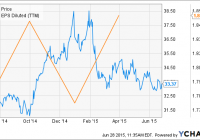
Summary Electricity and natural gas distributor Unitil Corp. has seen its share price fall by 13% YTD even as its earnings were boosted by frigid winter conditions in its service area. The company has an impressive record, with its share price outperforming between FY 2010 and FY 2014 and strong net income and EPS CAGRs over the same period. A lack of market penetration in its service area and investments in expanded natural gas capacity should enable the company to continue its earnings growth trend in coming years. Its shares are not undervalued at present, although bearish sentiment from a rising interest rate could create an attractive long investment opportunity. Existing investors are encouraged to maintain their positions while potential investors are encouraged to initiate long positions if the share price falls below $30.40 in response to interest rate news. Electricity and natural gas distributor Unitil Corp. (NYSE: UTL ) has seen its share price and trailing diluted EPS move in opposite directions over the last several months, with the former falling by 13% since late February even as the company’s earnings were boosted by a harsh Northeast winter (see figure). The company has been an above-average performer on the S&P Utility Index since the beginning of FY 2010 and hasn’t reduced its dividend since its incorporation in 1984. This track record has not been enough to shield Unitil from the bearish sentiment that has afflicted the utility sector in anticipation of rising interest rates later this year, however. This article considers Unitil as a potential long investment in light of its falling share price and strong earnings YTD. UTL data by YCharts Unitil Corp. at a glance Unitil is a New Hampshire-based utility public holding company that provides electricity to 102,400 customers and natural gas to 75,900 customers in the states of New Hampshire, Massachusetts, and Maine. The company serves its customers via its five wholly-owned subsidiaries. Unitil Energy Systems is an electric distribution utility serving 74,000 customers in central New Hampshire, including Concord. Fitchburg Gas and Electric Light distributes electricity to 15,700 natural gas customers and 28,600 electricity customers in northern Massachusetts. Northern Utilities is a natural gas distribution utility with 62,200 customers in coastal New Hampshire and Maine, while Granite State Gas Transmission owns and operates an 86-mile underground natural gas pipeline that runs throughout Unitil’s subsidiary natural gas service areas in New Hampshire and Maine. While these subsidiary utilities are all regulated, Unitil also owns Usource LLC, which is an unregulated energy brokering and management firm that serves as agent for 1,200 customers. Unitil has been one of the better performers in the utility sector, with its shares outperforming both the S&P 500 and the S&P Utility Index between the beginning of FY 2010 and end of FY 2014 even as it has been largely ignored by analysts (only one analyst participated in its most recent earnings call ). This performance can be attributed to several factors, including access to inexpensive debt that has allowed it to finance a 54% increase in its net PP&E value, a favorable regulatory structure that has allowed it to report consecutive increases to ROE since FY 2012, and low customer penetration within its existing natural gas distribution system. The company has also benefited from its exposure to natural gas distribution, which has grown steadily since the end of 2011 (see figure) as increased shale gas extraction caused prices to plummet. This has been a boon to natural gas distributors in the form of rising sales volumes and revenues. Unitil has experienced CAGRs of 17% and 12% for its net income and diluted EPS, respectively, since FY 2012. Meanwhile, natural gas distribution now generates 55% of the company’s sales margin versus 45% for electricity (as of FY 2014). US Natural Gas Consumption data by YCharts Q1 earnings report Unitil reported very strong Q1 earnings at the end of April in the wake of an especially cold and snowy winter in the Northeast U.S. Consolidated revenue came in at $172.2 million, up 10.3% from $156.1 million YoY and beating the consensus estimate by 7.8% (see table). Natural gas revenue increased by 8.3% over the previous year’s Q1 to $100.3 million while electricity revenue increased by 13.6% to $70.3 million. The only subsidiary to report flat revenue was Usource, where revenue remained unchanged at $1.6 million. The revenue gains were driven by strong natural gas sales, which increased by 6.8% YoY; electric sales gained only slightly to 0.3%. The former’s strong performance was the result of a combination of the cold weather, with Q1 containing 4% more heating days versus the previous year and 14% more versus the long-term average, and FY 2014’s 3% increase in total customers. Unitil Corp. Financials (non-adjusted) Q1 2015 Q4 2014 Q3 2014 Q2 2014 Q1 2014 Revenue ($MM) 172.2 119.8 76.6 73.3 156.1 Gross income ($MM) 61.6 50.7 39.3 36.6 57.3 Net income ($MM) 13.6 9.4 1.6 1.1 12.6 Diluted EPS ($) 0.98 0.68 0.11 0.08 0.91 EBITDA ($MM) 39.8 31.3 18.5 17.4 35.8 Source: Morningsta r (2015). Gross income rose by 7.5% YoY due to a 6.3% increase to the consolidated natural gas sales margin and a 10.4% increase to the consolidated electricity sales margin. The distribution of the sales margin between natural gas and electricity remained almost unchanged from the previous Q1 at 63% and 37%, respectively (residential and commercial natural gas consumption peaks in the winter when heaters are running whereas electricity consumption is higher in the summer when air conditioners are in use, explaining the difference between the Q1 distribution and the FY 2014 distribution). These increases caused net income to improve by 8% YoY to $13.6 million from $12.6 million, resulting in a diluted EPS of $0.98 versus $0.91 YoY that beat the analyst consensus by $0.04. EBITDA rose to $39.8 million from $35.8 million the previous year. The EPS improvement and beat were both largely attributable to the winter weather, with management stating in the Q1 earnings call that the higher number of heating degree days boosted EPS by $0.02 compared to the previous year and $0.08 compared to the long-term average in the service area. The weather was not the only positive factor, however, as natural gas therm sales increased by 5% YoY on a weather-normalized basis due to a combination of more customers and the rapid fall in the price of natural gas that occurred in the second half of 2014. The impressive earnings performance brought Unitil’s trailing ROE up to 9.2% overall, compared to 8% and 8.2% in FY 2012 and FY 2013, respectively. Unitil ended the quarter with $11.2 million in cash, down from $14.3 million the previous year (see table) due to infrastructure investments over the previous four quarters. The company’s current ratio improved YoY from 1.11 to 1.28 despite this cash decrease, however, while its total assets grew by 12% thanks to an 11% increase to net PP&E compared to Q1 2014. While Unitil’s balance sheet isn’t as strong as some other utilities, in combination with the company’s earnings growth record it is sufficient to maintain a BBB+ credit rating from S&P. Furthermore, while cash on hand is not substantial, it is augmented by $88 million remaining in credit facility liquidity. Management was comfortable enough with the state of the company’s finances at the end of FY 2015 to increase the quarterly dividend by 1.4%, resulting in a forward yield of 4.2% based on an annual dividend of $1.40. While not as high as some of the bigger utility names – the widely-followed utility Southern Company (NYSE: SO ) has a forward yield of 5.2% at present – it is higher than the sector average. The iShares U.S. Utilities ETF (NYSEARCA: IDU ) has a 3.57% yield before expenses, for example. Unitil Corp. Balance Sheet (restated) Q1 2015 Q4 2014 Q3 2014 Q2 2014 Q1 2014 Total cash ($MM) 11.2 8.4 10.1 12.0 14.3 Total assets ($MM) 1,040.8 1,000.2 916.5 900.6 928.0 Current liabilities ($MM) 140.4 129.4 76.0 102.6 131.7 Total liabilities ($MM) 757.5 726.9 648.6 629.8 654.0 Source: Morningstar (2015). Outlook Unitil offers potential investors with a number of advantages over other utilities in addition to its high dividend yield. First, the company only has 60% penetration within its existing natural gas distribution system, leaving it with 50,000 potential future customers without the need for investment into expanded service areas. This gap allowed it to achieve a customer growth rate in FY 2014 that was 3x the region average. Furthermore, roughly 70% of the company’s existing natural gas distribution system is made of new, high-durability materials, minimizing the amount of capex that needs to be directed toward the replacement of existing capacity. Unitil therefore has the ability to generate continued earnings growth in coming years via existing capacity, supporting a continuation of its net income CAGR of 17%. Unitil is in the process of expanding its service areas to meet expected natural gas demand in the Northeast U.S. despite its ability to meet new customer growth with its current capacity. Northern Utilities is in the process of expanding its natural gas service areas to increase the company’s potential customer growth in coming quarters. Electricity isn’t being ignored either, with a sufficient number of new substations being constructed in New Hampshire to meet expected load growth in the state. There are a number of reasons to expect natural gas and electricity demand to increase in Unitil’s service area. First, the regional economy has fared quite well of late, with the unemployment rates in New Hampshire, Massachusetts, and Maine all falling well below the U.S. average (see figure). This trend, combined with the continued presence of inexpensive natural gas prices, will eliminate constraints on natural gas consumption. Finally, all three states benefit from their reliance on relatively clean feedstocks for electricity generation compared to other states. Coal as a source of electricity has come under a great deal of pressure from state and federal regulators in recent months. That fuel is responsible for only a small fraction of the electricity produced in Unitil’s service area, however, with nuclear power, natural gas, and renewables generating the vast majority of electricity there. Coal’s regulatory difficulties have boosted the fortunes of natural gas and will benefit those companies such as Unitil that generate income by distributing the latter. New Hampshire Unemployment Rate data by YCharts Valuation Analyst estimates for Unitil’s diluted EPS in FY 2015 and FY 2016 have remained quite stable over the last 90 days, reflecting the lack of volatility in the company’s outlook. The consensus estimate for FY 2015 has remained unchanged at $1.90 while that for FY 2016 has fallen only slightly from $2.00 to $1.98. While the presence of only two analyst estimates would normally call these numbers into question, the performance stability of regulated entities suggests that they will be close to the company’s actual results. If so, they will represent the company’s best earnings since at least FY 2010, continuing a growth trend that has been in place since that year. Unitil’s share price at the time of writing of $33.37 yields a trailing P/E ratio of 17.9x and forward ratios for FY 2015 and FY 2016 of 17.5x and 16.9x, respectively (see figure). All three of these numbers are solidly in the middle of their respective ranges since the beginning of 2012, suggesting that the firm’s shares are fairly valued at present. UTL PE Ratio (NYSE: TTM ) data by YCharts Conclusion Unitil Corp. has been something of an unsung hero among public regulated utilities over the last five years, outperforming both its sector and the broader market since the beginning of FY 2010 even as it has gone largely unnoticed by analysts. Both of these developments can be attributed in large part to the company’s focus on a small service area in a relatively rural part of the country. This lack of size and volatility shouldn’t deter investors, however, as the company’s recent track record has demonstrated. While I believe that Unitil is in a position to continue its record of steady earnings and dividend growth by increasing its market penetration within its existing service area and expanding its natural gas service area, the lack of a clear value argument at present and the prospect of bearish sentiment continuing to negatively impact utilities’ share prices as the first interest rate increase by the Federal Reserve in almost a decade grows closer prevent me from initiating a long investment at this time. Existing investors should hold their positions, however, and I will look to join them in the event that the company’s FY 2015 P/E ratio falls below 16x (or $30.40 based on the current consensus estimate). Disclosure: I/we have no positions in any stocks mentioned, but may initiate a long position in UTL over the next 72 hours. (More…) I wrote this article myself, and it expresses my own opinions. I am not receiving compensation for it (other than from Seeking Alpha). I have no business relationship with any company whose stock is mentioned in this article.
Bill Gross: It Never Rains In California

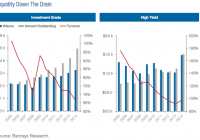
Ted Cruz recently suggested praying for rain in Texas, and apparently someone did a few weeks ago, producing a deluge resembling a modern day Noah’s Ark of sorts. California’s Governor Brown on the other hand, has taken a more secular approach. He believes that Mammon, not God, bears responsibility for the Golden State’s record drought and that I, we, all of us simple folk should cut back water usage by a minimum of 25%. Well it’s hard to argue with Governor Moonbeam especially when it comes to the environment, although if you ask me, his other idea of hundreds of miles of high speed rail at a minimum cost of $25 billion is off the rails and on the governor’s private moon. But I will do my part. As a free citizen though, I have choices: replace the lawn with artificial grass, take fewer showers, jerry-rig the toilet bowl, or perhaps eat fewer almonds. I will choose a diet of fewer almonds. Growing almonds it seems, consumes 10% of all the annual residential water supplied to 40 million thirsty folks in California, and 60% of that production is exported, so I suggest we fight the drought “there” as opposed to “here”, if you get my drift. To that same point, an article in the impeccably objective Wall Street Journal claims that the water consumption for one pound of almonds is equivalent to 50 five minute showers, so I’m not giving up my shower for a bag of almonds. It’s here, though, where I have to do a little bragging. Some people will talk about having the world’s greatest dog or their newborn baby who slept through the night during the first week. But Sue and I have something very different. We have the world’s greatest shower. To be quite candid, it’s not the water, the temperature, the simple knobs, or even the shower head that makes it the best; nor is it the combination of all four. The key to our shower in fact, is not the actual experience of hot water on a 98.6° body at all. It’s the view; our shower has the world’s greatest view. The scenery from it is so gorgeous that when we sell our home, we may list the shower separately and see if it attracts an offer higher that the rest of the house. If not, we’ll just sell the house with a shower “easement” and continue to come in and out from the street every morning at 6:00 a.m. Back to the view. That it has one in the first place is, I suppose, outrageous in and of itself. But here Sue and I were in 1990, constructing our house on a Laguna Beach cliff overhanging more white water than you could shake a kayak at. The sailboats were drifting by, the surfers were hanging ten and it seemed like every minute of every waking day should be focused on that gorgeous piece of the Pacific that comes to rest 60 feet below our bathroom. So we built a shower with a window – not a picture window – but one big enough for a view. As is customary with a new home, I carried Sue over the threshold on the first day we moved in. But once the workers had cleared out, we headed straight for the shower. “Champagne?” she asked. “Nah”, I said romantically. “Just wanna look at the view.” When it comes to retirement, I don’t think we’ll need our 401Ks. We’ll just sell tickets to our shower, and use the proceeds to pay for some of Governor Moonbeam’s almonds. Speaking of liquidity, whether it be in surplus in a Laguna Beach shower, or an extreme deficit in the State of California, current concerns in the financial markets center around the absence of liquidity and the effect it might have on future market prices. In 2008/2009, markets experienced not only a Minsky moment but a liquidity implosion, as levered investors were forced to delever. Ultimately the purge threatened even the safest and most liquid of investments. Several money market funds appeared to “break the buck” which in turn threatened the $4 trillion overnight repo market – the center core of our current finance-based economy. Responding to this weakness, the Fed and other central banks imposed emergency liquidity provisions of their own – in effect they became the buyers of last resort. Recently however, Congressional legislation concerning “too big to fail” and Federal court rulings in favor of AIG regarding the expropriation of shareholders’ capital, have cast doubts as to whether central banks and their governments can exercise similar “puts” in the future to stabilize asset prices. As a result, regulators are proceeding with “better safe than sorry” mandates – tightening bank capital standards, curtailing the size of the potentially volatile repo market from $4 to $2 trillion, and pursuing inquiries as to which financial institutions are “strategically important” – code for “big enough to threaten asset market stability”. Not only major banks but several insurance companies and asset managers including PIMCO – just one block down the street – are being scrutinized. These individual companies which include Prudential, MET, BlackRock, and at least several others have responded as you might expect. “No problem” sums it up – markets are a little less liquid they claim, but recent experience would show that for PIMCO at least, there were no “fire sales” or “forced selling” after my recent departure, as stated by CEO Doug Hodge in a friendly WSJ article. Ah, now I’ve caught your interest. Well first of all let me state that the PIMCO example is not a good one to use to prove the current liquidity of mutual funds, ETFs, and even index funds. Hodge himself admitted to internal proprietary “liquidity” provisions, adding that it used derivatives for exposures “to support cash buffers and inflows” (sic). The fact is that derivatives on a systemic basis represent increased leverage and therefore increased risk – presenting possible exit and liquidity problems in future months and years. Mutual funds, hedge funds, and ETFs, are part of the “shadow banking system” where these modern “banks” are not required to maintain reserves or even emergency levels of cash. Since they in effect now are the market, a rush for liquidity on the part of the investing public, whether they be individuals in 401Ks or institutional pension funds and insurance companies, would find the “market” selling to itself with the Federal Reserve severely limited in its ability to provide assistance. While Dodd Frank legislation has made actual banks less risky, their risks have really just been transferred to somewhere else in the system. With trading turnover having declined by 35% in the investment grade bond market as shown in Exhibit 1, and 55% in the High Yield market since 2005, financial regulators have ample cause to wonder if the phrase “run on the bank” could apply to modern day investment structures that are lightly regulated and less liquid than traditional banks. Thus, current discussions involving “SIFI” designation – “Strategically Important Financial Institutions” are being hotly contested by those that may be just that. Not “too big to fail” but “too important to neglect” could be the market’s future mantra. Down the street from PIMCO, I must openly acknowledge that helping to turn Janus into one of these “too important” companies is one of my objectives, as it is for CEO Dick Weil. But that day lies ahead of us. For now, regulators and thus large institutional asset managers are at least contemplating an inability to respond to potential outflows. Just last week Goldman Sachs’ Gary Cohn cleverly suggested that liquidity is always available at “a price”. True enough in most cases, except perhaps for 1987 when stock markets declined 25% in one day as the vaunted portfolio insurance scheme met its maker due to sellers all rushing to the exit at the same time. Aside from the obvious drop in trading volumes shown above, the obvious risk – perhaps better labeled the “liquidity illusion” – is that all investors cannot fit through a narrow exit at the same time. But shadow banking structures – unlike cash securities – require counterparty relationships that require more and more margin if prices should decline. That is why PIMCO’s safe haven claim of their use of derivatives is so counterintuitive. While private equity and hedge funds have built-in “gates” to prevent an overnight exit, mutual funds and ETFs do not. That an ETF can satisfy redemption with underlying bonds or shares, only raises the nightmare possibility of a disillusioned and uninformed public throwing in the towel once again after they receive thousands of individual odd lot pieces under such circumstances. But even in milder “left tail scenarios” it is price that makes the difference to mutual fund and ETF holders alike, and when liquidity is scarce, prices usually go down not up, given a Minsky moment. Long used to the inevitability of capital gains, investors and markets have not been tested during a stretch of time when prices go down and policymakers’ hands are tied to perform their historical function of buyer of last resort. It’s then that liquidity will be tested. And what might precipitate such a “run on the shadow banks”? A central bank mistake leading to lower bond prices and a stronger dollar. Greece, and if so, the inevitable aftermath of default/restructuring leading to additional concerns for Eurozone peripherals. China – “a riddle wrapped in a mystery, inside an enigma”. It is the “mystery meat” of economic sandwiches – you never know what’s in there. Credit has expanded more rapidly in recent years than any major economy in history, a sure warning sign. Emerging market crisis – dollar denominated debt/overinvestment/commodity orientation – take your pick of potential culprits. Geopolitical risks – too numerous to mention and too sensitive to print. A butterfly’s wing – chaos theory suggests that a small change in “non-linear systems” could result in large changes elsewhere. Call this kooky, but in a levered financial system, small changes can upset the status quo. Keep that butterfly net handy. Should that moment occur, a cold rather than a hot shower may be an investor’s reward and the view will be something less that “gorgeous”. So what to do? Hold an appropriate amount of cash so that panic selling for you is off the table. A wise investor from nearly a century ago – Bernard Baruch – counseled to “sell to the sleeping point”. Mimic Mr. Baruch and have a good night.

VNQ Share Fall, Yields On REITs Rise As Treasury Yields Fall

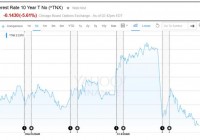
Summary The Vanguard REIT Index ETF appears to be on sale. Despite falling treasury yields and rising prices for utilities, equity REITs are showing weakness. I believe we are seeing a flight to quality as investors angle for more conservative assets. For investors that believe the markets are reasonably efficient, it makes sense to hold a large position in a low fee ETF like the Vanguard REIT Index ETF (NYSEARCA: VNQ ). I believe the markets are reasonably efficient, but I also believe that fear and greed occasionally overpower rational analysis and we see movements that fail to make adequate sense. On June 29th, it appears that fear was the emotion of the day and VNQ was becoming even more attractive. The Fear If you haven’t heard already, there are some issues in Greece. The Greek banks and their stock market are closed for the day and there are expectations of a payment due to the IMF to be missed. There was a nice little piece on it in the SA news feed earlier in the day . The piece there contains a little more information for readers that are interested. Rather than repeat the issues with Greece, I want to focus on the irony in the interest rate market. Let us begin with a look at a yield chart I pulled from Yahoo: (click to enlarge) The yields fell sharply lower today. If an investor is simply interested in what level of yield they can get on their investment, this should indicate that too many people are buying bonds and that they should be less attractive. By comparison, other sources of income should be more attractive. They should see prices increases and yields fall. However, that is precisely not what we saw with the Vanguard REIT Index ETF. I put together a quick chart from Google showing the price movements for VNQ and the Utilities Select Sector SPDR ETF (NYSEARCA: XLU ). (click to enlarge) As you can see, the movements previously were relatively similar and this morning they both jumped higher, but since then VNQ has been trading down while XLU has maintained part of the gain. My Take I’m seeing yields falling on treasury securities as investors have a “flight to quality”. Since the treasury securities are seen as the most reliable investment available, that is where the money is being placed. We see the same logic over the course of the day as investors are picking XLU over VNQ. The theory may be that if economic conditions worsen, the utilities will still have safe profit margins. Renters can move in with their parents and stop renting an apartment, but they won’t stop consuming electricity. The logic makes sense in the context of a flight to quality, but it ignores everything else about the business. I’d Rather Have REITs Owning a piece of the utility companies is a reasonable choice for portfolio diversification and very reasonable for investors focused on dividend yields. However, REITs remain an extremely attractive investment for the tax advantaged accounts. In my opinion, VNQ is a screaming buy relative to the 10 year treasury. The yield on VNQ just broke 4%. It is offering investors substantially higher levels of income than the Treasury, though I will grant it is also a significantly riskier security. The reason the risk is worth it can be viewed in the long term context. When we focus on investing and buying yield rather than on short term price movements, it is reasonable to say that an investor buying a bond should expect to achieve roughly the yield to maturity if they hold the security to maturity. In the event of a zero coupon bond (no reinvestment risk), we would expect precisely that yield absent any brokerage costs. When it comes to income, the investor in VNQ would need to see future dividends fall by over 40% before they would receive less in their yield on VNQ than they would on investing in the treasury security. It could happen, at least theoretically equity REITs could find themselves forced to reduce dividends if the economic environment worsens and revenues decline, however I have yet to see any plausible argument for a 40% reduction across the industry. The worst year for VNQ when measured in dividends paid out was 2010. The total dividend payment was $1.89. Compared to the current share price, that would still result in a 2.52% yield. Acceptable Capital Losses If we assume that dividends will average roughly the same level they are at now over the next ten years, then we have superior performance by about 1.7% per year. Using simple math, the premium in yield would compound to just over 18% in ten years. So long as VNQ ended the period with the share price falling by less than 18%, the shares would have delivered a superior total return. The most logical case for VNQ to underperform treasury investments would be a substantial cut in dividends that matches a substantial decline in share price as investors would continue to expect a reasonable yield on new investments. In that manner, if dividends were cut to less than $2.00 per share, I would expect capital losses to easily surpass the acceptable levels. I find that scenario to be very improbable. On the other hand, since late 2004 through early June VNQ delivered a CAGR (compound annual growth rate) counting reinvested dividends of 8.75% per year. Over the next decade I’m expecting the dividends to grow on average by 4% to 5% per year and I’m expecting share price to grow at a slightly slower rate as higher interest rates on bonds will require higher yields from other income securities. Conclusion I’m long VNQ and I have a buy-limit order to add to my REIT holdings. I’m hoping to see the major REIT index funds decline more over the next year so I can keep adding to my positions at prices I consider attractive. I’m not just rebalancing into more REIT investments; I’m increasing my exposure to equity REITs because I see attractive long term investment opportunities. The situation right now resembles a falling knife, but I see it as a falling knife of gold. I may get cut several times as I keep buying into the REIT sector, but the long term expected returns at these yield levels are enough to keep me happily buying more. Disclosure: I am/we are long VNQ. (More…) I wrote this article myself, and it expresses my own opinions. I am not receiving compensation for it (other than from Seeking Alpha). I have no business relationship with any company whose stock is mentioned in this article. Additional disclosure: Information in this article represents the opinion of the analyst. All statements are represented as opinions, rather than facts, and should not be construed as advice to buy or sell a security. Ratings of “outperform” and “underperform” reflect the analyst’s estimation of a divergence between the market value for a security and the price that would be appropriate given the potential for risks and returns relative to other securities. The analyst does not know your particular objectives for returns or constraints upon investing. All investors are encouraged to do their own research before making any investment decision. Information is regularly obtained from Yahoo Finance, Google Finance, and SEC Database. If Yahoo, Google, or the SEC database contained faulty or old information it could be incorporated into my analysis.