Tag Archives: pro

Hedging A PayPal Spin-Off Arbitrage Investment Strategy

PYPL and EBAY stocks are expected to start trading in the “when-issued” market this week. Introducing four investment strategies for different levels of risk tolerance. The PayPal spin-off investment scenario reflects an expected return of 2% to 11%. The long waiting period is finally coming to an end as PayPal (Pending: PYPL ) and eBay (NASDAQ: EBAY ) are getting closer to the first spin-off milestone – July 8th, the spin-off record date. The record date has some significant meanings in this context: Holders of EBAY shares will be entitled to receive PYPL at the distribution. The first batch of (largest) shareholders will receive their distributed shares. Trading at the “when-issued” market begins based on shares distributed in the first batch. After the previous article published about the PayPal spin-off arb strategy, I received many questions about how to create an optimized position that would benefit from this spin-off arb opportunity in a hedged environment. I answered some of this questions, and I want to present some scenarios that will assist readers and potential investors to tailor the best position to meet their unique characteristics. At the beginning, I wish to address two primary issues that are fundamental to this investment strategy: risk aversion and outflow theory. Before investing in the PayPal spin-off (if investing at all), investors should know exactly what their risk appetite is. Some investors take high risks in anticipation of higher returns than usual, and other investors take small risks and expect moderate gains. Both approaches are perfectly fine, but an individual investor should think of that before engaging with a spin-off arbitrage strategy and create an investment strategy that fits his or her risk aversion preferences (institutional investors assess their risk appetite regularly). Investors looking to gain from a short-long position should accept the outflow theory that I presented in a May article . An investor who believes that both eBay and PayPal will soar after the split should engage in a different strategy, which I will not cover here, and hold both equities long. To create a trading scenario for the spin-off, I will assume that most readers will receive the distributed shares between a week after the record date and the distribution date. At this point, EBAY.wi and PYPL.wi shares already reflect a 10% price fluctuation. Let’s discuss the four possible scenarios: Scenario A: take no action during the spin-off; Scenario B: hold only long position (sell 100% EBAY); Scenario C: hold long and short positions at a 2:1 ratio (sell 50% EBAY); Scenario D: hold long and short position of the same size. I also assume that the PYPL.wi price will increase by 5% during the period I described above, 3% during the weekend between the distribution date and PYPL’s first trading day, and an additional 10% on the first trading day. All figures are within the reasonable spin-off fluctuations that were presented in the previous article. I also assume that the positive changes in PayPal’s stock price equal the adverse changes in eBay’s stock price. I calculated the return and volatility based on a distributed share price of $32 for a PayPal share and $28 for an eBay share, assuming cash from selling the EBAY stock was not reinvested. The four scenarios presented above yielded the following return and volatility figures: Scenario A B C D Return 2.1% 7.1% 9.0% 10.9% Volatility 1.05% 2.80% 3.39% 4.01% Investors highly averse to risk can choose to take action and get an estimated return of 2% of scenario A or just sell all units of the EBAY stock once received and gain 7% from a PYPL long-only position as presented in scenario B in the period between the moment the distributed shares are received until the end of the first day of trading in PYPL shares. Investors who have some tolerance for risk can choose a long-short strategy that maximizes return from the spin-off but is accompanied with a slightly higher risk. Scenario C, which suggests to sell 50% of eBay’s distributed shares and short the other 50%, offers a lower risk for investors than scenario D. Investors who are somewhere in the middle between complete risk aversion and total risk taking could choose a larger/smaller quantity of EBAY shares to sell in order to hedge PYPL fluctuations. Investors who hold options of eBay pre-distribution can add an additional hedging layer with post-distribution options and protect their positions better from any downside. However, since the outflow of cash that is expected from PYPL and EBAY will trigger a possible movement in prices, it might be easier to hedge the position by playing with the ratio between the long and short positions. Disclosure: I am/we are long EBAY. (More…) I wrote this article myself, and it expresses my own opinions. I am not receiving compensation for it (other than from Seeking Alpha). I have no business relationship with any company whose stock is mentioned in this article. Additional disclosure: Information provided in this article is for informational purposes only and should not be regarded as investment advice or a recommendation regarding any particular security or course of action. This information is the writer’s opinion about the companies mentioned in the article. Investors should conduct their due diligence and consult with a registered financial adviser before making any investment decision. Lior Ronen and Finro are not registered financial advisers and shall not have any liability for any damages of any kind whatsoever relating to this material. By accepting this material, you acknowledge, understand and accept the foregoing.
How To Select Funds That Fit

By Detlef Glow Since my colleague Jake Moeller, Lipper’s Head of Research for the U.K. & Ireland, wrote in his last Monday Morning Memo about the reasons an investor might sell a fund , I thought it would be worthwhile to write about the initial fund selection. To find a suitable fund it is necessary that the purpose for which the fund is being bought is clearly defined and that investors know their preferred performance profile. Quantitative Research Once the decision to invest in a given asset type or sector has been made, investors have to find the fund(s) that best suit best their needs. Since in some sectors there are hundreds of funds available to investors, it is necessary to narrow the investment universe by using a quantitative research process to evaluate fund performance. Fund Classification To evaluate the performance of a mutual fund an investor must compare the performance of the fund to the performance of the appropriate market and other funds with the same or similar investment objectives. This means an investor needs to compare apples to apples-or even better, green apples with green apples and red apples with red ones-to employ a proper quantitative screening process. Even though this sounds very simple, it is a rather difficult task , since investors need to take into account that funds with the same investment objective might use different techniques (such as hedging strategies) to achieve their goals. To find a proper classification becomes even harder, when one is looking at alternative UCITS or multi-asset funds. These funds might have the same investment objective but employ totally different sources to generate returns, meaning that the funds might contain totally different risk factors. In this regard, it is important that the investor not only looks at the asset type and investment objective when he tries to classify a fund, he also needs to look at the performance and risk drivers within the portfolio. The fund prospectus is only a starting point for the fund classification, since the prospectus gives the investor only a general idea of what the fund manager can or can’t do to achieve particular goals. The second step must be to view a detailed presentation, since that is the only way to understand what the fund manager is doing, especially in regard to rather complex products. In addition, one needs to monitor the holdings of the fund to see if there is any style drift and/or change of investment focus within the portfolio. Performance Measurement Even though past performance is no guarantee of future performance, past performance is the only source telling an investor how a fund has behaved in different market environments. Past performance is the only source for evaluating the risk/return profile of a fund. It is necessary that the investor use a period with enough data points to show statistically relevant results. A number of investors prefer monthly data for a three- to five-year period, i.e., 36 to 60 data points, to evaluate the performance of a fund. Even though it seems this number of data points is rather small, this period might be more relevant to evaluate the performance of a fund than longer periods; the fund manager or parts of the process might change during longer periods, which would falsify the results of the quantitative research. To evaluate the performance of a fund in comparison to the underlying market and its peers, it is necessary to analyze a number of non-overlapping periods in both bull and bear markets. Only in this way can the length and the magnitude of an out- or underperformance in the given market environment be measured to gain an understanding of the performance profile of a fund during different phases of a market cycle. In addition to the “plain-vanilla” evaluation of performance, some investors also use risk-adjusted ratios such as the information or Sharpe ratio to assess a fund. Pitfalls of Ratios If an investor uses risk-adjusted ratios in addition to plain-vanilla performance measures, the investor needs to understand in detail the formula behind the ratio and to ensure that the employed ratio works in all market conditions. One example is the often-quoted Sharpe ratio. Professional investors know the weaknesses of this ratio in negative-performance environments and would rather use an alternative measure such as the Israelsen ratio to determine the risk-adjusted performance of a fund. Since the Sharpe ratio is often used by the media or on Internet platforms, private investors and their advisors are often unaware that they shouldn’t use the ratio in negative-performance environments. Fund Ratings Some investors try to take a shortcut in the quantitative research process by using quantitative fund ratings from independent rating providers, since these ratings are often available free of charge. But this is not the purpose of the ratings. Any quantitative rating is a measure that should give the investor a hint of which funds are the best under the constraints of the methodology used to evaluate the funds in a given peer group. The measures employed in the given methodology might or might not suit the needs of the investor. In this regard, an investor must have a detailed understanding of the measures used in any given fund rating in order to use the rating in a fund selection process, even as a supplement to an individual fund assessment process. From my point of view, a fund rating or even a fund award should be used along with other quantitative measures, but it should never be used as the only criterion to select a fund; normally, no fund-rating methodology completely meets the needs of an individual investor. After the quantitative assessment of a given peer group the investor needs to verify the results and analyze the most suitable funds in more detail to find the fund that best suits a particular purpose. This second step in the fund research process is the qualitative research. Qualitative Research The qualitative research process begins with the fund prospectus, since the prospectus can give the investor detailed information on which derivatives or security lending strategies a fund manager can employ to enhance the performance of the fund. Because of the language used in the standard fund prospectus, it is often difficult to extract this information. The next step in the process is to send a questionnaire, the so-called request for proposal (RFP), to the asset management company to gain more detailed insight into the wider fund management process. The questionnaire should not only contain questions on staff turnover, changes in the management style, or the management and research process, it might also contain questions on the company’s share- and stakeholder structure. One important point that should be covered in the questionnaire is the risk management process employed by the asset manager, since that process might be the key to achieving the risk targets of the fund and/or to keep the fund in line with the expected general risk profile. The RFP might also contain questions about the general policies of the asset manager, such as exercising shareholder voting rights , etc. This approach also applies to investors who favor passive products, since the investor needs to understand in detail the methodology used to determine the index constituents and their weightings within the index, as well as the general policy of the fund with regard to the use of derivatives and security lending strategies. To complete the qualitative assessment the investor needs to interview the fund manager. While the first contact should be in person, updates can be done over the phone. The first interview can be done at the investor’s office or as an onsite visit to the fund by the investor. Even though it is more convenient to have the fund manager go to the investor’s office, I personally prefer to make onsite visits, since they give the opportunity to speak to other key staff such as analysts and the risk manager to gain even more detailed insight on the management and research process and to validate the answers given in the RFP. By the way, it can be great fun to ask the fund manager during a one-on-one interview the same questions as in the RFP, since the fund manager might give different answers to the same questions. With regard to a deeper understanding of what is going on in the portfolio, it is worthwhile to review the holdings of the fund and to challenge the fund manager with questions on holdings that do not look suitable for a particular investment approach. Since the whole process is done to understand in detail what a fund manager is doing to outperform the market and his peers as well as to get an idea of when a fund is likely to out- or underperform a particular management approach, investors need to develop their own standards for quantitative and qualitative research. From my point of view, the quantitative and qualitative fund research goes hand in hand for fund selection, since neither one can answer all the questions on its own. But in conjunction the two approaches can deliver a very clear picture of whether a fund is suitable for a given investor. Investors looking at the same performance numbers might come to the same conclusion regarding the quantitative research, but since qualitative research is driven individually according to specific requirements, the results of this process can differ widely between investors. The views expressed are the views of the author, not necessarily those of Thomson Reuters.

Bearish GLD Trend After Greece Won Its Gamble

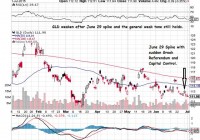
Summary The sudden Greek referendum and capital control gave the impression that events would spiral out of control and GLD spike up. U.S. and China intervened to keep the status quo and even the IMF which was defaulted on by Greece considered debt relief. Even the EU backed away from its demands and prepared to spend $35 billion euros to keep Greece within the EU. Still Greek PM wants a ‘No’ vote to increase negotiation leverage for greater concession. In short, Greece called the EU’s bluff and won the gamble. Financial stability concern had subsided but the world would still flock to USD. Bearish trend for GLD is now in place. The value of gold in our current fiat monetary system would be to serve as a hedge against inflation and financial instability. Inflation remains subtle today and major Centrals Banks only expect inflation to return to the 2% target in the next 2-5 years. Hence there is no reason to purchase gold from an inflation perspective. The financial stability argument is now in vogue with the whole Grexit saga that is playing out in real time. This has been expected after the Syriza government seized power back in January 2015 with the conflicting mandate of overthrowing austerity imposed by its European partners and to stay in the Eurozone at the same time. This is doomed for failure because the internal devaluation (cutting of wages and pensions, etc) would still go against the constraint of the strong euro in Greece’s competitiveness. Hence the Greek economy had shrunk year after year which would increase the debt to GDP ratio and make its debt untenable. Greek Referendum Card Therefore the only way forward would be for the Syriza government to play with the only card they have to force debt relief. That is the card of brinkmanship. It is only when Syriza threaten to burn the Eurozone apart with its default and the threat of leaving the European Union, then would the creditor nations be willing to grant them the much needed debt relief. It is important to understand this whole dynamics because it would in Greece’s interest to keep pushing Europe to the brink of collapse but at the same time maintain its membership in the Eurozone as long as the mandate of the Greek sways towards staying in the Eurozone. The Syriza government had to keep pushing the envelope to scare its creditors and it did a big scare on June 27. Greek Prime Minister Alexis Tsipras called for a sudden referendum on July 5 when the deadline for the EU bailout package on June 30. This worked wonders and was broadcasted worldwide for its sudden and irrational nature. At that point in time, shocked EU finance ministers expressed their angry clearly and closed the negotiations with Greece. On the next working day of June 29, Greece installed capital controls and limited the withdrawals of ATM cash to $60 euros per day. Banks were closed as the ECB refused to increase its emergency lending to deal with the bank run. Ratings agency such as Fitch and Standard and Poor downgraded Greeks banks and sovereign debt respectively. For a while, it would appear that things are rapidly spiraling out of control. I was shocked too and I wrote an article about the irrational nature of the Greek government as seen here . As the SPDR Gold Trust ETF (NYSEARCA: GLD ) chart below would show, gold prices actually spiked up that day as the threat of unconstrained disaster of Grexit appears imminent. The risk was that it would move out of Europe to the wider global economy. USD weakened as it was exchanged for gold. However this extreme extrapolation was a result of shock rather than a comprehensive assessment of the global economy. Foreign Intervention It turned out that the global will to keep the status quo was underestimated. Global leaders such as U.S. President Barack Obama, China’s Premier Li Keqiang and even IMF Christine Lagarde were not willing to rock the boat too hard. On June 30, the New York Times reported that President Obama intervened in the talks to urge creditors to soften their stance and come to a resolution. Obama was concerned over the financial stability concerns as the situation unfolded as described above. The U.S. President had grounds to believe that the unraveling of Europe could easily cause the contagion to spread not only in weaker European countries like Spain and Italy but also to the global economy including the U.S. In addition to the economic damage, there would also be geopolitical damage as Greece is part of NATO which is used to actively counteract the influence of Russia in Europe. This is especially after Russia annexed part of Ukraine in 2014 and this is still an existing concern. Obama was concerned enough for him to dispatch a senior Treasury officer to Europe to follow the status of the talks. For China , they had substantial investments in Greece and want Greece to stay within the EU framework for the safety of their investment. When the new government came into power, they tried to tear apart signed infrastructure contracts which unnerved Beijing. Things would only worsen if Greece were to leave the EU under desperate circumstances. Lastly we have the IMF which was at the losing end of Greece’s struggle with the EU. Greece failed to pay the $1.6 billion euros due on June 30 as the bailout negotiations failed. However the IMF had not taken action against Greece. Instead IMF Managing Director Christine Lagarde is entertaining the option of debt relief in exchange for reforms. Calling The EU Bluff Meanwhile the EU President Jean-Claude Juncker urged the Greeks to vote yes on the July 5 referendum and to stay within the Eurozone. This indicated that the EU would bend over backwards to accommodate the Greeks. In fact, the EU had already backed away from its proposal to rise the Value Added Tax from 13% to 23% and was prepared to give away another $35 billion in bailout. This is despite their doubts over the ability of the current Greek government to implement any reforms as demanded for the creditors. In fact even with these concessions on the table, the Greek PM is still urging his people to vote ‘no’ so that they can have more leverage on the EU for even more concession. The creditors are losing ground step by step with the negotiations with the current Greek government. The recent referendum, flawed as it is, is not used to primarily as a means for the Greek people to express their opinion. It is used as negotiation tool. In short, Tsipras had called the EU’s bluff. Even if the EU was willing to let go of Greece and go against its strong political will to unite the European nations on the frustrations of the creditor nations, international pressure would not allow it to happen so soon after a major recession and with the ongoing Russian aggression. In short, Tsipras took a gamble politically and he won. We can now expect to see more debt relief for Greece even if its record for implementation of reforms are doubted. Tsipras had won and Greece can stay within the Eurozone and not pay its debt. Conclusion The GLD chart below shows the recent impact of the Grexit drama. It spiked on June 29 as pointed out in the chart but it softened shortly after. It is clear that the financial stability concerns had faded and what is left is the rush to safety which would benefit the USD. (click to enlarge) Hence we should continue to sell GLD on any spikes in prices but we should not push it too far as there will be residual demand for gold in case events escalate beyond control suddenly. In other words, there will be a gradual weakening of GLD with periodic strength which should be sold. Disclosure: I/we have no positions in any stocks mentioned, and no plans to initiate any positions within the next 72 hours. (More…) I wrote this article myself, and it expresses my own opinions. I am not receiving compensation for it (other than from Seeking Alpha). I have no business relationship with any company whose stock is mentioned in this article.