Tag Archives: nreum

Stock Picking Grades For Small Cap Value Style Fund Managers
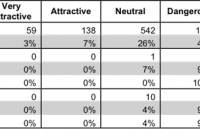
Summary In this report, we focus on how much Small Cap Value style fund managers allocate to the best stocks compared to how many good stocks are available in the style. Many ETFs and mutual fund managers do a poor job identifying quality stocks for their funds. These funds are not worth owning at any cost. The emphasis that traditional research places on low costs is a positive for investors, but low fees alone do not drive performance. Only good holdings can. This report shows how well Small Cap Value ETFs and mutual fund managers pick stocks. We juxtapose our Portfolio Management Rating on funds, which grades managers based on the quality of the stocks they choose, with the number of good stocks available in the style. This analysis shows whether or not ETF providers and mutual fund managers deserve their fees. For example, if a fund has a poor Portfolio Management Rating in a style where there are lots of good stocks, that fund does not deserve the fees it charges, and investors are much better off putting money in a passively-managed fund or investing directly in the style’s good stocks. On the other hand, if a fund has a good Portfolio Management Rating in a style where there are lots of bad stocks, then investors should put money in that fund, assuming the fund’s costs are competitive . Figure 1 compares the number of good stocks in the Small Cap Value style to the number of good funds. 197 out of the 2131 stocks (over 10% of the market value) in Small Cap Value ETFs and mutual funds get an Attractive-or-better rating. Zero out 15 Small Cap Value ETFs allocate enough to quality stocks to earn an Attractive-or-better Portfolio Management Rating. Mutual fund managers have not fared any better. Zero out of 273 Small Cap Value mutual funds allocate enough of their assets to quality stocks to earn an Attractive-or better Portfolio Management Rating. ETF providers and mutual fund managers need to do a better job to justify their fees. With no high quality funds available, 100% of investor assets in Small Cap Value ETFs are invested in ETFs with Dangerous Portfolio Management Ratings. Investors have almost no choice in this style with only one ETF even receiving better than a Dangerous Portfolio Management Rating. The picture is no better for mutual fund investors as 96% of investor assets are allocated to mutual funds with Dangerous-or-worse Portfolio Management Ratings. Figure 1: Small Cap Value Style: Comparing Quality of Stock Picking to Quality of Stocks Available (click to enlarge) Sources: New Constructs, LLC and company filings The First Trust Mid Cap Value AlphaDEX ETF (NYSEARCA: FNK ) has the highest Portfolio Management Rating of all Small Cap Value ETFs and earns my Neutral Portfolio Management Rating. The Prudential Small-Cap Value Fund (MUTF: PZVAX ) has the highest Portfolio Management Rating of all Small Cap Value mutual funds and earns my Neutral Portfolio Management Rating. The iShares Russell 2000 Value ETF (NYSEARCA: IWN ) has the lowest Portfolio Management Rating of all Small Cap Value ETFs and earns my Dangerous Portfolio Management Rating. The Aston/River Road Independent Value Fund (MUTF: ARVIX ) has the lowest Portfolio Management Rating of all Small Cap Value mutual funds and earns my Very Dangerous Portfolio Management Rating. Schweitzer-Mauduit International (NYSE: SWM ) is one of my favorite stocks held by Small Cap Value ETFs and mutual funds and earns my Attractive rating. Over the past ten years, Schweitzer has grown after-tax profit ( NOPAT ) by 13% compounded annually. Schweitzer also currently earns a top-quintile return on invested capital ( ROIC ) of 16%. Despite this outstanding profit growth, Schweitzer remains undervalued. At its current price of ~$44/share, SWM has a price to economic book value ( PEBV ) ratio of 1.1. This ratio implies that the market expects Schweitzer to grow NOPAT by only 10% from its current levels over the remainder of its corporate life. This expectation is rather low given the double-digit NOPAT growth achieved for the past decade. Unit Corporation (NYSE: UNT ) is one of my least favorite stocks held by Small Cap Value ETFs and mutual funds and earns my Very Dangerous rating. Over the past eight years, Unit’s NOPAT has declined by 1% compounded annually. The company currently earns a bottom-quintile ROIC of 5%, down from 19% in 2005. Unit has generated positive economic earnings in just one of the last 16 years covered by our model. Despite its lack of profit growth, UNT is rather overvalued. To justify its current price of ~$46, UNT must grow NOPAT by 9% compounded annually for the next 11 years. Such a high profit growth expectation seems overly optimistic given this company’s track record of declining profits. Kyle Guske II contributed to this report. Disclosure: David Trainer and Kyle Guske II receive no compensation to write about any specific stock, style, or theme.

Deutsche Liquid Alts Outlook: Overweight Long/Short Equity

While global equities lost ground in the third quarter of 2014, liquid alternatives consolidated their gains from the first half of the year. Discretionary macro and trend-following strategies were among the top performers, according to a briefing paper published by Deutsche Asset & Wealth Management (Deutsche), as diverging central bank policies provided opportunities for alternative strategists in the fixed-income and currency markets. In the paper, Deutsche offers a brief review of each of the following alternative strategies and current recommendations for portfolio positioning of each strategy: Long/short equity Market neutral equity Discretionary macro CTAs Credit strategies Event-driven Distressed What follows is a summary of Deutsche’s analysis of each alternative strategy. Long/Short Equity The choppiness of the broad stock market in Q3 – “risk-off” in July; “risk-on” in August; and mixed in September – put the focus on stock picking, the long/short equity specialty, rather than trend following or asset allocation. U.S. stock pickers in particular found “the operating environment more supportive than in European markets,” according to Deutsche. Market Neutral Market-neutral equity strategies underperformed in the second quarter but bounced back in the third, with the HFRX Equity Market Neutral Index posting its second-largest gain in more than three years in August. According to Deutsche, “gains occurred across factor-based models as well as fundamental and trading strategies.” As the broad bull market in stocks led to a flight of assets from market-neutral strategies, it became easier for market-neutral strategists, less constrained by size, to find better opportunities. What’s more, the flow of funds out of market-neutral has led to the survival of the fittest managers, improving their prospects for Q4 and 2015. Discretionary Macro Deutsche says the third quarter of 2014 was a “defining period” for discretionary macro strategies, with the class advancing in each of the quarter’s three calendar months. Positive performance was delivered by substantial bets on the dollar vs. the euro, as well as directional positioning in long bonds, and relative-value equity trades. Returns over the quarter were broadly based across asset classes. Commodity Trading Advisors CTAs posted gains in the third quarter, despite the continued decline in most commodities markets. The HFRX Systematic Diversified CTA Index added 1.55% in August, thanks to currency trends, rising U.S. bond prices, and further advances in the U.S. stock market. Credit Strategies Credit-strategy managers that were net-short high-yield bonds or had balanced books in the third quarter were rewarded, according to Deutsche. The bearish turn for high yield was caused by the “valuations in this sector moving ahead of fundamentals.” Relative-value credit strategies benefitted from corporations’ continued and elevated levels of refinancing. Event-Driven Kiboshed tax-inversion mergers weighted on event-driven strategies in the third quarter, as Congress passed laws discouraging the tax-reduction strategy that had been a boon to M&A activity. Two unrelated deals also fell through in early August: Sprint’s proposed takeover of T-Mobile, and 21 st Century Fox’s proposed acquisition of Time Warner. Distressed Investors in distressed assets had “nowhere to go” in the third quarter, according to Deutsche. The HFRX Distressed Index gave back gains over the period “as spreads backed up across many segments of the market.” Conclusion Deutsche concludes its briefing with a list of nine expectations, as well as allocations to strategies ranging from “overweight” to “underweight” for each alternative class. Long/short equity, market-neutral equity, and event-driven are given “overweight” ratings; Discretionary macro and credit strategies are given “overweight/neutral” ratings; CTAs are given a “neutral/underweight” rating; and Distressed strategies are assigned a pure “underweight” rating. Overall, Deutsche’s 12-month forecast for alternative strategies is “neutral/positive” with a projected 9.1% return. For more information, download a pdf copy of the report .

Opportunities For Alpha With Event Driven Credit Strategies

Editor’s note: Originally published on December 17, 2014 Many investors are aware of event-driven equity strategies, wherein the stock of the acquired company is held long, while the stock of the acquiring firm is sold short, generating arbitrage profits when the deal closes. But many of the same investors may not be aware that event-driven strategies can also be applied to credit instruments, which is the subject of a recent paper by Franklin Square titled Event-Driven Credit Strategies: Opportunities for Outperformance [.pdf]. The objective of event-driven credit strategy is to generate “equity-like returns” with a risk profile more similar to fixed-income. Event-driven equity strategies invest in the stock of companies after the announcement or in anticipation of a “corporate event” – such as a merger or acquisition, a bankruptcy or corporate restructuring, or a shareholder proxy fight. Event-driven credit strategies work under the same premise, but they add two additional “events” to their list: credit-rating changes and “special situations.” Credit Ratings “Investment grade” is the crucial threshold in credit ratings. Standard & Poor’s (S&P) and Moody’s each have different rating scales, but when a company is upgraded to BBB- by S&P or Baa3 by Moody’s, they officially crossover from “junk” to “investment grade” status – and that makes a big difference in the price investors are willing to pay for a company’s bonds. In the U.S., the difference has averaged 180 basis points over the past three years; or 202 basis points globally. By conducting extensive fundamental research, event-driven credit strategies try to anticipate corporate-credit upgrades from “junk” to “investment grade” – or the reverse. A company that’s upgraded to investment-grade credit quality is called a “rising star;” while a company that’s downgraded from investment-grade to junk is called a “fallen angel.” Event-driven credit strategies aim to invest in the bonds of companies before they become rising stars – or short them in anticipation of them becoming fallen angels. According to Franklin Square, “rising stars have generally outperformed similarly rated bonds by an average of 1.5% in the immediate aftermath of an upgrade event.” Special Situations Special situations are another type of event-driven strategy that tends to be more effective for credit strategies than for event-driven equity investors. A typical “special situation” may involve a company that’s under short-term financial stress, but has long-term promise. Event-driven credit investors often extend short-term loans to (or buy short-term bonds from) such companies, normally at above-market interest rates and with terms favorable to the lender. According to Franklin Square, “the average stressed bond issue outperformed the Barclays High Yield Index by an average of nearly 2% per year” over the past decade. Mergers and Acquisitions In the equities sphere, mergers and acquisitions (M&A) are the most prominent corporate events. In May, Hillshire Brands (NYSE: HSH )– manufacturer of Jimmy Dean sausages, among other popular food products – announced the high-profile acquisition of Pinnacle Foods (NYSE: PF ). Pinnacle’s shares soared, but so did its bonds, rising 9.2% on the day of the merger announcement. The above example shows that M&A provides event-driven opportunities for fixed-income investors, too. Indeed, since the early 2000s, the bonds of companies receiving merger bids have outperformed their benchmarks by 3% in the month following the proposed merger’s announcement. Conclusion Franklin Square’s whitepaper concludes with a list of three keys to event-driven credit strategies: Identify market price inefficiencies Initiate a catalyst Introduce equity-like returns Since employing event-driven credit strategies requires skill, expertise, and substantial capital, most individuals seeking exposure use investment vehicles such as mutual funds and closed-end funds. In the view of Franklin Square, investors should consider an event-driven credit fund’s focus, its strategy, its expenses, and its risk profile before investing. Disclosure : No position