Tag Archives: nreum

In Defense Of iShares MSCI Emerging Markets Minimum Volatility ETF
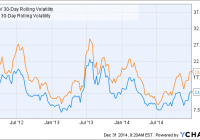
Summary I recently profiled several emerging market low-volatility ETFs and selected EEMV for my own personal portfolio. Last year, another Seeking Alpha author wrote a detailed analysis highlighting the drawbacks of EEMV. This piece considers those drawbacks in light of EEMV’s 3-year performance and also examines the role of the fund in one’s portfolio. Introduction In a previous article , we studied the performance of three low-volatility emerging market (EM) ETFs: EGShares Low Volatility EM Dividend ETF (NYSEARCA: HILO ), PowerShares S&P Emerging Markets Low Volatility Portfolio (NYSEARCA: EELV ) and iShares MSCI Emerging Markets Minimum Volatility (NYSEARCA: EEMV ). We found that all three low-volatility EM ETFs delivered lower volatility than the benchmark iShares MSCI Emerging Markets ETF (NYSEARCA: EEM ) over the past two years, but with wildly disparate returns. EEMV did the best out of the three funds, with a 20.64% return, while EELV returned 8.87%. Also, both funds beat EEM (6.23%). On the other hand, HILO was by far the worst fund with a total return performance of -9.53%. I decided to select EEMV for my own portfolio as it had better sector diversification, greater allocation towards low P/E countries, and the lowest expense ratio out of all the ETFs. In April 2013, around one and a half years after the inception of EEMV, Seeking Alpha author Investment Therapist wrote a detailed analysis that was critical of EEMV for the following four reasons: The methodology of EEMV is constructed without a return focus. Historical volatility is not the best way to obtain low future volatility. EEMV is underdiversified and overconcentrated in low-volatility, high-dividend names, which may underperform in a bull market. The low volatility of EEMV will not protect the fund from a financial crisis. With another 1.5 years under its belt since the date of that article, this fund is now over three years old. This article seeks to address some of the criticisms raised by Investment Therapist in light of the EEMV’s three year performance, and also examines the role of the fund in one’s portfolio. While I disagree with some of his statements, this piece aims not to be combative, but is intended to both clarify my own thinking and to stimulate discussion with the broad readership of Seeking Alpha. 1. The methodology of EEMV is constructed without a return focus. Investment Therapist writes: Basically, the portfolio is being created with an emphasis on volatility and NOT return opportunities. It should go without saying that most rational investors are primarily focused on potential Rewards relative to Risk, and not solely focused on Risk (volatility). By focusing on volatility, the portfolio is created with no outlook on the future return opportunities of the stocks within the portfolio. Investment Therapist is basically saying that volatility has no relationship with future return. However, volatility is a validated factor for alpha. In an April 2012 article by Robeco Asset Management entitled “The volatility effect in emerging markets”, authors Blitz, Pang and Vliet found that from 1988 to 2010, EM stocks that showed lower volatility or lower beta outperformed those with higher volatility or higher beta on a risk-adjusted basis. After adjusting for differences in market beta, the “top-minus-bottom” 1-factor alpha spread between the highest and lowest quintiles of stocks ranked in terms of volatility was determined to be -8.8% per annum. Ranking stocks in terms of beta produced similar results that were less strong (1-factor alpha spread = -5.4%), but still statistically significant. Similar analysis conducted with size, value and momentum (re)confirmed that these premia also operated in emerging markets. Based on the 1-factor alphas, the authors found that the low-volatility premium was much larger than the size premium, comparable to the value premium, but smaller than the momentum premium. Low-volatility stocks also tend to be larger and more mature companies, which could possibly predispose them towards value rather than growth exposure. Was the low volatility premium simply due to an increased exposure to the value factor? To address this, the authors calculated 3-factor and 4-factor alphas for their sample. They found that the 3-factor alphas were very similar to the 1-factor alphas, indicating that exposures to size or value do not explain the higher returns of low-volatility or low-beta stocks in the study. Only the 4-factor alphas were slightly lower, indicating that low-volatility stocks may have indirectly benefited by also showing momentum characteristics (NB: riddle me that!). Therefore, it seems that selecting for low-volatility has been a robust factor for achieving higher risk-adjusted returns. 2. Historical volatility is not the best way to obtain low future volatility. In Robeco’s study of emerging market stocks, the authors stated that “Past risk is again strongly predictive for future risk”. However, Investment Therapist writes: If choosing stocks with low historical volatility and/or low correlations is such a great way of creating a “Minimum Volatility Portfolio,” then why are there over 10 Emerging Market mutual funds that have lower 1-year and Since Inception (of EEMV) volatility than EEMV? Focusing on historical volatility clearly doesn’t produce a portfolio with the lowest volatility. The funds with lower volatility than EEMV focus on the valuation of stocks (determining a stock’s intrinsic value), which EEMV does not since returns are not an input into the construction of the ETF portfolio. Investment Therapist is saying that funds (presumably mutual funds) with a focus on value managed to achieve lower volatility than EEMV over 1-year or since inception (1.5 years). As EEMV is now 3 years old, we can do a longer test of its realized volatility. Note that I shall be using EEM as a benchmark rather than mutual funds as I believe that is a fairer comparison. The graph below shows the 30-day volatility for EEMV and EEM over the past 3 years. EEMV 30-Day Rolling Volatility data by YCharts The results show that EEMV has consistently managed to obtain lower volatility than EEM over the past 3 years. Therefore, it seems that the fund does succeed at producing lower volatility compared to the benchmark. Just for interest, I also report the 2-year volatility and beta values for three EM low-volatility funds (EEMV, EELV and HILO), three EM value funds ( EVAL , PXH , TLTE ), and EEM. The 2-year return of the funds is also shown for comparison. Data are from InvestSpy . Volatility Beta Return EEMV 12.90% 0.81 3.90% EELV 13.30% 0.81 -2.00% HILO 15.30% 0.89 -15.90% Average 13.83% 0.84 -4.67% (NASDAQ: EVAL ) 25.00% 0.57 -5.20% (NYSEARCA: PXH ) 17.90% 1.06 -9.30% (NYSEARCA: TLTE ) 14.70% 0.82 -1.60% Average 19.20% 0.82 -5.37% EEM 16.90% 1.06 -1.40% Interestingly, we find that the three EM value funds actually had higher volatility than the benchmark EEM. Therefore, for passively-managed emerging markets ETFs at least, it seems that value stocks did not possess lower volatilities. 3. EEMV is underdiversified and overconcentrated in low-volatility, high-dividend names, which may underperform in a bull market. Investment Therapist writes: With correlations now coming down and higher yielding investments now approaching the status of “overcrowded trade,” I expect (my opinion) that the same high tracking error that came with the fund on the upside performance will also cause this fund to experience strong pains should a bull market in Emerging Markets form. Overall, once the strong performance over the fund’s very short tenure is examined deeper, it can be seen that the strong stylized bias towards the value-oriented, low-volatility names were a tail-wind to the fund. I do agree with Investment Therapist here. Low-volatility names tend to exist in more mature, stable industries that have a lower capacity for growth. In our previous article, we saw that EEMV was actually more pricey than EEM in terms of its valuation metrics (table reproduced below, data from Morningstar , value metrics are forward-looking). EEMV EEM Price/Earnings 15.69 12.76 Price/Book 1.86 1.49 Price/Sales 1.51 1.14 Price/Cash Flow 7.38 4.91 Dividend yield % 2.81 2.56 Projected Earnings Growth % 10.97 11.76 Historical Earnings Growth % 5.06 -1.68 Sales Growth % -15.60 -13.79 Cash-flow Growth % 6.36 7.85 Book-value Growth % -26.56 -21.57 Since EEMV’s inception, there have been at least two mini-bull markets where EEM climbed by 20% or more. Let’s see how EEMV and its “opposite fund”, the PowerShares S&P Emerging Markets High Beta Portfolio (NYSEARCA: EEHB ), performed over these two time periods. Jun 1st, 2012 to Jan 1st, 2013 EEM Total Return Price data by YCharts Feb 1st, 2014 to Sep 1st, 2014 EEM Total Return Price data by YCharts We can see that in both mini-bull runs, EEMV underperformed the benchmark EEM, while EEHB outperformed. Therefore, I agree with Investment Therapist’s assertion that EEMV would likely underperform EEM in a future bull market. But we should also consider this question: what was the purpose of the low-volatility fund in the first place? No one should have expected such a fund to keep pace with a roaring bull. Instead, a low-volatility fund’s aim should be to reduce equity risk (to a certain extent), resulting in higher risk-adjusted returns. The following table shows the 20-month return, volatility, beta, and maximum drawdown of EEMV, EEHB and EEM (data from InvestSpy ). Volatility Beta Max draw. Return EEMV 13.7% 0.86 -15.90% 7.80% EEHB 25.0% 0.62 -29.90% -12.90% EEM 18.0% 1.16 -18.90% -5.60% We can see that the recent struggles of EM markets has caused EEHB to significantly underperform. EEHB had higher volatility and also greater maximum drawdown over the past 20 months compared to EEMV or EEM. (Note that the beta values are with respect to S&P500 and therefore may n to be applicable). So am I saying to go for high volatility/beta in bull markets, and low volatility/beta in bear markets? Hardly. The first reason is that no one can reliably predict when the next bull or bear market will arrive. The second reason is that if you were to pick a factor to tilt towards in a bull market, wouldn’t you rather choose momentum [such as PowerShares DWA Emerging Market Momentum Portfolio (NYSEARCA: PIE )], which is an academically validated factor for outperformance, rather than high-volatility, an academically validated factor for underperformance? All in all, I don’t think that buying-and-holding EEMV is an inherently flawed decision. This is particularly true for the investor who wants some exposure to emerging markets, but are afraid that they can’t handle the higher volatility of emerging markets. However, for investors with a higher risk tolerance I would recommend also buying PIE and PXH to take advantage of momentum and value premia as well, and for better diversification over the entire market cycle (one could also achieve better diversification by holding EEM). 4. The low volatility of EEMV will not protect the fund from a financial crisis. Investment Therapist writes: Bonds will behave much differently than stocks, even during a financial crisis. A portfolio of stocks, however, wavered during the most recent financial crisis and the lack of “diversification” was made evident. There is no fundamental research proving that this type of optimization would work at the Stock Selection level since a portfolio of stocks behave more similarly than two unique strategies like Bonds and Stocks. I do completely agree with Investment Therapist on this. Low volatility stocks are still stocks, and will move (more or less) as other stocks do. Therefore, investors in EEMV should not expect the fund to hold up during a recession (like a bond would). But again, an investor should be asking the same question: what was the purpose of the low-volatility fund in the first place? What a low-volatility fund will do is to perform better than a neutral or a high-volatility fund during a correction or a bear market. Indeed, (backtested) data shows that MSCI EM Minimum Volatility Index, the underlying index for EEMV, dropped “only” -41.97% in 2008, while the MSCI EM index dropped -53.18%. In more recent and actual data, EEMV held up better than EEM in the September swoon that hit emerging markets this year (strangely, so did EEHB). EEM Total Return Price data by YCharts Conclusion Investment Therapist’s article contained some criticisms on EEMV that, while technically correct, should not unduly worry the investor who recognizes the role and limitations of a low-volatility fund in their portfolio. Yes, EEMV will likely underperform EEM in a bull market and will also likely underperform bonds during a bear market. However, what EEMV will deliver is lower volatility compared to EEM, which is great from a psychological point of view, as well as higher risk-adjusted returns or “alpha” (as long as the low-volatility premium persists, which I will assume to be the case until evidence points otherwise). However, one cautionary note that I will echo Investment Therapist on is that low-volatility stocks are becoming more expensive. Therefore, I recommend that investors with higher risk tolerances should also consider holding EM value funds such as PXH or EM momentum funds such as PIE to harvest other alternative sources of alpha.
How Do You Find Value Investment Ideas?

It’s easy to drown while trying to drink from the fire hose of information that is the stock market. After 25+ years of value investing successes and failures, I’ve come up with my 11 favorite shortcuts to finding promising companies. Did I miss any shortcuts? How do you find value investment ideas? I’ve got the fire roaring, eggnog in hand, enjoying some downtime during the hectic holiday season. The New Year is approaching, which inevitably has me looking back over the investment year that was. There were some successes and, as always, there were some failures. I still flinch while thinking about my ill-timed “deworsification” into the Russian stock market. One question I always try to answer is, “How exactly did I find my best ideas?” Value investing is for investors with a long-term outlook and simply looking back over the last year is not going to be very informative. The sample size is too small and not enough time has elapsed to let investment themes play out. So instead of just looking at the past year, I decided to go back a little further. During my investment career, I have spent a substantial amount of time searching for excellent value ideas. But finding that one gem in the ocean of possible alternatives can be overwhelming. It’s easy to drown while trying to drink from the fire hose of information that is the stock market. So over time, I have unearthed many useful tools that have helped me to discover great ideas. Some of these shortcuts started off extremely useful and continue to be powerful, but some simply didn’t pan out or lost their efficacy. I went back over the last 25+ years of my investing career and tried to recall how I first stumbled across each successful investment idea. I then narrowed this list down to the top 11 ways to find new ideas that I have found most useful. The list progresses from least to most valuable. Traditional Media – I wasn’t sure if I should include media on this list as it can really be more of the delivery mechanism for the other criteria below, but I have been spurred to look closely at a company because of information I’ve gathered through various media outlets, including newspapers, television and business websites. I tend to find investable concepts more than individual stock picks using traditional media, and there is a ton of noise, but there’s a lot of good information out there if you look hard enough. Removal From an Index – Obviously, when a stock is dropped from an index, there is forced selling by index funds that hold the name. However, the index sponsors also try to game the system. Companies that are added to an index tend to be sexy and on an upward trajectory, while companies that are dropped from an index tend to be stodgy and are often out of favor. The oversold cast-offs can be an attractive place to discover value investments. New CEOs – This really depends on the specific situation. If a company’s CEO is retiring after being named Time Magazine’s “Person of the Year”, when the company’s stock price is at an all-time high, it’s not going to attract my attention. If a CEO is pushed out by the board after failing miserably, now we’re talking! A new CEO can make a huge difference in the right situation. Companies that tend to benefit the most from a change at the top tend to have a smaller market cap, a manageable debt load and strong free cash flow. Biggest Percentage Losers – I check the biggest losers list every day. Most of these stocks deserve the sell-off, but every so often a great idea can be salvaged from this discard pile. When bad news comes out, many investors sell first and ask questions later, if ever. I’ve worked as an equity analyst and I have seen this first hand. The thought of going into a client meeting with a dog that dropped 40% makes investment professionals cringe. Stocks that drop dramatically often sail right past true value. 52 Week Lows – This is another list that I check every day. What’s on the list? Why? It’s a fantastic way to spot industry trends as well as to find individual companies that have been left for dead. It’s a fantastic list to use to find bargains, but just because a stock is at a 52-week low, it doesn’t mean it’s undervalued. Exiting Bankruptcy – Companies that are overlooked with a checkered past can often lead to very attractive gains. Bondholders often receive equity when a company emerges from bankruptcy and many times they sell it quickly, depressing the company’s share price. Organizations that are exiting bankruptcy often have smaller debt loads and have shed unattractive businesses during their reorganization, yet are still covered in the taint of failure. If you feel your nose wrinkling as your face contorts into a look of disgust upon hearing the name of a company that imploded into bankruptcy, but is now emerging, you may be on to a great investment idea. Insider Buying – A sizeable open market purchase by an individual with intimate knowledge of a business can be a fantastic buy signal. However, there can be a lot of noise. Ignore small, insignificant purchases and stock acquired through options. Pay more attention to open-market purchases by company management with a good track record of buying and selling stock, especially when there is size to their trades. Gurus – Do you have a team of 20 well-paid, remarkably intelligent and highly-trained analysts at your disposal? No? Neither do I, but many successful value managers have this and much more. So why not utilize their resources? I don’t tend to get too excited when I see that 40 hedge fund managers own Apple, but when a highly-respected value manager purchases 5% of a $100 million company, then I tend to take notice. Always pay attention to the type of manager you follow as some trade frequently and utilizing their public filings is not advisable. However, there is an extended list of value managers with long-term time horizons and superior track records that trade infrequently. Untraditional Media – I would include blogs and newsletters in this category, including Seeking Alpha. Ideas from untraditional media can be hit or miss, but I’ve cultivated a small group of analysts/investors that I genuinely trust and rely on. Unlike many of the other resources I use to find investment ideas, I can assume that the ideas presented by this trusted group will be well-thought-out and worth a second look. I’m always searching for smart investors that share the same value investing methodology as myself. Sentiment – As a value investor, I want to see high negative sentiment. The more hated and despised a company is, then the more interested I become. When everyone is negative, the slightest positive news can start to move a stock upward. I have always viewed traditional academic value screens as a measure of sentiment. The reason most companies are trading in the bottom decile of book value is that they are hated. Some of my favorite valuation screens include price/book, price/sales and EV/EBITDA. If these metrics are depressed, you likely have a company with very poor sentiment. Spin-offs – I know. I’m sure many of you are cringing, wondering why you should sit through another narrative on why spin-offs are so great. I agree…but they still work. I won’t go through all of the reasons that spin-offs tend to outperform as the information is freely available across the internet. If the information is so freely available, shouldn’t the strategy stop working? Yes, it should. But when going back through my investing career, I have used the strategy to consistently find huge winners. I imagine that spin-offs will lose their ability to outperform eventually, but I don’t believe we are at that point just yet. Index funds still dump spin-offs that are not in their index and individuals still dump the 25 share position that has magically appeared on their brokerage statement. Although investors need to be more selective when investing in spin-offs today, especially when many savvy investors are familiar with the strategy, there are still excellent opportunities available. Hopefully I’ve been able to outline a strategy or two that readers will find helpful. Undoubtedly, there are many more strategies that successful investors use to uncover great value ideas that I have missed. I’d love to hear from the Seeking Alpha community. How do you find value investment ideas?

First Energy: The Hidden Gem Of Marcellus Shale?

Summary Electricity companies are the major beneficiaries of growing investment in the Marcellus and Utica Shale. First Energy is making investments in order to take advantage of the growth opportunity in the region. Cracker plants will substantially increase the demand for electricity in the region. The U.S. shale boom has come under threat due to the consistent fall in crude oil prices. And fracking was already controversial due to the environmental hazards — the state of New York has banned the practice due to the environmental issues. The fall in crude prices, however, has really impacted companies with oil-heavy portfolios while companies with gas-heavy portfolios continue to grow production. The main reason behind the increase in production is that the demand for natural gas, natural gas liquids, and the components remains high. Marcellus and Utica shale are natural gas rich areas and companies continue to invest in these natural gas rich areas to grow their production. These natural gas players have gained a lot from this boom in production. However, there are some other players that have been benefiting from this boom and have been relatively anonymous. First Energy (NYSE: FE ) is one of these players. The company has been providing electricity to the facilities in the region and it has been growing impressively. Over the last year, the stock has gained about 22%. First Energy has changed its strategy and the company is now focusing on transmission and regulated distribution business. The company has become a major supplier to the oil and gas companies operating in these regions. Drilling is still done through the diesel generators, but the gas processing plants use electricity and their demand is constantly increasing. The process of separating liquids and the natural gas process needs a lot of electricity. As the investment in natural gas drilling has been increasing, the demand for electricity has also been increasing. Since July 2011, First Energy’s usage for shale-related activities has increased by 70 megawatts. By 2019, this region is expected to create further demand of about 1,100 megawatts due to the increased developments in the area. In order to capture this growth opportunity, the company is planning to invest in a number of transmission projects. First Energy is going to invest $100 million in new transmission projects to increase supply to the operators in the Marcellus shale. Natural gas processing is a multi-stage process, and the rising demand for polyethylene and other feedstock components for the petrochemical industry have prompted the natural gas players to invest in cracker plants. These plants turn liquid ethane in polyethylene and other feedstock components. As the natural gas and natural gas liquids production continues to rise from the Marcellus shale, it is likely that these companies will want to build cracker plants in order to manufacture these feedstock components from liquids ethane and natural gas. As a result, demand for electricity will further rise as these cracker plants need substantial electricity to operate. First Energy will stand to benefit from this rise in demand, and the investment in better transmission will pay off for the company. First Energy is currently serving 12 natural gas processing plants in Pennsylvania, Ohio, and West Virginia. The company previously announced a $4.2 billion project, which will run through 2017. Most of these investments are focused in these states and the Marcellus shale area. One of the planned cracker plants is the project by Royal Dutch Shell (NYSE: RDS.A ) — the company is going to build a plant in Monaca Beaver County and this facility will process over 100,000 barrels of liquid ethane every day. The plant will use between 300 and 400 megawatts of electricity. The Bottom Line A growth opportunity is present for First Energy and it is already making efforts to capture this opportunity. Timely investment in the transmission network will position the company nicely to provide electricity to the new natural gas processing plants as well as cracker plants. Despite the overall poor conditions of the energy industry, the demand for natural gas liquids and feedstock components remains high, which bodes well for the company. Natural gas players will continue to grow production of natural gas, natural gas liquids and other feedstock components in order to meet the rising global demand for these products. As a result, demand for electricity will continue to grow. In my opinion, First Energy is well-positioned to grow and the company’s investment is targeted at a high-growth area of its business mix. I believe that despite a healthy gain (22%) during the current year, First Energy will continue to grow and will have a solid 2015. Disclaimer : This article is for informational purposes only and it should not be taken as an investment recommendation. Investing in stock markets involves a number of risks and readers/investors are encouraged to do their own due diligence and familiarize themselves with the risks involved.