Tag Archives: nreum

CROP Isn’t Growing Fast Enough, Even The Discount To NAV Will Not Attract Me
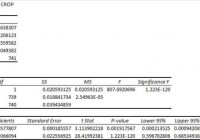
Summary I’m taking a look at CROP as a candidate for inclusion in my ETF portfolio. The expense ratio seems to be justified by not being market weighted, but the diversification within the fund is weak. The correlation to SPY is easily the most attractive characteristic, but it is combined with moderate volatility and very weak returns. I’m not assessing any tax impacts. Investors should check their own situation for tax exposure. Investors should be seeking to improve their risk adjusted returns. I’m a big fan of using ETFs to achieve the risk adjusted returns relative to the portfolios that a normal investor can generate for themselves after trading costs. I’m working on building a new portfolio and I’m going to be analyzing several of the ETFs that I am considering for my personal portfolio. One of the funds that I’m considering is the IQ Global Agribusiness Small Cap ETF (NYSEARCA: CROP ). I’ll be performing a substantial portion of my analysis along the lines of modern portfolio theory, so my goal is to find ways to minimize costs while achieving diversification to reduce my risk level. What does CROP do? CROP attempts to track the total return (before fees and expenses) of the IQ Global Agribusiness Small Cap Index. According to the prospectus, the underlying index “is a rules based, modified capitalization weighted, float adjusted index.” I can appreciate having a weighting system other than simple market capitalization. Weighting by market cap is very easy; the ETF simply buys up the initial amount of shares in each fund and maintains the position. In this case, the ETF is not using a simple market cap weighting. In my opinion, that would justify a slightly higher expense ratio. CROP falls under the category of “Consumer Defensive.” Does CROP provide diversification benefits to a portfolio? Each investor may hold a different portfolio, but I use the SPDR S&P 500 Trust ETF (NYSEARCA: SPY ) as the basis for my analysis. I believe SPY, or another large cap U.S. fund with similar properties, represents the reasonable first step for many investors designing an ETF portfolio. Therefore, I start my diversification analysis by seeing how it works with SPY. I start with an ANOVA table: (click to enlarge) The correlation is excellent at 72%. I want to see low correlations on my investments. Extremely low levels of correlation are wonderful for establishing a more stable portfolio. I consider anything under 50% to be extremely low. However, for equity securities an extremely low correlation is frequently only found when there are substantial issues with trading volumes that may distort the statistics. Standard deviation of daily returns (dividend adjusted, measured since January 2012) The standard deviation is great. For CROP it is .8229%. For SPY, it is .7300% for the same period. SPY usually beats other ETFs in this regard. I like the low correlation and it could be enough to cover the higher standard deviation once we start looking at allocations within a portfolio. Liquidity looks mediocre Average trading volume is pretty low, a bit over 11,000. That isn’t low enough to eliminate it from my consideration, but it is a concern. I’m writing this while the market is open, and the current spread is .36%. That’s a big enough spread to pay attention to when putting in an order. Of course, spreads can change constantly, but investors here should make sure they are using limit orders to prevent crossing a large spread. Mixing it with SPY I also run comparisons on the standard deviation of daily returns for the portfolio assuming that the portfolio is combined with the S&P 500. For research, I assume daily rebalancing because it dramatically simplifies the math. With a 50/50 weighting in a portfolio holding only SPY and CROP, the standard deviation of daily returns across the entire portfolio is .7208%. With 80% in SPY and 20% in CROP, the standard deviation of the portfolio would have been .7121%. If an investor wanted to use CROP as a supplement to their portfolio, the standard deviation across the portfolio with 95% in SPY and 5% in CROP would have been .7238%. Why I use standard deviation of daily returns I don’t believe historical returns have predictive power for future returns, but I do believe historical values for standard deviations of returns relative to other ETFs have some predictive power on future risks and correlations. Yield & Taxes The distribution yield is 1.63%. I like to see strong yields for retiring portfolios because I don’t want to touch the principal. By investing in ETFs I’m removing some of the human emotions, such as panic. Higher yields imply lower growth rates (without reinvestment) over the long term, but that is an acceptable trade off in my opinion. The weak yield makes me less excited about the portfolio from a retirement standpoint, but I have a long ways to go before I’m there. I’m not a CPA or CFP, so I’m not assessing any tax impacts. Expense Ratio The ETF is posting .75% for a gross expense ratio, and .75% for a net expense ratio. I want diversification, I want stability, and I don’t want to pay for them. The expense ratio on this fund is higher than I want to pay for equity securities, but having a better system than a simple market cap weighting provides some justification for the higher ratio. Market to NAV The ETF is at a .96% discount to NAV currently. Premiums or discounts to NAV can change very quickly so investors should check prior to putting in an order. Largest Holdings The diversification within the ETF is very weak. While the weighting method provided some justification for a higher expense ratio, the poor diversification within the holdings severely damages that justification. Rebalancing the fund may require some costs, but having fewer positions to rebalance reduces those costs. (click to enlarge) After looking at the diversification level within the ETF, I’m more critical of the expense ratio. Conclusion I’m currently screening a large volume of ETFs for my own portfolio. The portfolio I’m building is through Schwab, so I’m able to trade CROP with no commissions. I have a strong preference for researching ETFs that are free to trade in my account, so most of my research will be on ETFs that fall under the “ETF OneSource” program. For a correlation of 72% and more volatility than SPY, I would have expected the ETF to have more significant returns. I don’t believe in using past performance to predict future performance, but if an ETF shows moderate or higher correlation and weak performance, it makes me doubtful. During the time period I used (almost 3 years) SPY went up by over 66%. Crop went up by 14%. That isn’t terrible if the ETF is extremely low risk, but for something with even a moderate correlation to SPY it feels like pretty weak performance. I’m going to be knocking CROP off my list. Despite what initially appeared to be solid diversification benefits when combined with SPY, there have been no other positives outside of the discount to NAV. While I like buying an ETF at a discount to NAV, it needs to be an ETF that I actually want to own. Additional disclosure: Information in this article represents the opinion of the analyst. All statements are represented as opinions, rather than facts, and should not be construed as advice to buy or sell a security. Ratings of “outperform” and “underperform” reflect the analyst’s estimation of a divergence between the market value for a security and the price that would be appropriate given the potential for risks and returns relative to other securities. The analyst does not know your particular objectives for returns or constraints upon investing. All investors are encouraged to do their own research before making any investment decision. Information is regularly obtained from Yahoo Finance, Google Finance, and SEC Database. If Yahoo, Google, or the SEC database contained faulty or old information it could be incorporated into my analysis. The analyst holds a diversified portfolio including mutual funds or index funds which may include a small long exposure to the stock.
The Best Japan ETF For The Long-Term, Hint: It’s Not DXJ

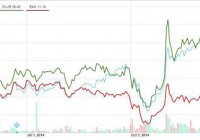
Summary I examine the Japan Hedged Real Estate ETF. I compared the performance of the Japan Hedged Real Estate ETF to the DXJ, and the un-hedged EWJ. Based on the policies of the BOJ, and Japan’s Pension fund, along with the underlying fundamentals I believe the Japan Hedged Real Estate ETF will be a long-term winner. In this article, I will be conducting an overview of a unique ETF that I believe is currently in the sweet spot for potential long-term gains. The WisdomTree Japan Hedged Real Estate ETF (NYSEARCA: DXJR ) I believe is worth considering because of the monetary stimulus that the Bank of Japan [BOJ] initiated in late October, in addition to increased buying of REITS and real estate equities from Japan’s Government Pension Investment Fund [GPIF]. DXJR Fund Facts Index Description The Index and the Fund are designed to provide exposure to Real Estate companies in Japan, while at the same time hedging exposure to fluctuations between the value of the U.S. dollar and the Japanese yen. [ DXJR Fund Page ] Assets: $35.3 million Expense Ratio: 0.43% SEC 30-Day Yield: 1.13% Inception Date: 4/8/2014 DXJR Performance I went to ETF.com and used their ETF Finder to see how the performance of DXJR compared to other Japan related ETFs. I excluded leveraged & inverse funds from my search, and found there were 19 Japan related ETFs. I compared the performance of DXJR since its inception, to the un-hedged iShares MSCI Japan ETF (NYSEARCA: EWJ ), and the largest hedged Japan ETF, the WisdomTree Japan Hedged Equity ETF (NYSEARCA: DXJ ). The chart below shows that since inception, DXJR has significantly outperformed EWJ, and has modestly outperformed the DXJ. The chart clearly shows that in an environment where the BOJ is easing, and Yen is weakening, a currency hedged ETF is the best option. (click to enlarge) Why DXJR Over DXJ? Someone may pose the question, why consider the DXJR which has only $35 million in assets, compared to DXJ which has over $11.5 billion in assets? Both ETFs will benefit from the GPIF allocating more to equities & real estate, and both will benefit from having a hedge to profit from the weakening Yen. The big difference that I believe will lead to DXJR outperforming DXJ is the supply of real estate. Supply Shortage For example, there was an article earlier this year from the WSJ, which, talked about an office space shortage, or this article from Japan Property Central about a severe shortage in apartments. Putting it in simple terms and stating the obvious, Japan is an island, therefore there is a limited supply of available land, and the only way to get around that fact is to build vertically. In a CNBC interview Daisuke Kitai who is the spokesperson at Nomura Real Estate Development stated: The availability of plots large enough to build new apartment complexes in central Tokyo is very limited. As I stated above, the only way to go is to build vertically, however, based on the statement from Mr. Kitai, it is easy to see why there is a shortage of apartments. Foreign Buying Mr. Kitai also brought up another source of demand that is leading to a shortage and that is increased buying from foreign buyers. Mr. Kitai made two statements, which show that there is demand from foreign buyers for Japanese real estate. Based on these statements its easy to see that foreign buyers will continue to properties in Japan, and with the yen weakening foreign buyers who are buying with a stronger currency will get more bang for their buck. Tokyo prices look relatively reasonable compared with similar quality properties in Hong Kong and Singapore. Of the seventy properties sold in the Toranomon Hills complex this summer, 30 percent were sold to foreigners, many from Hong Kong and Taiwan. Estate Planning The final reason why there is a supply shortage is the aging population of Japan is buying properties to minimize inheritance taxes. Also from the CNBC interview Kosei Ajima who is the general manager of property developer Mori Building Co stated: Many Japanese are buying an apartment as a gift to their children to minimize the eventual inheritance tax burden. With the population of Japan aging fast, I would expect there to be continued buying from Japanese citizens who are looking to leave their children with a lower tax bill. Closing Thoughts In closing, I believe the combination of the underlying fundamentals of the Japanese real estate, buying of REITS and real estate stocks by the GPIF, and the BOJ continuing to weaken the yen will lead to long-term gains for DXJR. For someone considering DXJR remember that the ETF has low volume, therefore it would be wise to use limit orders. Disclaimer: See here .

How Are Housing ETFs Poised For The New Year?

The housing construction market has recovered at a steady and gradual pace in the second half of 2014 after a slump at the beginning of the year. Overall economic growth, improving job numbers, growing consumer confidence, moderating home prices, stabilizing mortgage rates and a low level of housing inventory all led to the improvement. A string of housing data released lately portrays a mixed to slightly positive picture of the housing market. Existing home sales and new home sales rose in the month of October. Though housing starts declined in October and November, analysts in general believe the broader housing trends are stable to slightly positive and will pick up momentum in the New Year. Homebuilders are also turning more optimistic as demand for new homes rises with an improving job market and growing consumer confidence. Homebuilders’ confidence, as indicated by the National Association of Home Builders (NAHB)/Wells Fargo housing market index, rose 4 points to 58 in November. Though the index declined a point to 57 in December, it is still well above 50, which is the demarcating line between expanding and contracting activity levels. However, what keeps us concerned are the chances of a rise in short-term interest rates in 2015 as the Fed has already ended its six-year long quantitative easing program in October. Though the Fed had earlier promised to keep the key interest rate at record low for a ‘considerable time,’ investors are speculating about the timing of the planned rate hike. The robust job numbers might draw the Federal Reserve closer to raising interest rates. Higher interest/mortgage interest rates may have a moderating effect on housing demand and pricing. ETFs to Tap the Sector Given the improving fundamentals, the homebuilding sector deserves a closer look. For investors willing to play the space in a less risky way, an ETF approach can be a good idea. This technique can help to spread out assets among a wide variety of companies and reduce company specific risk at a very low cost. Below, we have highlighted three ETFs that are worth looking into. The SPDR Homebuilders ETF (NYSEARCA: XHB ) XHB is one of the more popular homebuilding ETFs in the market today with assets under management of around $1.48 billion and a trading volume of roughly 4.07 million shares a day. The fund has an expense ratio of 35 basis points. The fund holds 37 stocks in its basket, with 44% of the assets going to mid caps and 6% comprising large cap stocks. Despite the smaller holding pattern, the fund does not appear to be concentrated in the top 10 holdings. The fund has just 34.1% in the top 10 with Lowe’s Companies (NYSE: LOW ), Whirlpool Corporation (NYSE: WHR ) and Restoration Hardware Holdings (NYSE: RH ) occupying the top 3 positions with asset allocation of 3.64%, 3.63% and 3.56%, respectively. The fund’s assets include 33% homebuilders, 15% household appliances securities, 26% specialty retail stocks and the balance 26% building materials companies. The fund carries a Zacks Rank #3 (Hold) with a high level of risk. The iShares U.S. Home Construction ETF (NYSEARCA: ITB ) Another popular choice in the homebuilding sector is ITB, which tracks the Dow Jones U.S. Select Home Construction Index. It has $1.55 billion in assets with a trading volume of roughly 3.5 million shares a day, while its expense ratio is just 45 basis points. The fund holds 39 stocks in its basket, out of which only 12% are large cap securities. The fund has a concentrated approach in the top 10 holdings with 62.9% of the asset base invested in them. Among individual holdings, top stocks in the ETF include D.R. Horton, Inc. (NYSE: DHI ), Lennar (NYSE: LEN ) and Pulte (NYSE: PHM ) with asset allocation of 10.97%, 10.53% and 9.67%, respectively. Homebuilders accounts for around 64% of this fund. The fund carries a Zacks Rank #3 (Hold) with a high level of risk. The PowerShares Dynamic Building & Construction Portfolio ETF (NYSEARCA: PKB ) This ETF comprises around 30 housing companies and has its assets invested across all classes of the market spectrum. Engineering and construction stocks comprise 21% of the fund, followed by building materials companies that account for 17%. A look at the style pattern reveals that the fund has a preference for value stocks. The fund manages an asset base of $58.0 million and has an expense ratio of 63 basis points. The fund has only 16% in large cap securities and 46.1% in the top 10 holdings. The fund carries a Zacks Rank #3 (Hold) with a High level of risk. To Sum Up The housing market has improved dramatically from the trough year of 2009. Homebuilding activity is expected to take a cue from improving job numbers and a rebounding economy. Though the timing of a rise in interest rates creates uncertainty, homebuilders are increasingly optimistic of a pick up in sales in the New Year.