Tag Archives: nreum

Is 2015 The Year For Municipal Bond ETFs?

The U.S. muni bonds market had a great 2014 with its returns just below the S&P 500 and the Dow Jones Industrial Average. These two blue chip indices advanced a respective 15.3% and 11.5%. With the S&P 500 also crossing the 2,000 mark, muni bonds turned out to be the third best performing category gaining 8.7% (per Wall Street ), its three -year best. Needless to say, the $3.6 trillion muni bond market breezed past the 6.97% return generated by investment grade corporate bonds and 4.6% return delivered by the safe-haven U.S. treasuries. In fact, this outperforming corner of the bond market has not fallen behind even in a single month of 2014. This was in stark contrast to a lackluster performance in 2013 when the space crumbled thanks to poor financial health of Detroit and Puerto Rico as well as rising rate woes. Behind the Surge Municipal bonds are an excellent choice for investors seeking a steady stream of tax free income. Usually the interest income from munis is exempt from federal tax and may also not be taxable per state laws, making it especially attractive for investors in the high tax bracket looking to reduce their tax liability. Apart from investors’ desire for a tax-shelter, the demand-supply imbalance, improving fiscal health of many municipal bond issuers and a defensive sentiment prevailing in the market on sluggish global recovery made for a rewarding combination. As per Janney Montgomery , U.S. municipal-bond issuance will decline each year through 2017 to as low as $175 billion. Investor’s appetite for munis pushed the yields to multi-month lows. If this was not enough, the space is presently undervalued. A recent Bloomberg article stated that muni bonds almost reached the ‘cheapest’ valuation as compared to U.S. treasuries in 2014. The flight to safety mode led investors to grasp Treasuries quickly making munis an undervalued investment proposition. A Bet for 2015 Too With the deadline for income tax return filing coming closer, demand for municipal bonds should be on a roll in the New Year as well. Investors should note that munis are safer bets compared to corporate bonds and yield better than treasuries. With the Fed insisting to take a ‘patient’ stance on the rate hike issue, the higher yield nature of the munis should keep it in a straight up trajectory. ETF Plays Thanks to the muni boom, as much as $13.4 billion of assets were in muni ETFs’ as of September 30, an all-time high. Given the bright prospects of the muni space, let’s look at some of the top performing ETFs in the space. These could be a good way to target the best of the segment and these might be interesting selections for 2015 as well: Market Vectors CEF Municipal Income ETF ( XMPT ) This overlooked choice looks to track the S-Network Municipal Bond Closed-End Fund Index. The product is composed of shares of municipal closed-end funds listed in the U.S. that are principally engaged in asset management processes designed to produce a federally tax-exempted annual yield. Notably, closed-end products are best-suited for those who seek higher income. The product charges165 bps in fees and has mustered an asset base of $39 million. The fund is up 17.8% year to date and 0.6% in the last one month (as of December 31, 2014). The fund has a dividend yield of 5.58% as of the same date. SPDR Nuveen Barclays Build America Bond ETF ( BABS ) This is a long-term muni bond ETF and thus scored the best in 2014 thanks to the flattening of the yield curve. The product looks to track the Barclays Build America Bond Index, which is a division of the Barclays Taxable Municipal Bond Index. The product has amassed about $113.2 million in assets and charges about 35 bps in fees. The fund is up 21.3% this year and 2.23% in the last one month (as of December 31, 2014). The fund has a dividend yield of 3.61%. Market Vectors Long Municipal Index ETF ( MLN ) This fund looks to track the Barclays Capital AMT-Free Long Continuous Municipal Index. This Index intends to mainly measure the performance of long-duration U.S. muni bonds with nominal maturity of at least 17 years. Income from MLN is free of the federal tax burden and alternative minimum tax. The ETF has managed an asset base of about $93.5 million and has an expense ratio of 0.24%. MLN is up 17% so far this year and up 1.82% in the last one month. The fund has a dividend yield of 3.86%.
2 New Alternative ETNs Launched In December

A pair of new exchange-traded notes (ETNs) launched last month: One providing investors with the price return of a diversified basket of MLPs; the other a targeted-volatility and VIX “roll yield” strategy. ETNs, which are unsecured notes backed by the faith and credit of the issuer, trade on exchanges like shares of stock or ETFs. The Credit Suisse S&P MLP Index ETN (NYSEARCA: MLPO ) The Credit Suisse S&P MLP Index ETN debuted on December 2. It provides exposure to the price return of the S&P MLP Index, which includes both MLPs (master limited partnerships) and publicly traded LLCs (limited liability companies). Index components must be from either the energy sector or gas-utility sector, with market capitalizations of at least $300 million. The index is cap-weighted, but no constituent may constitute more than 15% of the total index, and constituents that account for more than 4.5% may not combine to account for more than 45%, as a group. Although the ETN launched last month, the index has been calculated live since September 6, 2007. For the five years ending November 28, 2014, the total return S&P MLP Index returned an annualized 17.80%, besting the S&P 500’s total return of 15.45%. However, the new Credit Suisse S&P MLP Index ETN provides exposure to only the price return of the index, which returned 11.18% for the five years ending 12/31/14. The wide difference between the total return and price return of the index is due to the large yield distributed by MLPs. The net-expense ratio of MLPO is 0.95%. Investors looking for a total return on the S&P MLP Index can look to the iPath S&P MLP ETN (NYSEARCA: IMLP ), which was launched in on January 3, 2013 and carries an expense ratio of 0.80%. As of November 28, the ETNs five largest holdings were Enterprise Product Partners (NYSE: EPD ), Energy Transfer Equity (NYSE: ETE ), Plains All American Pipeline (NYSE: PAA ), Magellan Midstream Partners (NYSE: MMP ), and Energy Transfer Partners (NYSE: ETP ). The new ETN joins the ranks of nine other alternative ETNs offered by Credit Suisse: Long/Short Equity Index ETN (NYSEARCA: CSLS ) Equal Weight MLP Index ETN (NYSEARCA: MLPN ) Merger Arbitrage Index ETN (NYSEARCA: CSMA ) Leveraged Merger Arbitrage Index ETN (NYSEARCA: CSMB ) Market Neutral Index ETN (NYSEARCA: CSMN ) Gold Shares Covered Call ETN (NASDAQ: GLDI ) The Credit Suisse Commodity Benchmark ETN (NYSEARCA: CSCB ) Silver Shares Covered Call ETN (NASDAQ: SLVO ) The Credit Suisse Commodity Rotation ETN (NYSEARCA: CSCR ) For more information about MLPO, read the fund’s prospectus . The ETRACS S&P 500 VEQTOR Switch ETN (NYSEARCA: VQTS ) The ETRACS S&P 500 VEQTOR Switch ETN launched on December 3. The ETN is linked to a volatility-targeted S&P 500 index strategy and a long/short VIX futures strategy. The VIX futures component is intended to capture VIX “roll yields” and volatility drops when allocated to short positions in VIX futures; and VIX upside during volatility spikes when allocated to long positions in VIX futures. The ETRACS S&P 500 VEQTOR Switch ETN tracks the performance of the S&P 500 VEQTOR Switch Index, which seeks to “simulate a dynamic portfolio that allocates between equity and volatility based on realized volatility in the broad equity market.” The index launched on November 17, 2014, and has no prior performance history. The ETN’s net-expense ratio is 0.95%. For more information, download a pdf copy of the fund’s prospectus .

GII Survives My First Round Of Cuts As Poor Liquidity Meets Strong Dividend Yields

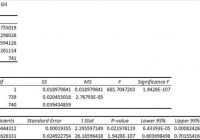
Summary I’m taking a look at GII as a candidate for inclusion in my ETF portfolio. The expense ratio isn’t great, but it is within reason. The correlation to SPY is a huge selling point, but the poor liquidity may have made the statistics less reliable. I’m not assessing any tax impacts. Investors should check their own situation for tax exposure. Investors should be seeking to improve their risk adjusted returns. I’m a big fan of using ETFs to achieve the risk adjusted returns relative to the portfolios that a normal investor can generate for themselves after trading costs. I’m working on building a new portfolio and I’m going to be analyzing several of the ETFs that I am considering for my personal portfolio. One of the funds that I’m considering is the SPDR S&P Global Infrastructure ETF (NYSEARCA: GII ). I’ll be performing a substantial portion of my analysis along the lines of modern portfolio theory, so my goal is to find ways to minimize costs while achieving diversification to reduce my risk level. What does GII do? GII attempts to track the total return (before fees and expenses) of S&P Global Infrastructure Index. At least 80% of the assets are invested in funds included in this index. GII falls under the category of “Miscellaneous Sector”. Does GII provide diversification benefits to a portfolio? Each investor may hold a different portfolio, but I use (NYSEARCA: SPY ) as the basis for my analysis. I believe SPY, or another large cap U.S. fund with similar properties, represents the reasonable first step for many investors designing an ETF portfolio. Therefore, I start my diversification analysis by seeing how it works with SPY. I start with an ANOVA table: (click to enlarge) The correlation is excellent at 69%. I want to see low correlations on my investments. Extremely low levels of correlation are wonderful for establishing a more stable portfolio. I consider anything under 50% to be extremely low. However, for equity securities an extremely low correlation is frequently only found when there are substantial issues with trading volumes that may distort the statistics. Standard deviation of daily returns (dividend adjusted, measured since January 2012) The standard deviation is also very good. For GII it is .7760%. For SPY, it is 0.7300% for the same period. SPY usually beats other ETFs in this regard; GII is doing very well comparatively. Because the ETF has fairly low correlation for equity investments and a reasonable standard deviation of returns, it should do fairly well under modern portfolio theory. Liquidity looks fine Average trading volume is bad. The average over the last 10 days was in the ballpark of 5,000 to 6,000 shares. This represents a serious liquidity problem. As I’m writing (market open), the spread is .46%. I’d be very cautious about crossing that spread and would stick to limit orders. In my sample period (about 3 years), there were 31 days where the dividend adjusted close did not change at all. Those days may represent days in which no shares changed hands and thus a change in fair value would not be recorded. Such an event could significantly damage the reliability of the statistics for correlation and standard deviation. I will perform the rest of the analysis treating the standard deviation and correlation as being reliable and valid numbers, but investors should be aware that the poor liquidity may have significantly changed the results. Mixing it with SPY I also run comparisons on the standard deviation of daily returns for the portfolio assuming that the portfolio is combined with the S&P 500. For research, I assume daily rebalancing because it dramatically simplifies the math. With a 50/50 weighting in a portfolio holding only SPY and GII, the standard deviation of daily returns across the entire portfolio is 0.6930%. With 80% in SPY and 20% in GII, the standard deviation of the portfolio would have been .7006%. If an investor wanted to use GII as a supplement to their portfolio, the standard deviation across the portfolio with 95% in SPY and 5% in GII would have been .7210%. Why I use standard deviation of daily returns I don’t believe historical returns have predictive power for future returns, but I do believe historical values for standard deviations of returns relative to other ETFs have some predictive power on future risks and correlations. Yield & Taxes The distribution yield is 3.12%. The SEC yield is 2.90%. That appears to be a respectable yield. This ETF could be worth considering for retiring investors. I like to see strong yields for retiring portfolios because I don’t want to touch the principal. By investing in ETFs I’m removing some of the human emotions, such as panic. Higher yields imply lower growth rates (without reinvestment) over the long term, but that is an acceptable trade off in my opinion. I’m not a CPA or CFP, so I’m not assessing any tax impacts. Expense Ratio The ETF is posting .40% for a gross expense ratio, and .40% for a net expense ratio. I want diversification, I want stability, and I don’t want to pay for them. The expense ratio on this fund is higher than I want to pay for equity securities, but not high enough to make me eliminate it from consideration. I view expense ratios as a very important part of the long term return picture because I want to hold the ETF for a time period measured in decades. Market to NAV The ETF is at a .09% premium to NAV currently. Premiums or discounts to NAV can change very quickly so investors should check prior to putting in an order. Generally, I don’t trust deviations from NAV and I will have a strong resistance to paying any meaningful premium to NAV to enter into a position. While the .09% premium isn’t too bad, the spread is still a concern. Largest Holdings The diversification within the ETF is mediocre. There are 7 investments that are each over 3% of the total investments, so I’m not overly impressed by the diversification within the portfolio. The value for correlation was great for an equity security, and if that correlation was based on much higher trading volumes I would be confident enough to disregard some of the concentration within the portfolio. (click to enlarge) Conclusion I’m currently screening a large volume of ETFs for my own portfolio. The portfolio I’m building is through Schwab, so I’m able to trade GII with no commissions. I have a strong preference for researching ETFs that are free to trade in my account, so most of my research will be on ETFs that fall under the “ETF OneSource” program. The best argument for the ETF, in my opinion, is that it has a very favorable level of correlation (NYSE: LOW ) with SPY and a strong dividend yield. If further testing on the correlation supports the idea that it actually is that low (I’m doubtful), then I would rate the ETF very favorably despite a mediocre expense ratio and poor liquidity. I’m willing to deal with poor liquidity by using limit orders and watching for deviations from NAV if the ETF actually provides meaningful diversification benefits. I’ll keep GII on my list for the next round with a note to dig deeper on correlations and poor liquidity.