Tag Archives: nreum

AES Corporation Looks Undervalued And Sports A 3% Yield
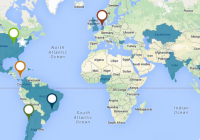
The company recently raised its dividend 100%. The company offers exposure to a lot of different markets. Growth is looking to get back on track and shares look undervalued. It expects to increase the dividend by 10% annually for the next few years. As I not only look to add higher yield plays to my portfolio but also better diversify I came upon AES Corporation (NYSE: AES ). The company meets both of these criteria and I think the shares look quite attractive here. Long-term I think the company is fairly safe play and has a good story going forward. AES is a global power company that through its various units operates, and delivers power in 19 different countries. Below is a map of its countries of operation and also the units in which they divide the business by. (The units are marked with the pin) ( click to enlarge) (Source: AES website ) The company has exposure to a lot of different markets, which can most definitely be seen as a good thing, but also as a bad thing. Its good because it’s very diversified, gives opportunity for more growth, and offers protection from specific market issues. The bad would be that exchange rates can hurt it easily, and instability risks are also prevalent in emerging markets. The company does have a risk management program when it comes to currency and utilize hedges to combat fluctuations effecting the company drastically. As it can be seen the company operates in several emerging markets which I think is great for future growth and makes it a great diversification play. The first thing that catches the eye is the company’s great yield. On December 15th the company announced a 100% increase of its dividend marking its second increase since bringing it back. I see this as a big step as it gets a trend of dividend growth going. It brought the dividend back in late 2012 and has grown it from 4 cents quarterly to currently 10 cents quarterly. Why I like this dividend even more is the fact the payout ratio is just 31%. With an annual dividend of 40 cents the shares currently yield over 3% and I believe in the future the company will be able to raise it further. In fact in its most recent presentation it says that it expects to increase the dividend 10% annually until at least 2018 (Its plans just outline 2015-2018). This will be made possible by the fact the company also expects to increase free cash flow by 10-15% annually through 2018. Over the past few years the company has been trimming some fat and bettering it balance sheet with the sales of some assets and minority interests. Since 2012 the company has sold nearly $3B worth of assets to better position itself. It may opt to continue in 2015 to trim some more non-core holdings as it continues to focus its scope. ( click to enlarge) (Source: AES website ) Also over the past few years the company completed the repurchase of 72 million shares. It may continue to buy back shares in 2015 as well. The company has not decided yet what it will do with basically half of its discretionary cash. It projects that it will have between $560-$660 million extra to allocate to new growth investments along with possibly more share repurchases. Below is the capital plan for 2015. (Source: AES website ) Looking forward growth appears to be on good track. This is shown in the estimates for FY 2014 and FY 2015 below.   2014(est) 2015(est) % Change Revenue $16.98B $17.55B 3.30% EPS $1.28 $1.35 5.47% (Source: Yahoo Finance ) The 2014 revenue estimates are almost 7% higher than what the company reported in 2013 and this trend looks to continue into 2016 as well. The increase in EPS is a great sign as earnings next year of $1.35 points to a payout ratio of just 29.6%. EPS could also see a boost if some of the extra cash is utilized for further share repurchases. Growth through operations are going strong with 7,000 megawatts under construction, the largest construction pipeline in the company’s history. The total investment in these projects is $9 billion in which the company’s equity portion has already been funded. The ROE on these projects is expected to be greater than 15% and the company expects by the time they are all completed by 2018 they will be contributing roughly 30 cents of EPS. A short term catalyst is going to be the completion of the company’s Mong Duong power plant in Vietnam which will be brought online this year. Along with all of this the shares look undervalued at current levels as well. For starters, it currently trades at just .55x sales. I don’t usually use this as a gauge, but I believe in this case it is noteworthy because the company continues to grow revenue at a good rate. The real indicator though would be its forward price-to-earnings. At just 9.39 it is ridiculously lower than the current electric utilities industry average of 24.7 and the forward average the industry has of 19.3. This clearly points to the shares being undervalued and potentially having big upside. In conclusion, now looks like an opportune time to possible initiate a long-term position in AES. The company continues to create shareholder value through dividends and share buybacks. It also continues to expand and reinvest in its core business while trimming assets as it sees fit. Taking a look at the earnings and revenue the shares look undervalued trading nearly 20% off 52 week highs and just 3% from the lows. I believe the company is a great diversifier, and all around good long-term play.
A Low-Tech Index Offering Exposure To The High-Tech Sector

By Robert Goldsborough Investors craving a big helping of large-cap growth stocks with a strong tilt toward the technology sector can consider PowerShares QQQ ETF (NASDAQ: QQQ ) . A perennial favorite among U.S. large-cap growth investors, QQQ is the sixth most actively traded U.S. exchange-traded fund and has the sixth-most assets of any U.S. ETF. QQQ also offers exposure to leading Nasdaq-listed consumer discretionary firms (18% of assets) and biotech firms (15% of assets) and tracks the cap-weighted Nasdaq-100 Index, which includes the 100 largest nonfinancial stocks in the Nasdaq Composite Index. Given its narrow sector focus, this ETF would work best as a satellite holding in a diversified portfolio. This is a high-quality portfolio with a mega-cap tilt, with more than 87% of assets invested in large-cap companies and more than 93% of assets invested in companies with Morningstar Economic Moat Ratings, those that Morningstar’s equity analysts deem as having sustainable competitive advantages. However, given this fund’s sector tilts, it is more volatile than a broad portfolio of large-cap stocks. For example, over the past 10 years, it has had a volatility of return of 18.0% compared with 14.6% for the S&P 500. When considering whether to invest, investors should take note of the fact that stocks in this fund make up almost the entire 20% tech component of the S&P 500. Despite the relatively low overlap, QQQ has a high correlation in performance with the S&P 500 (90% over the past 10 years) and an even higher correlation with the large technology ETF Technology Select Sector SPDR (NYSEARCA: XLK ) (98% over the past 10 years). Fundamental View The U.S. technology sector dominates QQQ and accounts for fully 58% of its assets, and large-cap tech firms’ performance determines its fortunes. The single largest dynamic affecting the tech sector right now is the shift to mobile computing and growth in cloud computing. Mobile and cloud computing are truly disruptive forces in the tech sector. As users shift to mobile devices, PC sales continue to fall. Global PC shipments dropped by 10% in 2013 and were flat to slightly down in 2014, with developed markets stabilizing but emerging markets seeing declines, as users shift to tablets. Despite sluggishness in PC sales, the total number of devices sold is expected to rise meaningfully in the years to come, as consumers and businesses adapt to smartphones and tablets. Our analysts project that some 2.6 billion-plus computing devices will ship in 2017–more than twice the total number of devices that shipped in 2012. Across the tech sector, firms are reshaping their portfolios for this ongoing transition. Microsoft (NASDAQ: MSFT ) in 2013 acquired Nokia’s (NYSE: NOK ) handset business and has developed the Windows Phone operating system, while Intel (NASDAQ: INTC ) has invested heavily in producing microprocessors optimized for mobile devices. Apple (NASDAQ: AAPL ) leads the marketplace with its iPhone and iPad, continually gaining share from struggling competitors. And Google (NASDAQ: GOOG ) (NASDAQ: GOOGL ) long has had a dominant position in Internet search and has aggressively invested in its Android operating system for smartphones and tablets, providing it free of any license fees. Having Google software on the device helps to ensure that when users search, they use Google. Enterprise hardware suppliers also are reshaping their businesses. Broadly, we are confident in tech firms’ positioning for growth in the medium term. Tech firms generally are procyclical in their performance, and with continued economic strength, tech firms generally should do well. The Gartner Group estimates that tech spending grew 3.2% in 2014, measured in constant currency, to $3.8 trillion and forecasts a growth rate of 3.2% in 2015. As large tech firms manage and reshape their businesses to adapt to secular declines in PC demand, we expect that they will continue to find ways to benefit from smartphone and tablet growth. To be sure, not all technology players will win in a world dominated by mobile computing and cloud computing. For instance, we view cloud computing as a moderate threat to all IT infrastructure suppliers, as cloud service providers are technically savvy customers. So as enterprises migrate their infrastructure to these service providers, infrastructure suppliers’ pricing power likely will decrease. Apple makes up 13% of the assets of QQQ and is far and away this ETF’s largest holding. Apple surged in 2014 after a turbulent 2013. The company benefited from strong earnings reports and guidance that beat expectations, driven by solid iPhone unit sales in both developed markets and in China. Although iPad sales have continued to lag, investors have been enthused by the launches of two larger-screen iPhones, Apple Pay, and Apple Watch and what it means for Apple’s continued ability to innovate. We expect Apple to remain a leader in the premium smartphone and tablet markets for years to come. Portfolio Construction Known as the Cubes or the Qubes, this ETF tracks the Nasdaq-100 Index, which was created in 1985 to represent the Nasdaq Composite Index’s 100 largest nonfinancial stocks by market capitalization. The top 10 holdings account for a significant 47% of the portfolio. While Apple has a narrow moat, this ETF’s next-largest eight holdings all have wide moats. The average market cap of this fund’s holdings is about $96.6 billion. The Nasdaq-100 index rebalances once a year, although it has on occasion conducted special index rebalances in order to prevent any one company from having an outsize impact on the index (the index caps any one company’s weighting at 24%). The last special index rebalance took place in 2011 and was driven by the continued overweighting of Apple. Fees This ETF is relatively inexpensive, with an annual expense ratio of 0.20%. Its estimated holding cost is slightly higher, at 0.25%. Estimated holding costs are primarily composed of the expense ratio but also include transaction costs, sampling error, and share-lending revenue. One alternative is Fidelity Nasdaq Composite (NASDAQ: ONEQ ) , which tracks the broader Nasdaq Composite Index. ONEQ contains 1,920 stocks listed on the Nasdaq, making it a much broader portfolio than QQQ’s. Given its broader holdings, ONEQ is less top-heavy, with the top-10 names accounting for about 31.5% of total assets. ONEQ also includes Nasdaq-listed financial stocks, which make up about 6.5% of its portfolio. The average market cap of ONEQ’s holdings (about $31.5 billion) is considerably less than that of the holdings in the Cubes (about $97.0 billion). This can be attributed in part to ONEQ’s 17% exposure to small-cap stocks. ONEQ charges 0.21%, with an estimated holding cost of 0.12%. A cheaper and less volatile large-cap growth fund is Vanguard Growth ETF (NYSEARCA: VUG ) , which has an expense ratio of 0.09%. The performance of QQQ is highly correlated with the performance of VUG (96% over the past five years). Similarly, another large-growth option is iShares Russell 1000 Growth (NYSEARCA: IWF ) , which charges 0.20%. With just more than one third the holdings of ONEQ, IWF is more concentrated than the Fidelity offering. At the same time, it’s far more diverse than QQQ. Even so, QQQ’s performance is highly correlated with the performance of IWF (96% over the past five years). Those seeking more-concentrated exposure to tech names can consider Technology Select Sector SPDR ( XLK ) , which carries a 0.16% expense ratio and holds 71 companies, all of which are information technology and related services, software, telecommunications equipment and services, Internet, and semiconductors. A less-liquid alternative is Vanguard Information Technology ETF (NYSEARCA: VGT ) , which holds 393 companies and charges just 0.12%. Disclosure: Morningstar, Inc. licenses its indexes to institutions for a variety of reasons, including the creation of investment products and the benchmarking of existing products. When licensing indexes for the creation or benchmarking of investment products, Morningstar receives fees that are mainly based on fund assets under management. As of Sept. 30, 2012, AlphaPro Management, BlackRock Asset Management, First Asset, First Trust, Invesco, Merrill Lynch, Northern Trust, Nuveen, and Van Eck license one or more Morningstar indexes for this purpose. These investment products are not sponsored, issued, marketed, or sold by Morningstar. Morningstar does not make any representation regarding the advisability of investing in any investment product based on or benchmarked against a Morningstar index.

Profiting From Greece And ECB Events

Summary Greek election result and what it means for investors. European Central Bank quantitative easing and what to expect from the Euro. Recommendations to profit from these moves. This is a very unusual article for me, as my regular readers will know, since I generally invest long term. I authored another similar article in March of 2012 about the Greek debt situation. This is a special situations and I believe that such opportunities should not be ignored. I also write a series about hedging and this particular situation falls neatly into that category. There are two issues coming out of Europe over the last week: the European Central Bank [ECB] quantitative easing [QE] program and the Greek election results this Sunday, January 25, 2015. The QE announcement was expected, but the size of the program was about twice what was being rumored and caught the markets by surprise. The Greek election turned out about the way early polls implied but still has the potential to create instability on the continent. The two events taken together sends a message that we should be cautious when investing in Europe. But, then again, there may also be some opportunity to profit. Greek Election With about 90 percent of the votes counted it is projected that the Syriza Party will win the election and come away with a total of 149 of the 300 seats in Parliament. That includes the 50 extra seats given to the winning party and leaves Syriza leader, Tsipras, two seats short of an outright majority. That means that Tsipras will need to entice one of the other smaller parties into forming a government. And that is likely to lead to compromise; on what, I do not know. But without having won outright control, Tsipras may not be able to move as far or as fast as his constituents are expecting. That may be good because it will give Tsipras an excuse and may give him more time to negotiate whatever the eventual agreement with the European Union [EU], ECB and the International Monetary Fund [EMF] from which past bailouts have come. The bottom line, in my humble opinion, is that this creates uncertainty in the EZ. Some expect Greek to exit the EU, others expect at least some Greek debt forgiveness, while others expect Greece leaders to cave into the demands of continued austerity. No one knows for sure what will happen. This uncertainty is likely to further undermine the already weakening Euro currency against other major currencies, especially the U.S. dollar. However, since the worst possible outcome of outright control by Syriza (worst case for the EZ) did not occur, the initial impact could be muted. ECB and QE Investors who own shares of companies that are either domiciled in the Euro Zone [EZ] or conduct significant business there, should consider taking steps to protect holdings from what I expect to be additional downside risk from currency translations. The ECB announced last week its intention to initiate a 1 trillion euro quantitative easing program in March 2015 expected to last through at least September of 2016. Now that the initial impact from the program announcement has taken its toll, we may see the Euro drift sideways unless my interpretation of the Greek election is off. Recall what happened to the Japanese Yen relative to the US dollar after the US ended its QE3 and the Japanese Central Bank announced shortly after that it would expand its QE program in late October of last year. There was an initial steep sell off over the first few days followed by a more gradual, but still significant, continued decline in the value of the Yen over the next four weeks. The Yen has continued to trade with a range since that time, but weekly moves are can still be volatile. See the chart of CurrencyShares Japanese Yen ETF (NYSEARCA: FXY ) below. FXY data by YCharts The Euro has been in a downtrend for the last six months (see chart of the CurrencyShares Euro ETF (NYSEARCA: FXE ) below), but the rate of decent increased about the middle of December when Draghi of the ECB indicated that QE in the EZ was coming soon. During this period it was widely accepted that the ECB would initiate a QE program in the range of 500 billion Euros. After the announcement of one trillion Euros hit on January 22, the Euro fell to an 11-year low near $1.1 / Euro. But the program has not even begun yet and will not get started until March! FXE data by YCharts A prolonged QE program aimed at weakening the Euro against the U.S. dollar and other major currencies will, in my opinion, be successful to the extent that the Euro will weaken further. Of course, the idea is that a weakening Euro will make EZ produced goods more competitive in the global marketplace; hence, increasing demand for EZ goods, creating jobs, increasing GDP and moving inflation up a notch or two. The problem is that other central banks are not likely to sit idly by and do nothing. As a matter of fact, both Canada and Denmark cut rates in the last week and Japan is determined to weaken the Yen further; others will likely follow. In other words, the ECB will probably be successful in weakening the Euro against the U.S. dollar and create inflation, but the other goals are less certain. The U.S. Federal Reserve Bank [FED] is unlikely to take further QE actions as such a move could be construed as a retaliatory move. That could move the world dangerously closer to an all-out currency war; something no one wants or needs. Thus, even with short-term U.S. interest rates pegged near zero, the U.S. dollar is more likely to continue to strengthen against other currencies, especially the Euro. Before I make my recommendations I must stress that using leveraged ETFs is always a very short-term strategy. Holding leveraged ETFs long-term, much more than a week, is generally a losing proposition. If you can’t monitor your positions at least once a day, please don’t consider this trading strategy. Unleveraged ETFs are less volatile and can be held longer. Recommendations PowerShares US Dollar Bullish ETF (NYSEARCA: UUP ) is an unleveraged US Dollar Index ETF that goes up when the US dollar rises relative to a basket of other major currencies, including the euro. Daily average volume is 1.7 million shares, a very important point because you don’t want to trade an ETF that is thinly traded and run the risk not being able to close out a position when you want. My theory is that the uncertainty created by the Greek elections combined with the ECB move with put downward pressure on the Euro over the next few weeks and potentially even longer. I own UUP now and may add to my position, primarily as a hedge against currency translation losses by companies that do extensive business in Europe. This position has done well and I expect the trend to continue (see UUP chart below). UUP data by YCharts ProShares Ultra Short Euro ETF (NYSEARCA: EUO ) is a double-leveraged inverse ETF on the euro that goes down twice the amount that the US dollar increases relative to the euro. EUO daily average volume is about 1.3 million shares, thus providing adequate liquidity also. The unleveraged short Euro ETFs did not have adequate trading volume to warrant a recommendation. I do not hold any EUO at this time but plan to take a short-term position within the next week. This is more of a momentum play and not my usual cup of tea, so my position will be very small and short-lived. The trend for EUO has been strong and I believe that there is still more to come, but for how long I do not know (see EUO chart below). EUO data by YCharts Again, this is meant as a means to protect at least some of what you have, not as a get-rich-quick scheme. Don’t plan to hold the position beyond the point when the prices begin to turn against you. It would be prudent to use trailing stops to protect your capital. A drop of more than five percent is significant, thus I would keep my trailing stops at five percent. The leveraged ETFs are very risky securities, and can lose you money if held long-term. It is the nature of how these securities are designed. They can be solid performers over relatively short periods only. Be careful out there! Additional disclosure: I intend to initiate a short-term position in EUO this week.