Tag Archives: nreum

Active Power Inc: ‘Disruptive Technology’ Not So Revolutionary After All
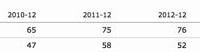
Summary Flywheel technology has been much hyped as the next big thing in the UPS space, although batteries have prevailed as the dominant solution. Wider market acceptance of flywheel technology would not necessarily result in upside, due too immense competition in a business where reliability and economics of scale are key. Significant loss of market share on a relative and absolute basis invalidates the bull thesis. Rapidly deteriorating financials in the most recent years suggests that their competitive situation has only become worse. 3x book value for a company that has never been profitable and has a declining top-line is just too much, a market cap at liquidation value is more appropriate. The first impression one gets from reading all the information on Active Power, Inc.(NASDAQ: ACPW )’ website is one of a business with a great product that is at the cusp of gaining market acceptance, as soon as these darn datacenter-architects would finally realize the benefits of flywheel-technology. They make a compelling case, where it not for the fact that: The technology is about 20 years old and market acceptance would surely have already taken place if the product really were superior. Rather than being a scrappy start-up, the company is a tiny player in a relatively mature industry, where long-term customer relations and scale are key. While touting their product’s perceived benefits they basically conceded that it’s not working out by offering the same product utilizing legacy technology Active Power Inc. builds so-called Uninterrupted Power Supplies (UPS). A UPS is an electrical apparatus that provides emergency power to a load when the main power source fails. A UPS differs from an auxiliary or emergency power system or standby generator in that it will provide near-instantaneous protection from input power interruptions, by supplying energy stored in batteries, supercapacitors, or flywheels. The on-battery runtime of most uninterruptible power sources is relatively short (only a few minutes) but sufficient to start a standby power source or properly shut down the protected equipment. In essence, they serve to bridge the time-gap between the occurrence of a power-outage and the start-up of a backup generator. It is a typical value-add business, with the overall addressable market estimated to be in the area of ~17B, with the sub segment of relatively large scale UPS with more than 150 kVA, the market that Active Power is targeting, around 4.6B. Most of these UPS’ utilize batteries to store energy. Active Power’s UPS’ on the other hand use flywheel technology. Instead of storing chemical energy, like batteries do, flywheels are brought to spin very fast, storing kinetic energy in the process, which can then be converted to electrical energy if need be. The bull thesis in essence, is that flywheel UPS’s While having larger upfront costs, have lower lifetime costs, as the maintenance intervals are larger; Are “greener” compared to batteries, as the latter end up being toxic waste; While runtime lies in the area of 10-15 seconds for flywheel UPS, compared to ~15 minutes for battery UPS, usually only a few seconds would be needed until the backup generator comes on-line. Combined these factors would make the market gradually shift to flywheel technology. Back in reality, the company, which has been in business for 15 years and never made a profit, saw a shrinking top line. (click to enlarge) Source: Morningstar In their 2010 10-K they state that their addressable market at the time was in the area of ~1.8B, compared to 4.6B in 2014. Using their revenue numbers in these years implies that their market share has actually dropped from around 3.6% in 2010 to 1% in 2014. This certainly doesn’t support the bull thesis, although market statistics on UPS are scarce, and it’s unclear how much of this is attributable to flywheel UPS gaining (or losing) traction or if the company plainly can’t compete. The UPS market is highly concentrated, with the bulk of the market share lying with Schneider-Electric (OTCPK: SBGSF ) and Emerson (NYSE: EMR ), both 40B market-cap behemoths. (click to enlarge) Source: VDC research The scrappy up-start picture isn’t supported by the fact that both of these companies massively invested in flywheel UPS themselves, With Schneider-Electric having bought APC, the until then US-market leader in the UPS market and Emerson’s acquisition of Liebert. Both of these subsidiaries offered extensive flywheel UPS products . Though Emerson at some point in the recent past opted to discontinue their flywheel product line, suggesting that the flywheel sub segment may be even more concentrated with Schneider Electric than the overall UPS market. Bottom line, these findings are still ambivalent as to whether the flywheel technology has gained traction in the market, but the significant reduction in market share AND absolute sales suggests a severe competitive disadvantage in a market that has more than doubled in the past four years. If one chooses to buy one of these, one wants to be really sure it will work. The lifetime of UPS are in the area of 15-20 years, and incur significant recurring service costs and warranty coverage. The slightly lower life time costs of flywheel UPS compared to UPS cost is simply a negligible criteria for customers compared to the vendors ability and reputation to service their products regularly and guarantee warranty coverage. Source: VDC research In the case of Active Power, there is substantial uncertainty as to whether the company will even be around in 10 years time, which greatly reduces their value proposition vs their peers. Bigger is simply better in this market. Financials As stated before, the company has never made a profit during it’s lifetime. In the most recent years it has additionally seen rapidly deteriorating operating margins as seen below: (click to enlarge) Source: Morningstar Yet they publish slides like this titles “gaining momentum”: (click to enlarge) witness the momentum To stay afloat, they regularly dilute their share count every 2 years: (click to enlarge) Source: Morningstar In spite of rapidly deteriorating financials, massive loss of market share on a relative and absolute basis in a market that has seen huge growth and severe competitive disadvantages versus their large peers that offer a substantially better value proposition, the company still trades at 3x book value, with a market cap of around $50M. My best guess as to why this is the case, is that they make a good case to the investing world of their superior product and tell a good story of how the break-out is right around the corner. The facts however tell the opposite story. Most of their assets are in the form of current assets, which makes their book value a decent proxy for liquidation value, a more appropriate yardstick of what this company should be trading for, implying 60% downside. I’ve used several sources throughout this analysis, most notably the 10-K’s of Active Power Inc, Schneider Electric and Emerson, as well as some research papers on the flywheel vs battery UPS debate from Mitsubishi , Schneider , datacenter dynamics and VDC research . Financial data was taken from Morningstar. Editor’s Note: This article covers one or more stocks trading at less than $1 per share and/or with less than a $100 million market cap. Please be aware of the risks associated with these stocks. Disclosure: The author has no positions in any stocks mentioned, and no plans to initiate any positions within the next 72 hours. (More…) The author wrote this article themselves, and it expresses their own opinions. The author is not receiving compensation for it (other than from Seeking Alpha). The author has no business relationship with any company whose stock is mentioned in this article.
Is Targa Resources The Next Energy Sector Takeover Candidate?

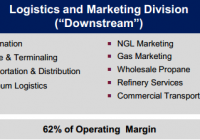
Summary In the current low energy price environment, strong companies are looking for assets or companies they can take over on the cheap. Targa Resources Corp. is the general partner of a quality MLP that has suffered with lower energy commodity prices. TRGP is down 35% even as dividend increased 6% every quarter. Several large cap energy midstream companies could start a bidding war for TRGP. A 30% premium on the current share price is not out of the question. The steep declines in the energy commodity prices have led to speculation about mergers or acquisitions in the sector. I primarily follow the MLP and related companies, and so far in 2015, acquisition activity has been light. Vanguard Natural Resources LLC (NASDAQ: VNR ) has agreed to acquire a couple of smaller upstream MLPs and Enterprise Product Partners LP (NYSE: EPD ) just announced a $2.1 billion private deal acquisition of gathering and processing assets. Outside of these I can’t think of any meaningful purchases. I think that Targa Resources Corp. (NYSE: TRGP ) could be ripe for a take over offer from an energy midstream company looking to add quality assets and a historically successful midstream operation. Targa Overview Targa Resources Corp. owns the general partner interest and 9.1% of the LP units of Targa Resources Partners LP (NYSE: NGLS ) a $7.9 billion market cap midstream MLP. NGLS generates about 40% of its operating margin from gathering services in Texas and Oklahoma and the balance comes from logistics and marketing, which includes the following services: Targa Resources Corp. has used the GP incentives growth model to produce a high level of dividend growth compared to the NGLS distribution growth rate. If you are not familiar with the GP growth potential, I covered how the partnership system works in this article . Over the last three years the TRGP dividend has increased 27% up to 35% year over year every quarter. This growth in the TRGP dividend was fueled by high single digit distribution growth at the MLP level. Targa Resource Partners has aggressively developed and acquired midstream assets. The company has invested over $2 billion in organic capex since 2012, bringing $1 billion worth of projects online in each of the last two years. In addition, over $8 billion in acquisitions have closed over the last three years. In February Targa Resources closed its acquisition of Atlas Pipeline Partners, LP and Atlas Energy, LP. Commodity Price Declines Slow DCF Growth In the current slower drilling and lower energy price environment, Targa Resources Partners most recent guidance is for 4% to 7% distribution growth in 2015 with 1.0 times distributable cash flow coverage. In 2014 the NGLS distribution grew by 8% on 1.5 times DCF coverage. The Targa Resources Corp dividend guidance for 2015 is 25% growth, compared to 27% growth in 2014. The market has noticed the significant drop in DCF coverage at the MLP level, pushing down the NGLS and TRGP share prices by 30% and 35% respectively since last September. In 2015, the TRGP share price has cycled a couple of times between about $90 and $107. In the last 6 weeks the price has dropped from the $107 cycle peak to currently trade around $90. Reasons for the decline seem to be around falling energy commodity prices and the failure of TRGP to announce some sort of MLP roll up plan similar to the recent Kinder Morgan Inc. (NYSE: KMI ) and Williams Companies (NYSE: WMB ) moves. See: Income Power Couple: Stacking Kinder Morgan Against Williams Companies The steep share price decline has pushed the TRGP yield up to 3.6%, well above the low 2% yield the company carried last year and the 2% to 2.5% rate the market current puts on 25% high visibility dividend growth. It seems that the market does not believe that this year’s growth guidance will be met and prospects have slowed for Targa Resource Partners in the longer term. Potential Acquirers In spite of the current downturn in values, the Targa Resources companies have a high quality book of assets and operations. The company’s gathering assets are in the heart of the Permian basin and the processing, storage and export assets are in prime locations on the Gulf Coast. To acquire these assets would be a boost to one of several large cap midstream companies. If a company buys up TRGP as the general partner, the MLP is then controlled, to be merged with other assets or left as a stand alone partnership. Here are a couple of large cap MLPs that would benefit from the acquisition of Targa Resources Corp and have the resources to make a $6 billion or higher bid for the company. Enterprise Product Partners : With its $60 billion market cap, EPD needs to make meaningful acquisitions to move the needle. The Targa assets would dovetail in nicely with the Enterprise holdings. EPD made a similar acquisition last year by first buying the privately held Oiltanking GP interests and then later making an offer for the publicly traded Oiltanking LP units. Williams Companies likes to view itself as one of the major natural gas infrastructure players. Acquiring Targa would be similar to last year’s absorption of Access Midstream Partners. Williams first picked up all of the Access GP ownership and then merged the MLP into Williams Partners. Energy Transfer Equity LP (NYSE: ETE ) : The Energy Transfer group has been a more of build by acquisition set of businesses. Last year they made a run at Targa, but nothing came of it. I would not surprise me if Energy Transfer made another offer for the company. If one of the listed companies made an offer for TRGP, it would not be a surprise to see a bidding war break out. An offer of $120 per share might be enough to obtain the company. Disclosure: The author is long TRGP, KMI, WMB. (More…) The author wrote this article themselves, and it expresses their own opinions. The author is not receiving compensation for it (other than from Seeking Alpha). The author has no business relationship with any company whose stock is mentioned in this article.

Will Yellen Move The Price Of SLV?

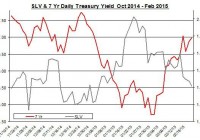
Summary The price of SLV fell down in the past week. Will Yellen’s testimony move the price of SLV? The rally in the U.S. treasury yields coincided with the drop in silver prices. The silver market cooled down in the past week as shares of the iShares Silver Trust ETF (NYSEARCA: SLV ) fell by 6%. For SLV, the upcoming testimony of Yellen and the latest developments in Europe could curb further down SLV. Yellen testifies Following the release of the minutes of the FOMC meeting, the upcoming testimony of FOMC Chair Yellen will take the center stage this week. Yellen will testify on Tuesday and Wednesday before the Senate Banking Committee and House Financial Services Committee, respectively. The latest minutes were perceived a bit dovish. After all, the probabilities of a rate hike have gone down a bit for both July and June compared to previous weeks. Because of the dovish tone in the minutes, some market analysts think that Yellen’s testimony will be a bit more hawkish – given the strong numbers presented in the latest non-farm payroll report, this scenario is plausible. But Yellen isn’t likely to rock the boat and reiterate that a decision on a rate hike will be data dependent. Since the FOMC is slowly adjusting the markets for a rate hike in the coming months, it’s unlikely that there will be a surprise or significant delay. This is true because central banks tend to “surprise the markets” and change the market expectations when it comes to stimulating the economy. When it comes to austerity and rate hikes, central banks tend to be much more cautious, prudent and give enough time for the market to adjust to the new policy. The biggest fear of a central bank is that its policy change will lead to an economic slowdown or even recession. Besides Yellen’s testimony, the second estimate of the U.S. GDP for the fourth quarter will be released on Friday. In the first estimate, the GDP growth rate was 2.6%, which was a bit lower than market expectations. If the GDP growth rate comes lower than current estimates, which are 2.1%, this news may bring back up the price of SLV. Another report worth considering is the U.S. CPI, which will be released this week. A drop in the core CPI could actually bring up SLV – this could revise down the FOMC’s inflation expectations. In the meantime, the recent developments in Europe may have also contributed to the weakness of SLV. Greece’s debt problem was defused, for now… One factor that could have had some indirect implications on the levels of risk in the financial markets, which may have benefited precious metals investments such as SLV, is the Greek debt problem and the possibility of a Greek exit from the European Union. The recent news from this front is that the Greeks have practically conceded to the Germans : The Greeks didn’t achieve too major goals to the austerity measures set in place. Greece received a four-month extension on its bailout. In exchange, on Monday, the Syriza-led government submitted its list of structural reforms that will need to be approved by the EU members. At least when it comes to the fiscal targets, the Greeks got a victory, and the budget surplus of 4.5% of GDP is on the table and the target could come down to 1.5% next year. These developments are likely to push away the whole Greek exit talk for the near term from the markets’ agenda. One of the main events of the week in Europe is the third tranche of the targeted LTRO. The last two auctions came short of market expectations. If this tranche also fails to reach high levels, then it could suggest the ECB may wish to expand its QE program. For SLV, lower risk in the financial markets could bring further down its price. One way is via the changes in the U.S. treasury yields. The sharp fall in U.S. long-term treasury yields at the beginning of the year changed course in recent weeks, as indicated in the chart below. Source: U.S. Department of Treasury and Bloomberg The linear correlation between SLV and U.S. long-term treasury yields isn’t strong at only -0.17 (for 7-year yields), but precious metals, especially gold, tend to have a strong relation with treasury yields. Nonetheless, the rise in U.S. interest rates, as the market expects a rise in the Fed’s cash rate in the middle of the year, could further contribute to the weakness of SLV. In the past week, the amount of silver ounces in SLV has picked up a bit albeit the silver ounces in this ETF are still down for the year. Source: iShares Silver Trust website It’s still unclear when, if at all, the FOMC starts to raise rates. For now, it seems that unless we will see a major change in the U.S. economic recovery, the FOMC will likely to raise rates in the middle of the year. Yellen’s upcoming testimony could provide some more insight about the next policy change, but I suspect this testimony, much like others in the past, won’t offer more than a general tone and “data dependency” policy. The recent diffusion of the Greek debt crisis is likely to curb down the demand for investments that are considered safe haven such as precious metals. For now, the possible upside for SLV is if the U.S. economy’s progress fails to meet market expectations (e.g. lower-than-anticipated growth in GDP or CPI). In such an event, SLV could rally, even if for a short term. For more see: Will Higher Physical Demand For Silver Drive Up SLV? Disclosure: The author has no positions in any stocks mentioned, and no plans to initiate any positions within the next 72 hours. (More…) The author wrote this article themselves, and it expresses their own opinions. The author is not receiving compensation for it (other than from Seeking Alpha). The author has no business relationship with any company whose stock is mentioned in this article.