Tag Archives: management

Fire Your Investment Manager: Ideas For An Ultra-Low Volatility Index Part V

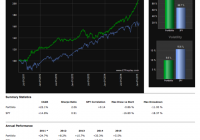
Our provisional Ultra-Low Volatility Index has reached an all time high. It handled recent market volatility splendidly. Recent market volatility has served as an excellent out-of-sample test. As before, here are the provisional Ultra-Low Volatility Index strategy’s rules. Buy the PowerShares S&P 500 Low Volatility ETF (NYSEARCA: SPLV ) with 80% of the dollar value of the portfolio. Buy the Direxion Daily 20+ Yr Trsy Bull 3X ETF (NYSEARCA: TMF ) with 20% of the dollar value of the portfolio. Rebalance annually to maintain the 80%/20% dollar value split between the positions. Here are the results in a linear scale: (click to enlarge) There is no denying that the performance of the strategy has destroyed the S&P 500 on a risk/return basis. The outperformance continues in the last 12 months: (click to enlarge) The last 6 months: (click to enlarge) The last 3 months: (click to enlarge) And YTD 2015: (click to enlarge) Personally, even though the performance is outstanding, I do not feel comfortable with strategies which do not use multiple markets for hedging, but for investors who only like stock/bond mixes, this strategy index is interesting food for thought. I do not feel comfortable with strategies which rely heavily upon bonds as the hedging mechanism for equity exposure , because these strategies, such as risk parity, have benefited from a multi-decade secular bond bull market. As Bruce Kovner once said, one of his main jobs is to imagine configurations of the world that do not yet exist, but could. I believe that a multi-year, secular bear market in bonds is a high probability potential future event path. Therefore, I believe that hedging using multiple markets is the responsible thing to explore, even though our ideas for an Ultra-Low Volatility index have performed well historically and in the very recent past. Now that you’ve read this, are you Bullish or Bearish on ? Bullish Bearish Sentiment on ( ) Thanks for sharing your thoughts. Why are you ? Submit & View Results Skip to results » Share this article with a colleague

Exelon Set To Grow And Reward Investors In The Long Run

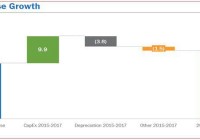
Summary EXC’s strategic investments in regulated operations and recent acquisitions will trigger decent growth and stability in revenue, earnings and cash flows. EXC will better support its dividend payments to remain an attractive pick for dividend-seeking investors. Stock offers attractive dividend yield of 3.3%. Owing to volatility in natural gas and power prices, Exelon Corporation’s (NYSE: EXC ) competitive business operations have been hurting its earnings growth prospects. In its efforts to fight back the challenges in its competitive power operations, the company has started pursuing an intelligent strategic growth formula that focuses on strengthening its regulated operations. As a matter of fact, these strategic initiatives, focused on diversifying its power generation portfolio through strategic acquisitions and through the sale of its competitive assets, will strengthen its long-term growth prospects. I believe that by increasing regulated operations, the company will create stable earnings and a secure cash flow base, which will ensure the security of its attractive dividend payment policy in the long term. EXC Making Right Moves to Grow In Long Run The company has a large operational base with both competitive and regulated operations. Competitive business operations contribute more than 40% towards its total earnings. Weakness in the company’s competitive business operations in recent years due to low and volatile power prices has hurt EXC’s consolidated earnings growth prospects. In its efforts to overcome the backdrops of its competitive operations, the company has carved out an intelligent strategic growth plan to divest most of its competitive assets and grow its power generation portfolio through acquisitions. The company has signed definitive contracts to sell the non-core assets of its generation segment for $1.4 billion . And out of these $1.4 billion proceeds, approximately $1 billion will be used to fund the acquisition of Pepco Holdings Inc. (NYSE: POM ). The POM-EXC merger agreement, which recently reached a settlement in a hearing before NJ BPU (New Jersey Board of Public utilities), is expected to close in the second or third quarter of 2015. Upon its completion, the merger will increase the scale of EXC’s regulated operations. An increase in regulated operations and completion of the merger will bring stability to its cash flow base. Along with that, the combined utility business is expected to have a rate base of approximately $26 billion , which will portend well for its future sales growth. Also, I believe the $6.8 billion POM-EXC merger will positively affect its earnings growth rate, and EXC is expected to enjoy an earnings growth rate of 4%-6% in the long term. Moreover, EXC is working to improve its electricity generation portfolio and reduce its operational risks. The company completed the acquisition of Integrys Energy, which will strengthen its operations. Since many of Intergrys’ customers are in the same regions where EXC has significant power generation operations, the acquisition will benefit the company by matching generation with load capacity. Talking about the significance of the acquisition, Kenneth Cornew, the president and CEO of Exelon Generation, said : “The combination creates a stronger, more diverse business that is well positioned to compete for customers in retail electricity and gas markets across the country. It vastly expands our gas portfolio increasing our load by 150 BCF annually.” Owing to the potentials of the company’s strategic growth efforts, I believe the management’s expected rate base growth of $24.7 billion by the end of 2017 is achievable, which will add well towards its sales and earnings numbers in the long-run. The following chart shows the company’s expected rate base growth from 2014 to 2017. Source: Company’s Earnings presentation In addition to the successful acquisitions, EXC is considering options to close its nuclear power operations. Although the company has a widely extended nuclear power generating portfolio, but owing to their cost-competitive nature, its nuclear facilities are putting EXC at a disadvantage as compared to its peers. The company has highlighted the need for government support on nuclear plants in its recent statement on a power plant closure in Illinois. Although the government hasn’t responded to this statement yet, I believe that if the state doesn’t pursue the Regional Green House Gas Initiative (RGGI) or comparable market based programs to support carbon-free nuclear energy in Illinois, EXC should shut three out of its eleven nuclear plants in the state. Potential rewards for Income-Seeking Investors EXC has returned a significant proportion of its annual cash flows to its shareholders through healthy dividend payments. The company currently offers an attractive dividend yield of 3.30% . Given the fact that the POM acquisition will soon raise its level of regulated operations, EXC will remain attractive for its dividend-seeking investors due to the attainment of a stable cash flow base. As a matter of fact, a stable cash flow base will provide sustainability and security to the company’s long term dividends. The following chart shows EXC’s dividend per share payments in the last two years and for future years, based on my estimates. Source: Company’s Yearly Earnings Reports & Equity Watch Estimates Risks With an increase in the level of regulated operations, the company will be exposed to the risk of increases in regulatory restrictions by federal and state regulators. Moreover, EXC’s competitive assets will continue to face the risk of volatility in power prices. In addition to that, failure to integrate new acquisitions may undermine the company’s expected earnings growth potentials. Conclusion Owing to the company’s strategic investments in regulated operations and recent acquisitions, I believe EXC will witness decent growth and stability in its revenue, earnings and cash flows. Moreover, the company will be able to better support its dividend payments to remain an attractive pick for dividend-seeking investors. The stock currently offers an attractive dividend yield of 3.3%. Also, analysts have anticipated a decent next five-year earnings growth rate of 4.40% for the company.
Is Water Utility Artesian Resources A Buy?

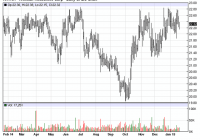
Water shortages in North America are becoming more acute. Infrastructure costs are becoming increasing large for municipal governments. Artesian Resources is positioned to garner increasing revenues from local governments. We had briefly touched on Artesian Resources Corp (NASDAQ: ARTNA ) on our website recently and wanted to revisit it with a bit more ‘meat on the bone.’ When you think about regulated utility companies in North America you likely think of the local electric company or natural gas company–the ones we write checks to year around, but as investors we need to cast the net a bit further. Throughout the United States and Canada our water and sewer service comes from municipal systems in over 70% of households. Another 15% of us have our own well (like all 10 houses in our subdivision have their own well), while 11% are served by investor utilities. About the same percentages hold true for sewage systems. All of us North Americans understand that water is becoming an increasingly valuable resource and this is truer and truer everyday. Whether it be irrigating crops or fracking oil wells the need for water simply continues to grow. Similarly, the need to treat sewage in a way that allows the liquid and solid waste to be disposed of in a way that doesn’t harm the environment is taxing our infrastructure which is old and inefficient. Local municipalities are stressed financially trying to maintain their water and sewage plant and equipment, yet both state and federal regulations simply continue to pile on in a way that demands a huge amount of capital to address water safety and environmental concerns. Thinking about this one has to believe there is a huge potential long term opportunity in investor owned companies that can help address the water and sewer issues of the nation. Certainly many investors have followed these companies for a very long time and maybe owned shares, but given the modest level of dividends paid by most of the water utility companies they had not really hit our radar screen. Only by attempting to discern where we would find the safety we desired coupled with the dividends and long term potential for capital gains did we start to dig deeper around the water arena. Artesian Resources Corp is primarily operating in Delaware, but with operations in Pennsylvania and Maryland. They have been providing water services (and now sewer) to the area for over 100 years–so they certainly have the experience necessary to be successful. Recently they have acquired a couple additional local water systems and are shopping for more–there goal is to be aggressive. We think they have the background that will allow them to move strongly forward. Artesian Resources Corp is a rather small company (we prefer companies that are smaller for some reason) with revenue that is likely to hit $72 or $73 million in the year that just ended (December 31). From this the company will garner around $10 million in net income–around $1.10-$1.15 per share. Additionally, if we look at free cash flow we can add back another $9 million in depreciation–giving relatively huge cash flow of around $2/share. From this they will pay out around 85 cents/share in dividends (a current yield of 3.82%). This is a reasonable payout ratio of about 40-45% leaving a good deal of cash for re-investment–and believe me there will be no shortage of projects vying for the capital. Now as we look at some of the most recent financial history of the company we are impressed by a near 30% year over year income gain last quarter and a 10% gain for the 9 month period. These were attained with revenue growth of just 8% and 4% respectively. Looking at dividends the company has raised them twice a year for the last 5 years. We definitely like these rising payouts even if they are just around 3-4% a year. One must remember that this is mainly a regulated utility – not a high tech supercharged company. As a utility they have plenty of debt (have you ever known a utility to have little debt?), but they are borrowing at reasonable interest rates and their ability to refi this debt when it comes due should be no issue. The share price has remained relatively stable over the last year–in fact essentially flat. As a conservative income investor we would like to a stable fair dividend and the opportunity for future capital gains (not a guarantee of that gain–just the opportunity). Here is how the shares have performed in the last year. (click to enlarge) Now for a few negatives. First off the company has 2 classes of common stock–and the class that you and I own is Non-Voting . Insiders own all of the voting stock, thus you have to have good faith in the management as you have no say in the operations and management of the company. In principle we dislike this with a passion, but on the other hand we buy preferred stocks all the time and we have no problem with having no vote in the company so I guess we can live with it with Artesian. secondly the company recently lost a lawsuit in which they disputed some contract terms and will need to anty up $3 million to settle the claims. Fortunately, the company accrued the bills as they received them so the payment should not affect their income statement although it will cause a ding on the balance sheet. With the above in mind we have personally purchased a small personal position in these shares (as well as in our most recent Model portfolio) Our belief is that this should be bought with a 5 year invest commitment. The company website is here . For those wanting the ‘unvarnished’ financials here is the latest SEC filed 10Q.