Tag Archives: load

GDXJ Re-Balancing Pummels These 5 Gold Developers

The Market Vectors Junior Gold Miners ETF (NYSEARCA: GDXJ ) is an ETF administered by Van Eck and created to replicate the Global Junior Gold Miners Index which is a basket of small-cap gold exploration, development and production companies. The GDXJ tries to maintain an average market cap of its holdings above $150 million. According to recent filings, the ETF’s largest holdings are Centamin ( OTCPK:CELTF ), IAMGOLD (NYSE: IAG ), Hecla (NYSE: HL ) and AuRico (NYSE: AUQ ), but included in the 69 total equity positions are exploration names such as Bear Creek Mining ( OTCPK:BCEKF ) and Focus Minerals ( OTCPK:FKSMF ). Needless to say, the ETF which mirrors the junior resource markets, hasn’t performed well. Year-to-date, it is down 18.18% but in the past 3 months the ETF is down over 40%. Recently, the GDXJ was re-balanced in order to maintain their average market capitalization hurdle. Given the performance of the underlying equities, the pre-revenue, development stories that have become less and less liquid were sold in favor of more liquid, higher market capitalization names such as IAMGOLD, AuRico and Alamos (NYSE: AGI ). As a result, some of these development companies have been crushed by this relentless selling. Asanko (NYSEMKT: AKG ), Premier Gold ( OTCPK:PIRGF ), Torex ( OTCPK:TORXF ), Rubicon (NYSEMKT: RBY ) and Midway (NYSEMKT: MDW ) were among them. Shares in those companies are down 23%, 25%, 22%, 17% and 15%, respectively over the past 30 days. Last Friday saw huge volume traded in these names as well. Asanko traded 28 million shares on Friday alone. The average daily volume traded over the past 3 months in Asanko is just 156,500 shares (the other names were similar). These companies have all outperformed the GDXJ year-to-date. Torex is up 24%, Premier up 19%, Rubicon up 8%, Asanko is flat on the year, Midway down 11%. The GDXJ on the other hand was down 25%. So perhaps the decision to cut these outperforming names wasn’t the best call afterall? Regardless, these teams have significantly de-risked their projects. Below is a summary of the milestones achieved this year: Torex – closed a $145 million equity financing and another $375 million project finance facility to build their Morelos project which is one of the highest-grade undeveloped open-pit gold projects in the world. They moved the construction of their project forward on time and on budget for a mid-2016 commercial production start-up. They also got $85 million worth of at-the-money warrants exercised (of $90 million) and made significant strides towards the development of their second mine, Media Luna. I doubt this company would get acquired before they complete construction and ramp-up, but come mid-to-late 2016 when the mine is running smoothly, I would expect a major to take them out (and likely at a significant premium). Since June 30, 2014, the GDXJ has sold 65.9 million Torex Gold shares in the market reducing their position by 57 Premier Gold – released a positive PEA on their Hardrock and Brookbank projects and followed that up with meaningful exploration results at their Cove Gold project. Recently, they were able to raise $9 million to continue de-risking these Canadian high-grade gold projects. Although earlier-stage, Premier could see a takeover bid come from one of the many companies looking for Canadian exposure to add to their project pipeline. Since June 30, 2014, the ETF sold 29.6 million shares, reducing their position by 73%. Rubicon Minerals – started the year with a $75 million streaming deal from Royal Gold, then followed that up with a $115 million bought deal financing. They continued to advance the construction of their Phoenix Gold project which they are touting as “Canada’s next high-grade gold mine”. With what management has delivered on so far and the expected production start-date of mid-2015, we believe that statement could prove to be true. Given the recent flight to safety by many global miners (see Osisko takeover battle), we view Rubicon as another likely takeover candidate given its postal code. 31.5 million shares of Rubicon have hit the market since June 30th, courtesy of the GDXJ. They reduced their position by 56%. Asanko Gold – had a truly transformational year. They successfully closed the acquisition of PMI Gold for roughly $180 million worth of stock in order to consolidate the two companies neighboring gold assets in Ghana. Shortly after, the company decided that the newly acquired, higher-grade mine from PMI would become the phase 1 project and outlined a path to get to 200,000 ounces of annual gold production by 2016. The company continued to de-risk the phase 1 development and worked on developing an integration plan for the second phase development which could see the company’s production double from 200,000 ounces to 400,000 ounces of gold annually, effectively catapulting the company into the mid-tier ranks. Next year looks to be another exciting year as the company completes construction and formally outlines the integration plan of the second phase of production. With Asanko’s board and management, this company could be a takeover target or could continue acquiring assets to grow their production profile. Asanko Gold saw its weighting in the GDXJ reduced by 37.9 million shares or roughly 77% since June 30th. Midway – broke ground on their heap leach gold project in Nevada and followed that up with the formalization of a joint venture with Barrick on the Spring Valley project which will see Midway carried to production at a 25% interest should Barrick chose to build it. Midway also announced the finalization of a project finance facility of $55 million and $25 million bought deal financing which allows the company to finish building Pan. The project is one of very few run-of-mine projects (means no crushing necessary) which enables it to be both technically straight forward as well as lower cost than other mines, making it a takeover candidate for anyone looking for simple heap leach projects in safe jurisdictions (of which there are many companies). Midway Gold saw the fewest shares hit the market with just 8.7% of its weighting in the GDXJ eliminated (roughly 1.1 million shares). Overall, the recent selloff in these names should be taken in context. All of the above teams are delivering on their promises, meeting or exceeding expectations, de-risking their projects and moving towards cash flow. An unrelated index re-balancing sale of these companies’ shares provide an opportunity for us as resource speculators. This is one of those times where I, as a speculator, finding myself questioning my investment thesis. Am I missing something? Does the market know something I don’t? In this case, I believe the selloff in the names is unrelated to the specific companies themselves or even the broader markets in general; it’s just a portfolio manager with a heavy finger. As a result, this re-balancing combined with the fact we are in the final days of tax-loss season provides an opportunity to gain exposure to high-quality gold development names. Disclosure: None Editor’s Note: This article covers one or more stocks trading at less than $1 per share and/or with less than a $100 million market cap. Please be aware of the risks associated with these stocks.
Inside The 2 New Innovative Biotech ETFs From BioShares

The biotechnology corner of the broader health care industry has been one of the best performing U.S. sectors this year despite some temporary glitches and rough trading in between. Encouraging industry trends, increasing merger and acquisition (M&A) activities, expansion into emerging markets and ever-increasing health care spending led the sector to easily outperform the broader U.S. equity markets. Encouraged by the high growth potential offered by this sector, issuers are launching innovative products to attract investors to this space. In fact, the new issuer – BioShares – has gone a step further to launch two new funds that look to provide exposure to two distinct groups of stocks – one focusing on earlier clinical trial stage companies and the second looking to provide exposure to advanced products stage companies with FDA approved drugs. The two passively managed funds – BioShares Biotechnology Clinical Trials Fund (NASDAQ: BBC ) and BioShares Biotechnology Products Fund (NASDAQ: BBP ) – follow an equal-weighted strategy which diminishes single-stock risk and results in a well-diversified portfolio. Also, both the funds charge 85 basis points as fees. BBC and BBP in Focus BBC tracks the LifeSci Biotechnology Clinical Trials Index to measure the performance of biotechnology companies with a primary product offering that is in a Phase 1, Phase 2 or Phase 3 clinical trial stage of development. These biotechnology clinical trial companies conduct clinical human trials with the ultimate aim of gaining FDA approval. With this focus, the fund presently holds a basket of 68 stocks focusing mainly on small caps. Auspex Pharmaceuticals Inc. (NASDAQ: ASPX ) occupies the top spot with 2.85% allocation, followed by 1.65% to Retrophin Inc. ( OTC:RTRX ) and 1.59% to Sage Therapeutics Inc. (NASDAQ: SAGE ). BBP, on the other hand, tracks the LifeSci Biotechnology Products Index to measure the performance of biotechnology companies with a primary product offering that has received U.S. Food and Drug Administration approval. The companies within the index have developed at least one drug that has been approved by the FDA and has gone into commercial production. Moreover, these companies primarily focus on sales and marketing to raise awareness of their new product launches. BBP currently holds a basket of 36 stocks with NPS Pharmaceuticals Inc (NASDAQ: NPSP ), ImmunoGen Inc. (NASDAQ: IMGN ) and Halozyme Therapeutics Inc (NASDAQ: HALO ) being the top three holdings, each with a little over 3% exposure. Companies forming part of BBP and BBC’s index should have a minimum of $250 million in market capitalization and a minimum average daily volume of $1 million. How Might it Fit in a Portfolio? The above two funds are an interesting choice for investors seeking to gain exposure to the high potential biotech space. The funds give investors a choice to select the group of biotech companies they want to invest in – as in earlier clinical trial stage companies or advanced products stage companies. These two groups of companies are typically found together in most of the Biotech ETFs currently trading in the market. Moreover, biotech companies are expected to continue benefiting from increased M&As in the space, boom in health care activities and an aging global population, reigniting higher health care utilization. Can it Succeed? The biotech space is moderately populated though there are a few competitors to these funds. There are presently six regular Biotech ETFs in the market. Among them, iShares Nasdaq Biotechnology Index Fund (NASDAQ: IBB ) is the largest and most popular fund in the space with an asset base of $6.5 billion and average trading volume of 1.4 million shares. The fund has returned 33.8% this year. First Trust Amex Biotechnology Index Fund (NYSEARCA: FBT ) and SPDR S&P Biotech ETF (NYSEARCA: XBI ) are two other funds which have garnered $1.9 billion and $1.4 billion in assets, respectively. Investors should note that all the above-mentioned ETFs charge less than the two new funds from BioShares. The expense ratios of IBB, FBT and XBI stand at 0.48%, 0.60% and 0.35%, respectively. Consequently, BBP and BBC might have a difficult time attracting investors from a price perspective. However, if the funds manage to deliver better returns than the veterans in the space, they might eventually gain popularity.

Short GLD And Central Gold-Trust Into The Secular Decline Of Gold

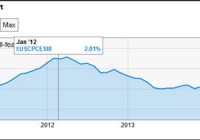
Recovering US economy together with the Fed pushing off inflationary concerns results in a hawkish Fed. This is bullish on the USD and bearish on Gold. Inflation is likely to remain subdued as low energy prices can persist. GLD would be an ideal instrument to short gold efficiently into its secular decline. Gold is priced in United States Dollars (USD) and it is affected by the actions of the Federal Reserve, inflationary pressure and issues of financial stability. In this article, we shall start with recent action by the Federal Reserve as seen in the December 2014 FOMC statement . We are currently in the interim period after the Fed has formally ended QE3 and before the first rate hike since the Great Recession of 2009. In general, a bullish Fed is bearish on the price of gold as it would push the USD higher and reduce inflation. This is exactly what we got as we go through the latest FOMC statement. The FOMC has a upbeat outlook on the US economy as we see in the quote below: “Information received since the Federal Open Market Committee met in October suggests that economic activity is expanding at a moderate pace. Labor market conditions improved further, with solid job gains and a lower unemployment rate. On balance, a range of labor market indicators suggests that underutilization of labor resources continues to diminish. Household spending is rising moderately and business fixed investment is advancing, while the recovery in the housing sector remains slow. Inflation has continued to run below the Committee’s longer-run objective, partly reflecting declines in energy prices.” In the above quote, we can see two drivers of weakness for gold. First, it is clear that the economy is recovering steadily. This is supported by labor market improvement and increasing consumption. Secondly, we are seeing the Fed’s acknowledgment that inflation is running low due to the decline of energy prices. The economy is expanding and the financial system has been cleaned up after the Credit Crunch of 2007, with strong regulatory action. With the benefit of hindsight, regulators have learned the cost of lax oversight and will be more stringent in their supervision. As the economy strengthen, the banks will strengthen accordingly. This has reduced the appeal of gold in the extreme event of a currency collapse when the banking and payment system ends as we know it. Next we see that inflation is low and below the 2% inflation target due to low oil prices. Inflation as measured by broad based measures such as the Consumer Price Index (CPI) is at 1.3% for November 2014, dropping from 1.7% from the prior 3 consecutive months. Even if we take into consideration the Fed’s preferred measure of inflation, the Personal Consumption Expenditure (PCE), it is also low at 1.55%. (click to enlarge) Source: Y-Charts Now I would like to point out that I am referring to broad based measures of inflation and not prices of individual items. A common rebuttal that I get from comments when I mention low inflation is that they would quote price increase of individual items from their grocery shopping increasing more than the mentioned inflation rates. Broad based inflationary measures such as CPI and PCE take into account a basket of goods and services which includes grocery shopping. These are what the Fed considers in its decision making process. What the Fed does have an impact on is the market and price of gold which is the main consideration of this article. Now the attitude of the Fed is crucial in linking the price of gold to inflation. In today’s fast paced world, gold would react first to expected inflation before actual inflation kicks in. One crucial source of expected inflation trend would come from the Fed. Today the Fed is giving more leeway to the below target inflation environment. Currently, the Fed sees this period of low inflation as ‘transitory’ as it expects low energy price to pass. They are not going to ease monetary conditions which would be supportive of gold prices. In this FOMC meeting, we also saw two hawkish dissents urging for an earlier rate hike on the grounds that the economy is strengthening faster than expected. The two hawkish dissents together with the overall bullish majority view outweighs the one dovish dissent urging for more accommodation to meet the Fed’s 2% inflation target. The majority view remains bullish on the US economy even as they urge patience to temper the bullishness of the FOMC Statement. In fact, credit conditions are likely to tighten as the banks pre-empt the Fed’s tightening. In this period of guessing when the Fed will start its first rate hike, the market tendency would be to assume an earlier rate hike rather than a later rate hike as the US economy recovers. As credit conditions tighten marginally and inflation risk remains subdued, gold investors are likely to exit their position and go into more productive assets. Moreover, there are grounds to believe that energy price can remain low for an extended period of time which would continue to keep a lid on inflation. A final piece of the argument acting against the price of gold is the strengthening USD. We can approach this from the theme of divergence of monetary policy in major currencies. Large economies like Japan and Europe are embarking on massive monetary easing programs of 80 Trillion yen per year and 3 Trillion euros respectively. The Fed and the Bank of England are expected to raise rates next year. This will encourage funds to flow into a higher yielding USD especially when the European Central Bank and Swiss National Bank are discouraging deposits with negative interest rates. This would include funds parked in gold, and gold being priced in USD will decline further as the USD appreciates. The chart below will show you the strength of the USD as measured against the Australian Dollar, Euro, Japanese Yen and Great Britain Pound in the spot market. This is the Dow Jones FXCM Dollar Index and these currencies against the USD make up 80% of the spot market and represents a diverse economic makeup. A pictorial view should give you a better sense of the USD strength on the bigger weekly picture. (click to enlarge) There are two ways to sell gold efficiently if you share my bearish view on gold. The first way would be to sell SPDR Gold Trust ETF (NYSEARCA: GLD ). The second way would be to sell the Central Gold-Trust (NYSEMKT: GTU ). Both are listed on the New York Stock Exchange and the prices are closely correlated to each other. GLD has a market capitalization of $27.71 billion and a volume of 7.4 million and it is more liquid than GTU with a market capitalization of $788.17 million and volume of 131 thousand. The reason for mentioning GTU is that it provides unencumbered gold holdings that are not being lent out. This will provide an alternative to investors who take issue with the ‘red flags’ that they see in the GLD prospectus and the gold audit process. (click to enlarge) (click to enlarge) Both the GLD and GTU charts above are almost identical in their trend. This would show that GLD reflects the price of gold as accurately as GTU despite the concerns over it by some investors. As GLD is more liquid than GTU, it would be the ideal instrument to profit from the slide of the gold. However I would note that GTU is a Closed End Fund, not an Exchange Traded Fund like GLD. There are some tax advantages by holding onto GTU compared to GLD. You can read more about GTU here and decide for yourself which is a better instrument for you based on your individual investment status. From both GLD and GTU, we can see that gold had a mini rally for two months from the start of November to mid December 2014 and it is now resuming its downtrend again. (click to enlarge) For a long term view of gold, I have added the monthly chart of XAU/USD. XAU is the currency term for gold and you can see for yourself the current and ongoing secular decline of gold. You can read about the history of the QE programs from the St. Louis Fed . Merry Christmas and a Happy New Year.