Tag Archives: lists

Could A Strike Of The South African Gold Miners Push GLD Higher?
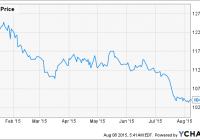
Summary All the three major labor unions in the South African gold mining industry rejected the proposed 13% pay hike. The labor unions demand 70%-100% increase of wages. The South African gold producers can’t afford to increase wages too much as labor costs are said to represent approximately 50% of gold mining costs in South Africa. A probable strike may help to support gold and GLD prices; however, it won’t push too them much higher, as the South African gold production isn’t important enough. As the gold price stabilizes in the tight range between $1,080 and $1,100 per troy ounce (toz), the SPDR Gold Trust ETF (NYSEARCA: GLD ) found its short term support at the $104 level. Although the long-term fundamentals are positive, the short-term development of the GLD share price is questionable. But the current developments in South Africa indicate that GLD may bounce off the recent lows. On August 2 , The Association of Mineworkers and Construction Union that represents approximately one third of South African gold miners, rejected a 13% pay hike proposal. On August 7 , the National Union of Mineworkers did the same. Although the offer has been increased to a 17% pay hike, the unions demand an increase by 70-100%. Basic monthly wage is approximately $460 right now which really isn’t too much, given the harsh working conditions in South African gold mines. On the other hand wage costs are said to represent approximately 50% of gold mining costs in South Africa. This claim is supported by a 2011 estimate that labour costs account for 38% of total operating expenditures. It means that increasing wages by the rejected 13% or 17% would be extremely painful for gold producers given the current gold price. Increasing wages by 100% would ruin them. The South African gold producers can’t afford to increase wages too much. The discussions should continue on Wednesday but the difference between the demands of the miners and offers of the mining companies is still very large. The general secretary of the National Union of Mineworkers claimed that they will go on strike if their demands are not met. The situation will most probably escalate in the coming weeks, however impacts of the possible strike on gold and GLD prices is questionable. South Africa And Gold Mining Although South Africa was the world’s biggest gold producer for the better part of the 20th century, its position has deteriorated significantly lately. According to the USGS data, South Africa produced approximately 150 tonnes gold in 2014. It equals to approximately 4.823 million toz. On the other hand China, the world’s biggest gold producer, mined 450 tonnes (14.468 million toz) gold and the total global gold production amounted 2,860 tonnes (91.951 million toz). It means that South Africa was the 5th biggest gold producer in 2014 (the 5th position is shared with Peru) and only 5.24% of the 2014 global gold production was attributable to this country. (click to enlarge) Source: own processing, using data of USGS Only 20 years ago, South Africa was the world’s biggest gold producer by far. It produced 580 tonnes (18.647 million toz) gold in 1994, which represented more than 25% of the global production. But poor infrastructure, labor problems and the fact that the miners must dig for gold deeper and deeper, resulted in a continuous decline of South African gold production. The South African gold production declined by 74% between 1994 and 2014, while the global gold production increased by 24% during the same time period. (click to enlarge) Source: own processing, using data of USGS The problems of the South African gold industry are well illustrated by the fact that 8 out of the 10 deepest mines are located in South Africa (chart below) and all of them produce gold. The world’s deepest mine, Mponeng , is owned by AngloGold Ashanti, which produces 405,000 toz gold per year and the operating depth ranged from 2,400 to 3,900 meters below surface in 2012. The mine life should be expanded to 2040 which means that the miners will probably dig much deeper. Source: own processing, using data of mining-technology.com Can the strike alone push GLD price higher? The strike alone probably won’t be enough to push gold and GLD price too much higher. South Africa is responsible for only slightly more than 5% of global gold production. In the case that all of the South African gold production would stop (which is not probable), global gold market would lost only slightly more than 0.4% of annual mine supply every month. And there is another problem. There was a major strike of the platinum miners last year in South Africa. The strike took place from January to June and some of the world’s biggest platinum producers (Lonmin ( OTCPK:LNMIY ), AngloAmerican Platinum ( OTCPK:AGPPY ), Impala Platinum ( OTCQX:IMPUY )) were affected. But the platinum price was relatively stable. The chart below shows price development of ETFS Physical Platinum Shares ETF (NYSEARCA: PPLT ), ETFS Physical Palladium SHares ETF (NYSEARCA: PALL ), GLD and iShares Silver Trust ETF (NYSEARCA: SLV ). Share prices of all of the funds increased by 5-9% during the first half of 2014. Only palladium price increased more significantly, mainly due to the problems between Ukraine and Russia that is the world’s biggest palladium producer. Platinum and PPLT prices increased by less than 10% although South Africa is world’s biggest platinum producer and it was responsible for 72% of global platinum production in 2013, the year before the strike. The reason is that platinum producers were processing the stockpiled material. If the South African gold miners have stockpiles large enough, a similar scenario may repeat itself this time again. It means that the strike alone doesn’t have the potential to push gold price notably higher, however it may have a positive psychological effect and it may help gold and GLD prices to hold above the current support levels. Conclusion All in all, the possible strike of the South African gold miners doesn’t have the potential to move gold and GLD prices significantly. South Africa is not that important gold producer anymore. Moreover the miners have probably some stockpiled material that may help to offset the impacts of the strike for some time. On the other if there is a strike, it may have a positive psychological impact on markets and given that GLD price is consolidating above the $104 level and most of the gold producers are unable to generate any profit at current gold prices, it may help to avoid further price declines in the short term. Disclosure: I/we have no positions in any stocks mentioned, and no plans to initiate any positions within the next 72 hours. (More…) I wrote this article myself, and it expresses my own opinions. I am not receiving compensation for it (other than from Seeking Alpha). I have no business relationship with any company whose stock is mentioned in this article.
Dividend ETFs: Another Canary In The Coal Mine?

Bloomberg reports that money is flowing out of dividend-focused ETFs. That’s a big change after years of inflows. Pair this up with the REIT and Utility selloff, and maybe dividend investors should start getting worried. Years ago, coal miners would bring canaries into the mines with them. Not because they wanted to have a mascot around, but because canaries were more sensitive to deadly gases. When the bird died, it was time for the humans to run for the exits. Right now, the shift taking place in income-oriented stocks could be flashing just such a warning sign. Who doesn’t love an ETF? According to Bloomberg , Vanguard Dividend Appreciation ETF (NYSEARCA: VIG ) has seen more money flow in its doors every year since it was created in 2006. Until this year, that is. Roughly $800 million has left the roughly $20 billion fund so far in 2015. And VIG isn’t alone. According to Bloomberg the dividend ETF category, with about $100 billion in assets, has seen roughly $2 billion in outflows this year. Now that’s not a huge amount of money percentage wise, but it’s a clear indication that the popularity of dividend ETFs is waning. And that’s a big deal. But what’s going on? For starters, as the Federal Reserve has talked about raising short-term interest rates, the market has already started the process. The rate on 10-year treasuries has inched up from 1.6% to 2.3% this year. VIG yields around 2.2%. Why take the risk of owning stocks if you can get the same yield from a treasury? And to add insult to injury, VIG is down roughly 2% so far this year while sibling Vanguard S&P 500 ETF (NYSEARCA: VOO ) is up about 2%. VOO yields around 2%, for comparison. So VIG is lagging the broader market and it doesn’t offer much of a yield advantage compared to the S&P 500 Index. Once again, why bother with VIG? Bigger picture But that’s not the whole picture. For example, real estate investment trusts have also fallen out of favor. Vanguard REIT Index ETF (NYSEARCA: VNQ ) is down around 4% so far this year and roughly 12% from its early year highs. And Vanguard Utilities ETF (NYSEARCA: VPU ) is down roughly 11% this year and nearly 15% from its early year highs. So dividend ETFs aren’t the only ones facing performance headwinds. Note that market watchers have commented on the asset outflows from these two funds this year, too. The take away is that sectors of the market that are associated with dividend investing aren’t the bright spots they once were. They are lagging and seeing investor outflows. And it’s worth noting that VNQ and VPU both have higher yields than the 10-year treasury. So investor flight is about more than just yield. The most likely reason for all of this bad news is investor sentiment. And that’s a potentially dangerous thing if it starts to snowball. At that point it could easily turn into an avalanche of selling. Remember Benjamin Graham’s Mr. Market isn’t sane, the prices he offers sometimes appear ridiculously high and ridiculously low. This is just another way of explaining the pendulum nature of the market, in which prices move back and forth from the extremes. Over long periods, the prices may make sense, but over short periods that’s not really the case. The next shoe to drop? There’s no way to tell, of course, what might cause what’s happening to dividend-focused investments to turn into an avalanche. However, there’s a pretty big issue coming to a head right now: the Fed and short-term rates. Some suggest that any rate hike will be small so it will have little impact on companies. And, thus, should lead to little change in stock prices. You could also argue that any hike will be driven by economic improvement, though I’d argue that the economy is hardly robust and stable right now. But these counter arguments miss the emotional impact, which is what drives stock prices over short periods of time. And it also ignores the multi-year run up in the prices of dividend-focused investments. For example, despite their recent pull backs, VIG, VNQ, and VPU are up still up roughly 70%, 55%, and 40%, respectively, over the past five years. That’s down from early year highs and you could easily argue that the declines so far this year for REITs and utilities have brought at least these two sectors back into buying territory. This thesis, however, ignores the usual market pendulum from extreme to extreme. Yes, the pendulum swings through rational, but that normally happens as it’s swinging to the other extreme. In other words, I don’t think now is the time to be aggressive. I think caution is still in order. And until the Fed actually starts raising rates, uncertainty will be your enemy. So I think the canaries are starting to choke. Perhaps it’s not time to exit the mines just yet, but I’d sure be making plans to do so if you own anything speculative. Disclosure: I/we have no positions in any stocks mentioned, and no plans to initiate any positions within the next 72 hours. (More…) I wrote this article myself, and it expresses my own opinions. I am not receiving compensation for it (other than from Seeking Alpha). I have no business relationship with any company whose stock is mentioned in this article.

Top 3 iShares ETFs Provide Exposure To The Health Care Sector

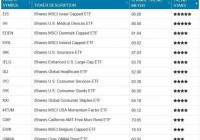
Summary The Top 3 iShares ETFs in our data base are EIS, IHI and EDEN. Large exposure to the health care area, in one form or another, is the common factor among the three ETFs. This sector has strong fundamentals driven by government mandated health reforms pushing managements to action. Introduction July was a choppy month in the markets, with Greece driving the headlines. The markets sold off during the Greek rebellion, rallied in relief when Greece agreed to tough bailout conditions, and sold off quickly heading into the Federal Reserve’s FOMC meeting. Then it bounced again, when the FOMC issued a dovish statement after its meeting. During this volatility, the three iShares ETFs that rose to the top of our medium-term rankings (see Figure 1) were the iShares MSCI Israel Capped ETF (NYSEARCA: EIS ), the iShares U.S. Medical Devices ETF (NYSEARCA: IHI ) the iShares MSCI Denmark Capped Investable Market Index ETF (BATS: EDEN ). The common factor uniting all three top iShares ETFs is the dominant exposure to the health care area in their portfolios. (click to enlarge) Figure 1: The best trending iShares ETFs from the ETFmeter.com database. (Chart courtesy ETFmeter.com ) The Common Factor EIS has approximately 26% of its assets in Teva Pharmaceuticals (NYSE: TEVA ). The world’s largest manufacturer of generic drugs this week announced it had purchased Allergan’s generic drug business. The deal just adds depth to its generics portfolio plus more growth opportunities, and pushed TEVA to a new high following its major breakout in early 2014. For EIS, its top 10 holdings account for nearly 70% of its assets, and add exposure to Israeli banks, industrials, telecom, and materials. The correlation between the performance of EIS and TEVA is a strong 79% (see Figure 2). (click to enlarge) Figure 2: Teva Pharmaceuticals is the largest holding of EIS, and the correlation between the two is 0.79 and rising (see lower graph). (Chart Courtesy StockCharts.com and ETFmeter.com) Medtronic, Abbot Labs and Thermo Fisher Scientific are the three top holdings of the iShares U.S. Medical Devices ETF, accounting for more than 30% of the ETFs assets. Almost 82% of the fund’s assets are in just 20 stocks. In our analysis, eight of the top 20 stocks are rising strongly. Its best performing stocks this month are Bard (NYSE: CR ) and Intuitive Surgical (NASDAQ: ISRG ). The long-term correlation between IHI and Medtronic (NYSE: MDT ), its largest holding, is 0.94 (see Figure 3). (click to enlarge) Figure 3: Medtronic is the largest holding of IHI, and the correlation between the two is 0.94 (see lower graph). (Chart Courtesy StockCharts.com and ETFmeter.com) The EDEN iShares Denmark ETF has broken out to new highs, and it has Novo Nordisk (NYSE: NVO ) to thank for it. A bit more than 22% of the ETF’s assets were in Novo Nordisk, with its top 10 holdings accounting for some 64% of the assets, scattered amongst the mega shippers and brewers. Novo Nordisk focuses on diabetes drugs and assorted pharmaceuticals. Lately, the 200-day correlation between EDEN and NVO is about 0.98, which means that the ups and downs of EDEN have closely followed the fortunes of NVO (see Figure 4). (click to enlarge) Figure 4: Novo Nordisk is the largest holding of EDEN, and the correlation between the two is 0.98 (see lower graph). (Chart Courtesy StockCharts.com and ETFmeter.com) Looking Ahead Health care stocks have been amongst the best performers for the past several years. Health care reform in the U.S. has pushed managements into action, and the fundamental drivers for the sector are likely to remain strong for the foreseeable future. Thus, these iShares ETFs are likely to have a wind in their sails far beyond the horizon. Disclosure: I/we have no positions in any stocks mentioned, and no plans to initiate any positions within the next 72 hours. (More…) I wrote this article myself, and it expresses my own opinions. I am not receiving compensation for it. I have no business relationship with any company whose stock is mentioned in this article.