Tag Archives: investing ideas

4 ETFs In Focus As Iran Reaches Nuclear Deal

The tension in the Middle East has eased following the historic nuclear deal between Iran and world powers. After decade-long negotiations, the Islamic Republic is ready to back down the development of nuclear weapons for over a decade in exchange for relief in oil sanctions imposed in the late 2000s. This seems to be a major development for Iran, the U.S. and the six world powers. The deal would open the doors for international oil and gas giants like Royal Dutch Shell (NYSE: RDS.A ), Total S.A. (NYSE: TOT ) and Eni SpA (NYSE: E ), previously barred under sanctions, to invest in the Iranian oil and energy sector thanks to Iran’s huge oil reserve. This is especially true as Iran is the world’s fourth-largest reserve holder of oil with 158 billion barrels of crude oil, according to the Oil & Gas Journal . Notably, it accounts for almost 10% of the world’s crude oil reserves and 13% of reserves held by the Organization of the Petroleum Exporting Countries (OPEC). On the other hand, any relaxation in sanctions would boost Iranian oil exports and production, adding to the global supply glut. However, it will take at least six months for the sanctions to be lifted due to vast legislative procedure involved in the historic deal. Additionally, the relief to oil sanctions will be gradual when it starts and thus could take years or more for Iran to increase oil production significantly or fully ramp up its export capacity. As per Fitch Ratings, Iranian oil production will increase in 2016 but will take a number of years to reach its previous peak. Iran currently exports about 1.1 million barrels per day, which more than halved from 2.6 million barrels per day exported in 2011. The development has put the spotlight on many corners of the investing world with investors keeping a close eye on them for the coming days. In particular, crude oil price has seen huge volatility following the historic nuclear deal. Crude price slumped as much 2.3% on the day but bounced back later to settle 1.6% higher at the close. As a result, we have highlighted four ETFs, which are especially in focus in the wake of nuclear deal: United States Brent Oil Fund (NYSEARCA: BNO ) Oil ETFs which directly deal in the futures market will be on the top of investors’ list. While there are many, the focus would be on Brent crude oil that serves as a major benchmark of oil worldwide instead of WTI, which is more of a benchmark for American prices. The fund provides direct exposure to the spot price of Brent crude oil on a daily basis through future contracts. It has amassed $95.4 million in its asset base and trades in good volume of roughly 215,000 shares a day. The ETF charges 75 bps in annual fees and expenses. BNO gained 0.5% on Tuesday trading session and is down about 9% in the year-to-date period. SPDR S&P Oil & Gas Exploration & Production ETF (NYSEARCA: XOP ) As Iran is expected to increase oil production after sanctions are lifted, a closer look at the exploration and production sector is warranted. XOP is one of the largest and popular funds in the energy space with AUM of $1.7 billion and expense ratio of 0.35%. It trades in heavy volume of more than 9.7 million shares a day on average. This fund provides an equal-weight exposure to 75 firms by tracking the S&P Oil & Gas Exploration & Production Select Industry Index. None of the firms accounts for more than 1.84% of the total assets. The product is skewed toward small cap securities, as these account for 56% share in the basket, while the rest is almost evenly split between large and mid caps. The ETF surged 3% on the Iran deal but is down 4.8% so far in the year. iShares U.S. Aerospace & Defense ETF (NYSEARCA: ITA ) A nuclear agreement could be a boon for the U.S. defense sector, as it will prompt the Mideast partners to seek improved defense systems from American contractors. While there are other two quality options in the defense space – PPA and XAR – ITA will garner huge investors’ interest for its liquidity and AUM. The fund follows the Dow Jones U.S. Select Aerospace & Defense Index and holds 36 stocks in its basket. It allocates higher weights to the top two firms – Boeing (NYSE: BA ) and United Technologies (NYSE: UTX ) – at over 8% share each. Other securities hold no more than 6.70% of total assets. The fund has accumulated $533.6 million in AUM while charges 44 bps in fees a year. The product is up 0.6% on Tuesday trading session and 6.4% so far this year. Market Vectors Gulf States Index ETF (NYSEARCA: MES ) The deal could be the game changer for the Middle East, as it would make the relationship with the Western countries smoother with increased investments, new business, and a pickup in other economic activities. Given this, MES having AUM of just $15.3 could be potential winner in the coming years. The fund provides exposure to the 63 largest and most liquid stocks in the Gulf region by tracking the Market Vectors GDP GCC Index. Emaar Properties, Qatar National Bank and National Bank of Kuwait occupy the top three spots with at least 6% share each. Other firms hold no more than 4.3% of total assets. From a sector look, financials dominates the portfolio with 66.7% share while industrials and telecom round off the next two spots with double-digit exposure each. The ETF charges 99 bps in annual feeds and trades in a paltry volume of about 6,000 shares. The fund added 1.3% on the day and over 4% in the year-to-date time frame. Original Post
Wide Moat ETF Gets An International Counterpart

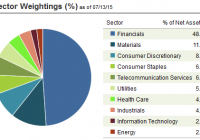
Summary Popular economic moat ETF strategy goes international. Highlight the new market Vectors Morningstar International Moat ETF. A closer look at the economic moat strategy. The popular Market Vectors Wide Moat ETF (NYSEARCA: MOAT ) got an international equivalent today with the debut of the Market Vectors Morningstar International Moat ETF (NYSEARCA: MOTI ). MOTI tracks the Global ex-US Moat Focus Index (MGEUMFUN), “a rules-based, equal-weighted index intended to offer exposure to 50 attractively priced companies outside the U.S. with sustainable competitive advantages according to Morningstar’s equity research team,” according to Market Vectors . Like its U.S.-focused counterpart, MOTI uses Morningstar’s proprietary methodology to identify companies with long-term advantages, which allows companies to earn sustainable excess economic profits , as measured by the return on invested capital relative to the company’s cost of capital. The new ETF features exposure to 16 countries, including four emerging markets. However, MOTI’s geographic lineup is heavily tilted toward developed markets. India, China, Mexico and Chile – MOTI’s four emerging markets exposure – combine for just over a quarter of the new ETF’s weight. Conversely, Australia alone is 21.1% of MOTI’s weight. Home to 51 stocks, MOTI’s lineup is roughly two and a half times the size of MOAT’s. However, MOTI applies the same equal-weight methodology. MOAT’s 21 holdings have weights ranging from 4.64% to 6%, whereas MOTI’s holdings range in size from 1.15% to 2.32%. Four of MOTI’s top 10 holdings are Indian stocks, making the country the most represented among MOTI’s top 10 lineup. ” MOAT resonated with investors and with much of the world’s investable opportunities outside the United States, we’re launching MOTI as a means to capture moat-based opportunities abroad,” said Brandon Rakszawski, product manager at Van Eck Global, in a statement. “Morningstar is a leader in equity research and we look forward to offering investors the ability to access its analysts’ best ideas through an investible ETF.” At the sector level, MOTI is heavily allocated to financial services names with that sector commanding nearly 49% of the ETF’s weight. Materials at almost 12% is the only other sector to garner a double-digit allocation. Consumer discretionary and staples names combine for just over 15% of MOTI’s weight, according to Market Vectors data. Familiar individual names in MOTI’s lineup include State Bank of India, Unilever (NYSE: UN ), America Movil (NYSE: AMX ), Westpac Banking (NYSE: WBK ), Nestle ( OTCPK:NSRGY ), Potash Corp. (NYSE: POT ), HSBC (NYSE: HSBC ) and all of Canada’s major banks. MOAT’s methodology has clearly been embraced by investors. The ETF has swelled to nearly $881 million in assets under management in just over three years of trading. MOTI’s annual expense ratio is 0.56%. MOTI Sector Weights Chart Courtesy: Market Vectors Disclosure: I/we have no positions in any stocks mentioned, and no plans to initiate any positions within the next 72 hours. (More…) I wrote this article myself, and it expresses my own opinions. I am not receiving compensation for it. I have no business relationship with any company whose stock is mentioned in this article.

New Alternative ETF Takes Income Generating Seriously

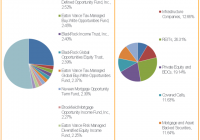
Income investors may look at alternative assets to garner attractive yields. ETF options that provide attractive dividends. Focus on the Global X suite of SuperDividend ETFs. By Todd Shriber & Tom Lydon Investors are still searching for ways to generate income. Home to asset classes including business development companies (BDCS), private equity, closed-end funds, covered call funds and others, the alternatives space is a credible source of high income and yields. Enter the Global X SuperDividend Alternatives ETF (NASDAQ: ALTY ) , which debuted today. ALTY is the latest member of Global X’s SuperDividend suite , becoming the sixth ETF in a group that includes well-known products such as the Global X SuperDividend ETF (NYSEARCA: SDIV ) and the Global X SuperDividend U.S. ETF (NYSEARCA: DIV ). ALTY tracks the Indxx SuperDividend Alternatives Index. The new ETF offers investors exposure to an array of income-generating asset classes including a 26.3% weight to real estate investment trusts (REITs), a 19.1% allocation to BDCs and private equity and an 8.5% weight to master limited partnerships (MLPs). The new ETF also features 11.6% weights to covered call strategies and mortgage- and asset-backed securities, according to Global X data . BDCs have increased in popularity among investors for one big reason: Tantalizing dividend yields. However, with Treasury yields on the rise, some high-yielding asset classes are proving vulnerable, meaning investors should take the time to assess positions in BDCs and the corresponding exchange traded funds. BDCs are closed-end investment companies created under the Investment Company Act of 1940 that invest in debt and equity of small public and privately-held companies. The companies essentially help fund small $5 million to $100 million businesses. Ever since the financial crisis, regulators have clamped down on traditional lenders and made it harder for businesses to access public capital, which has forced smaller business to take loans from BDCs. ALTY delivers on the income promise via of a fund-of-funds approach as top 10 holdings are other funds, including a 26.3% weight to the Global X SuperDividend REIT ETF (NASDAQ: SRET ) . SRET, by far ALTY’s largest holding, debuted in March. “As a result of their stable earnings, REITs have demonstrated less volatility than equity prices. Global REIT volatility from 2010 – 2014 was 15.3% as compared to 16% of S&P 500. This stability has contributed to higher risk-adjusted returns as observed by Sharpe Ratio. The Sharpe Ratio for global REITs in 2014 was 2.11 as compared to a Sharpe Ratio of 1.01 for S&P 500,” said Global X, citing Bloomberg data. Alternative assets have other advantages in addition to income-generating potential. “Alternatives are generally known for lower volatility compared to equities. ALTY’s index methodology seeks to further reduce volatility through its selection and weighting of components. Alternative income is often generated from sources with low correlation to equities and traditional fixed income, such as real assets, private equity, and derivative strategies,” according to Global X . However, those advantages come at a cost. As ALTY holds multiple asset classes across multiple funds, the new ETF’s expense ratio is 3.03%, which is high by the standards of most actively-managed mutual funds, let alone passively-managed ETFs. ALTY pays its dividend on a monthly basis. (click to enlarge) Charts Courtesy: Global X Disclosure: I/we have no positions in any stocks mentioned, and no plans to initiate any positions within the next 72 hours. (More…) I wrote this article myself, and it expresses my own opinions. I am not receiving compensation for it. I have no business relationship with any company whose stock is mentioned in this article.