Tag Archives: investing ideas

Choosing Which Stocks To Sell For A Big Purchase

Summary This article outlines the thinking process of needing to sell some stocks for a big purchase. Know how much cash is needed to liquidate from stocks, so as not to sell more than needed. Must keep emotions in check, and sell stocks based on company valuation and future prospects of the business. Here’s a little background story to my situation. The Situation of Being Carless I recently sold my 2001 Toyota Echo. I bought it used about three years ago. The odometer indicates mileage of over 320,000km. While I owned it, other than the usual maintenance, I replaced the battery and the exhaust pipe. I managed to sell it for $500 less than my buying price. Not too shabby. I’m not one who drives a lot, but I only noticed how inconvenient it is after I sold the car. Now, I’m looking for another car. I’m still debating whether to buy a new car or a pre-owned one. Someone that knows a lot more about cars than me said that it’s probably better to buy a new one now that I got several years of driving experience down my belt. Further, it could be risky buying a pre-owned car because I don’t know its history. The previous owner could also have hid facts about crashes the car had experienced or changed the odometer. The ideal situation is that I anticipated I’ll need to “invest” in a car a couple years before and actually saved up for it. As we know, the general principle is to not put money into the stock market if you plan to use it within 5 years. The reality is I did not save up, and I don’t have a lot of cash on hand. So, other than to stop buying stocks in the meantime, I also needed to sell some of my shares. Emotionally, I don’t want to sell at a loss, and some of my holdings are in the red, especially energy companies. At the same time, I also want to take profit in my biggest winners. However, the better way is to try to suppress my emotions, and look at valuations and future earnings estimates instead. So, I should be looking at the valuations of all of my holdings and deciding which ones are possible sells. I especially don’t want to sell my core holdings, but if they’re excessively overvalued, or I feel less comfortable with them for some reason, it might make sense to take some shares off the table and take some profit. Unfortunately, I made some sales before I wrote this article. I notice I’m much more logical and less emotional when I rethink the process in writing. How did I Choose What to Sell? It is through this event that I realize more prominently that I’m less comfortable with some stocks than others. In other words, this exercise more critical helps me determine what I should be holding or not. Further, I also look at valuation, as well as compare a holding’s future prospects with others. Another consideration is gains. The market is uncertainty; it could drop 25-50% for whatever reason at any time period. Still, I would probably regret later by selling some shares in my winners, as some would be against clipping the wings of their winners. Royal Bank of Canada Royal Bank of Canada (NYSE: RY )’s shares are fairly-valued today. F.A.S.T. Graphs shows consensus analyst estimates of 4.7% earnings growth going forward. Adding that to its current yield of 3.9%, it indicates an estimated return of about 8.6% in Royal Bank shares today, which is an acceptable return for a blue chip investment. In Q2 2015, 63% of Royal Bank’s revenue came from Canada. The housing bubble has been the topic at the dinner table in recent years, especially in popular cities such as Vancouver and Toronto. The fear is that the average income cannot pay for the average housing prices. In January 2015, the Huffington Post’s article shows the income you need to buy an average house across Canada . In Toronto, an average household income of C$113,009 is needed for an average-priced house or condo of C$587,505 at the low mortgage rate of 2.99%. The monthly mortgage payment turns out to be C$2,560. If rates rose to 6%, the 2005 rate, the required household income would be raised to C$143,182. It’s worse in Vancouver. An average household income of C$147,023 is needed for an average-priced house or condo of C$819,336 at the low mortgage rate of 2.99%. The monthly mortgage payment ends up being C$3570. If rates rose to 6%, the 2005 rate, the required income would be raised to C$190,581. Of course these numbers are just that — an average. And it also makes a difference how much down payment a family has saved up. Still, it doesn’t change the fact that housing prices have been on the rise for over a decade in those cities. And with income levels misaligning with housing prices, there could be a ripple effect if the prices started to drop. I sold some shares in Royal Bank, and will continue monitoring, but I want to emphasize that if I had cash on hand to make my purchase, I wouldn’t have sold my shares. Baxter International I started a position in Baxter International (NYSE: BAX ) as a non-core. Then, I made it core. And now I sold out of it. It was a small position and I suppose I wasn’t strongly attached to it. I sold it essentially at breakeven. I might still receive a tiny position in Baxalta, as I sold it on June 16, but the settlement date is a few days later, while the company spins off the Baxalta shares to shareholders as of the record date of June 17. If I do receive shares of Baxalta, I’ll be monitoring it and decide if I want to add to the position later on. Starbucks Some of you might stare in disbelief that I sold some shares of Starbucks (NASDAQ: SBUX ). It has been one of my biggest winners with 50% gain. The high P/E is scaring me a little. I certainly wouldn’t add shares at a P/E of 36. Looking at the F.A.S.T. Graph below, it’s at the high end of its valuation. (click to enlarge) If it trades sideways again, so that earnings catch up some, I might add to my position again. Actually, I should have sold McDonald’s (NYSE: MCD ) before selling Starbucks because Starbucks has better future prospects. However, my McDonald’s shares are below my breakeven point, and psychologically, it’s hard for me to separate from those shares at present levels. That said, in hindsight, I shouldn’t have bought McDonald’s at the price that I did. And a thought just came to me…I should have sold McDonald’s at a small loss and kept my Starbucks shares because I believe Starbucks will outperform McDonald’s in the future. Whoops, I guess I should have written this article before I took action. I’m still a bit short on cash, so I might revisit my decision on McDonald’s next week. Microsoft Lastly, I sold some shares in Microsoft (NASDAQ: MSFT ). The other technology companies I hold are International Business Machines (NYSE: IBM ) and Qualcomm (NASDAQ: QCOM ). IBM is a core holding that I believe is much more undervalued than Microsoft. IBM’s P/E is under 11 and Qualcomm’s is under 14, while Microsoft’s is under 18. Consensus analyst estimates Microsoft’s earnings to grow at 6.7% in the near term, Qualcomm’s to grow at 1.3%, and IBM’s to grow at 5.1%. If I didn’t need the money, I wouldn’t sell the Microsoft shares because they’re not excessively overvalued. In Conclusion Looks like I couldn’t keep my emotions entirely at bay, but in writing this article, I believe my thought process became clearer and less sentimental. It would certainly have helped if I had a set of rules for selling stocks ahead of any sales based on allocation, diversification, quality, valuation, and future prospects. Ask Yourself Do you need to sell some of your stocks to make a purchase? Do you have a set of rules to determine what to sell when you need to? Do you ever sell for the sake of taking profit off the table to preserve gains and capital? If you like what you’ve just read, please consider clicking the “Follow” link at the top of the page, above the article title, to receive an email notification when I publish a new article. Disclosure: I am/we are long IBM, MCD, MSFT, QCOM, RY, SBUX. (More…) I wrote this article myself, and it expresses my own opinions. I am not receiving compensation for it (other than from Seeking Alpha). I have no business relationship with any company whose stock is mentioned in this article. Additional disclosure: I’m not a certified financial advisor, and this article is not advising to buy or sell any security. Please use it as initial research.

Taylor Swift > Apple

Summary Taylor Swift lights up Apple over plans to stiff musicians. Apple blinked. This creates a huge opportunity for fans & costs Apple a fortune. When pop stars attack Yesterday, Taylor Swift announced that she would pull her album, 1989, from Apple (NASDAQ: AAPL ) Music. My first reaction was: 1989? Someone could have been born in 1989? Jeesh she is young. My second thought is that she writes well and knows how to get what she wants. Her concern is that Apple Music was going to offer a free three-month trial without paying the talent behind the music. So she light them up as, shocking, disappointing, and completely unlike this historically progressive and generous company. She has a point The often exploitative nature of the music industry’s high-priced helpers has long been a complaint of singers and songwriters; what is new is that individual singers are going out of their way to use their clout to push back. After the free three months, Apple intended to pay music owners 71.5% of the subscription revenue, which is consistent with the industry standard. While this would not be problematic for established musicians, it would be a long wait for newer, smaller labels and independent artists. Apple caves It took only seventeen hours for Taylor Swift’s message to get through to Apple. Apple exec Eddy Cue came out on Twitter (NYSE: TWTR ) to say that Apple will make certain that musicians are paid, even during the free trial period. Apple made up with Swift fast . Music arbitrage This turns a potential negative for musicians into a huge commercial bonanza – every singer and band with a big online follower can specifically encourage free streaming for a full quarter of a year with streaming royalties passed on to the musicians. This will cost the fans nothing. This will make their favorite musicians money. It will cost Apple a boatload, but at least they got some good free press. The industry takes a lot out of the artists… now bands and fans can use this free trial period to get a little back. Just keep streaming your favorite music for ninety days starting on June 30, 2015. Powerful interests vs. other powerful interests Businesses – especially hip, modern businesses such as Apple – like to imply that their principles guide the negotiations with their counterparties. The reality is that their behavior is guided primarily by their interests . As a shareholder-owned firm, that is as it should be. Once those shareholders are enriched, they can use those resources to support starving artists or whatever else they want to do. This victory for musicians did not come from trying to argue about principles when it is really about interests. It came from competing interests, and concentrated interests at that. Sure, Taylor can protest that this was never about her and that she can go without pay for a few months… but her protest (again, utterly appropriately) was 100% aligned with her interests. Only when a star with enough clout went head-to-head against Tim Cook did Apple back down. Conclusion Free enterprise has a remarkable knack for restoring equilibrium. In many cases (such as shareholder activism) this self-righting tendency is strengthened by the presence of concentrated interests that can offset other concentrated interests. It can be the very inequality of people such as Taylor Swift that most benefits the types of young, independent artists that are poorly positioned to protect themselves. Rhetorically, Apple executives (and just about everyone else) like to talk about their principles, but they act upon their interests. If they did not, then someone else would and that interloper would quickly take over Apple’s markets. So, if you want to be able to predict behavior, follow interests. Oh, and don’t mess with Taylor Swift . Disclosure: I am/we are long AAPL. (More…) I wrote this article myself, and it expresses my own opinions. I am not receiving compensation for it (other than from Seeking Alpha). I have no business relationship with any company whose stock is mentioned in this article. Additional disclosure: Chris DeMuth Jr is a portfolio manager at Rangeley Capital. Rangeley invests with a margin of safety by buying securities at deep discounts to their intrinsic value and unlocking that value through corporate events. In order to maximize total returns for our investors, we reserve the right to make investment decisions regarding any security without further notification except where such notification is required by law.

Solid Growth Outlook Is One Reason Among Many To Buy PPL Corp.

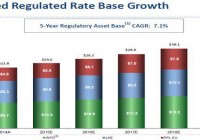
Summary Growth investments directed at becoming a regulated utility company and recent competitive business spin-off will ensure earnings growth in the years ahead. Transformation into 100% regulated utility will ensure cash flow stability and strengthen EPS. PPL currently offers an attractive dividend yield of 4.90%, and remains on track to consistently increase dividends in years ahead. I reiterate my bullish stance on PPL Corporation (NYSE: PPL ); the company is moving ahead with its long-term growth generating investments in order to better its operational performance and keep its financial growth momentum healthy. Moreover, with the completion of its competitive business unit spin off, PPL has increased its focus on regulated utilities, which will mean more upside for its future earnings growth. Considering the fact that the company has been improving its regulated operations and is continuing with growth investments to expand them further, I believe PPL’s cash flows will remain strong in the years ahead, which will ensure the sustainability of its future dividend payments. Furthermore, the company’s future dividend growth is expected to improve. Growth Initiatives Remain On Track In the recent past, utility companies have been making infrastructure development spending to expand their operational bases. As per EIA reports, utility companies’ growth investments will help increase electricity generation in the U.S. by 1.1% and 0.9% in 2015 and 2016, respectively. Moreover, EIA reports have predicted that the increased generation capacity will help utilities raise retail residential prices in 2015 by 1.1% and in 2016 by 1.8%. Given this constructive utility sector’s rate outlook, I believe that utility companies will continue with their infrastructure development projects, which will portend well for earnings and cash flow growth of the industry in the years ahead. As far as PPL is concerned, under its robust strategic growth efforts, the company has been making growth investments towards the development of its transmission and distribution networks in order to capitalize on the available growth potentials. In the past decade, PPL had invested almost $4.7 billion for network rebuilding and up-gradation and it expects to make an additional $5.7 billion of investment over the next five years. As part of its growth investment plan, the company had previously invested in the Susquehanna-Roseland power project, which will strengthen its regulated transmission operations in the region. Moreover, the $1.4 billion power-line construction project will benefit the customers by delivering them power without putting an extra burden on other regional power lines. Moreover, PPL’s $563 million worth Kentucky-based combined natural gas cycle plant Cane Run 7 will be operational soon. These ongoing investments in construction projects will serve as an important means of regulated rate base growth in the years ahead, which will benefit the company’s top-line and will strengthen its cash flows. The following chart shows that PPL’s management expects healthy, regulated rate base growth over the next five years. Source: Company’s Earnings Presentation Making its moves towards generating regulated rate base growth, PPL has filed a rate base increase case with the Pennsylvania Utility Commission (PUC) on an estimated ROE of 10.95%; if approved, the rate hike will add revenues of almost $167.5 million per year, after coming into effect on 1st January 2016. I believe that the rate increase will in fact improve its cash flows, which will back its ongoing growth investments. Moreover, the company, combined with other parties of LG&E and KU generation stations, has reached a settlement agreement of raising electric and gas rates by $132 million. Effective from 1st July 2015, the new rate hike will help it recover the cost of constructing Cane Run natural gas plant and will better its long-term earnings growth prospects. Furthermore, as part of its plan to focus on a broader regulated asset base, PPL recently completed the spinoff of its competitive energy business by combining with River Stone Holdings, and formed a separate entity named Talen Energy Corporation. I believe that after the spinoff, PPL being solely focused on regulated asset base, will strengthen its top-line and bottom-line numbers, and its cash flow certainty will improve, which will support its dividend growth. Safe & Sustainable Dividends PPL has been making attractive cash returns to its shareholders by regularly returning cash flows in the form of dividends. During 1Q’15, dividend payments made by the company were $250 million, up 6.8%, year-over-year. Moreover, PPL had recently announced its quarterly dividend payment of $0.3725 per share , which translates into a healthy dividend yield of 4.90% . Moving ahead, AEP’s cash flow will improve, which will help PPL make regular dividend payments. Owing to the company’s correct growth measures, I believe the company’s future cash flows will remain strong, which will allow the company to consistently increase dividends. Guidance Due to the company’s strong financial performance and due to its attractive, planned infrastructure development projects, the management’s confidence in PPL’s earnings growth prospects have been restored, due to which they have reiterated their previously earnings guidance. The company continues to believe that its EPS for full year 2015 will remain in a range of $2.05-to-$2.25 . Moreover, PPL’s management remains confident about achieving its long-term annual earnings growth rate 4%-to-6%. Risks The company’s future financial performance remains exposed to a risk of increase in regulatory restrictions. Moreover, any laxness shown by the management during the execution of its well thought-out capital expenditure plan will hurt PPL’s long-term earnings growth potentials. In addition, unforeseen negative economic changes, currency headwinds and unfavorable weather changes are key risks that might hamper the company’s future stock price performance. Conclusion I am bullish on PPL; the company has an attractive growth outlook. PPL’s growth investments directed at becoming a regulated utility company, and the recent competitive business spin-off have directed it in the direction of earning better revenues and experiencing earnings growth in the years ahead. In fact, transformation into a 100% regulated utility will ensure cash flow stability and strengthen its EPS, which makes it attractive for dividend-seeking investors. The company currently offers an attractive dividend yield of 4.90%, and remains on track to consistently increase dividends in the years ahead. Disclosure: I/we have no positions in any stocks mentioned, and no plans to initiate any positions within the next 72 hours. (More…) I wrote this article myself, and it expresses my own opinions. I am not receiving compensation for it (other than from Seeking Alpha). I have no business relationship with any company whose stock is mentioned in this article.