Tag Archives: investing ideas

3 Sectors To Watch In The Second Half Of 2015

Summary The tepid return in the major averages was generated by weakening in interest rate sensitive areas and continued strength in high growth leadership categories. Healthcare stocks were once considered a defensive area of the market, yet have transitioned to a more growth oriented phase. Conversely, utility stocks have been torched by rising interest rates that have eaten away at their returns. The S&P 500 Index was nearly unchanged in the first half of 2015, yet the divergences in underlying sectors told a very different tale. The tepid return in the major averages was generated by weakening in interest rate sensitive areas and continued strength in high-growth leadership categories. This tug-of-war style market has created a relative valuation chasm between several important sectors that warrants close attention. Leader: Healthcare Healthcare stocks were once considered a defensive area of the market similar to consumer staples and utilities because of their inelastic business models. After all, medical services and drug companies operate with little cyclical burden to their bottom line. Nevertheless, some believe that these stocks have transitioned to a more growth-oriented phase that has been driven by the biotech boom and continued advancements in the medical field. The Health Care Select Sector SDPR ETF (NYSEARCA: XLV ) has been a top performing area of the market over the last three- and five-year time frames and continues to lead as the No. 1 sector so far this year. There’s no doubt that this ETF has shown tremendous momentum and activity has been robust as XLV has gained 9.51% through June 30. While this area of the market has been one of the most resilient, I would be hesitant to chase performance and add near its recent highs. If XLV or a similar healthcare fund has been on your radar, I would be patient with respect to any future entry points and look to pick up shares on at least a modest dip. In addition, this sector should serve as a benchmark of momentum leadership. If we see XLV start to fall out of favor, it may signal that investors are looking to pair back on risk and potentially rotate into a more defensive stance. Healthcare stocks currently make up over 30% of the iShares MSCI USA Momentum Factor ETF (NYSEARCA: MTUM ), which screens its underlying holdings for recent performance characteristics. Laggard: Utilities On the flip side of the coin, utilities have been torched this year as a result of rising interest rates. Coming off a strong performance in 2014 where rising rates acted as a tailwind, the Utility Select Sector SPDR (NYSEARCA: XLU ) is down 10.70% through the first half of 2015. The price of XLU peaked at virtually the same time as interest rates bottomed and has been on a steady course lower ever since. For the moment, it appears that the fate of utility stocks is going to be closely tied to the price action of U.S. Treasury yields. This traditionally defensive sector has been eschewed for more growth-oriented positions in healthcare, consumer discretionary and technology stocks. From a relative value standpoint, I believe that utilities look attractive at these levels given the thesis that interest rates will remain stable or head lower over the next six months. The recent drop in price also has boosted the yield on XLU to a healthy 3.80%, which makes it the highest yielding sector in the S&P 500. Income investors should note that diversified dividend funds such as the iShares Select Dividend ETF (NYSEARCA: DVY ) and First Trust Morningstar Dividend Leaders Index Fund (NYSEARCA: FDL ) have outsized utility sector exposure. This asset allocation acted as a drag on returns in the first half of the year and should be noted as a key driver moving forward as well. Tweener: Financials Financial stocks have long been touted as the cure to beat rising interest rates, yet the Financial Select Sector SPDR (NYSEARCA: XLF ) has been mired in a sideways malaise since the beginning of the year. XLF posted a net return of -0.61% through the first six months of 2015 and has failed to show inspiring price action to back up its reputation. XLF is an interesting fund because of the wide designation of financial-centric companies. This ETF includes large banks, REITs, brokerages and even diversified holding companies such as Berkshire Hathaway Inc (NYSE: BRK.A ) (NYSE: BRK.B ). REITs are currently the third largest industry group within XLF at 14.20% and have dragged on returns since the beginning of the year. The iShares U.S. Real Estate ETF (NYSEARCA: IYR ) has experienced the same interest rate sensitive drag as utility stocks and is down 5.5% in 2015. Conversely, indexes that focus solely on banking stocks such as the SPDR S&P Bank ETF (NYSEARCA: KBE ) have gained 8.87% this year. Clearly these stocks are the true beneficiaries of the rising interest rate theme as it relates to a fundamental driver of industry returns. Ultimately, XLF appears to be experiencing its own internal tug-of-war based on this bifurcation between sub-sectors that has caused it to drift aimlessly for the last six months. The Bottom Line The information presented above can be applicable to both broad-based indices and individual sector investing. Investors that own diversified equity ETFs need to be cognizant of the underlying asset allocation and sector positioning as it relates to future risk and returns. Those who prefer to select more targeted ETFs may choose to shift their positions in order to take advantage of a specific theme or pair back on an overbought area of the market. Making small tactical changes of this nature can have a big impact on your performance and risk profile as we make our way into the second half of the year. I spoke in-depth about these topics and more in our recent mid-year teleseminar: Four Components Of A Successful Income Portfolio . Click here for the presentation . Disclosure: I am/we are long DVY. (More…) I wrote this article myself, and it expresses my own opinions. I am not receiving compensation for it. I have no business relationship with any company whose stock is mentioned in this article. Additional disclosure: David Fabian, FMD Capital Management, and/or clients may hold positions in the ETFs and mutual funds mentioned above. The commentary does not constitute individualized investment advice. The opinions offered herein are not personalized recommendations to buy, sell, or hold securities.
Bearish GLD Trend After Greece Won Its Gamble

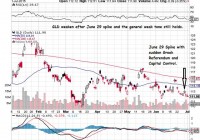
Summary The sudden Greek referendum and capital control gave the impression that events would spiral out of control and GLD spike up. U.S. and China intervened to keep the status quo and even the IMF which was defaulted on by Greece considered debt relief. Even the EU backed away from its demands and prepared to spend $35 billion euros to keep Greece within the EU. Still Greek PM wants a ‘No’ vote to increase negotiation leverage for greater concession. In short, Greece called the EU’s bluff and won the gamble. Financial stability concern had subsided but the world would still flock to USD. Bearish trend for GLD is now in place. The value of gold in our current fiat monetary system would be to serve as a hedge against inflation and financial instability. Inflation remains subtle today and major Centrals Banks only expect inflation to return to the 2% target in the next 2-5 years. Hence there is no reason to purchase gold from an inflation perspective. The financial stability argument is now in vogue with the whole Grexit saga that is playing out in real time. This has been expected after the Syriza government seized power back in January 2015 with the conflicting mandate of overthrowing austerity imposed by its European partners and to stay in the Eurozone at the same time. This is doomed for failure because the internal devaluation (cutting of wages and pensions, etc) would still go against the constraint of the strong euro in Greece’s competitiveness. Hence the Greek economy had shrunk year after year which would increase the debt to GDP ratio and make its debt untenable. Greek Referendum Card Therefore the only way forward would be for the Syriza government to play with the only card they have to force debt relief. That is the card of brinkmanship. It is only when Syriza threaten to burn the Eurozone apart with its default and the threat of leaving the European Union, then would the creditor nations be willing to grant them the much needed debt relief. It is important to understand this whole dynamics because it would in Greece’s interest to keep pushing Europe to the brink of collapse but at the same time maintain its membership in the Eurozone as long as the mandate of the Greek sways towards staying in the Eurozone. The Syriza government had to keep pushing the envelope to scare its creditors and it did a big scare on June 27. Greek Prime Minister Alexis Tsipras called for a sudden referendum on July 5 when the deadline for the EU bailout package on June 30. This worked wonders and was broadcasted worldwide for its sudden and irrational nature. At that point in time, shocked EU finance ministers expressed their angry clearly and closed the negotiations with Greece. On the next working day of June 29, Greece installed capital controls and limited the withdrawals of ATM cash to $60 euros per day. Banks were closed as the ECB refused to increase its emergency lending to deal with the bank run. Ratings agency such as Fitch and Standard and Poor downgraded Greeks banks and sovereign debt respectively. For a while, it would appear that things are rapidly spiraling out of control. I was shocked too and I wrote an article about the irrational nature of the Greek government as seen here . As the SPDR Gold Trust ETF (NYSEARCA: GLD ) chart below would show, gold prices actually spiked up that day as the threat of unconstrained disaster of Grexit appears imminent. The risk was that it would move out of Europe to the wider global economy. USD weakened as it was exchanged for gold. However this extreme extrapolation was a result of shock rather than a comprehensive assessment of the global economy. Foreign Intervention It turned out that the global will to keep the status quo was underestimated. Global leaders such as U.S. President Barack Obama, China’s Premier Li Keqiang and even IMF Christine Lagarde were not willing to rock the boat too hard. On June 30, the New York Times reported that President Obama intervened in the talks to urge creditors to soften their stance and come to a resolution. Obama was concerned over the financial stability concerns as the situation unfolded as described above. The U.S. President had grounds to believe that the unraveling of Europe could easily cause the contagion to spread not only in weaker European countries like Spain and Italy but also to the global economy including the U.S. In addition to the economic damage, there would also be geopolitical damage as Greece is part of NATO which is used to actively counteract the influence of Russia in Europe. This is especially after Russia annexed part of Ukraine in 2014 and this is still an existing concern. Obama was concerned enough for him to dispatch a senior Treasury officer to Europe to follow the status of the talks. For China , they had substantial investments in Greece and want Greece to stay within the EU framework for the safety of their investment. When the new government came into power, they tried to tear apart signed infrastructure contracts which unnerved Beijing. Things would only worsen if Greece were to leave the EU under desperate circumstances. Lastly we have the IMF which was at the losing end of Greece’s struggle with the EU. Greece failed to pay the $1.6 billion euros due on June 30 as the bailout negotiations failed. However the IMF had not taken action against Greece. Instead IMF Managing Director Christine Lagarde is entertaining the option of debt relief in exchange for reforms. Calling The EU Bluff Meanwhile the EU President Jean-Claude Juncker urged the Greeks to vote yes on the July 5 referendum and to stay within the Eurozone. This indicated that the EU would bend over backwards to accommodate the Greeks. In fact, the EU had already backed away from its proposal to rise the Value Added Tax from 13% to 23% and was prepared to give away another $35 billion in bailout. This is despite their doubts over the ability of the current Greek government to implement any reforms as demanded for the creditors. In fact even with these concessions on the table, the Greek PM is still urging his people to vote ‘no’ so that they can have more leverage on the EU for even more concession. The creditors are losing ground step by step with the negotiations with the current Greek government. The recent referendum, flawed as it is, is not used to primarily as a means for the Greek people to express their opinion. It is used as negotiation tool. In short, Tsipras had called the EU’s bluff. Even if the EU was willing to let go of Greece and go against its strong political will to unite the European nations on the frustrations of the creditor nations, international pressure would not allow it to happen so soon after a major recession and with the ongoing Russian aggression. In short, Tsipras took a gamble politically and he won. We can now expect to see more debt relief for Greece even if its record for implementation of reforms are doubted. Tsipras had won and Greece can stay within the Eurozone and not pay its debt. Conclusion The GLD chart below shows the recent impact of the Grexit drama. It spiked on June 29 as pointed out in the chart but it softened shortly after. It is clear that the financial stability concerns had faded and what is left is the rush to safety which would benefit the USD. (click to enlarge) Hence we should continue to sell GLD on any spikes in prices but we should not push it too far as there will be residual demand for gold in case events escalate beyond control suddenly. In other words, there will be a gradual weakening of GLD with periodic strength which should be sold. Disclosure: I/we have no positions in any stocks mentioned, and no plans to initiate any positions within the next 72 hours. (More…) I wrote this article myself, and it expresses my own opinions. I am not receiving compensation for it (other than from Seeking Alpha). I have no business relationship with any company whose stock is mentioned in this article.

Top 10 Mutual Fund Performers Of 1H 2015

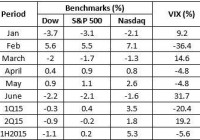
The first half performance of mutual funds cannot be termed as very strong. Only four of the mutual fund categories analyzed posted above a 10% gain in the first half. The broader market performance also compares unfavorably with the same periods in 2014 and 2013. Amid high volatility, the Dow failed to end in the green in 1H 2015, while the S&P 500 managed to gain just 0.2%. The Dow was the only benchmark in the first quarter to end in the red, but S&P 500 joined the blue-chip index in negative territory in the second quarter. The S&P 500 thus ended its nine-quarter winning trend, but the Nasdaq managed to extend its winning streak to 10 quarters and hit an all-time high. What Happened in First Half of 2015? The year started with concerns related to lower global growth projections, a slump in oil prices, strengthening of the dollar and apprehensions about the timing of the Fed interest rate hike. Amid this, the GDP data had been of little help. Beginning with the harsh winter and dismal releases, economic data has been mixed. Meanwhile, an increase in bond yields remained a cause for concern through May. By the first week of May, the yield on the benchmark U.S. 10-year note touched its highest level for 2015. However, recently, the retail and housing sector data have shown strength. The Fed officials meanwhile signaled a hike in interest rates, though at a slower-than-expected pace. The major headwind for the market is the drama in Greece. Greek debt negotiations have guided markets right from the beginning of 2015. On the last day of 1H 2015, Greece defaulted on IMF repayments despite submitting a fresh two-year aid proposal to its creditors. Synopsis of Benchmark & Fund Category Performance Below we present the performance of the key benchmarks, i.e., the Dow Jones Industrial Average, Standard & Poor’s 500, Nasdaq Composite Index, and the fear-gauge CBOE Volatility Index (VIX). Synopsis of YTD Fund Category Performance as evident from the chart, volatility has been very pronounced. Losses in January was followed by gains in Feb, and then ended in the red again in March. Though markets managed small gains in April and May, they were back to the negative zone in June. Focusing on June, the losses for the Dow and S&P 500 were the largest since January. Also, all three benchmarks ended in the red in June, repeating the event last seen in March. Except February, benchmarks have failed to post solid gains. In fact, it was February’s robust gains that had helped offset the losses in the first quarter and reduced the loss margin for 1H 2015. Except for the Nasdaq, we do not have a benchmark performance to be proud of. Below we present the top 15 fund categories for the first half of 2015: Source: Morningstar The performance chart clearly reveals the domination of the non-US fund categories. Apart from the Healthcare funds, there are no US categories in the top 5. Small growth fund category manages to snatch a place in the top 10 with gains of about 7.9%. It was fairly natural for the Japan Stock fund category to clinch the top spot given that Nikkei has hit an 18-year high. China too had soared this year, before hitting a rough patch recently. Key Events Coming to the key events now, earnings, data on GDP, nonfarm payroll, retail, and housing were the primary factors on the domestic front. Along with this, guessing the timing of the first rate hike has also swung markets. For international events, it has been predominantly the Greek drama with some inputs from China and Japan. Earnings Affected by Strong Dollar The US dollar achieved a 12-year high and had a meteoric rise against the euro early this year. However, the stronger dollar sparked concerns about the multinationals’ earnings numbers, as a stronger dollar will impact exports. This was proved true, or at least the ‘dollar scapegoating’ was a theme in the reading of the first quarter results. The large-cap S&P 500 companies earn about 40% of their revenues from outside the US. Total first quarter earnings for the 498 S&P 500 members were up 2.4% on lower revenues of 3.3%. Only 62% could beat EPS estimates and only 42.4% outperformed revenue expectations. GDP Advance estimates in January revealed that fourth quarter GDP increased at an annual rate of 2.6%, less than the consensus estimate of an increase by 3.6%. Eventually, the third estimate showed GDP increased at an annual rate of 2.2%, less than the consensus estimate of an increase by 2.4%. The advance estimate for the first quarter was again dismal. GDP was forecasted to have improved by 0.2%, less than the consensus estimate of an increase by 1%. The second estimate showed contraction as GDP was estimated to have shrunk 0.7%. However, this was narrower than the consensus estimate of a 0.8% decline. As for the latest data, the first quarter GDP reading showed that the economy contracted in the first quarter at a slower pace than previously estimated. According to the “third estimate,” GDP contracted at an annual rate of 0.2% in the first quarter. Employment Data Nonfarm payroll data has been mostly encouraging. The U.S. economy created 257,000 new jobs in January, the 11th consecutive month in which the economy generated more than 200,000 jobs, its longest such stretch since 1994. The unemployment rate went down to a six and a half year low of 5.5% in February. However in March, 126,000 jobs were added, less than the consensus estimate of 247,000. Also, job additions fell below 200,000, bringing an end to the unbroken run of 12 such successive monthly gains. March’s figure was later revised down to 85,000. In May, the US economy recorded the largest job additions since Dec. 2014. A total of 280,000 jobs were created in May. Fed’s Rate Hike A continuous market mover is the guessing game of the first rate hike. The nature of mixed economic data had somewhat restricted the Fed from giving a clear indication on the timing of the first rate hike. Also, there has been contradictory views, adding to volatility and shift in investor sentiment. Minutes from the FOMC’s April 28-29 meeting had stated that officials opined a rate hike in June was “unlikely” as they remained concerned about weak economic growth in the first quarter. However, now, the Federal Reserve signaled it will hike interest rates at a slower-than-expected pace. Fed officials said that the improving U.S. economy is strong enough to withstand one or two rate hikes this year. However, officials kept short-term interest rates unchanged in the FOMC policy meeting. Fed members haven’t yet decided when to raise rates this year as the decision will depend on how the economy evolves. Greece Crisis This has been the biggest international event driving the markets this year. Negotiations between Greece and its creditors have continued through the year, but on the final day of the first half of 2015, the country defaulted on its debt repayment. Looking back, Greece’s finance minister Yanis Varoufakis in January had rejected the country’s extended bailout program. February had begun on a tense note after the ECB cancelled its acceptance of junk-rated Greek government debts as security for regular central bank loans. Later in the month, Germany dismissed Greece’s plea for bridge funding until the end of May. Ultimately, Greece’s finance minister, Yanis Varoufakis and other Eurozone’s officials struck a deal regarding Greece’s bailout program. The Grexit concerns intensified again in May and continued to impact. Lingering uncertainty over striking a deal between Greece and its creditors dampened sentiment during the first week of June. Gains for stocks were limited during the second week due to the IMF halting negotiations with Greece. Eurozone finance ministers failed to strike a deal with Greece over the country’s bailout program during the third week as well. Uncertainty over Greece’s bailout program led to daily deposit outflow of around one billion euros, which eventually led to the ECB approving an emergency loan to Greece’s banking system. Breakdown in cash-for-reform talks between Greece and its lenders over the last weekend left the country teetering on the brink. Finally now, Greece defaulted on IMF repayments despite submitting fresh two-year aid proposal to its creditors. The latest update is that Greece is appealing to eurozone partners to ‘keep it afloat.’ Top 10 Mutual Fund Performers in 1H 2015 Below, we present the year-to-date best-performing mutual funds. However, we only have considered those funds that have a minimum initial investment within $5000 and net assets over $50 million. Six of these 10 mutual funds carry a favorable Zacks Mutual Fund Rank. While Fidelity China Region Fund (MUTF: FHKCX ) and VALIC Co I Health Sciences Fund (MUTF: VCHSX ) hold a Zacks Mutual Fund Rank #1 (Strong Buy), funds including Matthews China Dividend Fund (MUTF: MCDFX ), Fidelity Select Biotechnology (MUTF: FBIOX ) and T. Rowe Price Health Sciences (MUTF: PRHSX ) hold a Zacks Mutual Fund Rank #2 (Buy). However, Rydex Biotechnology A (MUTF: RYBOX ), Oberweis China Opportunities (MUTF: OBCHX ) and Invesco China A (MUTF: AACFX ) carry a Zacks Mutual Fund Rank #4 (Sell). Separately, Fidelity Adv Biotechnology A (MUTF: FBTAX ) holds a Zacks Mutual Fund Rank #5 (Strong Sell). Meanwhile, with net assets below $50 million, Buy-ranked Rydex Japan 2x Strategy A (MUTF: RYJSX ) has gained 27.7%. This would have thus ranked second in the top-15 list. Going Forward Greece will continue to affect mood and everyone want a positive progress. The rate hike too is most likely to come in the second half and this will guide markets. GDP will most likely turn out to be positive hereafter and the labor data has already shown strength. Retail will further add strength in the concluding months when holiday season heats up. Housing market has already shown signs of a rebound, and except for a temporary glitch, they may not trend south. Therefore, let’s hope for a profitable second half now. Original Post