Tag Archives: investing ideas

How To Select Funds That Fit

By Detlef Glow Since my colleague Jake Moeller, Lipper’s Head of Research for the U.K. & Ireland, wrote in his last Monday Morning Memo about the reasons an investor might sell a fund , I thought it would be worthwhile to write about the initial fund selection. To find a suitable fund it is necessary that the purpose for which the fund is being bought is clearly defined and that investors know their preferred performance profile. Quantitative Research Once the decision to invest in a given asset type or sector has been made, investors have to find the fund(s) that best suit best their needs. Since in some sectors there are hundreds of funds available to investors, it is necessary to narrow the investment universe by using a quantitative research process to evaluate fund performance. Fund Classification To evaluate the performance of a mutual fund an investor must compare the performance of the fund to the performance of the appropriate market and other funds with the same or similar investment objectives. This means an investor needs to compare apples to apples-or even better, green apples with green apples and red apples with red ones-to employ a proper quantitative screening process. Even though this sounds very simple, it is a rather difficult task , since investors need to take into account that funds with the same investment objective might use different techniques (such as hedging strategies) to achieve their goals. To find a proper classification becomes even harder, when one is looking at alternative UCITS or multi-asset funds. These funds might have the same investment objective but employ totally different sources to generate returns, meaning that the funds might contain totally different risk factors. In this regard, it is important that the investor not only looks at the asset type and investment objective when he tries to classify a fund, he also needs to look at the performance and risk drivers within the portfolio. The fund prospectus is only a starting point for the fund classification, since the prospectus gives the investor only a general idea of what the fund manager can or can’t do to achieve particular goals. The second step must be to view a detailed presentation, since that is the only way to understand what the fund manager is doing, especially in regard to rather complex products. In addition, one needs to monitor the holdings of the fund to see if there is any style drift and/or change of investment focus within the portfolio. Performance Measurement Even though past performance is no guarantee of future performance, past performance is the only source telling an investor how a fund has behaved in different market environments. Past performance is the only source for evaluating the risk/return profile of a fund. It is necessary that the investor use a period with enough data points to show statistically relevant results. A number of investors prefer monthly data for a three- to five-year period, i.e., 36 to 60 data points, to evaluate the performance of a fund. Even though it seems this number of data points is rather small, this period might be more relevant to evaluate the performance of a fund than longer periods; the fund manager or parts of the process might change during longer periods, which would falsify the results of the quantitative research. To evaluate the performance of a fund in comparison to the underlying market and its peers, it is necessary to analyze a number of non-overlapping periods in both bull and bear markets. Only in this way can the length and the magnitude of an out- or underperformance in the given market environment be measured to gain an understanding of the performance profile of a fund during different phases of a market cycle. In addition to the “plain-vanilla” evaluation of performance, some investors also use risk-adjusted ratios such as the information or Sharpe ratio to assess a fund. Pitfalls of Ratios If an investor uses risk-adjusted ratios in addition to plain-vanilla performance measures, the investor needs to understand in detail the formula behind the ratio and to ensure that the employed ratio works in all market conditions. One example is the often-quoted Sharpe ratio. Professional investors know the weaknesses of this ratio in negative-performance environments and would rather use an alternative measure such as the Israelsen ratio to determine the risk-adjusted performance of a fund. Since the Sharpe ratio is often used by the media or on Internet platforms, private investors and their advisors are often unaware that they shouldn’t use the ratio in negative-performance environments. Fund Ratings Some investors try to take a shortcut in the quantitative research process by using quantitative fund ratings from independent rating providers, since these ratings are often available free of charge. But this is not the purpose of the ratings. Any quantitative rating is a measure that should give the investor a hint of which funds are the best under the constraints of the methodology used to evaluate the funds in a given peer group. The measures employed in the given methodology might or might not suit the needs of the investor. In this regard, an investor must have a detailed understanding of the measures used in any given fund rating in order to use the rating in a fund selection process, even as a supplement to an individual fund assessment process. From my point of view, a fund rating or even a fund award should be used along with other quantitative measures, but it should never be used as the only criterion to select a fund; normally, no fund-rating methodology completely meets the needs of an individual investor. After the quantitative assessment of a given peer group the investor needs to verify the results and analyze the most suitable funds in more detail to find the fund that best suits a particular purpose. This second step in the fund research process is the qualitative research. Qualitative Research The qualitative research process begins with the fund prospectus, since the prospectus can give the investor detailed information on which derivatives or security lending strategies a fund manager can employ to enhance the performance of the fund. Because of the language used in the standard fund prospectus, it is often difficult to extract this information. The next step in the process is to send a questionnaire, the so-called request for proposal (RFP), to the asset management company to gain more detailed insight into the wider fund management process. The questionnaire should not only contain questions on staff turnover, changes in the management style, or the management and research process, it might also contain questions on the company’s share- and stakeholder structure. One important point that should be covered in the questionnaire is the risk management process employed by the asset manager, since that process might be the key to achieving the risk targets of the fund and/or to keep the fund in line with the expected general risk profile. The RFP might also contain questions about the general policies of the asset manager, such as exercising shareholder voting rights , etc. This approach also applies to investors who favor passive products, since the investor needs to understand in detail the methodology used to determine the index constituents and their weightings within the index, as well as the general policy of the fund with regard to the use of derivatives and security lending strategies. To complete the qualitative assessment the investor needs to interview the fund manager. While the first contact should be in person, updates can be done over the phone. The first interview can be done at the investor’s office or as an onsite visit to the fund by the investor. Even though it is more convenient to have the fund manager go to the investor’s office, I personally prefer to make onsite visits, since they give the opportunity to speak to other key staff such as analysts and the risk manager to gain even more detailed insight on the management and research process and to validate the answers given in the RFP. By the way, it can be great fun to ask the fund manager during a one-on-one interview the same questions as in the RFP, since the fund manager might give different answers to the same questions. With regard to a deeper understanding of what is going on in the portfolio, it is worthwhile to review the holdings of the fund and to challenge the fund manager with questions on holdings that do not look suitable for a particular investment approach. Since the whole process is done to understand in detail what a fund manager is doing to outperform the market and his peers as well as to get an idea of when a fund is likely to out- or underperform a particular management approach, investors need to develop their own standards for quantitative and qualitative research. From my point of view, the quantitative and qualitative fund research goes hand in hand for fund selection, since neither one can answer all the questions on its own. But in conjunction the two approaches can deliver a very clear picture of whether a fund is suitable for a given investor. Investors looking at the same performance numbers might come to the same conclusion regarding the quantitative research, but since qualitative research is driven individually according to specific requirements, the results of this process can differ widely between investors. The views expressed are the views of the author, not necessarily those of Thomson Reuters.
Calpine Corporation’s Price Decline Is Unwarranted

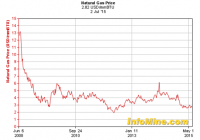
Summary The company’s long-term story remains unchanged and highly favorable. The recent sell-off likely the result of sector rotation out of utilities. I increased my exposure to the shares by 50%. Calpine Corporation (NYSE: CPN ) shares have gotten pummeled in recent months and now sit at 52 week lows near $17.50/share. Shares are down significantly since I first recommended the company on Seeking Alpha back in February of 2015 , but I still maintain a long-term bullish outlook. This is one company that I agree with sell-side analysts on and I’ve been vigorously beating the drum in favor of. In my opinion, there isn’t a company better positioned for macro trends in United States energy production over the next ten-twenty years than Calpine. This is a shame as retail investors have shunned the company, with the almost all of the shares held by insiders or institutions. This is woeful compared to peers and I think retail investors are turning a blind eye to the company’s prospects for capital appreciation. The lack of a dividend, as opposed to the company’s share repurchase plan, in my opinion is the single biggest obstacle that retail investors need to get over when considering an investment here. Especially for tax-advantaged accounts, Calpine can give utility-sector exposure to improve account diversification while simultaneously providing an excellent growth vehicle long-term. Long-Term Tends Remain Intact Increasingly stringent environmental regulations in the United States are not going away anytime soon, despite heavy lobbying from the coal industry and some outdated utility players. 63% of Americans now believe in climate change according to a recent Yale study on the subject. Such a large voting bloc can’t be ignored going forward and any attempts to strip down/repeal current EPA mandates are likely to be met with fierce voter opposition. Unfortunately the facts remain that America’s coal fleet is incredibly old; the average coal-fired power plant was constructed in the 1970’s. Bolt-on fixes to reduce greenhouse gas emissions on these plants are going to become increasingly more expensive and subject to diminishing returns. On the same coin, new construction of coal plants, which are highly capital intensive and require decades for payoff, are unlikely in the current regulatory environment regulating CO2 and other gases. Likewise, we aren’t shutting off coal and switching to wind/solar/hydroelectric overnight. We simply don’t have the technological capacity or the investable capital to meet our current energy needs with these processes yet. Renewable energy’s share of power generation is highly likely to continue growing quickly over the coming years, but the time when renewables constitute the majority of American power generation is likely many decades away. * Historical natural gas price chart 2008-2015 By comparison, plants fired by natural gas, which constituted 95% of Calpine’s power generation in 2014, are set to the biggest beneficiaries of the production switch. Cheap natural gas from the American shale revolution likely isn’t going away anytime soon and will continue to be an amazing source of cheap power input for natural gas plants. While fracking is also a highly contentious environmental issue, opinion is more divided here than with opinions on the coal industry and climate change and may be symptomatic of a lack of understanding of the process rather than the actual science behind it. A federal ban or hamstringing regulation is highly unlikely at this point and states where fracking occurs are treading carefully given the boost the process has given local economies. Reducing Debt, Freeing Up Cash flow Calpine holds a stigma after dealing with a bankruptcy in 2005. Natural gas prices were sky-high, competition was stiff with new plants coming online the company’s markets, and the company’s $22B debt load was simply unsustainable. The company now has more assets than it did pre-bankruptcy and the debt load much smaller at $11.84B, so investors should not have little fear of a repeat. * Calpine Investor Presentation Additionally, average yearly interest expense has come down significantly during this timeframe, saving the company hundreds of millions over the past few years as the company takes advantage of the low interest rate environment. As the debt comes down over the next few years, this frees up capital for the company to continue to purchase shares at an elevated rate or invest in new acquisitions that will generate substantial additional earnings (like the Fore River purchase from Exelon in August of 2014). 1Q 2015 Results, Rest-Of-Year Outlook First quarter was in-line with management guidance. This sported a tough year/year comparable because of the polar vortex, which provided an extremely healthy boost to first quarter results last year (adjusted EBITDA in the east region was down from $269M to $125M y/y). Of note is management’s reaffirmation of 2015 adjusted EBITDA (basically EBITDA plus debt extinguishment, one-off maintenance, operating leases, and stock-based compensation) of $1.9-2.1B. For investors used to EBITDA, EBITDA is forecast to be $1.5-$1.7B. This places estimates of 2016 EV/EBITDA firmly in the 10-11x range, which is honestly in-line with broader market peers. The difference here is this is severely discounting Calpine’s advantages. Its fleet is young (average plant age of 14 years), giving the company an advantage over aging peers. As we’ve noted, it has no projected expensive regulatory overhang from EPA emission mandates. It operates in some of the strongest power markets in the United States (California, Texas, and the Northeast). Of note are the share repurchases. Total spent on repurchases totaled $236M through 4/30/15. Pushing this through the rest of the year (although perhaps management may elevate purchases due to lower prices at current levels) and it is likely that Calpine will retire $700M+ worth of shares at current rates. If prices remain at current levels, this could end up retiring 10%+ of the float in one year, just from free cash flow (free cash flow for 2015 is projected at between $800-$1B). Conclusion Calpine remains a strong buy and I’m unsure of what has driven the current selloff other than sector rotation, which has been a driving theme of 2015 as utilities have swung out-of-favor due to the impacts of a looming fed rate hike, which impacts utilities in regards to value of the dividend yield (no impact on Calpine as it pays no dividend) and the possibility of higher interest costs (approximately 50% of Calpine’s debt is variable rate, generally tied to LIBOR + a fixed rate). Most investors would be well-suited to include Calpine in their investments, especially younger investors that have a long timeframe to allow the secular trends to play out in the company’s favor. Even short-term traders may be interested, given the company is going to perform strongly in the back half of the year where it traditionally has not, giving the company an opportunity to trounce year/year comparables. Disclosure: I am/we are long CPN. (More…) I wrote this article myself, and it expresses my own opinions. I am not receiving compensation for it (other than from Seeking Alpha). I have no business relationship with any company whose stock is mentioned in this article.

Refresh Your Portfolio With Some Green (Investments)

Summary Sustainability is an investable opportunity. A variety of sustainable investment instruments will suit the unique risk tolerance of different investors. Sustainable-themed mutual funds are a good way to get exposure to this investment opportunity. Green investing, or sustainable investing, is the type of investment that intentionally seek sustainable, environmentally friendly outcome. Examples of green investing include the stock of a clean energy company, and a project finance to reduce carbon footprint of urban housing communities. Green investing is NOT just for tree huggers. A 2009 study shows that “carbon legacy” of just one child is worth as much as 20 times the emission saved by a person who drive a high-mileage car, recycle, use energy-efficient appliances and light bulbs, etc. With global population projected to reach almost 10 billion by 2050 ( link ), the subsequent exponential growth in carbon emission will make sustainability an ever pressing concern. Sustainability is an investable opportunity. Everyone’s portfolio needs a refresh with some green in it. The good news is, there have already been a plethora of options to suit the unique risk tolerance of different investors. The options span from conservative fixed income instruments (rated as high as AA) to nano-cap high risk stocks, any many things in between. Green investing is not just project finance. One big misconception about green investing is that the underlying investment is some obscure high-tech project in the field that may or may not turn a profit. Granted, project finance is needed for global sustainability and large banks like Deutsche Bank are actively involved in it; however, many actively traded stocks and fixed income instruments allow retail investors to tap into the theme, too. In this way, with reasonable capital commitment and a diversified portfolio, retail investors are on the right path to realize positive returns with minimal project risk. Below I will discuss just a few such investments. The true scope of available instruments is far beyond what I can cover here. Indices A handful of green-related indices already exist in the market place. These are easy ways to track the performance of green investment, which is useful for benchmarking relevant mutual funds and ETFs, which I will touch on later. But first, a brief overview of the key sustainability indices. Dow Jones Sustainability Indices (DJSI) Family Launched in 1999, the (DJSI) were the first global equity indices tracking the financial performance of leading sustainability-driven companies globally. Various sub-indices are available for different regions, such as DJSI World, DJSI United States, and DJSI Eurozone etc. A stocks is only selected if it scores high enough in an integrated assessment of economic, environmental and social factors. Dow Jones conducts annual assessment to ensure the index components remain best-in-class in their sustainability outcome. Due to the methodology, invariable most companies selected are public, large-cap companies. These companies, such as Abbot Labs (NYSE: ABT ) and TD Bank (NYSE: TD ), have long track record as successful companies. S&P Green Bond Index (SPUSGRN) This is the fixed income cousin of the DJSI. A first-of-its-kind index, the S&P Green Bond Index is designed to track the global green bond market. The index was only launched in July 2014. For a bond to be included in the index, the bond issuer has to explicitly disclose the use of proceeds or its compliance with the Green Bond Principals has been independently verified. The index is characterized by medium duration (5 years) and relatively low risk with Yield to Worst of 1.8% Index Funds There are a handful of green index funds available. Even the grandfather of index investing, Vanguard, offers the Vanguard FTSE Social Index Fund (MUTF: VFTSX ). Again, this shows green investing is serious business. Instead of repeating the long list, here I recommend a few for different types of investors. If you are just tipping your toes in to green investing – the TIAA-CREF Social Choice Equity Fund (MUTF: TICRX ) The TIAA-CREF Social Choice Equity Fund is open to both institutional and retail investors. If you are just dipping your toes in this new category, TISCRX allows you to test the thesis for as low as $250. The fund’s style is mostly large-cap U.S. stocks balanced between growth and value stocks. Its solid track record makes the fund a wise investment decision by itself too- the fund has returned 0.24% YTD and 16.2% for the past five years. If you are laser focused on net returns – the DFA U.S. Sustainability Core 1 Portfolio (MUTF: DFSIX ) The DFSIX has stood out among green mutual funds for its stellar performance. Returning investors 2.8% YTD, its annualized return for the past five years is impressive at 17.9%. The fund’s style is mostly large-cap U.S. stocks balanced between growth and value stocks. The fund’s its top holdings include Apple (NASDAQ: AAPL ), Microsoft (NASDAQ: MSFT ), and Exxon Mobil ( XOM). Better yet, as an investor you get to keep most of the performance, as the fund’s expense ratio is only 0.32% If you have a more global taste – the New Alternatives Fund ( NALFX) The New Alternatives Fund, managed by Accrued Equities, devotes about 60% of capital to non-U.S. stocks and the rest to domestic stocks. With a slightly elevated expense ratio of 1.08%, the fund gives investors exposure to global stocks that focus on alternative energy. The fund is co-managed by the fund’s founder Mr. Schoenwald since 1982 and Mr. Rosenblith since 2010. Year to date, the fund has returned a respectable 13.7% and it annualized a sound return of 10.6% in the last 5 years. An ETF Pick – the PowerShares WilderHill Clean Energy Portfolio ETF ( PBW) PowerShares WilderHill Clean Energy Portfolio ETF is a clean energy ETF; ETFs are similar to index funds but trade like stocks. PBW is composed of over 40 stocks, with an expense-ratio cap of 0.6%. Some of its top holdings are in Tesla (NASDAQ: TSLA ), which manufactures electric cars, and Ameresco (NYSE: AMRC ), which provides energy efficient solutions to electricity providers and consumers alike. The above is a just a sneak peak of the plethora of green equity funds available. For fixed income funds, a whole new dynamic of public-private partnership is at play as well. In future post, I will explore select fixed income instruments, especially those with innovative structure here and abroad. Disclosure: I/we have no positions in any stocks mentioned, and no plans to initiate any positions within the next 72 hours. (More…) I wrote this article myself, and it expresses my own opinions. I am not receiving compensation for it (other than from Seeking Alpha). I have no business relationship with any company whose stock is mentioned in this article.