Tag Archives: investing ideas

Sector Factors To Consider With Dividend ETFs
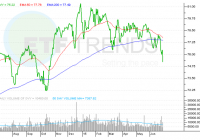
Summary Dividend stock ETFs have been losing assets as Treasuries sold off and yields rose. The selling pressure in dividends provides a warning for what could occur in a rising rate environment. A good chunk of dividend ETF portfolios are allocated in utility stocks, which are sensitive to changes in interest rates. By Todd Shriber & Tom Lydon Thanks to the jump in Treasury yields, a rise that has been fueled by speculation the Federal Reserve will soon raise interest rates, investors are departing some noteworthy dividend exchange traded funds. Of the four largest dividend ETFs, only the Vanguard High Dividend Yield ETF (NYSEArca: VYM ) has seen inflows this year, while the iShares Select Dividend ETF (NYSEArca: DVY ) is the worst outflows offender of the four due in part to its 31.5% weight to the lagging utilities sector. Once the Federal Reserve hikes interest rates, U.S. dividend stocks and exchange traded funds could experience a meaningful correction after investors piled into the yield-paying assets during the low rate environment. That is particularly true of dividend ETFs with big weights to rate-sensitive utilities and real estate stocks. Reports Chris Dieterich for Barron’s : Part of the concern: All that money that’s flowed in over the past six years could be yanked out just as quickly, as investors scramble to take profits at the first whiff of market trouble. That’s happened twice over the past two years, first in 2013 and again in the past few months, when the stocks that have fallen hardest were those with the highest yields. Take utilities, the highest yielders among the S&P 500’s 10 industry groups. Utility stocks on the S&P 500 are fresh off a 6.7% plunge in the second quarter, the worst of any U.S. stock sector, while the S&P 500 overall was flat. With Treasury yields climbing, utilities-heavy dividend ETFs are lagging. For example, DVY is off nearly 3% this year while the S&P 500 is up 1.8%. The First Trust Value Line Dividend Index Fund (NYSEArca: FVD ) has lost 1.2% thanks to an almost 23.75 weight to utilities stocks, indicating investors have mistakenly added over $118 million to that ETF this year. On the bright side, recent history shows dividend ETFs can whether the rising Treasury yields storm. That happened in 2013 when Treasury yields surged, but DVY and FVD gained an average of 27.8%, though that lagged the 32.3% returned by the S&P 500. The caveat with 2013 is that the Utilities Select Sector SPDR (NYSEArca: XLU ) gained more than 10%, a feat unlikely to be repeated this year. DVY remains alluring for income ETFs , in part due to a screening methodology that includes dividend growth and payout ratios. However, stock selection by yield could make DVY vulnerable to increased lethargy if Treasury yields continue higher. FVD follows the Value Line Dividend Index, which equally weights components and utilizes the proprietary Value Line research to select components. Specifically, stocks are ranked by the Value Line Safety Ranking of 1 or 2 out of 5, which are based on price stability and financial strength. Additionally, the index excludes stocks with a dividend yield lower than the S&P 500. iShares Select Dividend ETF (click to enlarge) Tom Lydon’s clients own shares of DVY. Disclosure: I am/we are long DVY. (More…) I wrote this article myself, and it expresses my own opinions. I am not receiving compensation for it. I have no business relationship with any company whose stock is mentioned in this article.
While The Athens Exchange Is Closed, The Greece ETF Show Goes On

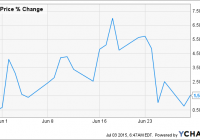
Investors can still trade Greece through an ETF while Athens Stock Exchange was closed. GREK showing larger discount to net asset value. Investors should understand risks of ETFs that track international markets. Exchange traded funds try to reflect the performance of an underlying market. However, there are times when an ETF may diverge from the net asset value, especially with international markets. For example, the Global X FTSE Greece 20 ETF (NYSEArca: GREK ) is was trading at a 10.4% discount to its NAV on Monday, according to Morningstar data. GREK plunged 8.9% Monday on over four times its average daily volume after Greece rejected austerity measures demanded by international creditors in a referendum vote over the weekend. The Greece ETF has been swinging in volatile trading over the past week . ETFs, more or less, consistently reflect the movement of their net asset value, or combined value of all securities in an ETF’s portfolio divided by the number of ETF shares outstanding, as market makers or authorized participants create or redeem ETF shares by buying or selling baskets of underlying securities for ETFs. Since ETFs trade like any other stock on an exchange, the ETF’s price can fluctuate throughout the day. ETFs typically update their underlying trading value, calculating the approximate NAV every 15 seconds throughout the trading day. In domestic equity ETFs, the NAV works as intended. The NAV provides a fair value of the ETF, which basically means the fund is trading in line with its underlying assets with little or no tracking error. This also allows investors to get a better view of whether or not they are over or underpaying an ETF. When the ETF’s price is lower than the NAV , the ETF is said to be at a “discount” – the ETF is valued less than the fund’s overall holdings. If the ETF’s price is above the NAV, the ETF is said to trade at a “premium” – the ETF is trading higher than what the underlying holdings are worth. However, the NAV gets cloudier when looking into other markets. For instance, international markets are not open in the same time zone as U.S. markets, but foreign stock and bond ETFs are still trading on U.S. exchanges. Since the NAV is taken based on the last price at which it was traded, the NAV may not move during normal hours. Consequently, the NAV for international ETFs, along with most commodity and fixed-income funds, may represent a stale number as these markets don’t necessarily trade during normal U.S. market hours. In the case of Greece, the Athens Stock Exchange has been closed for at least a week, following the June 28 decision by the Systemic Stability Council for a week-long closure of the country’s banks and local stock market, according to ekathimerini . The Greek bourse remains closed Monday. Consequently, the traded value of GREK has deviated considerably from its NAV – the ETF is currently trading at a much lower value to its constituents due to the underlying market closure. The last time something similar occurred was during the so-called Arab Spring of 2011 when Egyptian markets were shut down for two months, but U.S. investors were still able to trade shares of the Market Vectors Egypt Index ETF (NYSEArca: EGPT ) . Nevertheless, GREK ETF investors may still get a general sense of where the ETF is going through indirect means. For instance, Coca-Cola HBC, which makes up 21.4% of GREK, dipped 3.9% over the past week while the National Bank of Greece (NYSE: NBG ), which makes up 9.5% of GREK, saw the value of its American Depository Receipts pare recent gains to fall flat for the week. Max Chen contributed to this article . Disclosure: I/we have no positions in any stocks mentioned, and no plans to initiate any positions within the next 72 hours. (More…) I wrote this article myself, and it expresses my own opinions. I am not receiving compensation for it. I have no business relationship with any company whose stock is mentioned in this article.

EWZ: June Review

Summary The iShares MSCI Brazil Capped ETF grew by 1.55% in June. Out of the 15 biggest EWZ holdings, Cielo was the biggest gainer and Vale was the biggest looser. The Petrobras corruption scandal still impacts Brazilian share markets significantly. The iShares MSCI Brazil Capped ETF (NYSEARCA: EWZ ) grew by 1.55% in June. Although the first half of the month was very good and EWZ’s share price was up by 7% at one point, it started to decline in the second half of June, as the Petrobras (NYSE: PBR ) corruption scandal started to weigh on Brazilian share markets again. On June 19, Reuters reported that police arrested top executives of the two biggest Brazilian construction companies. And on June 25, a wave of panic flooded the markets, as a rumor claimed that the former Brazilian president da Silva should be investigated. Although the rumor was denied quickly, the panic reactions have demonstrated that investors are still extremely sensitive to any news related to the corruption scandal that is still far from over. The portfolio of EWZ consists of 68 share titles. The 15 largest holdings represent more than 60% of assets of the fund. The biggest holdings are prefferred shares of Itau Unibanco (NYSE: ITUB ), the biggest Brazilian bank, followed by shares of Ambev (NYSE: ABEV ), a major South American beer and soft drinks producer. Ordinary shares of the second biggest Brazilian bank, Banco Bradesco (NYSE: BBD ), create 7.19% of the portfolio. And the weight of preferred shares of Petrobras is 5.06%. Source: Own processing, using data of iShares.com The chart below shows the June performance of the 15 biggest holdings. The biggest price increase experienced shares of electronic payment solutions company Cielo ( OTCQX:CIOXY ) (9.55%), shares of Banco do Brasil ( OTCPK:BDORY ) (6.77%) and shares of the stock exchange BMF Bovespa (4.36%). On the other hand, June wasn’t good for shares of the energy sector holding company Ultrapar (NYSE: UGP ) (-4.28%) and for diversified mining company Vale (NYSE: VALE ) (-7.04% and -8.78%). (click to enlarge) Source: Own processing, using data of Bloomberg The share price of Cielo grew by 9.55% in June. The growth was fueled by the announcement that Cielo will acquire 30% of Stelo S.A. The transaction should help Cielo, the biggest Brazilian electronic payment solution company, to expand to the electronic wallet segment. Shares of Vale were crushed by weak metals prices. The iron ore price started to grow after it bottomed in early April near the $46/tonne level and it reached $62/tonne in the first decade of June. But it started to decline again and it was at $55/tonne in late June. Copper price declined by 4% and Vale’s investors started to be nervous again. Not only the share price of Petrobras is negatively affected by the corruption scandal. Also the future growth prospects of the company are negatively affected. The company intends to cut its investments by 37% over the next five years. Petrobras plans to invest $130 billion over the 2015-2019 time period, although the original plan was to spend $207 billion. The company needs to reduce its huge debt, but this decision will reduce its growth significantly. (click to enlarge) Source: Own processing, using data of YahooFinance As shown by the chart above, the EWZ share price is strongly correlated with S&P 500 as well as with oil prices represented by The United States Oil ETF (NYSEARCA: USO ). But the strongest and most stable correlation is between EWZ and Petrobras. Although Petrobras represents only 9.03% of EWZ’s portfolio, it is one of the most important Brazilian companies and it has a strong impact on the whole Brazilian economy. Moreover the current corruption scandal leads to an increased political risk and any negative news about Petrobras tends to affect the whole Brazilian share market. The chart shows that EWZ had the highest correlation with Petrobras share price and S&P 500 in June. (click to enlarge) Source: Own processing, using data of YahooFinance The chart above shows volatility of EWZ measured by 10-day moving coefficient of variation. Although the volatility was high in late May and early June, it was relatively low and stable during the second part of the month. Conclusion The EWZ share price increased by 1.55% in June, when most of the early gains evaporated during the last decade, as the corruption scandal started to unnerve investors again. The moving correlation between EWZ and Petrobras was high and stable in late June. On the other hand the correlation between EWZ and S&P 500 was high and declining and correlation between EWZ and USO was high and growing. The development on global share markets, development of oil prices and any news related to the Petrobras corruption scandal will impact the direction of EWZ in July. Moreover the state of the Brazilian economy isn’t good, the GDP is expected to decline by 1-1.2% in 2015. Although EWZ may be an ineresting long term buy, it is quite probable that its share price will decline in the short term. Editor’s Note: This article discusses one or more securities that do not trade on a major U.S. exchange. Please be aware of the risks associated with these stocks. Disclosure: I am/we are long PBR. (More…) I wrote this article myself, and it expresses my own opinions. I am not receiving compensation for it (other than from Seeking Alpha). I have no business relationship with any company whose stock is mentioned in this article.