Tag Archives: handle

5 Very Successful ETF Launches Of 2014

2014 turned out to be momentous for the ETF industry with assets hitting the $2 trillion (approximately) mark. Over 180 ETFs were launched in 2014, higher than last year’s 150 initiations and 2012’s 168 rollouts. Not only this, a considerable number of ETFs are in the pipeline, pointing to growing investor interest for exchange-traded products in this market. Net inflows in November itself were $42.4 billion , indicating a record month exceeding the prior high of $41.1 billion in July 2013. Kudos go mainly to a wide range of innovative and fresh-themed products in the space, which hold investors’ attention despite the ebb and flow in the market. Among the new products, active funds, smart-beta ETFs, high yield options and hedged international products were appreciated by investors. Below, we have highlighted five ETFs launched in 2014 that scooped up assets within a short time span on the market, and look to be big winners for their issuers down the road: First Trust Dorsey Wright Focus 5 ETF (NASDAQ: FV ) The product saw huge success, though it kicked off in the initial phase of the year, earning as much as $1.7 billion in assets. First Trust has always been famous for its ‘smart indexing’. The product is designed to indentify the five First Trust sector- and industry-based ETFs that are arguably expected to have the maximum chance of outperforming the other ETFs in the selection universe. The new portfolio is based on momentum strategies as measured by Dorsey Wright’s definition of relative strength characteristics. DWA essentially eliminates the underlying ETF’s volume, intraday net asset value (NAV) or bid/ask spread and closely monitors how their prices are performing versus other ETFs within their respective universe. The following are the sector ETFs featuring in FV: First Trust NYSE Arca Biotechnology Index Fund (NYSEARCA: FBT ), First Trust Health Care AlphaDEX Fund (NYSEARCA: FXH ), First Trust Consumer Staples AlphaDEX Fund (NYSEARCA: FXG ), First Trust Dow Jones Internet Index Fund (NYSEARCA: FDN ) and First Trust Consumer Discretionary AlphaDEX Fund (NYSEARCA: FXD ). While the top choice receives about 25% exposure, the last pick gets 17.7% focus of the fund. For this ‘smart’ approach, the product charges 95 bps in fees. The product is up about 12% since its inception in early March. First Trust Enhanced Short Maturity ETF (NASDAQ: FTSM ) The actively managed product seeks to provide current income, with a focus on capital preservation. For this purpose, the fund invests in U.S. dollar denominated short-term investment grade securities. Making its debut in August, the product has already amassed as much as $798 million in assets. As such, the fund has a weighted average maturity of 0.90 years and an average duration of 0.20 years, indicating negligible interest rate risk. The fund holds a big basket of 162 securities. The fund charges 25 bps in fees and the product has been flat this year thanks to the upheaval in the short-end of the yield curve, and the fact that this space generally makes small moves anyway. Vident Core U.S. Bond Strategy ETF (NASDAQ: VBND ) The bond ETF space is tossing around the potential rate hike talks in the U.S. market. This has left investors busy in thinking through what sort of duration and investment grade bonds to pick right now. Thanks to this backdrop, VBND too has been able to garner considerable assets of $313 million within just two months. Securities with 5-7 years of maturity, with 7-10 years of maturity and with 3-5 years of maturity take about 35%, 34% and 26% of weight, respectively, in the ETF indicating the fund’s tilt toward medium-to-long-term bond market. The product charges 45 bps in fees and has lost about 0.6% since its inception. First Trust Eurozone AlphaDex ETF (NASDAQ: FEUZ ) The product hit the market on October 21 and has amassed about $323 million since then. The product looks to pick the Euro zone stocks with both growth and value factors being taken into consideration. The product is highly diversified with no stock accounting for more than 1.39% of the portfolio. The ETF has been heavy on France (23.1%) and Germany (22.6%). Investors are basically mulling over the accommodative monetary policy of the ECB and counting on the likely QE measures to be introduced in the region soon. This has helped the fund see success in such a short time frame. The product charges 80 bps in fees. iShares MSCI ACWI Low Carbon Target ETF (NYSEARCA: CRBN ) Investors would be surprised to know that the ETF industry has received two carbon funds lately. While both have been all the rage, the newer one – CRBN – has piled up $140 million in assets within just 15 days of its launch. The fund has global coverage with reduced carbon exposure. The index the fund tracks looks to pick stocks with low carbon emissions. The fund charges 20 bps in fees a year from investors.

I Like The Risk Level On SPLV, But I’m Not Entirely Sold

Summary I’m taking a look at SPLV as a candidate for inclusion in my ETF portfolio. I’m not huge on the expense ratio, but I like the other aspects of the ETF. The ETF is incredibly well-diversified which favorably impacts the standard deviation of returns. In the context of Modern Portfolio, the correlation and standard deviation of returns are very important. The ETF looks favorable in those regards. I’m not assessing any tax impacts. Investors should check their own situation for tax exposure. Investors should be seeking to improve their risk adjusted returns. I’m a big fan of using ETFs to achieve the risk adjusted returns relative to the portfolios that a normal investor can generate for themselves after trading costs. I’m working on building a new portfolio, and I’m going to be analyzing several of the ETFs that I am considering for my personal portfolio. One of the funds that I’m considering is the PowerShares S&P 500 Low Volatility Portfolio (NYSEARCA: SPLV ). I’ll be performing a substantial portion of my analysis along the lines of modern portfolio theory, so my goal is to find ways to minimize costs while achieving diversification to reduce my risk level. What does SPLV do? SPLV attempts to track the total return of the S&P 500® Low Volatility Index. At least 90% of funds are invested in companies that are part of the index. SPLV falls under the category of “Large Value.” Does SPLV provide diversification benefits to a portfolio? Each investor may hold a different portfolio, but I use (NYSEARCA: SPY ) as the basis for my analysis. I believe SPY, or another large cap U.S. fund with similar properties, represents the reasonable first step for many investors designing an ETF portfolio. Therefore, I start my diversification analysis by seeing how it works with SPY. I start with an ANOVA table: (click to enlarge) The correlation is about 86%. This is pretty great for making the ETF fit under modern portfolio theory. The low correlation means it should be possible to use the ETF without raising the standard deviation of returns unless the risk ETF has a very high standard of deviation of returns. Standard deviation of daily returns (dividend adjusted, measured since January 2012) The standard deviation is phenomenal. For SPLV it is .5978%. For SPY, it is 0.7300% for the same period. SPY usually beats other ETFs in this regard, so the combination of reasonable correlation and lower standard deviation than SPY is giving this ETF a real chance at being selected for my portfolio. Mixing it with SPY I also run comparisons on the standard deviation of daily returns for the portfolio assuming that the portfolio is combined with the S&P 500. For research, I assume daily rebalancing because it dramatically simplifies the math. With a 50/50 weighting in a portfolio holding only SPY and SPLV, the standard deviation of daily returns across the entire portfolio is 0.6410%. If we drop the position to 20% the standard deviation goes to .6899%. Once we drop it down to a 5% position the standard deviation is .7195%. I haven’t decided what exposure level I would use yet, but probably 5% to 10%. I really like the combination of low volatility and moderate to low correlation. If it wasn’t for the higher expense ratio, I’d consider making this a core holding. Why I use standard deviation of daily returns I don’t believe historical returns have predictive power for future returns, but I do believe historical values for standard deviations of returns relative to other ETFs have some predictive power on future risks and correlations. Yield & Taxes The distribution yield is 2.21%. The yield seems strong enough that it could be included in a retirees portfolio to bring some diversification benefits and a moderate dividend yield. I’m not a CPA or CFP, so I’m not assessing any tax impacts. If I were using SPLV, I would want it to be in a tax exempt account to remove any headaches associated with frequent rebalancing. Expense Ratio The ETF is posting .25% for an expense ratio. I want diversification, I want stability, and I don’t want to pay for them. In my opinion, a .25% expense ratio is higher than I want to pay for equity investments. It’s still low relative to many other methods of investing, but I’m looking for long term holdings and I don’t want to give my investments away. I haven’t decided if it’s worth paying the higher expense ratio to include SPLV. If the expense ratio was under .10%, this ETF would have a very strong case for being included. Market to NAV The ETF is at a .05% premium to NAV currently. In my opinion, that’s not worth worrying about. It is practically trading right on top of NAV. However, premiums or discounts to NAV can change very quickly so investors should check prior to putting in an order. Largest Holdings The portfolio is extremely well diversified. The largest position is around 1.25% of the portfolio. That is solid diversification. The intense diversification is part of the reason the volatility of the ETF is so low. Check out the chart below: (click to enlarge) Conclusion I’m currently screening a large volume of ETFs for my own portfolio. The portfolio I’m building is through Schwab, so I’m able to trade SPLV with no commissions. I have a strong preference for researching ETFs that are free to trade in my account, so most of my research will be on ETFs that fall under the “ETF OneSource” program. SPLV is a difficult ETF to make a decision on. For equity investments, the expense ratio is a bit high, but the relatively low correlation and standard deviation of returns make a pretty good argument for using at least a small position such as 5% in a long term portfolio. I could go either way on this one. I won’t consider it as a core holding (20%+) because of the higher expense ratio. Disclaimer: Information in this article represents the opinion of the analyst. All statements are represented as opinions, rather than facts, and should not be construed as advice to buy or sell a security. Ratings of “outperform” and “underperform” reflect the analyst’s estimation of a divergence between the market value for a security and the price that would be appropriate given the potential for risks and returns relative to other securities. The analyst does not know your particular objectives for returns or constraints upon investing. All investors are encouraged to do their own research before making any investment decision. Information is regularly obtained from Yahoo Finance, Google Finance, and SEC Database. If Yahoo, Google, or the SEC database contained faulty or old information it could be incorporated into my analysis. The analyst holds a diversified portfolio including mutual funds or index funds which may include a small long exposure to the stock.

Yellen’s Inflation Compensation And GLD

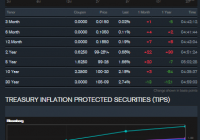
Summary The Fed is an important influencer of inflation, and for 2015, the Fed is ready to accept inflation as low as 1% and this will push down gold prices. The Fed is ready to fight possible long-term inflation as the economy grows by raising Fed Rates and gradually reducing its $4.55 trillion balance sheet if necessary. Yellen is signaling that the Fed is going to ignore market based weak inflation expectations as seen by the new term ‘inflation compensation’ on the Treasury market. Slim possibility that inflation will overshoot the 2% target, it is more likely to undershoot as energy prices are not transitory. A significant portion of gold holders still see high inflation as the economy strengthens. This is not applicable now and it is time to sell GLD before the crowd does. Fed, Inflation and Gold Frequent readers of my articles on gold will realize that I have been bearish on gold for quite some time now. Gold has many purposes and one of which is for its usage as storage of value. There will always be someone who is willing to buy and store gold if they do not believe in today’s monetary order or simply to form part of a diversified portfolio, and there are those who buy gold as an inflation hedge. This article is targeted for those who view gold as an inflation hedge. There will be a significant portion of investors who will buy gold as an inflation hedge, and it is the changes in inflation or inflation expectations which will have a big impact on the price of gold. There is no other institution that has more influence on inflation than the Federal Reserve, and this is why I believe that by following the Fed closely, we can better inform ourselves on inflation and that is why most of my gold article involves the Fed in one way or the other. The latest Fed document comes in the form of Chair Janet Yellen’s press conference on 17 December 2014. As always, the mainstream media is obsessed with when the Fed will raise interest rates, and there are a number of questions on it with the word ‘patient’ being the new buzz word. If you read the press articles elsewhere, you will probably be informed that the Fed will not raise rates for ‘a couple’ of meetings. Indeed, during the question and answer session, one reporter even wanted to confirm with the Chair if ‘a couple’ means 2 meetings which was subsequently confirmed. However, this is actually quite meaningless for the serious investors because Yellen has qualified her response as data dependent so who is to stop her from raising rates in the next meeting or 5 meetings down the road? She has certainly kept that possibility open, and remember that the US grew by 5% in the third quarter of 2014. My article may have come after all the buzz has subsided, but as you read about it in the new year of 2015, I hope to bring about new perspective based on some points that are largely ignored by the media. Let me bring your attention to the idea of inflation compensation, the existing size of the Fed’s balance sheet, and the Fed’s own inflation expectation for 2015, together with their view of a transitory low energy prices. Rate Hikes and Balance Sheet – Tools ready to Cap Growth Related Inflation Let us first begin with the concept that monetary policy works with a lag time. So the appropriate response to do is to predict as best as possible what will happen in the future and set policy that will ensure that the Fed’s dual mandate of stable prices and maximum employment is achieved as much as possible when the monetary policy takes effect. The Fed views that stable price means a 2% inflation target and predicts that this will be reached in 2017. Stable prices can only be achieved together with an appropriate Federal Funds Rate, which stands at 3.75% in the long run. However, the Fed set a target of 2.5% by 2017 to accommodate for the economic recovery and deal with the residual effect of the Great Recession. This will fit into the narrative where they would start to raise rates in 2015 and gradually guide rates towards their target as they expect the economy to grow in strength. For the shorter term, the Fed’s own forecast, which they would have factored in their own rate hikes, expects inflation to stay between 1% to 1.6% in 2015. This range is within the current Personal Consumption Expenditure inflation reading of 1.4% . So at least in the short term, the Fed is willing to accept lower inflation reading and this is going to be bearish on gold. However, gold might still catch a bid if there is a reasonable expectation for inflation to increase significantly in the future. This is where the size of the Fed balance sheet comes into the picture and where the uncertainty over the inflation compensation comes into play. The Fed is holding $4.55 trillion of assets as of 24 December 2014 and $4.47 trillion comes in the form of Federal Reserve credit. While this may have been accommodative in the past, it can also be used to keep a lid on inflation as seen in the quote by Yellen below. “Rather than actively planning to sell the assets that we’ve put onto our balance sheet, sometime after we begin raising our targets for short-term interest rates, depending on economic and financial conditions, we’re likely to reduce or cease reinvestment and gradually run down the stock of our assets. But our active tool for adjusting monetary – the stance of monetary policy so that it is appropriate for the economic needs for the country, that will be done through adjusting our short-term target range for the federal funds rate.” Yellen’s quote above shows that the Fed is ready to tighten monetary policy not only through the federal rate hike that is in the spotlight recently, but also through a gradual reduction of its balance sheet assets. Hence, we can conclude that the Fed is poised to reign in any runaway inflation that they expect when the economy recovers. This is an old economic theory that is about to be revisited by the investment community at large. Also, consider the argument that low energy prices may be here to stay in this excellent article by Kyle Spencer. The Fed has a bullish outlook for the US economy, and this is the majority view of the FOMC and they are prepared to reign in long-term inflation. The biggest cheerleader of them all has to be the Dallas Fed President, and you can read all about it in this article, Dallas Fed Fisher’s Prescience And GLD . In that article, I gave you the reason that the USD will rise, as the strong 5% GDP growth reinforces the possibility of an earlier rate hike and this will bring down the price of gold that is denominated in USD. In this article, I am now giving you another reason to sell which is to say that the Fed has capped all possibilities of inflation going higher than 2%. In all possibilities, inflation is more included to remain lower than what the Fed expects. My view is that the economy may grow, but inflation might not move towards the 2% target that is expected by the Fed. The tightening of monetary conditions by way of rate hikes will act as an inflation dampener in 2017. I have written about it in this article, Growflation And The 1% Fed Inflation Target In 2015 so I am not going to repeat myself. I am going to bring a new perspective of the declining yield of the 5-year treasury yields and how the Fed is responding to it. Instead of seeing it as a sign of a decline in inflation expectations, they see that it is possible that this could be due to an influx of funds due to the USD safe haven status. Inflation Compensation “Well, what I would say, we refer to this in the statement as “inflation compensation” rather than “inflation expectations.” The gap between the nominal yields on 10-year Treasuries, for example, and TIPS have declined-that’s inflation compensation. And five-year, five-year-forwards,as you’ve said, have also declined. That could reflect a change in inflation expectations, but it could also reflect changes in assessment of inflation risks. The risk premium that’s necessary to compensate for inflation, that might especially have fallen if the probabilities attached to very high inflation have come down. And it can also reflect liquidity effects in markets. And, for example, it’s sometimes the case that-when there is a flight to safety, that flight tends to be concentrated in nominal Treasuries and could also serve to compress that spread. So I think the jury is out about exactly how to interpret that downward move in inflation compensation. And we indicated that we are monitoring inflation developments carefully.” I have quoted Yellen on her answer above as this is a new concept. This would imply that the Fed would not take reference from market signals as credible inflation measurement for a while. This is evident in Yellen’s renaming of inflation expectation to inflation compensation instead. In other words, investors may expect 2% inflation in 5 years time, but increased demand for Treasury bills pushed down their actual yield to 1.538% (Current Yield of 1.66%-0.125% TIPS, see chart below). Hence, this 1.538% inflation market expectation is not a good gauge of actual inflation 5 years later. Source: Bloomberg This safe haven argument is not an unreasonable one, as Europe and Japan are still mired in economic troubles. Europe, Japan and Switzerland have all instituted negative interest rates, and it is only logical that international capital would flee these financial centers and enter into secure Treasury holdings, especially when the market has reasonable expectations that rates are going to rise soon. So to summarize it even further, Yellen is telling the world that the Treasury inflation pricing mechanism is malfunctioning now so don’t take it seriously. Since the Fed is going to raise rates soon, the danger is not that it would overshoot its inflation target, but rather that it will undershoot the inflation target. This is why I am bearish on gold as there is little upside to inflation to support gold prices. As long as the market continues its expectation that inflation is coming as the economy recovers, they will continue to overprice gold as there will be investors who will hold gold with a longer time horizon. Profiting with GLD In other words, there is a very slim possibility of high inflation in the days ahead, and the greater possibility is that inflation will undershoot the 2% target in the medium term. Hence, there is no reason to hold gold as an inflation hedge. As the new consensus builds around this, gold prices will continue its secular decline. The way for investors to profit from this is to sell the SPDR Gold Trust ETF (NYSEARCA: GLD ). There are other gold ETFs, but GLD is the most liquid at $27.45 billion market capitalization and 7.9 million of last known daily transaction. (click to enlarge) As you can see on the chart above, GLD has been on the bearish decline, but periodically there will be strength for which investors can sell on. This is indicative of a healthy market for which to sell GLD. The pullback indicates the profit taking of the bears. Of course, this bearishness of GLD will end one day as it approaches its true value. However, this will only happen after we see the significant portion of gold holders who hold in expectation of higher inflation as the economy grows give up their position. For most, this will only occur when they continue to see low inflation amid high growth. Then they will question themselves why they are willing to lose out on the economic growth by tying up their funds on their gold holding when there is very low inflation. So for readers who hold gold as an inflation hedge and are persuaded by my arguments, the time to sell gold is now before a flood of sell orders enter the market.