Tag Archives: function

Top Investment Ideas For 2015

The U.S. stock market will continue to build upon its secular bull market rally in 2015. Maintain overweight to the U.S. Consider asset classes and sectors that should benefit from rising interest rates. REITs should continue to perform. Bonds can still be effective for income and growth-oriented portfolios. I believe that the U.S. stock market will continue to build upon its secular bull market rally in 2015, and post a positive return, potentially even in the high single digit range, for the year, though there will likely be several more periods of short-term volatility over the course of 2015, similar to what we have seen thus far in January. As a result, I suggest the following portfolio management ideas for careful and thoughtful consideration for the New Year remembering that any investment portfolio should be custom tailored to an investor’s specific financial goals, income needs, investment timeframe and tolerance for risk. · Maintain overweight to the U.S. The U.S. appears to be positioned for the most upside potential in 2015, especially during the first half of the year, in comparison to other developed and emerging market countries for the following reasons: o Our contention that we are in the midst of a secular bull market and any intermittent market pullbacks may help to fuel the next leg(s) of this bull market cycle. o The U.S. economy currently resides as the “shiny city on top of the global economic hill” and should continue to generate a majority of capital inflows. o Europe appears to be struggling with how best to navigate out of their own economic recession and it may take longer for Europe to show consistent signs of economic growth than many originally forecasted though I still believe that international stocks (particularly within Europe and also including certain emerging markets) are an attractive asset class for the intermediate term, however, I expect better risk adjusted, relative performance potential over the near term in certain U.S. equity asset classes and sectors. · Consider Asset Classes and Sectors that have Historically Benefited from Improving Economic Conditions accompanied by Rising Interest Rate Environments I believe it is an appropriate time to consider making adjustments to investment portfolios to brace for the reality that interest rates will inevitably start rising, though yields may rise before any such interest rate increases if investors continue to increase allocations to bonds and thereby push up their prices. Recognizing that past performance is not a guarantee of future results, according to research report from Capital Innovations entitled, ” Most Bonds and Some Stocks Could Suffer from an Increase in Long-Term Rates “, areas such as senior loans/floating rate notes, convertible securities, high yield fixed income and certain sectors of common stocks; such as Materials, Information Technology, Energy, Consumer Discretionary and Industrials, have generally benefited historically from rising interest rate market environments ( measured for these purposes as the price impact of a 1% increase in 10-Year US Treasury rates ) during the timeframe of 1994 – 2013. We also conducted our own research at Hennion & Walsh observe which sectors performed best when the Federal Reserve embarked upon their last measured rate increase program during the years of 2004 – 2006, which I contend is the likely blueprint they will follow this time around. As you may recall, during this timeframe, the Fed raise the Federal Funds Target Rate by 25 Basis Points (i.e. 0.25%) on seventeen different occasions. Our research interestingly showed that the top performing sectors of the stock market during this time period were Energy, Utilities, Telecommunication Services, Financials ( led by REITs ), Materials and Industrials. · REITs Should Continue to Perform Many have been leery to increase allocations to Real Estate Investment Trusts (REITs) due to fears over the impact of rising interest rates on the housing market and mortgage REITs in particular. To this end, it is important to recognize that REITs are not just related to the housing market and all REITs are not Mortgage REITs. In fact, the largest component of the REITs market is not associated with Mortgage REITs, but rather is associated with Retail REITs. Other sectors of the REIT market include diversified REITs, industrial REITs, hotel and resort REITs, office REITs, residential REITs, health care REITs and specialized REITs ( including self-storage facilities ). Certain REIT sub-industries appear to be positioned well to perform in a rising rate environment for the next few years under the presumption that the Fed would not consider raising interest rates unless they believed that the U.S. economy was on a firm footing and expanding moderately well, even if the housing market is not growing as rapidly. Additionally, REITs have demonstrated that they have performed well during previous periods where the Fed has gradually raised interest rates. For example, during the previously discussed timeframe of 2004-2006, the Fed raised the Federal Funds Target Rate on 17 different occasions in 25 basis point (0.25%) increments, U.S. publicly traded REITs, as measured by the Wilshire REIT Index, experienced an average annual total return of 27.7%. Year # of Fed Fund Rate Increases Wilshire REIT Index Total Return % 2004 5 33.2% 2005 8 13.8% 2006 4 36.0% Data Source : Wells Fargo Advisors. Past performance is not an indication of future results. You cannot invest directly in an index. The Wilshire REIT Index measures U.S. publicly traded Real Estate Investment Trusts. The Wilshire US REIT Index (WILREIT) is a subset of the Wilshire US Real Estate Securities Index (WILRESI). · Remember that Bonds can be Effective for Income and Growth-oriented Portfolios It has long been our contention at Hennion & Walsh that, for income-oriented investors, bonds can provide for a dependable and consistent stream of income, and principal protection when held to maturity. Bonds, whether they are Municipal, Government or Corporate bonds, can also provide for compounded growth opportunities when the income received from the bonds is reinvested. Additionally, for growth-oriented investors, fixed income securities can provide investors with downside protection and diversification within a growth portfolio, especially in a highly volatile market where additional, measured, short-term flights to quality are likely. In our view, investors should be careful not to miss out on the income and diversification opportunities offered by bonds by trying to time future, potential changes in interest rates. History has shown us that trying to time the market, or time interest rate increases or decreases, is often an exercise in futility. With this said, it is important to understand that when interest rates do increase, bond prices may fall and yields may rise. However, rising interest rates should not impact the interest that bond holders receive on their bond holdings nor should they change the ability of these investors to receive par value on their bond holdings at maturity. Bond fund investors, on the other hand, may see the interest they receive on their fund holdings change in a rising rate environment and will not receive par value at maturity as there generally is no set maturity on bond funds. While allocations to bonds may vary based upon market conditions and investor objectives and risk appetites, certain types of bonds, from certain types of issuers, can still find a home in most investment portfolios throughout most market cycles. Please note : Hennion & Walsh Asset Management currently has allocations within its managed money program and Hennion & Walsh currently has allocations within certain SmartTrust® Unit Investment Trusts (UITs) consistent with several of the portfolio management ideas for consideration cited above. This posting is provided for informational purposes and is not a solicitation to buy or sell any of the investment strategies or companies discussed. Disclosure: The author has no positions in any stocks mentioned, and no plans to initiate any positions within the next 72 hours. (More…) The author wrote this article themselves, and it expresses their own opinions. The author is not receiving compensation for it. The author has no business relationship with any company whose stock is mentioned in this article.
The 6 Best Passive Large-Cap ETFs

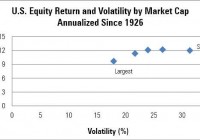
By Michael Rawson The S&P 500 outperformed 80% of active managers in 2014 and beat the small-cap Russell 2000 Index by more than 8 percentage points. Strong fund flows reflected investor preference for large-cap funds as the three exchange-traded funds with the strongest flows in 2014 each track the S&P 500, an index of large-capitalization stocks. While the S&P 500 is the most popular, it is not the only large-cap index that investors can choose. A total stock market index fund is usually the most efficient way for index investors to get exposure to the U.S. stock market because they offer comprehensive coverage of the market with very low turnover. However, there are at least two scenarios where it could make sense to hold separate size segment funds. They could be appropriate for investors who want to give an overweighting to certain size segments, such as small-cap stocks, when they believe that segment will outperform. However, it is very difficult to consistently get these calls right. Because different size segments tend to exhibit different risk and return characteristics, investors could also use these funds to exercise more control over their strategic portfolio allocations. In addition, investors may use size segment funds to balance out a portfolio of active managers. The chart below illustrates the annualized volatility and return for stocks sorted by market capitalization and grouped by quintile dating back to 1926. While smaller-cap stocks have generally offered higher returns over the very long term, there have been several market cycles that favored different size segments. The S&P 500 beat the Russell 2000 each year from 1994 through 1998, but that reversed in each year from 1999 through 2004. – source: Morningstar Analysts There is no industry-agreed-upon definition for large cap , so each index provider defines the large-cap universe in its own way. Morningstar defines large cap as all of the largest stocks, which in aggregate make up 70% of the market value of all stocks; this currently corresponds to stocks with a market cap larger than $17 billion. In terms of index performance, it’s a statistical dead heat. Because the indexes have similar risk and return profiles, the choice of which ETF to use largely comes down to factors such as fees, liquidity, tax efficiency, and personal issues such as which brokerage platform is used or how the other assets in the portfolio are positioned. There are 11 ETFs that track market-cap-weighted passive indexes, excluding mega-cap and total stock market funds that also land in the large-blend Morningstar Category. In terms of fees, they charge between 0.04% and 0.20%. While these fees are low relative to the average large-blend mutual fund, which charges 1.1%, there is no reason to pay more than necessary. We can eliminate the funds charging 0.20%. In fact, it is somewhat odd that iShares is willing to charge just 0.07% for iShares Core S&P 500 (NYSEARCA: IVV ) but charges 0.15% for iShares Russell 1000 (NYSEARCA: IWB ) , which offers similar exposure. The expense ratio is just one aspect of cost. Trading costs also have an impact on total return. While the underlying stocks in each of these indexes are mostly the same and are all liquid, some of the ETFs with fewer assets trade less and have wider bid-ask spreads. For example, the iShares MSCI USA (NYSEARCA: EUSA ) has just $57 million in assets and trades less than $1 million of volume a day. The average bid-ask spread of 17 basis points would quickly eat into the returns of a frequent trader. In contrast, SPDR S&P 500 ETF (NYSEARCA: SPY ) trades more than $20 billion a day, and its bid-ask spread is frequently less than 1 basis point. U.S. equity ETFs tend to be tax-efficient because of their ability to transfer low-cost-basis shares out of the portfolio through in-kind redemptions. However, there have been instances where they have issued capital gains. This is more likely to happen to ETFs with a smaller asset base or trading volume or that happen to switch indexes. The only ETF in this group that has issued a capital gains distribution in the past 14 years is SPDR Russell 1000 ETF (NYSEARCA: ONEK ) . Personal factors also enter into the equation. Brokers such as Schwab, Vanguard, and Fidelity offer trading commission discounts for using certain ETFs (check with your broker). A $10 savings per trade can have a big impact for those investing small sums or making frequent trades. Investors should also consider how their choice will have an impact on their overall portfolio. Investors who already have assets with one index family may want to stick with that suite of index products. For example, if you have a Russell 2000 fund for small-cap exposure, you may want to use a Russell 1000 fund for large-cap exposure to avoid overlaps. After eliminating the higher-cost, less-liquid, and less-tax-efficient ETFs from the list of 11, we are left with IVV, SPY, IWB, Vanguard S&P 500 ETF (NYSEARCA: VOO ) , Vanguard Large-Cap ETF (NYSEARCA: VV ) , and Schwab US Large-Cap ETF (NYSEARCA: SCHX ) . These funds track the four market-cap-weighted indexes in the table below. S&P 500 Unlike the other indexes listed, the constituents of the S&P 500 are selected by a committee that has some discretion over which stocks make it into the index and has stricter rules regarding public float and profitability for new index additions. These rules do not have much of an impact for large caps but can have a bigger impact for small caps. In addition, S&P does not follow a set rebalancing calendar, which helps to keep turnover low. Of the four indexes, S&P has the highest average market cap and includes the fewest mid-cap stocks. The lower exposure to mid-caps explains why the S&P 500 slightly underperformed the other indexes. However, the S&P MidCap 400 outperformed most mid-cap indexes. Of the three ETFs tracking the S&P 500, we prefer IVV or VOO over SPY. While SPY is the most liquid, it is technically organized as a unit investment trust, a more restrictive legal structure, which prevents it from engaging in securities lending, reinvesting dividends, and using index futures. Consequently, SPY has lagged the S&P 500 by more than its expense ratio. CRSP US Large Cap Index This benchmark is more comprehensive than the S&P 500. It targets the largest 85% of the market and applies buffering rules to limit turnover. This sweeps in both large- and mid-cap stocks. VV adopted this index in 2013. Vanguard has a history of working with index providers to refine best practices and negotiate better fees. In fact, it previously switched some index funds to MSCI from S&P. Russell 1000 The Russell 1000 Index dips even deeper into mid-cap territory. The average market capitalization of its holdings is $54 billion compared with $72 billion for the S&P 500. The index includes all but six of the stocks that are in the S&P 500 as well as many more mid-caps. IWB is lower-cost and has better liquidity than the ETFs from Vanguard and SPDR that track the same index. Dow Jones US Large Cap Total Stock Market This index tracks approximately the 750 largest U.S. stocks and is available through SCHX. Schwab offers a suite of ETFs based on Dow Jones indexes. The Dow Jones Small Cap Total Stock Market Index includes the next largest 1,750 stocks, while the mid-cap index encompass 501st to 1,000th largest stocks. S&P acquired the Dow Jones indexes business in 2010. Schwab’s size segment funds have the lowest expense ratios in their respective categories, and liquidity has improved as these funds have gained assets. Disclosure: Morningstar, Inc. licenses its indexes to institutions for a variety of reasons, including the creation of investment products and the benchmarking of existing products. When licensing indexes for the creation or benchmarking of investment products, Morningstar receives fees that are mainly based on fund assets under management. As of Sept. 30, 2012, AlphaPro Management, BlackRock Asset Management, First Asset, First Trust, Invesco, Merrill Lynch, Northern Trust, Nuveen, and Van Eck license one or more Morningstar indexes for this purpose. These investment products are not sponsored, issued, marketed, or sold by Morningstar. Morningstar does not make any representation regarding the advisability of investing in any investment product based on or benchmarked against a Morningstar index.

12% In 12 Years

There are too many articles telling people they cannot beat the market. It can be done, and at only 80% in the market. During his seminars, Dave Ramsey often talks about averaging 12%, and critics say that is not possible. It is possible. With a little leg work, research, mathematical skills, and strategic allocation, there is a method that works, and a track record to prove it. It was a pretty simple idea in 2003, and I wanted to see if it would work. I wanted to see if it was possible to beat the market using some of the basic strategies I had studied. I had committed myself to studying Graham, Buffett, Fisher, Zweig, Dreman, O’Shaughnessy, and Domash, and was ready to get to work. I used some pretty basic concepts to find my stock selections. First, I used the old MSN Money Stock Screener, which no longer exists to screen for Bulletproof stocks as outlined by Harry Domash in his original book, Fire Your Stock Analyst . With that, I determined an intrinsic value of each stock using the techniques from Mary Buffet ‘s book , where she outlines Warren Buffet’s techniques for stock selection. With a list of stocks that had at least a 15% discount to intrinsic value, I allocated my Marketocracy Hybrid Fund portfolio in equal lots based on Large-Cap, Mid-Cap, Small-Cap and International. These were the initial companies I bought on January 30, 2003: Symbol Name Notes AJG GALLAGHER(ARTHUR J.) BFR BBVA BANCO FRANCES SA BPT BP PRUDHOE BAY ROYALTY CRRC COURIER CORP DECA DECOMA INTL ‘A’ Acquired by MG: CN DOM DOMINION RES BLACK WARRIOR TR HRL HORMEL FOODS IMH Invictus MD Strategies Corp Listed only in Canada IMO IMPERIAL OIL LTD ITT ITT Corp KNX KNIGHT TRANSPORTATION MHO M/I Homes Inc MRK MERCK & CO NAT Nordic American Tankers Ltd OTCQB: OTCQB:NOVC Novation Companies Inc OTC NTZ INDUSTRIE NATUZZI ADS PAA PLAINS ALL AMER PIPELINE PEP PEPSICO INC PII POLARIS INDUSTRIES PTSI P.A.M. TRANSPORTATION SVCS QSII QUALITY SYSTEMS OTCQB: OTCQB:RILY B. Riley Financial Inc SGP SCHERING-PLOUGH Acquired by MRK SSL SASOL LTD ADR THO THOR INDUSTRIES TSMA TESMA INTL ‘A’ Acquired by MGA OTCPK: OTCPK:VCYE Velocity Energy Inc OTC WCSTF WESCAST IND INC CL A Acquired by Sichuan I would say I was off to a pretty good start that first year with a 33.3% return, after fees and commissions. This compared favorably with the S&P 500 at 33.25%. By 2005, my strategy changed a bit to include a 20% allocation for the new bond ETFs from iShares . I wanted to mirror what I was doing in real life as much as possible, and I never looked back. Since I started this approach of finding undervalued stocks that are financially safe and undervalued, I have averaged 12.40% over the last 12 years. In the meantime, the S&P 500 averaged 9.54%. Think about that. Including fees, I have a strategy that beats the market by an average of almost 300 basis points over the last 12 years, and that includes a 20% allocation for fixed income. It also includes all fees and commissions that are bane of all managed funds. This is a strategy that has a 5.26 alpha, 0.73 beta, and a 1.58 gain/loss ratio. The data is here for all to see. So why did I bring up Dave Ramsey? When Ramsey speaks at his financial seminars, he always touts 12% as the average annual return for a particular mutual fund since 1934. Professionals in the field recognize the mutual fund he describes as American Funds’ Investment Company of America (MUTF: AIVSX ), and it has returned almost 12% since 1934. I, however, am one of many who have said he needs to stop saying 12%, especially since ICA has only averaged 9.15% since 2003. Since the market has historically returned 9% since 1871, that is a more reasonable target number. This is according to data from Nobel Laureate Robert Shiller. If one is willing to listen, there are strategies that will help one achieve 12%, or at least beat the market; the strategy described here is one of many. Frederik Vanhaverbeke describes how no less than 30 Wall Street Legends consistently beat the market. Again, it is a matter time and effort. Which equities are in the Hybrid portfolio now? Here are the top five: Symbol Name SHOO Steve Madden Ltd GOLD Randgold Resources WDR Waddell & Reed Financial CRUS Cirrus Logic SLW Silver Wheaton Why is this topic important? It’s important because the naysayers contend that one cannot beat the market, and just give up. They acquiesce and only use index funds. One can beat the market, but that only occurs if one is willing to put in the work. Happy investing. Editor’s Note: This article covers one or more stocks trading at less than $1 per share and/or with less than a $100 million market cap. Please be aware of the risks associated with these stocks.