Tag Archives: function

Allocating Assets When The Fed Talks Out Of Both Sides Of Its Mouth
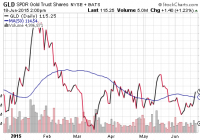
One year ago, each of the 17 members of the Federal Reserve provided an expectation of where the fed funds rate would be at the end of 2015. The average came in at 1.1%. Here in mid-June, the average expectation for committee members for the end of the year now registers 0.45%. If the party is set to rage on, then, shouldn’t investors aggressively allocate dollars in U.S. equities? Not from my vantage point. One year ago, each of the 17 members of the Federal Reserve provided an expectation of where the fed funds rate would be at the end of 2015. The average came in at 1.1%. That might have required four to five rate hikes this year alone. By March, the expected year-end rate dropped to 0.65%. Perhaps two or three rate increases, then? Nope. Here in mid-June, the average expectation for committee members for the end of the year now registers 0.45%. The financial markets have even less conviction about a 2015 increase to the cost of borrowing. Investors via fed funds futures are only pricing in a 22% chance that the Federal Reserve raises the benchmark rate in September and a 62% probability of a rate liftoff at the central bank’s December meeting. Personally, I imagine one face-saving hike this year – a one-n-done to say that they did it. Nevertheless, nobody will be removing much of the alcoholic punch from the the party’s punch bowl anytime soon. Diminished expectations have not been confined to 2015 alone. Fed forecasts for year-end 2016 have dropped from roughly 1.9% to 1.6%. For 2017, they’ve moved down to 2.9% from 3.1%. And that’s not all that the Fed has downgraded. As recently as three months earlier, the institution anticipated 2015 economic growth at 2.3%-2.7%. Yesterday, committee members revealed an assessment of a lethargic 1.8% to 2.0%. Wait a second. Haven’t chairwoman Yellen and her colleagues been prattling on about economic acceleration since last year? Haven’t they been stressing transitory factors to explain every bit of weakness, while simultaneously pointing to improvements wherever they can be emphasized? With one side of its collective mouth, committee members are talking up the economy’s advances. With the other side, it currently believes that the economy will grow even slower than its post-recession growth rate of approximately 2.1%. Keep in mind, our 2.1% post-recession performance is historically weak under normal circumstances. Since 6/2009, though, America received $7.5 trillion in stimulus by the U.S. government; we received $3.75 trillion in electronic dollar equivalents by the Federal Reserve. In other words, unprecedented fireworks only enabled the economy to grow at a lethargic pace. Meanwhile, based on what the Fed members report outside of the media spotlight, they anticipate additional cooling off here in 2015 (circa 1.8%-2.0%). Is it any surprise that stocks would rocket on the probability of fewer anticipated rate hikes alongside a less vibrant economy ? Heck, the Fed successfully talked down the U.S. dollar, kept bond yields from extending their recent tantrum and sent the SPDR Gold Trust ETF (NYSEARCA: GLD ) back above 50-day moving average. If the party is set to rage on, then, shouldn’t investors aggressively allocate dollars in U.S. equities? Not from my vantage point. Successful investors tend to sell complacency, rather than purchase more of it. And “risk-on” investors have become incredibly complacent with respect to sky high valuations as well as Fed accommodation. Understand the real reason that the Fed is even talking about raising short-term rates at all. The monetary policy authorities need to bolster the Fed’s arsenal before the next recession, external shock and/or “black swan” event. They are no longer capable of moving from a 5% fed funds rate range down to 1% or 0%. Instead, we’re now talking about maybe – possibly, someday – getting up to 3% before going back to 0% rate policy and a 4th iteration of quantitative easing (“QE4”). In truth, I doubt that the Fed will ever be able to move beyond 1% before reversing course. Japan has spent the last 15 years stuck at 0.5% or less. That has everything to do with our reliance on zero percent rates and asset purchases with currency credits (“QE”) for six years. Japan made the same error in judgment. Admittedly, the Fed has been marvelously successful at persuading businesses to buy back their stock shares; they’ve convinced pensions, money managers, mutual funds and real estate investors to stay engaged, enhancing the “wealth effect” for the wealthiest among us. (Yes, that includes me.) On the other hand, I have seen the same excesses throughout the decades. I witnessed firsthand what happened to Taiwanese equities in 1986 when Taiwan R.O.C. opened its doors to outside investors. The irrationally exuberant run-up met its panicky demise the following year. I warned investors to have an exit approach to the insanity of dot-com euphoria in the late 1990s; I offered the same warnings leading up to the 2007-2009 financial collapse. In essence, you do not have to be sitting 100% in cash. We still remain invested in core positions such as the Vanguard Mid-Cap Value ETF (NYSEARCA: VOE ), the iShares S&P 100 ETF (NYSEARCA: OEF ) and the Vanguard High Dividend Yield ETF (NYSEARCA: VYM ). Yet we have also raised 10%-25% cash in our portfolios (depending on client risk tolerance) as stop-limit loss orders have hit on both bond and stock positions. We let go of energy investments that did not pan out. We stopped out of longer-term bonds earlier this year. And Germany via the iShares Currency Hedged MSCI Germany ETF (NYSEARCA: HEWG ) is no longer in the mix of any client. The result? More cash for future buying opportunities. And that buying opportunity is likely to be far more consequential than a 3% pullback. With only a few exceptions, we believe it is far more sensible to wait for the real deal – a 10%-plus correction and/or a 20%-plus bear. Disclosure: Gary Gordon, MS, CFP is the president of Pacific Park Financial, Inc., a Registered Investment Adviser with the SEC. Gary Gordon, Pacific Park Financial, Inc, and/or its clients may hold positions in the ETFs, mutual funds, and/or any investment asset mentioned above. The commentary does not constitute individualized investment advice. The opinions offered herein are not personalized recommendations to buy, sell or hold securities. At times, issuers of exchange-traded products compensate Pacific Park Financial, Inc. or its subsidiaries for advertising at the ETF Expert web site. ETF Expert content is created independently of any advertising relationships.

How Greece Is Impacting The Financial Markets

From my perspective, the greater risk to investors is not their relative exposure to the country of Greece in their portfolios, but their relative exposure to other countries. I contend that international stocks, particularly within Europe and also including certain emerging markets, are an attractive asset class for risk-adjusted return potential over the intermediate- to long-term. Any pullbacks in international equity strategies (and European-based strategies in particular) as a result of the ongoing Greek drama, may present an attractive entry point, or re-entry point, for some investors. A lot of the volatility witnessed across global stock markets thus far in 2015 can be attributed to the ongoing soap opera involving Greece, the European Union and the International Monetary Fund. Greece, arguably the most notorious of the P.I.I.G.S. (Portugal, Italy, Ireland, Greece and Spain) countries, has been confronting a mountain of debt issues – currently estimated at 320 billion Euros – within the country for years. If that number is not staggering enough, consider these other economic statistics plaguing the country of Greece: Gross Domestic Product has fallen by 25% since 2010 A Debt-to-GDP ratio of 177% An unemployment Rate of 27% More than 20% of the Greek population is over the age of 65 – making it the world’s 5th oldest nation – and only 14% of the population is under the age of 15 (Data sources: BBC News, ECB, IMF, Green National Statistics Agency, Bloomberg.) With Greece in need of another bailout, or debt restructuring, to avoid defaulting on a significant repayment to the IMF at the end of June (and more to come thereafter), and Greece Prime Minister Tsipras opposing additional austerity measures (ex. pension cuts and potential increases to the age of retirement for these purposes in Greece) that may be a part of any new debt deal, many market participants are now bracing for the increased likelihood that Greece will leave the Euro – whether on their own or at the request of the EU. Germany, as the largest member of the EU, which Greece reportedly owes $56 billion alone, is showing signs of diminished interest in saving Greece again. This dubious view is shared elsewhere in Europe which suggests that this standoff may remain until the end of June deadline. While it is unknown if either party will blink first, or if the proverbial can will be kicked further down the road, we, at Hennion & Walsh, believe that it is appropriate for investors to consider the impact that a Greece exit from the Euro (now being referred to by many as the Grexit) would have on their portfolios and financial markets overall. Using a couple of the larger and more popular international equity exchange-traded funds below, including one Europe-specific strategy, as proxies, it would appear as though investors may not actually have that much exposure to Greece if they are investing in international equities through these types of product structures. FTSE Europe ETF (NYSEARCA: VGK ) has a 0.07% allocation to Greece as of May 31, 2015, according to Morningstar. iShares MSCI EAFE ETF (NYSEARCA: EFA ) has a 0.00% allocation to Greece as of May 31, 2015, according to Morningstar. From my perspective, the greater risk to investors is not their relative exposure to the country of Greece in their portfolios but rather their relative exposure to other countries that may be impacted by either a Greek default or a further extension of credit to this debt-burdened country. To this end, any funds “saved” by not allowing for any future Greece bailouts could be applied to additional quantitative easing measures or other economic stimulus programs within the Eurozone. It is worth noting that the fear of contagion throughout the Eurozone also adds to the volatility in the region each time a potential Grexit is in the headlines. I contend that international stocks, particularly within Europe and also including certain emerging markets, are an attractive asset class for risk-adjusted return potential over the intermediate-longer term. I would even suggest that having Greece ultimately leave the Euro would provide some certainty to international investors and relieve Europe of one of the anchors holding down their own economic recovery. Thus, any pullbacks in international equity strategies, European-based strategies in particular, as a result of the ongoing Greek drama may present an attractive entry point, or re-entry point, for some investors. Disclosure: Hennion & Walsh Asset Management currently has allocations within its managed money program consistent with the investment theme discussed in this article. This post is for educational purposes only and should not be considered as a solicitation to purchase or sell any of the securities or investment themes mentioned. International investments have their own unique set of risks that should be understood before considering an investment. As a reminder, all investment decisions in our view should be made consistent with an investor’s financial goals, tolerance for risk and investment timeframe. Disclosure: I/we have no positions in any stocks mentioned, and no plans to initiate any positions within the next 72 hours. (More…) I wrote this article myself, and it expresses my own opinions. I am not receiving compensation for it. I have no business relationship with any company whose stock is mentioned in this article.

Market Vectors Rolls Out A Spin-Off ETF

The niche ETF concept has been at the top of every issuer’s mind lately. There is hardly any scope for plain vanilla products in this rapidly growing industry. Moreover, these unique investing options give investors a scope to play the various areas of the market in basket form, using strategies that are usually hard to reproduce in a regular-themed portfolio. Probably, inspired by this sentiment, Market Vectors recently rolled out a spin-off ETF. The Market Vectors Global Spin-Off ETF (NYSEARCA: SPUN ) in Focus The fund tracks the Horizon Kinetics Global Spin-Off Index and comprises approximately 87 multi-cap securities belonging to the developed world. The universe of companies eligible for inclusion in the Index includes those that have been spun off. As per the summary prospectus , “for each company, an early entry at the start of the spin-off cycle aims to exploit valuation disconnects caused by selling pressure and pricing inefficiencies. A long-term hold seeks to capture periods of improved operating efficiency.” The fund does not appear to be concentrated on the top 10 holdings as no stock accounts for more than 1.64% of the basket. Among individual holdings, Global Brands Group Holding Ltd, Prothena Corp Plc (NASDAQ: PRTA ) and Indivior Plc ( OTCPK:INVVY ) occupy the top three positions in the fund, which has a net expense ratio of 0.55%. In terms of sector allocation, the ETF has double-digit allocation each in Consumer Discretionary, Financials and Industrials with 25.2%, 19% and 18.5%, respectively. Geographically, the fund is heavy on the U.S. with more than 65% exposure while the U.K. (6.5%) and Australia (5.5%) come in as the distant second and third. How Does it Fit in a Portfolio? In a spin-off, a company detaches certain assets to make a separate company and ‘spins off’, or hands out shares in that entity to the current shareholders. The most usual cause of a spin-off procedure is that the stock price of a big diversified company is unable to reciprocate the fair value of all its branches of operations. These could actually be among one of the top performing assets in the market. This is true for SPUN which actually reflects the full-phase of the separated companies. The issuer noted that such entities normally underperform in the earlier phase of their life-cycle due to the absence of historical performances, dearth of analyst coverage, inferior peer comparisons and market cap issues. However, over the long term, these entities trend to perform better on availability of historical results and the consequent perfection in the analysts’ reports. Better management often makes these lucrative bets. Thus, from the long-term perspective, the fund might be well liked by investors. ETF Competition The coast is clear for this newly launched ETF as it has to compete with just one ETF namely the Guggenheim Spin-Off ETF (NYSEARCA: CSD ) . Otherwise there is no meaningful player in this space. This fund tracks the Beacon Spin-off index which looks to focus on about 40 companies that have been spun-off within the past 30 months, but not before six months prior to the applicable rebalancing date. The fund charges 66 bps in fees (net) which much lower than the newly ETF. Thus, from the expense ratio point of view, SPUN scores a point over CSD. Moreover, CSD has moderately heavy concentration risk with the top four holdings taking 5% to 6% each. Thus, we see no hurdle for SPUN in garnering investors’ money. Article originally published on Zacks.com