Tag Archives: function

REM Offers A Dividend Yield Of 13.23%, But Is It Safe?
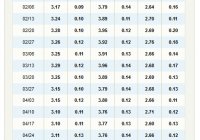
Summary Increasing rates on MBS will result in book value losses for the underlying mREITs. Increasing rates on the LIBOR curve will create gains to book value, but the LIBOR rate curve is increasing too much relative to the rates on MBS. Since REM is holding most of the mREIT industry, investors in REM could benefit substantially if interest spreads widened by MBS rates increasing by more than swap rates. One way that could happen for REM would be for the individual mREITs to repurchase their shares at a discount to book value rather than reinvesting in new MBS. A decline in buyers for new MBS would (at least in theory) result in new MBS being issued with higher rates or mREITs paying a smaller premium to face value. The iShares Mortgage Real Estate Capped ETF (NYSEARCA: REM ) is offering a beastly dividend yield, but the fund is delivering that massive yield through heavy investments in mREITs. Investors that aren’t familiar with mREIT industry need to learn the risk factors that are influencing REM. The biggest risk for investors in REM is that the value of the underlying holdings, the mREITs, could change quite substantially. The ETF holds a reasonably diversified batch of mREITs, though I wouldn’t mind seeing the ETF reduce the weight it puts on Annaly Capital Management (NYSE: NLY ), which is 14.44% of the assets of the ETF. The thing most mREITs have in common is that the RMBS (residential mortgage backed securities) is the primary investment tool. Some of them use other derivative investments, but the main exposure is the RMBS. Some mREITs are using larger positions on ARMS (adjustable rate mortgages), some focus on the 15-year RMBS or the 30-year RMBS, and some go into smaller segments of the market such as lending on jumbo mortgages or non-agency securities. When we boil it down, everything comes back to the rates on MBS and the spreads between short-term rates and long-term rates. Mortgage rates I grabbed the following chart to look for the latest rates across MBS: For 15-year and 30-year securities Interest rates have increased significantly since the end of the first quarter, but they ended the first quarter down from the start of the year. For ARMs The interest rate on new ARMs decreased during the first quarter and has been relatively flat during the second quarter. You might wonder why ARMs have seen interest rates getting soft while they are increasing on other securities. The simple reason is that mREITs are finding adjustable rate mortgages to be more attractive due to expected increases in the interest rates offered by the Federal Reserve. If the Federal Reserve is going to increase interest rates, then mREITs holding adjustable rate mortgages would theoretically be preferable in the short term since the rates they receive will increase. Share price declines Despite the mREIT sector taking a pretty bad beating on share price over the last year, investors in REM are actually flat on their investment because the dividends covered the decline in price. (click to enlarge) When investors hear the dividends are just covering the decline in share price, it may sound like a return of capital. That isn’t the case though. The underlying securities for the ETF are the shares in mREITs and many mREITs are trading at substantial discounts to their own book value. If investors could picture REM as an enormous mREIT with incredibly diversified holdings of the securities that the mREITs are holding, then REM would be trading at a substantial discount to book value. Since REM’s NAV is established by the share price of the mREITs, investors don’t see the huge discount when looking at REM. The mREITs hedge their exposure to rising interest rates through swaps, swaptions, and Eurodollar Futures. The chart below uses the latest publicly available data to establish the interest rates in the LIBOR market: (click to enlarge) The increasing LIBOR rates indicate that most mREITs will have substantial unrealized gains on their interest rate swaps. The gains on swaps should partially offset the losses they will report on MBS. The favorable development for mREITs is that the yield curve is becoming substantially steeper. The one-year rate has increased by about 11 basis points, but the rate on other years is increasing substantially more. An increase of 11 basis points is small relative to the increase in the rates on 15-year and 30-year MBS. On the other hand, the increase in interest rates during the quarter on maturities around 5 years is substantially less attractive. While the mREITs will see substantial gains on their interest rate swaps during the second quarter, initiating new swap positions will require paying these higher rates which in some cases are increasing by closer to 60 basis points. In my opinion, this is one of the biggest challenges to REM. A large portion of the holdings are mREITs that need positions in swaps with durations of 3 to 10 years and the interest rate due on those swaps has increased by more than the yield on MBS securities. Three possible favorable developments for REM REM would have enormous upside if three things happened. The first is that long-term MBS rates inch upwards and the second is that LIBOR rate increases for the first five years of the curve become substantially smaller. The gains on interest rate swaps are nice, but over the next few years, mREITs don’t want to find themselves paying higher rates on new swaps. The third option would be a way to cause the first two things to happen. If the mREIT industry saw substantially more repurchasing shares and less issuing shares, there would be a net outflow of money from the mREIT industry. That would be very beneficial to investors holding the entire industry, because the mREITs would have less capital available to bid for new MBS. A decrease in mREITs bidding on new MBS would mean less competition in that part of the market. Either MBS would be acquired at lower premium to face value or the originators of MBS would increase the interest rates they were charging borrowers to make the MBS more attractive to mREITs to encourage them to a pay a large premium to face value. Either paying a smaller premium to face value or having higher interest rates on the MBS would be extremely favorable developments for mREITs even though it would result in a loss on book value. The loss of book value would be material, but the increase in net interest margins would make dividends substantially more sustainable and encourage investors to buy the underlying mREITs to receive dividend yields that were both large and sustainable. In that case, an investor in REM would expect to see increases in share prices and in dividends. On the other hand, if LIBOR rates rise across the curve and MBS rates increase by less than the LIBOR rates, then the cost of financing for mREITs may increase by more than their yield on assets. Conclusion I’m bullish on the mREIT industry and expect positive returns to shareholders of REM over the next few years. I can’t provide an endorsement of the ETF because I believe the expense ratio is too high. There are a few competing ETF options, but none of them meet my threshold for attractive expense ratios and all of them have at least somewhat unfavorable weightings for the different mREITs in the ETF. Despite those concerns, it may be a good fit for the investor that wants exposure to the mREIT industry, but does not have a large enough portfolio to buy several positions in individual mREITs for diversification. For investors interested in my personal favorites, I like CYS Investments (NYSE: CYS ) and Dynex Capital (NYSE: DX ). I believe at the current discount to book value, American Capital Agency Corp. (NASDAQ: AGNC ) is also very attractive. I find Bimini Capital Management ( OTCQB:BMNM ) to be the most undervalued company in the space, but it is highly illiquid, and I like it for the external manager fees it receives rather than the composition of the portfolio. Disclosure: I am/we are long DX. (More…) I wrote this article myself, and it expresses my own opinions. I am not receiving compensation for it (other than from Seeking Alpha). I have no business relationship with any company whose stock is mentioned in this article. Additional disclosure: Information in this article represents the opinion of the analyst. All statements are represented as opinions, rather than facts, and should not be construed as advice to buy or sell a security. Ratings of “outperform” and “underperform” reflect the analyst’s estimation of a divergence between the market value for a security and the price that would be appropriate given the potential for risks and returns relative to other securities. The analyst does not know your particular objectives for returns or constraints upon investing. All investors are encouraged to do their own research before making any investment decision. Information is regularly obtained from Yahoo Finance, Google Finance, and SEC Database. If Yahoo, Google, or the SEC database contained faulty or old information it could be incorporated into my analysis.
X-Raying CEFL (Part 2): Geographical Distribution

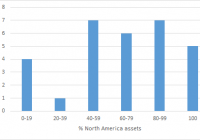
Summary A previous article in this series investigated the leverage and expense ratio statistics of CEFL, a 2X leveraged CEF fund-of-funds. This article presents the geographical breakdown of CEFL. How much international exposure does CEFL contain? Introduction The ETRACS Monthly Pay 2xLeveraged Closed-End Fund ETN (NYSEARCA: CEFL ) is a 2x leveraged ETN offered by UBS. CEFL tracks twice the monthly return of the ISE High Income Index [YLDA], an index that is comprised of high-yielding close-ended funds [CEFs]. The methodology used to construct YLDA has been summarized here . The YieldShares High Income ETF (NYSEARCA: YYY ) tracks the same index as CEFL. While many investors are attracted solely by CEFL’s high yield (currently 20.39% ttm), I believe that it is also important to look “under the hood” of the fund and to understand its characteristics. In a previous article , we delved into the holdings of CEFL to derive relevant leverage and expense ratio statistics regarding this fund. From that analysis, we found that CEFL is approximately comprised of one-third equity and two-thirds debt, CEFL is effectively leveraged by 240%, and CEFL exhibits a total expense ratio of 4.92% per dollar invested in the fund (or 2.05% per dollar of assets controlled), after accounting for acquired fund expenses. This article seeks to present the geographical distribution of CEFL in terms of its overall holdings, or in terms of equity and debt components. Methodology The geographical distribution of the component funds was obtained from CEFConnect , Morningstar or the fund websites. As some CEFs only report their allocation by region rather than by country, it was decided to present the data in terms of region only. The five regions are North America (includes Canada), Europe (includes Russia), Asia Pacific (includes Japan and Australia), Latin American and Middle East/Africa (includes Turkey). There is also a sixth category of “other” due to the fact that some funds do not report beyond their top 10 country holdings. The funds The following table shows the fund name, ticker symbol, % assets, and % of assets in region. Fund Ticker Assets North America Europe Asia Pacific Latin America Middle East/Africa Other GAMCO GLBL GOLD NAT RES (NYSEMKT: GGN ) 4.52% 77.9 11.5 2.1 6.0 2.5 0.0 DOUBLELINE INCOME SOLUTIO (NYSE: DSL ) 4.38% 47.4 13.0 0.0 14.6 0.0 24.9 EATON VANCE TM GL DIV EQ (NYSE: EXG ) 4.28% 55.6 36.2 8.1 0.0 0.0 0.0 FIRST TRUST INTERMEDIATE (NYSE: FPF ) 4.28% 49.2 39.7 0.0 1.2 0.0 9.9 ALPINE TOTAL DYNAMIC DIVD (NYSE: AOD ) 4.27% 53.2 29.0 5.6 0.0 0.0 12.3 EATON VANCE LIMITED DURAT (NYSEMKT: EVV ) 4.26% 90.5 5.4 0.0 0.0 0.0 4.1 MFS CHARTER INCOME TRUST (NYSE: MCR ) 4.24% 67.6 11.8 2.3 0.0 0.0 18.3 CLOUGH GLBL OPPORTUNITIES (NYSEMKT: GLO ) 4.24% 88.9 3.6 12.3 0.0 0.0 -4.7 BLACKROCK CORPORATE HIGH (NYSE: HYT ) 4.20% 100.0 0.0 0.0 0.0 0.0 0.0 ALPINE GLOBAL PREMIER PRO (NYSE: AWP ) 4.19% 31.8 26.9 28.5 3.7 2.2 6.9 WESTERN ASSET EMG MKT DBT (NYSE: ESD ) 4.18% 0.0 25.4 4.5 57.3 0.0 12.8 VOYA GLBL EQTY DIVD FUND (NYSE: IGD ) 4.12% 45.8 39.3 8.7 0.0 0.0 6.2 PRUDENTIAL GL SH DUR HI Y (NYSE: GHY ) 4.11% 69.4 20.0 0.0 2.0 0.0 8.6 PIMCO DYNAMIC CREDIT INCO (NYSE: PCI ) 4.11% 76.1 6.5 12.0 5.5 0.0 0.0 BLACKROCK INTL GROWTH&INC (NYSE: BGY ) 3.91% 11.7 54.5 28.0 1.3 2.1 2.4 MORGAN STANLEY EMERGING M (NYSE: EDD ) 3.88% 0.0 33.3 23.3 43.2 26.6 0.0 EATON VANCE TAX-MGD DV EQ (NYSE: ETY ) 3.81% 92.9 6.6 0.0 0.0 0.5 0.0 ABERDEEN ASIA-PAC INCOME (NYSEMKT: FAX ) 3.43% 2.7 3.2 94.1 0.0 0.0 0.0 PRUDENTIAL SHORT DURATION (NYSE: ISD ) 3.15% 100.0 0.0 0.0 0.0 0.0 0.0 CALAMOS GLOBAL DYNAMIC IN (NASDAQ: CHW ) 3.11% 57.8 24.0 11.5 1.0 1.3 4.4 MFS MULTIMARKET INC TRUST (NYSE: MMT ) 2.84% 100.0 0.0 0.0 0.0 0.0 0.0 BLACKSTONE/GSO STRATEGIC (NYSE: BGB ) 2.65% 100.0 0.0 0.0 0.0 0.0 0.0 ALLIANZGI CONVERTIBLE & I (NYSE: NCV ) 2.42% 100.0 0.0 0.0 0.0 0.0 0.0 WESTERN ASSET HIGH INC FD (NYSE: HIX ) 2.19% 98.2 0.0 0.0 0.0 0.0 1.8 BLACKROCK MULTI-SECTR INC (NYSE: BIT ) 1.89% 84.7 12.6 1.2 0.0 0.0 1.6 WELLS FARGO ADV MULTISECT (NYSEMKT: ERC ) 1.56% 78.8 4.6 2.2 4.5 2.3 7.6 ALLIANZGI CONV & INCOME I (NYSE: NCZ ) 1.35% 84.2 15.8 0.0 0.0 0.0 0.0 WELLS FARGO ADVANTAGE INC (NYSEMKT: EAD ) 1.33% 94.9 4.4 0.1 0.0 0.0 0.6 NUVEEN PFD INC OPP FD (NYSE: JPC ) 1.12% 57.6 35.4 0.0 0.0 0.0 7.0 INVESCO DYNAMIC CREDIT OP (NYSE: VTA ) 0.96% 70.1 19.8 0.0 0.0 0.0 10.1( The following chart shows the frequency distribution of CEFs at different percentages of North American assets, the vast majority of which are U.S. assets. Geographical distribution The respective regions shown in the table above were, after accounting for the leverage of each fund, summed to determine the overall geographical distribution of CEFL. The results are presented in the graph below. We can see from the chart above that North America accounts for just over two-thirds (68.2%) of the assets of CEFL. The second-largest region is Europe, at 14.8%, followed by Asia Pacific, at 8.3%. Latin American and Middle East/Africa represent relatively minor regions at 3.9% and 0.4%, respectively. Finally, 4.4% of the assets were unaccounted for in this analysis. The next chart shows the geographical breakdown for the equity and debt components of CEFL. Recall that CEFL is comprised of approximately one-third equity and two-thirds debt. Note that for hybrid funds, I have made the assumption that the region distribution is the same for the equity and debt components of the fund. We can see from the chart above that the debt portion of CEFL contains more North American exposure (71.6%) compared to the equity portion (57.1%). On the other hand, the equity portion of CEFL contains more European exposure (25.9%) compared to the debt portion (11.4%). Discussion and conclusion This article sought to evaluate the geographical exposure of CEFL. The main conclusion from this analysis was that CEFL contained around two-thirds of North American (primarily U.S.) assets, meaning that the fund has around one-third of international exposure. What does this mean for investors? Obviously, investors who are uncomfortable with any level of international exposure should avoid CEFL, as around one-third of the fund is in foreign assets. However, other investors may be attracted to the diversification benefits offered by the international exposure of CEFL. For example, a portfolio of 70% U.S. stocks and 30% international stocks (close to the geographic allocation of CEFL) has returned 11.4% a year since 1950, which is about 2% more than S&P500, but with about 10% less risk. Additionally, I like that the North American component of CEFL contains a higher allocation to debt vs. equity than the European component of CEFL. European debt is currently low-yielding and hence expensive, with struggling countries like Spain (2.26%) and Italy (2.28%) having the same 10-year bond yields as the U.S. (2.26%), and even lower yields for Germany (0.75%) and France (1.16%). On the other hand, European stocks are a lot cheaper than U.S. stocks, with CAPE ratios of 8.6 and 16.5 for emerging and developed Europe, respectively, compared to 26.0 for the U.S. Therefore, value investors like myself would be especially pleased with CEFL’s higher allocation towards European equities compared to European debt. I hope this information will be useful for investors in or considering investing in the fund. Disclosure: I am/we are long CEFL. (More…) I wrote this article myself, and it expresses my own opinions. I am not receiving compensation for it (other than from Seeking Alpha). I have no business relationship with any company whose stock is mentioned in this article.

The Fed Provided A Short-Term Boost To SLV

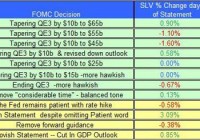
Summary The FOMC meeting concluded with a dovish statement and press conference. The silver market benefits from a dovish Federal Reserve. A potential rate hike could have a modest, negative impact on the price of SLV. The FOMC, as expected, didn’t raise rates and presented a dovish statement without dissenters. This news provided some backwind to the iShares Silver Trust ETF (NYSEARCA: SLV ) that came up in the last few days, albeit it’s still down by 8.5% over the past month. Let’s examine the recent FOMC meeting and its possible implications on SLV. Following the recent FOMC statement and press conference, the market revised down its outlook of the Fed’s rate “lift off”: The implied probabilities dropped to a 17% chance of a rate hike in September and 57% in December. In January 2016, the odds are 72% – nearly the same odds for a December rate hike only a week ago. The statement, which wasn’t changed much and didn’t offer any major headlines, still led to a modest rally in the price of SLV, as presented below. The dovish tone in the statement and Yellen’s press conference that followed suggested that even after the inaugural “lift off”, the FOMC will keep rates low – conditions that benefit the silver market. (click to enlarge) Source of data taken from FOMC and Google Finance The FOMC revised down its projections for the 2015 U.S. GDP growth rate from 2.5% in March to 1.9%. The rate of unemployment slightly increased to 5.25%. There weren’t any other major changes in the FOMC’s economic projections. Since Yellen reiterated that the first rate hike will still be data dependent, this means that if in the next few months the economic data show a stable recovery, e.g. NFP reports keep showing steady growth in jobs, lower unemployment, faster growth in wages, better GDP figures, higher inflation (just to name a few), the FOMC could decide to raise rates this year. As long as the FOMC keeps rates low, the silver market in general and SLV in particular benefit from it. Also, even if the FOMC were to start raising rates, the cash rate is likely to remain low, as Yellen suggested in the press conference, for a while. After all she tried, yet again, to diverge the attention from the historic first rate raise to the pace of subsequent rate hikes. She emphasized that rates will rise gradually; as such, this means the normalization policy is likely to have a modest adverse impact on SLV. In terms of the dot plots, FOMC members are still incline to raise rates this year, perhaps by September – this will allow for at least two rate hikes of 0.25% and bring the cash rate to 0.5% by the end of the year. For 2015, the median target range of the Federal Reserve hasn’t changed – it’s at 0.625% – albeit fewer FOMC members have picked higher rates and the projections are now more concentrated around lower interest rates, as you can see below: Source: FOMC’s website For 2016 and 2017, members slightly lowered their projections so that the median point declined by 0.25 percentage points for each year. This is another dovish indication that the trajectory of the future rate hikes could be more moderate than previously projected. Source: FOMC’s website In a CNBC interview, Richard Fisher, who is considered a hawk and was former president of the Federal Reserve Bank of Dallas and FOMC voting member, stated the dot plot outlook for the coming years is less relevant since the current members may not be there to make rate decisions in 2016-2017. This may be right, but since Yellen will remain at the Fed, we are still likely to see additional dovish FOMC decisions in the coming years. The market’s reaction to the dovish statement also included a depreciation of the U.S. dollar against leading currencies, which also contributed to the modest rise in shares of SLV. Nonetheless, the U.S. dollar could start to rise again especially against the euro – the ECB’s QE program and the ongoing Greek debt crisis are likely to drag down the currency – and yen. A stronger U.S. dollar could play against the price of SLV. The silver market isn’t out of the woods, but the FOMC provided a short-term boost to SLV. The market doesn’t seem convinced that the Fed will raise rates this year. As such, if and once it will occur, it could result in a modest drop in SLV prices. Until such time, as long as the FOMC produces dovish statements, silver will benefit over the short run. For more see: Will Higher Physical Demand for Silver Drive Up SLV? Disclosure: I/we have no positions in any stocks mentioned, and no plans to initiate any positions within the next 72 hours. (More…) I wrote this article myself, and it expresses my own opinions. I am not receiving compensation for it (other than from Seeking Alpha). I have no business relationship with any company whose stock is mentioned in this article.