Tag Archives: function

Long/Short Hedge Fund Factors: Low-Cost Downside Protection?
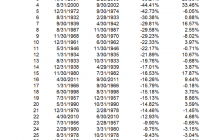
By Wesley R. Gray, Ph.D. The holy grail of financial markets is finding strategies that have misaligned risk and reward characteristics. In the traditional view, investors try to do the following: Identify strategies that have high returns , then… find ways to get the exposure with the lowest risk possible . However, there is another angle on this concept… Identify strategies that have great risk-management benefits , then… find ways to get the exposure at the lowest cost possible . For example, you might buy out of the money puts, which in a crisis will finish in the money and generate insurance-like returns. But puts might be expensive… What if you could identify an asset where the cost of this insurance is de minimus or – better yet – you get paid to own the insurance? That is, if you commit capital, you will, in expectation, generate positive returns over time-and get an insurance benefit. This would be the holy grail! This line of thought is a bit unorthodox, but may lead to creative portfolio solutions. An applied example: The US Treasury Bond. First, let’s frame the question through the typical lens: focus on expected returns first, volatility second. Many consider the US Treasury Bond to have low expected return, but high potential risk. The low expected return is due to low yields, and the high potential risk is associated with the fact that if we were to move down the “banana republic” path, long bonds would arguably get crushed. Everyone seems to know this. Conclusion: Bad investment. Next, let’s frame the question through a different lens: focus on risk-management benefits first, expected returns second. When we look at the US Treasury Bond as a risk-management instrument, we identify some amazing historical benefits that are distinct from its expected return characteristics. The results below highlight the top 30 drawdowns in the S&P 500 Total Return Index from 1927 to 2013. Next to the S&P 500 return is the corresponding total return on the 10-Year (LTR) over the same drawdown period: (click to enlarge) The results are hypothetical results and are NOT an indicator of future results and do NOT represent returns that any investor actually attained. Indexes are unmanaged, do not reflect management or trading fees, and one cannot invest directly in an index. Additional information regarding the construction of these results is available upon request. Leaving aside (for a moment) questions about long-run returns, the US Treasury Bond suddenly looks more like an insurance contract, and less like a traditional investment. Again, with a traditional investment, we would tend to focus first on expected return and standard deviation. Conclusion: We’ve potentially identified an insurance contract that pays us to hold it. Moving from US Treasury Bonds to Hedge Fund Factors The example above is not meant to be a pitch for or against US Treasury Bonds. The analysis is merely meant to highlight how framing the investment decision can potentially lead to different conclusions. In our quest to find additional low-cost-or free-portfolio insurance assets, we started playing with common “factor” returns. As insurance contracts, do these exhibit characteristics similar to what we saw before with respect to Treasury bonds? The results were surprising… We examine 3 common hedge fund “factor” portfolios alongside the S&P 500 Index: SP 500 = SP 500 Total Return Index HML = The average of 2 value portfolios (small and large) minus the average return of two growth portfolios (again, small and large) MOM = The average of 2 high return portfolios (small and large) minus the average return of two low return portfolios (small and large) QMJ = The average of 2 high-quality portfolios (small and large) minus the average return of two low-quality portfolios (small and large) Results are gross of management fees and transaction costs. All returns are total returns and include the reinvestment of distributions (e.g., dividends). Data are from AQR and Ken French . Summary Statistics: Here are the returns (1/1/1963-12/31/2014): (click to enlarge) The results are hypothetical results and are NOT an indicator of future results and do NOT represent returns that any investor actually attained. Indexes are unmanaged, do not reflect management or trading fees, and one cannot invest directly in an index. Additional information regarding the construction of these results is available upon request. Conclusion: You got paid to hold the hedge fund factors over the long-term. Insurance Benefit Analysis: In the context of a traditional asset pricing model, such as the Capital Asset Pricing Model (CAPM), an asset that actually delivers returns when the rest of the world is blowing up (i.e., negative beta during treacherous times), should have a negative expected return because of the diversification benefits. For example, the CAPM says the expected return of an asset equals the risk-free rate plus beta times the expected excess return of the market portfolio: r a = r rf + B a (r m -r rf ) In this equation, if beta is negative, then the asset could earn negative returns and the investor should be happy owning it. For example, let’s say rf=3%, Rm-rf= 4%, and B=-1. The expected return = -1%. Hence, under CAPM, you have to pay for an insurance contract. Yet as the analysis above highlights, all of these L/S factors have positive carry. In a traditional asset pricing framework, these assets should not act like portfolio insurance. But how do these strategies perform as insurance contracts? When we look at the worst 30 drawdowns on the SP 500 since 1963 we see a very interesting pattern – Factors tend to rip higher during crisis. In other words, hedge fund factors look and feel like insurance contracts that pay off during chaos. (click to enlarge) The results are hypothetical results and are NOT an indicator of future results and do NOT represent returns that any investor actually attained. Indexes are unmanaged, do not reflect management or trading fees, and one cannot invest directly in an index. Additional information regarding the construction of these results is available upon request. Conclusion: Hedge fund factors are VERY interesting in a portfolio context. Original Post
Rough Days Ahead For The Platinum ETF

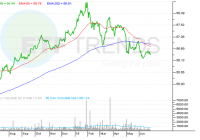
Thanks to a stronger dollar led by expectations of higher interest rates, many of the commodities have been reeling under pressure this year. The broad-based DB Commodity Index Tracking ETF (NYSEARCA: DBC ) is down 4.5% this year, indicating that the pain has been felt across the broad. In fact, the precious metals space has been one of the worst performers with ETFS Physical Platinum Shares (NYSEARCA: PPLT ) down 10.8% since the start of the year. Despite a long-term deficit, which indicates a bullish trend, the sentiment for the precious metal has been weak. Last week, platinum prices were trading near the $1,060/oz mark – falling to their lowest levels since 2009 – hit by strong supply. Supply Glut Unlike last year, wherein labor unrest crippled the output of South Africa – the world’s biggest platinum producer – production this year has returned to levels ahead of the five-month strike in 2014. A sharp depreciation of the South African rand – which has fallen to a 14-year low against the dollar in early June this year – has been the primary factor for the flood in supplies. A weaker rand lowers costs for South Africa’s miners, offsetting falling platinum prices and providing them with an incentive to keep producing. Johnson Matthey plc ( OTCPK:JMPLY ), one of the biggest makers of platinum-based chemicals, estimates that platinum supplies from South Africa are expected to jump by nearly 20% this year, the largest year-over-year gain since 1993, as per an article by the Wall Street Journal . Other Factors Apart from the supply glut, investors’ sale of shares of the physically backed platinum ETF is also pushing supplies higher and dragging prices down. Slowing growth in China – the world’s top consumer of platinum for jewelry – has also been a cause of concern. Chinese platinum imports fell 11% year over year for the first four months of the year, per TD Securities. Adding to the concerns, European car sales rose at the slowest pace in six months in May. Platinum is a key component of catalytic converters, so when car demand falls, platinum demand tends to fall as well. Thus, given robust supply and dwindling demand, platinum might have a rocky road ahead. This is also expected to dampen the performance of PPLT. PPLT in Focus Launched in January 2010, this ETF tracks the performance of platinum’s price and is quite a popular fund in the precious metals space managing assets worth $550.8 million. The product invests in bars of platinum and holds them in a secure European facility on behalf of the custodian, JPMorgan Chase Bank. The product charges a decent 60 basis points a year and has an average volume of more than 32k shares traded a day. PPLT is down 10.8% in the year-to-date frame. There are also a few ETNs in the platinum space including the iPath DJ UBS Platinum TR Sub Index ETN (NYSEARCA: PGM ) and the UBS ETRACS CMCI Long Platinum TR ETN (NYSEARCA: PTM ) . Both of these suffer from lower assets and low volume levels, though they have seen similarly bad performances in the year-to-date frame. Bottom Line A strong dollar and a weaker rand have been the primary factors boosting South Africa’s platinum supply. Diverging monetary policies across the globe is to be blamed for the raging currency war. Apart from this, slowdown in China and falling car demand in Europe are also supporting lower platinum prices. However, European car registrations, a proxy for sales, have increased 6.9% to 1.17 million units in April – the best sales volume for April since 2009. Nonetheless, it remains to be seen whether the momentum can sustain or not, boosting the demand for platinum, or will platinum prices continue their downtrend led by a supply glut. Original Post

Examining Your Fund’s Puerto Rico Exposure

Summary Puerto Rico is scaring investors on fresh default concerns. High-yield municipal bonds are fluctuating on the heightened risks. Focus on three high-yield muni ETFs. By Todd Shriber & Tom Lydon Greece or Puerto Rico, investors have their pick of default poison, but investors in fixed-income, exchange-traded and mutual funds would do well to monitor goings-on in Puerto Rico because the U.S. territory’s imminent default could affect some well-known municipal bond funds. So dire is the situation in Puerto Rico, Gov. Alejandro García Padilla told the New York Times over the weekend that government finances there are “in a death spiral.” And $72 billion is not chump change. To put $72 billion into context with a catchy anecdote, that is more than twice the market capitalization of General Mills (NYSE: GIS ). Puerto Rico’s debt woes are important to fund investors because an “estimated in 2013 that as much of 80% of Puerto Rico’s debt has found its way into muni-bond funds, and 180 mutual funds in the United States and elsewhere have at least 5% of their portfolios in Puerto Rican bonds,” Alan Gomez reports for USA Today , citing Morningstar data. “Last week, the general obligation (GO) debt had plumbed new depths, helping to record a negative 5% month-to-date return for the S&P Municipal Bond Puerto Rico General Obligation Index. According to JR Rieger, global head of fixed income for S&P Dow Jones Indices, the facts are the situation isn’t looking good: the pending Puerto Rico Electric Power Authority July 1st default looms on the market, the possible restructuring of the Government Development Bank debt and the possible postponement of G.O. set – asides have sent alarms to G.O. bond holders,” said S&P Capital IQ in a new research note. The $1.6 billion Market Vectors High-Yield Municipal Index ETF (NYSEARCA: HYD ) lost 1.4% Monday . That ETF has a Puerto Rico weight of just 3.2%, making the territory the fund’s tenth-largest geographic weight. The $396.8 million SPDR Nuveen S&P High Yield Municipal Bond ETF (NYSEARCA: HYMB ) lost just 0.8% yesterday despite a Puerto Rico weight of over 13%, making the territory HYMB’s largest geographic weight. The shorter-duration Market Vectors Short High-Yield Municipal Index ETF (NYSEARCA: SHYD ) was unchanged Monday even with a 4.5% weight Puerto Rican munis. Some actively-managed mutual funds have significantly larger Puerto Rico exposure than the ETF rivals. “Oppenheimer Rochester Fund Municipals (MUTF: RMUNX ), an actively managed mutual fund has 77% of its assets in NY state bonds, but most of the rest of the assets is in Puerto Rico bonds. Similarly Oppenheimer Rochester New Jersey Municipal Fund (MUTF: ONJAX ) has 29% of assets in bonds issued by Puerto Rico, despite what some New Jersey residents might expect,” according to S&P Capital IQ. SPDR Nuveen S&P High-Yield Municipal Bond ETF (click to enlarge) Tom Lydon’s clients own shares of HYD. Disclosure: I am/we are long HYD. (More…) I wrote this article myself, and it expresses my own opinions. I am not receiving compensation for it. I have no business relationship with any company whose stock is mentioned in this article.