Tag Archives: function

Start Living An Easier Life And Start Beating The Market Through Contrarian ETF Investments
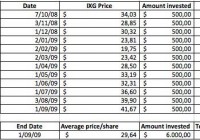
Summary Periodically buying the SPY all the time might be too boring for some people. Mixing things up with this new strategy might be more their cup of tea. As an example, John, our imaginary investor, will be using this new technique during the Financial Crisis of 2009 and during the GREXIT fears of 2012. With this new strategy, John doubled his performance. He gained 40% during 2008 – 2009 instead of 20%, and 22% during 2012 instead of 11%. So why even pick stocks if you can pick ETFs? It’s safer, easier and you’ll be able to beat the market. Discover 3 very interesting opportunities in the market right now, that might also lead to above average results. John might be getting a first position right now. In my previous article , we learned that life could be much easier and that perhaps joining them instead of trying to beat them might be the better option. However, in today’s article, I’ll dig deeper and see if simple investors like John can actually beat the market – by doing just one thing differently. Yes, there’s a way to still beat the market. And today, we’ll back-test that way 2 times + I’ll give you three possible opportunities that might lead to those same market-beating results. The portfolio strategy I’m going to describe to you during this article is all about two words: ‘Contrarian’ and ‘ETFs.’ It’s the Contrarian ETF Strategy. Let’s break down those words. A contrarian: A person who takes a contrary position or attitude; specifically: an investor who buys shares of stock when most others are selling and sells when others are buying. An ETF: A security that tracks an index, a commodity or a basket of assets like an index fund, but trades like a stock on an exchange. So the strategy goes as followed: Instead of picking individual shares of a company that is in trouble – which continues to be the more risky way of being a contrarian – we now decide to periodically buy an ETF related to an industry/commodity or country that is in trouble. You see, each year, there seems to be some sort of crisis going on somewhere in the world. Often does everyone think the world will end (for that particular industry that is in trouble) but in 99% of these cases, the world doesn’t end and these industries find ways to survive. Crises often are opportunities – when played right – and I bet you’re feeling the same thing. Are oil companies offering the opportunity of a lifetime right now? And how about oil suppliers and companies delivering services to oil companies? And what about Russia? Is Russia an opportunity or a value trap? Will the Ukraine – Russia war really last forever? Will oil remain below $100 during the next 10 years? Will Greece leave the EU? Well, I don’t know all the answers, but I do know that I’m very inclined to say “NO” to all of these questions. People love drama. And we all love doom-scenarios. But how often did any of them played out? Also, when you really think about it: Does oil really have to be at $100 before you – as an investor – can make a profit of certain oil related stocks? Hell no. Certain stocks would jump 20% if oil would make a 5% recovery, or would show signs of a simple stabilization. Does Russia really have to report a 2% GDP growth figure before you, as an investor, can make a decent profit? Hell no. Anything positive, anything that gives investors the outlook that “things will get normal again” will make Russian stocks go nuts (hence the 10% bounce in 4 days time that occurred last week). However, while most investors recognize these opportunities and see the possible value in these areas of the market right now, they often see things too pessimistic and are too uncertain. “I don’t know anything about Russian or Greek stocks. I know nothing about oil companies or their suppliers, I don’t know which ones are the good ones.” Well you don’t have to know which ones the good ones are. That’s what ETFs are for. John’s strategy during the financial crisis of 2009. Remember John from my previous article? Well, he’s back in town. John is still buying the SPDR S&P 500 Trust ETF (NYSEARCA: SPY ) each month, and just like he was in my previous article, he still is a pretty smart guy that loves to seize opportunities whenever they come along. Last time, he decided to double his investment efforts during the financial crisis. Instead of buying $500/month during 2009, he decided to buy $1000/month. This time, he’s about to do something even more smart. John figures that the industry that is being hurt most, will also have most upward potential. But instead of picking individual stocks and making risky/uncertain decisions that will make him sleep bad at night, he decides that now is the time to buy a financially related ETF. The iShares Global Financial ETF (NYSEARCA: IXG ) seems to be perfect, as it covers 240 banks. This way, he tries to profit – like a real contrarian – from an industry that is in serious trouble while not exposing himself to too much risk. John puts his monthly investments in the SPY on halt and puts his $500 in the IXG instead. However, like we mentioned, John is a very, very smart guy and he knows that a crash can go on for a long time, and thus that chances are real that he gets in too early. Therefore he has one rule when it comes to his contrarian plays: He will only get a first position after a 40% drop. On October 7, 2008, John finally gets what he wants. The IXG fell 40%. From $58 to $34, and John decides to make a first purchase. He then adds to this position the first of each of the following 11 months. After eleven months, and after investing his 6k, John possesses: 202 shares at an average price of $29.64. Which is far below his original entrance point. Thank god he didn’t went all in at once and stayed with the $500/month rule. (click to enlarge) With this strategy, John scored a ~40% return while not having to time the market, not having to take individual risky picks and while keeping it simple. If he had invested in the S&P 500 through the SPY this whole time, then he had gained 19%. So he doubled his return by making a simple shift in where he puts his assets. Of course, this is just one example where dollar cost averaging on an ETF of a sector in trouble turned out very nicely compared to the regular SPY and this is not a representation of any future scenario. So in order to make this theory a little more valid, let’s take a look at a second example. Same strategy, different scenario During the European Debt Crisis in 2012; everyone thought that Greece would be leaving the Eurozone and that the country would be doomed. On May 16, its main index (the ATHEX), had lost more than 40% compared to its year high in Feb., and was now quoting at 209 points. John didn’t belief that Greece would have to leave the Eurozone (damaging only itself and other members of Europe) and thus he decided to expose himself to the country as a whole. He again stops purchasing the SPY – and decides to buy the Global X FTSE Greece 20 ETF (NYSEARCA: GREK ) with his $500/month. After 11 months of dollar cost averaging, John held 625 shares of GREK at an average price of $14.12 while the index was now above $17. John was able to gain a nice 22% in a relatively safe way, while knowing nothing about Greek stocks. At a certain point, he was sitting on a 40% profit. More interesting though, is that John would have only gained 11% if he had continued to buy the SPY during the same period. So yet again John doubled his return. Conclusion Although periodically investing in the SPY should give one decent returns over time, it seems very likely that whenever a sector/industry/country appears to be in trouble, it might be a wise thing to shift your deposits from the SPY into an ETF related to this industry for the course of a year – after they’ve dropped ~40%. This could lead to market-beating results without much effort and without too much risk. Today, I’m seeing 3 great contrarian plays that fit John’s new strategy: Greece Greece is yet again being confronted with a “Grexit” and the ATHEX dropped more than -44% since January 2014. John would be getting his first position now, and this could lead to above average returns within a year from now. As Aristofanis explains here , a Grexit is very unlikely, just like last time. Russia The Russian index has fallen -48% since January 2014 and is also offering a high risk/reward. A first position of $500 now, could lead to market-beating results within a year from now, if you continue to dollar-cost average on the Market Vectors Russia ETF (NYSEARCA: RSX ) the following months. The fact that you’ll be dollar cost averaging + that you’re buying not a few specific Russian companies, is definitely lowering your overall risk. The Russian – Ukraine conflict can’t go on forever and the sanctions that Europe imposed on Russia could be relieved sooner than expected. Russia is in real trouble, now that the rouble and oil prices dropped so much: It’ll simply have no other choice than to retreat and to improve the situation with the Ukraine in order to save its economy. Oil Oil prices have taken a steep dive and thus it might be more than interesting to consider a position in the SPDR Oil & Gas Exploration & Production ETF (NYSEARCA: XOP ), as it is down more than -45% since its all-time-high of mid last year and holds ~83 holdings. However, further downside is definitely possible as oil hasn’t found its bottom yet. By Q3 of 2015 or early 2016 however, I belief that oil prices will start a sharp recovery. The commonly held belief is that Saudi Arabia is keeping prices so low by not lowering its production to put a stop to the rapid growth of production from the U.S. shale oil plays. Others believe it is their goal to crush the Russian and Iranian economies. If the oil price remains at the current level for a few months longer it will do all of the above and then it has succeeded. Also don’t forget that the low oil price will lead to an increased demand from all major economies who are thrilled to get themselves some cheap oil, if they all do this at the same time, there’s a possible shortage imbound which could lead to much higher prices in a short period of time. Mark Mobius, an economist and regular guest on Bloomberg TV recently said he sees Brent rebounding to $90/bbl by the end of 2015 and I agree with this vision. Although $70/bbl would also be good enough in order to make a profit of this ETF. Main source used for my oil prospects: Here . Read the full article, it is really interesting. Additional disclosure: All figures are coming from Yahoo Finance: I used ADJUSTED figures for dividends and splits for simplicity purposes. Returns are supposed to be accurate though.

Sri Lanka – Do The Elections Represent A Green Or Red Light To Investors?

Summary 2-term President Rajapksa loses despite calling election 2 years early. President Sirisena calls for National Government in ‘Rainbow Coalition’. China’s Economic Influsence likely to be reduced, but any shortfall likely to be made up from elsewhere. India likely to play a more prominent role in economic activity. The election is a milestone in Sri Lanka’s maturing democracy and may well represent a milestone in its economic progression. Background On Thursday January 8th 2015, Sri Lanka went to the polls in a Presidential election. This election had been called 2 years early by President Rajapaksa following evidence of declining support for a President that had once been hailed as a national hero . Indeed, his party’s previous dominance had allowed him to change the constitution and permit his seeking a third term. However, despite this wavering support, few expected him to actually lose the election. In the event, Maithripala Sirisena, a former health minister in Mr. Rajapaksa’s cabinet, won the election and was immediately installed as President. Whilst polls had shown the 2 candidates to be level pegging, this result remained shocking. It is thus necessary to consider whether this is evidence of a maturity in Sri Lankan politics or a dangerous change of course following a period of solid economic advance. The Election Despite rumors that elements of the police and army were intimidating anti-Government supporters prior to the election, the poll went ahead in a relatively peaceful fashion. Around lunchtime on the 9th, President Rajapaksa conceded defeat and left the Presidential Residence. That evening, President Sirisena was inaugurated as President and congratulations poured in on a smooth transition from the country’s neighbours and indeed from US Secretary of State Kerry . However, on January 11th, news emerged that the transition may not have been as smooth after all. An aide to President Sirisena announced that President Rajapaksa had approached the police and military seeking support to remain in office. An attempted coup was claimed . However, even if this is correct, the police and military refused to support Mr. Rajapaksa and a peaceful transition has been effected. It seems highly unlikely that Mr. Rajapaksa will make any further attempt to unseat his successor following his rejection by the security forces. Moreover, it is likely that this initiative will be used by President Sirisena and his supporters led by the United National Party (‘UNP’), as a way of pressuring Mr. Rajapaksa’s Sri Lankan Freedom Party (‘SLFP’) ahead of April’s parliamentary elections. From this perspective, it seems likely that the Rajapaksa family’s dominance of Sri Lankan politics (and indeed business life) is at an end. Winners and Losers The principle losers from this election are the Rajapaksa family and China. It was no secret that members of the Rajapaksa family had benefited from their family connection to the President. Whether by holding official office or by their involvement in business deals, the ‘first family’ had clearly benefited. One of the first questions private equity or strategic investors made was which part of the family would be involved and what their expectations would be. Their involvement in the country’s business life cannot be removed overnight. A comparison may be made with some of the business associates of President Suharto of Indonesia whose influence certainly waned following his removal from office, but didn’t disappear. However, it is equally clear that Mr. Rajapaksa’s loss was at least partially owing to discontent with the nepotism that had marked his rule. Many of the transactions in which they had been involved were with Chinese investors . Indeed, a simple overview of Sri Lanka’s international relations during President Rajapaksa’s rule involves China supplying the armaments and finance required to extinguish the LTTE and in return being given a prominent role in the country’s economic expansion. Whilst this certainly involved providing access to money and equipment that has propelled the rebuilding of Sri Lanka’s infrastructure at a rapid rate, critics pointed to the Chinese investment as being a quid pro quo for securing a naval base in the Indian Ocean. Such Chinese involvement naturally put pressure on Sri Lanka’s relationship with neighbouring India. President Sirisena has already talked about China being a good friend to Sri Lanka but warned about not being behoven to any one nation. Additionally, his election manifesto included the cancellation of the Colombo Port City project, a US$1.3 billion project to reclaim land and build everything from high rise offices and apartments to a Formula 1 Grand Prix track. If he carries out these promises, it is clear to annoy China on both economic and strategic grounds. Indeed some have hailed the defeat of President Rajapaksa as destroying China’s overall Indian Ocean Foreign Policy and placing a dent in its ambitions to build a global network of ports. This is likely to be exaggerating things a little, at least at this stage. It is easy to point to India as being the strategic winner from this election. It understandably held concerns about China’s influence both economically and militarily in Sri Lanka. Additionally, the economic policies of the ruling BJP are more in line with the UNP in Sri Lanka than they were with the more left wing Rajapaksa administration. Additionally, the religious minorities of Sri Lanka were solidly behind President Sirisena, and polls indicate that the size of their turn out was a major influence in his victory. Whilst President Sirisena and his key supporters are Sinhalese, it is likely that their policies will be more accommodative of minorities than had been the case with the previous administration. Hence his call for a ‘rainbow coalition’ Invest or Wait? Let’s consider the key questions at this time: · Will President Sirisena change economic course in Sri Lanka to the detriment of investors? o Highly unlikely. His key supporters (UNP) have a more pro-business posture than the SLFP and have been critical of policies (such as the land reform bill) that were deterring to foreign investors. · What will the impact be of cancelling the Colombo Port City project and the planned integrated resorts (casinos)? o The Port City was certainly a massive project and the construction and engineering would certainly have added to the local economy. However, there were major doubts about its ambition and viability. o Given recent revenue contraction in casinos from Macau to Singapore and the planned launch of casino based projects in many other East Asian countries, it is questionable whether building such projects in Colombo would have had a big impact on tourist arrivals and expenditure. Sri Lanka has a wealth of attractions for tourists and many would argue that it can continue to accelerate its tourism industry without resorting to gambling. · Are the upcoming Parliamentary Elections important? o President Sirisena has pledged to reverse the trend of increasingly centralized Presidential power that evolved during President Rajakasa’s terms and strengthen parliament. However, this may be the largest uncertainty given the composition of the coalition which supported his candidacy. o There is little doubt that this coalition was more ‘anti-Rajapaksa’ than it was ‘pro-Sirisena’. Equally, that Sirisena comes from the left-leaning SLFP but now is supported by the right-leaning UNP creates uncertainty. He talks of a “rainbow cabinet’ but this may turn out to be a more effective sound bite with echoes of Mandela than a sustainable coming together of previous enemies. o President Sirisena now has 3 months during which he must bring together elements of multiple parties into a coalition which will support him and demonstrate leadership prior to the election. This will require an impressive level of political maneuvering and only time will tell whether he can pull this off to create a balanced but effective government. The worst case scenario is for the coalition to fracture and leave him without a power base. o His Prime Minister, Ranil Wickremsinghe, was the driving force behind the selection of Mr. Sirisena and is the leader of the UNP. The day to day relationship between these two gentlemen is going to be critical as if Sirisena is regarded as being a puppet of the UNP, then the coalition could fracture rather easily. · Should we be concerned about China being annoyed? o In a word…’No’. Whilst there is little doubt that a return of Rajapaksa would have been China’s preference, they will not want to endanger their access to this strategically important island. Whilst the military benefits of Sri Lanka were often focused upon, the economic benefits of having a trans-shipment option that is lower cost and arguably more convenient to Singapore or Malaysia is also key to Chinese interests. o As mentioned above, this may also allow India and Sri Lanka to become friendlier, particularly given the friendship of Messrs Modi and Wickremsinghe. It would be no surprise if Mr. Modi was one of the first visitors to Sri Lanka, bringing with him promises of additional trade and support. · What about the response of other Countries? o The removal of Mr. Rajapaksa who was the architect of the crushing of the Tamils may bring Sri Lanka closer to its Commonwealth brethren as well as the US. This may well translate directly into expanded financial support as well as giving the country the ability to face the events that accompanied the ending of the civil war without being punished for retaining as President the architect of these events. o It is likely that international relations will improve under Mr. Sirisena and Sri Lanka may once again focus on promoting its many strengths rather than defend its recent history. Conclusion Whilst there are reasonable uncertainties about President Sirisena’s political leadership and his ability to build a sustainable coalition, the positives from this election exceed the doubts. International investment will be more balanced and strategic investors are less likely to be frozen out by preference for ‘first family’ initiatives or Chinese investment. Despite this, credit has to be given to President Rajapaksa for the great strides that Sri Lanka has made over recent years. The country now has a solid foundation of infrastructure including power generation and transportation from which it can build. In m y previous article , I argued that there were many reasons to be positive about Sri Lanka over the coming decade. I see no reason for concern that these reasons have been diluted and indeed believe that stronger growth can now be achieved. Today, Pope Francis arrives in Sri Lanka on an official Papal visit. The timing is appropriate as he will be being greeted by a President who has made reconciliation between religions a key issue. From this perspective, it is an effective ‘Christening’ of the new administration. Only time will tell whether President Sirisena will reward the electorate’s confidence, but the signs are positive and assuming that he can harness the spirit of co-operation and renewal that Pope Francis is certain to preach, the country is set for strong further growth. Investment options for prospective investors in Sri Lanka remain limited. The Ceylon Stock Exchange is small, illiquid and volatile. In essence, it is more of a private equity market for the time being. However, we believe that this will change over coming months as Sri Lanka focused investment vehicles emerge. To this end, emerging market investors should keep at least one eye on Sri Lanka given its strong potential.

Be A Value Investor Without Doing The Work: The Magic Formula

The Magic Formula from Joel Greenblatt’s Little Book That Beats the Market sounds like a cheap gimmick, but is in fact a robust value investing strategy. When individuals implement the Magic Formula in a disciplined way, they buy above-average companies at below-average prices, which is by definition value investing. The only way to succeed with the Magic Formula is to avoid behavioral bias. That means following the strategy in a rote and mechanical way, with no tweaking. You have to stick with it! Most investors can’t, which is actually why the Magic Formula will continue to work. Despite the recent availability of Magic Formula alternatives (including from Joel Greenblatt himself), the simple Magic Formula, applied strictly mechanically, remains compelling for disciplined long-term investors. Do you want to be a value investor but have no idea how to read financial statements? Or maybe you just don’t have the time to do your own proprietary research. Fear not! The Magic Formula will do it all for you. OK – it all, down to the name of the strategy, sounds very, very suspicious. I know it turned me off immediately when I first saw it. It’s the same reaction I had when I saw the title of Joel Greenblatt’s book describing the Magic Formula, The Little Book That Beats the Market (or as it’s now known, The Little Book That Still Beats the Market ). It sounds almost as bad as his other big book, You Can Be a Stock Market Genius . (Of course, that book somehow managed to launch a fleet of a thousand hedge fund manager careers, after the same methods made Greenblatt many millions of dollars personally.) But consider this. This stigma associated with the name the Magic Formula is actually a huge boon to anyone that cares to practice the Magic Formula! To look at why, we need to go back to the very definition of what the Magic Formula is. “The magic formula tries to buy those companies that provide the best combination of being both cheap and good.” – Joel Greenblatt, The Little Book That Still Beats the Market , Afterword to the 2010 Edition As Joel Greenblatt said both in the book and in almost every interview since then, the Magic Formula is a thought experiment – what results would you get if you tried to buy stocks that were cheap, Benjamin Graham style, but also good, Warren Buffett style? As the Magic Formula is an abstract thought experiment, the parameters of “cheap” and “good” are both simplified. “Cheap” is taken to mean that a company, compared to other companies, trades at a price that is cheap price compared to its earnings. But instead of using the simple price to earnings ratio, Joel Greenblatt’s Magic Formula instead uses the adjusted metric of EBIT/Enterprise Value. “Good” is taken to mean that a company, compared to other companies, can reinvest its money at higher rates of return. The adjusted metric that the Magic Formula uses to calculate this is EBIT/(Net Working Capital + Net Fixed Assets). The Magic Formula ranks the stocks in the market by how cheap they are, ranks them by how good they are, and then combines these rankings to get an ordering of how cheap and good each stock is. Put even more simply, the Magic Formula is a way to systematically buy companies that are priced at less than they are worth. That’s value investing. The good thing about the Magic Formula is that it does this for you. Even better, you don’t actually have to run the screens yourself (although you can if you want to). Just go to magicformulainvesting.com /, create a free account, and the computer will spit out a list of stocks (US stocks excluding ADRs and financial and utilities stocks, for which it is not appropriate to use the Magic Formula criterion) for you. You then simply buy a few stocks from this list every month, and hold each stock for about a year (give or take a day for tax-loss harvesting). That’s how little work you need to put in this. Oh? And the returns…they’re quite good. In The Little Book That Still Beats the Market , Joel Greenblatt reported that the Magic Formula applied to stocks over $50 million from 1988 to 2009 returned a total of 23.8% annualized. By comparison, the S&P returned a total of 9.5% annualized over that same period. You can see the performance of the Magic Formula since then at third-party sites unconnected with Joel Greenblatt (so the methodology in calculating return – which is complex, may not be exactly the same). But this article won’t focus on the returns. If you want to research those, there are a lot of third-party sources that let you look into more details on that. This is an article on how to be a value investor by using the Magic Formula. And being a value investor is about having the correct process, not on chasing recent good performance. So if the Magic Formula is so great, why hasn’t everyone done it? What is it about the process that makes it so good, and yet so rare? And we all know that one of the iron rules of finance is that good ideas tend to be arbitraged away. Why hasn’t the Magic Formula suffered the same fate? A few reasons: 1. The stocks that the Magic Formula highlights tend to be cheap for obvious reasons. Many are heavily shorted and hated. Stocks that are cheap despite being quantitatively good tend to be so because of serious headline risk or other “ick” factors. 2. The Magic Formula works for the same reason that value investing itself works – that is to say, it doesn’t work all the time and it takes time, and in today’s impatient and recent-past-performance oriented market, this opportunity does not get fully arbitraged away. And the results are quite volatile. There will be many down months and in fact many down years and many months and years of underperformance as well. 3. The Magic Formula is robust, meaning that not only does the top ten percent of stocks as ranked by the Magic Formula outperform the other stocks, but the second best ten percent performs all the ones below it, the third best ten percent performs all the ones below it in turn, and so on, to the very worst ten percent. So it is naturally hard to arbitrage away. 4. It’s very unsexy. You won’t impress any of your friends by saying you beat the market by mechanically applying someone else’s formula from a book published in 2010. You won’t get a job in equity research or as a hedge fund analyst by talking about your personal portfolio which was invested mechanically in the Magic Formula. 5. And most importantly, going back to the original point – the very name of the Magic Formula is repellent to people! And the process is, too. People either want to use their judgment to pick stocks, or they want to just set and forget a regular monthly contribution to a fixed asset allocation across index funds. So the Magic Formula will never catch on. The whole thing has an ick factor. And that’s very beneficial to people who actually stick with it. The less people do it, the stronger it is. But although it works, you don’t hear a lot of stories of people getting rich with the Magic Formula. Why? The strongest reason is our human behavioral flaws. There’s something weird about the human tendency to ruin a good thing. Tobias Carlisle and Wesley Gray wrote about a strange phenomenon in their recent book Quantitative Value . Study after study in fields as different from finance as medical diagnosis have shown that even expert judgment tends to detract from the performance of a good model. That is to say, models do worse when you add human judgment, even if it’s the judgment of an expert! The same is true in investing, and especially so for the Magic Formula. Joel Greenblatt said it himself in an online column (referring to an experiment where a partner company set up accounts to let people either pick Magic Formula stocks themselves out of a defined list, or just do the picking for them, randomly): Well, as it turns out, the self-managed accounts, where clients could choose their own stocks from the pre-approved list and then follow (or not) our guidelines for trading the stocks at fixed intervals didn’t do too badly. A compilation of all self-managed accounts for the two year period showed a cumulative return of 59.4% after all expenses. Pretty darn good, right? Unfortunately, the S&P 500 during the same period was actually up 62.7%. “Hmmm….that’s interesting”, you say (or I’ll say it for you, it works either way), “so how did the ‘professionally managed’ accounts do during the same period?” Well, a compilation of all the “professionally managed” accounts earned 84.1% after all expenses over the same two years, beating the “self managed” by almost 25% (and the S&P by well over 20%). For just a two year period, that’s a huge difference! It’s especially huge since both “self-managed” and “professionally managed” chose investments from the same list of stocks and supposedly followed the same basic game plan. Let’s put it another way: on average the people who “self-managed” their accounts took a winning system and used their judgment to unintentionally eliminate all the outperformance and then some! – Joel Greenblatt, 2012 What tends to happen is this. The Magic Formula will give you a list of stocks to choose from. Most people will exercise their judgment and pick the stocks that look the safest or the most promising out of the list. They’ll purposely avoid the ugliest looking companies that they just know will lose money. And what will happen is that the stocks that tended to look the best will actually perform the worst, and the stocks that looked the worst will perform the best. And by doing so, they’ll drain all the outperformance out of the Magic Formula, and in fact end up not even performing as well as if they had simply bought an index fund! So I can say with certainty that you shouldn’t do that. I can give some personal examples out of my own Magic Formula portfolio. Chicago Bridge & Iron (NYSE: CBI ) looked like a great pick when I bought it in July 2014. (I exercised no judgment when I bought the stock. I bought it because it showed up on the relevant Magic Formula list for me.) It was a big holding at Berkshire Hathaway for good measure, picked either by Warren Buffett himself, or Ted Weschler or Todd Combs. One of those super stock pickers had decided this was a great stock to own. Even H. Kevin Byun of Denali Investors, one of Joel Greenblatt’s best students, was behind this stock! As of the writing of this article, it’s down over 30% from my cost basis, excluding dividends. And it could turn out to be a permanent impairment of capital, depending on what happens in the world. On the other hand, Ebix (NASDAQ: EBIX ) looked like a terrible pick when I bought it in August 2014 (Again, I exercised no discretion in picking the stock, but bought it merely because it showed up on the Magic Formula list.) The stock was extremely heavily shorted, and I think I had to put in a special verification code at my broker when buying it, so heavy was the stigma. As of the writing of this article, it’s up over 45% from my cost basis, excluding dividends, and could go higher still. A few tips for implementing the Magic Formula without style drift due to behavioral error: 1. Decide on a fixed asset allocation to the Magic Formula, and then stick with it, by putting the same dollar amount into the Magic Formula every month. Don’t chase returns by putting money in when the Magic Formula has done well in the last few months, and then not putting money in when the Magic Formula underperforms the market. Beware of self-deception in coming up with reasons not to stick to the exact rules. 2. Don’t time the market. Concretely, this means making your contributions regularly rather than according to your whim or any other market-timing factors. And it also means sticking to the rules of holding each stock for one year (give or take one day, for tax-loss harvesting purposes), no more, no less, regardless of how good or bad the stock looks at any given point of time during your holding period. 3. Pick stocks completely randomly from the Magic Formula list, and resist the urge to “just this once” selectively buy or not buy a stock, no matter how great your knowledge on that specific company. This goes back to the point expressed in Quantitative Value about even experts detracting rather than adding value to a good model, which is what the Magic Formula is. The last point is the most important, and the hardest to stick with. You will end up buying a lot of stocks that look like value traps, and a lot of those stocks will in fact be value traps. My portfolio currently has Gamestop (NYSE: GME ), among other companies that everyone knows are obsolete, Herbalife (NYSE: HLF ), among other companies that everyone knows are “frauds” and King Digital Entertainment (NYSE: KING ), among other companies that everyone knows have past earnings that are unsustainable in the future. All of these stocks may in fact end up as losses. But implementing the Magic Formula means trusting that on the whole, taken across a diversified portfolio of Magic Formula stocks, and over a long period of time, because of the systematic underpricing by the market of these statistically cheap and good companies, the losers will be made up for by the winners. And because we trust in the power of a proven model over human judgment, which we know to be flawed, we know that throwing out or throwing in stocks to your Magic Formula portfolio will on the whole detract from the portfolio’s returns. The easiest way to fail, and ironically what happens to almost everyone who tries the Magic Formula, is that they just cannot stick with it in a systematic way (just Google “Magic Formula blog.” You’ll find many who a retail investor who tried to be a Magic Formula investor but just could not stick with it or ended up making their own little tweaks that killed their returns). In fact, the failure rate was so high that Joel Greenblatt – who doesn’t exactly need the money after making millions as a special situations hedge fund manager – opened a set of mutual funds called the Formula Funds that did the Magic Formula for you. But then that didn’t work out either because people could not handle the volatility. So then he closed those funds and opened a series of mutual funds called the Gotham Funds that do a sort of modified Magic Formula, but that short expensive stocks as well to lower the volatility. You can invest in those if you’d like. But to be honest, the fees are pretty high. And if you can handle volatility, you should just do the Magic Formula by yourself. After all, Joel Greenblatt keeps on paying the hosting fees for magicformulainvesting.com/, and keeps on standing by the Magic Formula in interviews. And if you want to hedge your market exposure, you can always just buy S&P 500 put options or futures. So although the secret is out, it’s as if it isn’t. After all, value investing itself hasn’t exactly been a secret for a very long time, and yet it continues to work. So if you are the rare person who can stick to the Magic Formula, you will end up beating the market over the long run. That’s what will happen if you buy stocks that are both cheaper than the market and better than the market. That’s what long-term value investing is. Sticking to a process that you know works. And the process here intuitively makes sense. By following the Magic Formula, you are basically making your own mini index fund. But it’s better than a typical market-capitalization-weighted index fund that you might buy from Vanguard. Instead of being weighted towards the biggest companies, which may be overpriced compared to their intrinsic value, your mini-index fund that is your Magic Formula asset allocation is equally weighted among a set of companies that are both the cheapest and the best. You can’t not do better than the market in the long run (although you will have months and years of underperformance which cause most people to quit, and thus which allow the anomaly to continue to exist) with such an approach. You are buying better businesses that are also cheaper. And if you believe in the principles of value investing, you know that the return from investing comes from a combination of the underlying businesses you buy and the prices you pay for them. So you will beat the market, and you will do it by value investing. Yet somehow, you can avoid doing any of the hard work usually involved. Just don’t talk about it to your friends, family, and on forums. You’ll be derided for using a “Magic Formula” and reading a “Little Book That Beats the Market.” But that’s good. It means less competition for you, and that’s why the Magic Formula will continue to be a compelling investment methodology going forward. P.S. One downside of using magicformulainvesting.com /, which is after all free, is that the site does not retain historical data. Thankfully, some third parties have stepped up that task. The best I’ve seen are www.magicdiligence.com /, which provides summaries of the Magic Formula’s performance each year since 2009, so you can see how the Magic Formula performed since the book’s publication, and www.dusthimer.net/Magic-Formula-Data.html , which has collected the monthly Magic Formula picks as reported by the website, so you can play around with the data yourself. But I personally don’t recommend playing around with the data too much here. You’ll get tempted to add a variable or ten and ruin a simple good thing, as most have. Additional disclosure: The author’s personal portfolio has a substantial portion allocated to a strictly mechanical Magic Formula strategy.