Tag Archives: etfs

SCHO: Who Says Cash Is King? SCHO Is My Replacement For Cash

Summary The Schwab Short-Term U.S. Treasury ETF offers investors liquidity, low expense ratios, and trading with no commissions in Schwab accounts. I would love to see better yields on treasury securities, but I’m looking for a place to park my cash while I look for more equity opportunities. Since I’m not big on paying high P/E ratios across the broad equity market, I’m looking at microcaps and waiting for better ratios. While yields are weak on treasury securities, SCHO looks like a nice place to park cash when an investor doesn’t know when new opportunities will be available. I’m planning to start using the Schwab Short-Term U.S. Treasury ETF in my portfolio. The Schwab Short-Term U.S. Treasury ETF (NYSEARCA: SCHO ) is exactly what it sounds like. The ETF is filled with short term treasury securities and pretty much nothing else. The weighted average maturity is under 2 years and the very low maturity combined with excellent credit quality results in a yield to maturity of only .63%. The low yield matches perfectly with a very low risk portfolio. Short term treasury yields have generally been terrible and with very weak expected yields it makes sense for fixed income investors to focus a great deal on the costs of their investments. Check Out Those Costs The expense ratio of .08% works great for me. Having SCHO as a Schwab fund with no commissions on trading also works great. Add in average volume of over 200,000 shares per day and the bid-ask spreads should remain tight so that investors are not getting screwed by moving in and out of the fund. Basically, this investment perfectly fills a specific niche in the investor’s portfolio. Over the rest of the year I plan to start pushing some of my new contributions to the portfolio into SCHO so I can hold them there while I wait for better prices on equity. Using The Schwab Short-Term U.S. Treasury ETF in a Portfolio As frequent readers may know, I’ve been looking for fixed income investments for my portfolio. I would like to find both a bond fund that offers reasonable yields with limited risk and a bond fund that makes a suitable replacement for having cash in my portfolio while offering a small yield. It would be interesting if I could find both of those things in one bond ETF, but I find that fairly unlikely. What I found today when I looked into the Schwab Short-Term U.S. Treasury ETF was a perfect option for replacing cash in the portfolio. The average yield to maturity of .63% isn’t going to make me rich, but the ETF will protect my cash while I look for suitable equity investments. Things I Like The portfolio doesn’t hold MBS securities. Most of the fixed income ETFs I’ve been looking at were using MBS as a meaningful part of the portfolio. Since I’m buying mREITs for less than NAV and cover them regularly, I don’t want or need MBS exposure in my bond ETF. That dramatically reduces the number of options but it works just fine with SCHO. Very low duration results in very little exposure to losses on increases in the yield curve. I don’t mind having some exposure to longer durations in exchange for higher yields, but that is more important for the longer term holdings. When it comes to a replacement for cash, the short duration is great for reducing volatility. I don’t want to see my cash equivalent portion of the portfolio taking a meaningful loss right when I’m looking to trade out to buy more equities. With an average maturity under 2 years, a substantial loss is very unlikely. I’m not worried about a fluctuation of 1% in the value of my cash holdings if it means they can earn some interest and are still able to be freed up for trading within a couple minutes. Credit risk is about as close to non-existent as it comes. The holdings indicate 99.8% of the portfolio is in treasury securities with the rest in cash. That works for me. I normally don’t mind some credit risk in exchange for higher yields, but I’m holding the cash position in anticipation of lower equity prices. If the market is turning south and providing me with better buying opportunities, I don’t want those opportunities to come at the same time as wider credit spreads driving down the value of my replacement for cash. Things I Don’t Like Treasury yields are weak. That is obviously not an issue with the ETF specifically, but it is the end of the list. I don’t see any other weakness and every investment in treasury securities is going to offer weak yields. That is just the macroeconomic environment. Conclusion The Schwab Short-Term U.S. Treasury ETF looks like my best option for holding cash in the portfolio while still getting some yield to offset some of the impacts of inflation. I could just hold cash, but I’m expecting to keep pouring money into my portfolios. If I was comfortable with making huge investments at very high P/E ratios, I would just keep allocating new investments to indexing the equity market. Since I’m growing less comfortable with that, I’m looking to hold more of my portfolio in cash so I can be ready to buy in to the market when there is a meaningful reduction in prices. I will also occasionally be looking for microcap investments. Since I don’t know when I’ll find ones that I feel are very compelling opportunities, being able to earn a small yield while being able to immediately withdraw my investment at a fair value is important. So far, I have not seen anything that can top SCHO in that category. Keep in mind I’m going to take advantage of trading SCHO without commissions and since I’m simply planning to allocate part of new investments to SCHO every month or two, keeping the trading costs low is very important. Disclosure: I/we have no positions in any stocks mentioned, but may initiate a long position in SCHO over the next 72 hours. (More…) I wrote this article myself, and it expresses my own opinions. I am not receiving compensation for it (other than from Seeking Alpha). I have no business relationship with any company whose stock is mentioned in this article. Additional disclosure: Information in this article represents the opinion of the analyst. All statements are represented as opinions, rather than facts, and should not be construed as advice to buy or sell a security. Ratings of “outperform” and “underperform” reflect the analyst’s estimation of a divergence between the market value for a security and the price that would be appropriate given the potential for risks and returns relative to other securities. The analyst does not know your particular objectives for returns or constraints upon investing. All investors are encouraged to do their own research before making any investment decision. Information is regularly obtained from Yahoo Finance, Google Finance, and SEC Database. If Yahoo, Google, or the SEC database contained faulty or old information it could be incorporated into my analysis.
Low Volatility Anomaly: Buffett’s Alpha Example

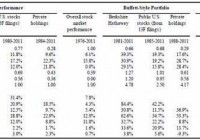
Summary This series offers an expansive look at the Low Volatility Anomaly, or why lower risk stocks have historically produced stronger risk-adjusted returns than higher risk stocks or the broader market. This article offers empirical evidence that one of the most successful investment minds of a generation has capitalized on this anomaly. By adding financial leverage to lower risk businesses, Berkshire Hathaway has generated higher risk-adjusted returns historically. Given the long-run structural alpha generated by low volatility strategies, I wanted to dedicate a more detailed discussion of the efficacy of this style of investing for Seeking Alpha readers. In recent articles, I have provided readers a detailed theoretical underpinning of the strategy. In this article and subsequent pieces, I am going to provide empirical evidence across markets that depicts the success of a low volatility bent. Empirical Evidence of the Low Volatility Anomaly Since the evolution of the Capital Asset Pricing Model (CAPM) in the early 1960s, it has been axiomatic in modern finance that expected returns are a function of an asset’s systematic risk, or beta, when the asset is added to a well-diversified portfolio. As discussed throughout this series thus far, the simplifying assumptions underlying CAPM provide frictions between model and market. These conventions underlying CAPM include that markets are wholly efficient, investors can lend and borrow unlimited amounts at the risk-free rate, trade fee of transaction costs and tax implications, and that the variance of returns is an adequate measure of risk in a world where asset returns are not normally distributed. Despite these shortcomings, the general CAPM framework has largely become broadly embedded in capital budgeting and, in part, market expectations. The presentation of empirical evidence on the Low Volatility Anomaly is greatly strengthened when you can demonstrate its role in the success of one of the greatest investors of our time. In 2013, Andrea Frazzini, David Kabiller, and Lasse Pedersen, each affiliated with hedge fund AQR Capital Management, published ” Buffett’s Alpha “, which deconstructed the return profile of Berkshire Hathaway (NYSE: BRK.A ) (NYSE: BRK.B ). From their analysis, the authors found: “the general tendency of high-quality, safe, and cheap stocks to outperform can explain much of Buffett’s performance and controlling for these factors makes Buffett’s alpha statistically insignificant.” That is a powerful statement. In a set-up to their attention-grabbing assertion, the authors demonstrated that of all stocks that traded for more than 30 years between 1926 and 2011, Berkshire Hathaway had the highest Sharpe Ratio. Buffett also magnified these risk-adjusted excess returns through the deployment of leverage estimated by the authors to be at a level of 1.6 to 1 on average. The leverage came both in the form of borrowings, which benefited from Berkshire Hathaway’s very high quality credit rating, and through float from his insurance subsidiaries. To demonstrate that Buffet’s tremendous performance was a function of this tendency to buy low risk stocks and employ conservative levels of investment leverage, the authors created tracking portfolios to mimic Buffett’s market exposure and active stock-selection themes, leveraged to the same active risk as Berkshire Hathaway. (click to enlarge) The Buffett-tracking portfolio performs comparably to the best-in-class performance of Berkshire Hathaway, demonstrating that Buffett is less a sage stock picker than a principled practitioner who has long understood the Low Volatility Anomaly and who had an investment vehicle that allowed him to avoid costly liquidations in times of stress. Note that Buffett’s average beta of his public stock holdings was just 0.77. In addition to the impressive long-run alpha demonstrated by Buffett’s leveraging of low volatility assets, another glaring failure of CAPM can be seen in the returns of the S&P 500 Low Volatility Index and the S&P 500 High Beta Index. These two indices form portfolios of the one hundred highest and lowest volatility stocks in the S&P 500 Index based on the standard deviation of price changes of the trailing 252 trading days. The indices are then rebalanced quarterly. The performance of these strategies was backtested to 1990, and demonstrates that returns would have been directionally opposite of what would be predicted by CAPM with low volatility stocks (replicated by the PowerShares S&P 500 Low Volatility Portfolio ETF (NYSEARCA: SPLV )) strongly outperforming high beta stocks (replicated by the PowerShares S&P 500 High Beta Portfolio ETF (NYSEARCA: SPHB )). (click to enlarge) Source: Standard and Poor’s; Bloomberg Joining these two examples, Buffett’s recent notable purchases have conformed to the idea of levering low volatility equities. When Berkshire Hathaway and 3G Capital combined to purchase H.J. Heinz in February 2013 , Heinz was the fifteenth largest constituent in the S&P 500 Low Volatility Index, putting the company in the 97th percentile of the S&P 500 in terms of trailing realized volatility. Buffett’s initial investment included an $8B preferred stake with a high fixed coupon, further dampening the volatility of the cash flow returns his enterprise received as part of the deal. The Berkshire/3G Capital combination would further expand their bet on the low beta packaged food sector in March 2015 with the purchase of a controlling stake in Kraft Foods Group (NASDAQ: KHC ). When Berkshire Hathaway’s Mid-American Energy unit purchased NV Energy in June of 2013 , the stock had a trailing twelve month beta of 0.73 and electric utilities were the largest individual sector weighting of the S&P 500 Low Volatility Index. When Berkshire’s utility unit had made an early purchase of Pacificorp in 2006, it was reported in Electric Utility Week that Buffett told Oregon regulators that owning utilities was “not a way to get rich – it’s a way to stay rich.” This quote came in the two years following Texas Pacific’s failed bid for Oregon’s Portland General Electric (NYSE: POR ) and KKR’s nixed acquisition of Arizona’s Unisource ( OTCPK:USRC ). Regulators at the time were concerned that these private equity firms would purchase the utility holding companies with excessive financing, the cost of which could be explicitly borne by customers in the form of higher rates and implicitly through backlogged maintenance, as capital expenditures were crowded out by debt service payments. With the notable exception of the disastrous TXU leveraged buyout in 2007, the industry has largely eschewed large scale leveraging transactions in favor of incremental releveraging through conservatively financed share repurchase plans and above market dividend rates. With regulated returns on equity, utilities generate stable and predictable cash flows for strong operators, making Buffett’s desire to lever the cash flow streams of these companies highly consistent with his long established track record of buying stable businesses. Warren Buffett’s tremendous long-run performance is in large part attributable to his early understanding of the relative outperformance of lower risk and stable businesses. In my next article in this series, I will demonstrate a way to capitalize on the Low Volatility Anomaly in the fixed income market. Disclaimer My articles may contain statements and projections that are forward-looking in nature, and therefore inherently subject to numerous risks, uncertainties and assumptions. While my articles focus on generating long-term risk-adjusted returns, investment decisions necessarily involve the risk of loss of principal. Individual investor circumstances vary significantly, and information gleaned from my articles should be applied to your own unique investment situation, objectives, risk tolerance, and investment horizon. Disclosure: I am/we are long SPLV. (More…) I wrote this article myself, and it expresses my own opinions. I am not receiving compensation for it (other than from Seeking Alpha). I have no business relationship with any company whose stock is mentioned in this article.

My Rules For Portfolio Strategy

Summary The list of rules below comes from my personal investing experience. By preparing a set of rules in advance investors can be ready to make better decisions. A major change in my personal views is the inclusion of a rule to not be scared of sitting on cash. When a high quality ETF drops in price I view the drop as a sale, but when a company is trading down on good cause, I’m less attracted to it. Lately I’ve been finding more and more messages coming to my inbox. It’s great to hear what my readers are thinking, however I’ve noticed a trend in reader messages. Since I frequently cover the mREIT sector, readers want to know about how attractive the sector is as a whole and how I’m modifying my holdings and my portfolio strategy. This is a great area for research and it is an area that has been on my mind quite a bit lately. Therefore, I’ve come to a few rules for portfolio strategy that I believe will help me avoid mistakes and that I think readers will want to consider in designing their own portfolio strategy. Rule #1 Contemplate your portfolio goals before deciding how your money should be allocated. Frequently we here that all investors really care about is “total return”. I’m not saying that the source of return is a huge factor, but the volatility of the returns is a meaningful factor. In seeking risk adjusted returns I think investors often forget that the returns need to be measured on the basis of the risk involved in achieving them. Rule #2 All volatility is not created equal. I expect to see some volatility in my portfolio but the cause of the volatility matters. When my holdings fluctuate with the values on the major indexes it does not bother me as much as when individual holdings are moving dramatically. When Freeport-McMoRan (NYSE: FCX ) plummets on weak demand for commodities and commodity futures take a nose div, it bothers me more than when shares of the Schwab U.S. REIT ETF (NYSEARCA: SCHH ) drop on interest rate movements. This is a purely human response. I have a very strong level of faith in the future of equity REIT indexes, but I don’t have that same level of faith in commodity pricing. If someone asked me about the difference in these scenarios even a year ago, I might have had a different answer. I might have said that the volatility at the portfolio level was what mattered. Under “Modern Portfolio Theory” it would be precisely correct to focus only on the volatility at the portfolio level. However, the simple facts remain. When SCHH drops significantly, I see the low price precisely the same way I would view a discounted price at the grocery store. It looks like a sale and I toss more of it into my basket (portfolio). Rule #3 Focus on what you know. I discovered that the mREIT sector was a great fit for me because I enjoy math and prefer the harder sciences to the softer sciences. The construction of mREIT portfolios as leveraged option-embedded bond funds fits in precisely with how I like to do research. For many investors the mREIT sector is simply too dangerous for involvement and those investors should follow their allocation rules rather than go chasing yield. Rule #4 Index what you don’t know. There are thousands of investable equity securities in the U.S. market. It would be impossible for a single investor to know enough to be competent on every single security. Being truly competent (rather than merely arrogant) on a sector requires an intense time commitment. Only investing in that sector though would create a great deal of risk for the portfolio. Therefore, I believe the core of the portfolio should be held in funds that track a diversified portion of the equity market. For instance, I’m long the Vanguard Total Stock Market ETF (NYSEARCA: VTI ) as a major holding in my portfolio. I want to complement my indexing strategies with buying the most attractive options. This rule should not be construed as saying that if you don’t know “Chinese Solar Stocks” you should buy an index to represent them. If you don’t know that part of the market and it is not highly relevant to your investing strategy, then it should be avoided entirely. The goal with this rule is simply to fill in the desired allocations with low fee index funds to reduce the volatility. Rule #5 Don’t be scared of cash. I’ve been guilty of allocating my cash to equity rapidly on the basis that cash earns very poor returns when interest rates are very low. This becomes a situational issue. If we are talking about an employer sponsored 401k plan, it makes sense to pick the appropriate allocations (which would usually be low on cash) and to just “set it and forget it”. Since these accounts are using dollar cost averaging this can be a great strategy so long as the 401k plan has at least a couple excellent options. For instance, I’m using the Fidelity Spartan Total Market Index Fund (MUTF: FSTVX ) and the Fidelity Spartan Real Estate Index Fund (MUTF: FSRVX ) in an employer sponsored account. They have an enormous overlap with some of my other holdings, but when it comes to a passive account using dollar cost averaging I simply want a diversified U.S. market fund and a diversified U.S. REIT index fund. In both cases I care a great deal about expense ratios which were huge factors in picking the funds I did for that account. When I’m adding to my other holdings which are going to be more actively managed, I’ve revised my strategy to be more willing to hold cash. I’ll hold onto the cash until I find very attractive opportunities. One example of this scenario is being willing to pass on attractive opportunities when there may be even better opportunities right around the corner. Missing out on a good investment is an acceptable tradeoff for me if the discipline also keeps me from making bad investments. Rule #6 Define attractive opportunities. This builds upon the rule of not being scared to hold cash. If the goal in holding cash is to have some dry powder to load up on the investments that appear to be on sale, then you should know in advance what you consider to be a sale. For instance, I consider shares of SCHH at about $36.00 to be on sale. If shares of SCHH drop under $36.00 then I will happily spend my cash on buying more. I am perfectly willing to be overweight on the equity REIT sector despite the interest rate sensitivity because I have such a strong belief in the underlying fundamentals. I am also willing to buy up mREITs when I see them trading at what I consider to be a material discount to the market leaders. I generally view Annaly Capital Management (NYSE: NLY ) and American Capital Agency Corp. (NASDAQ: AGNC ) as the big players in the sector and I view other mREITs in relation to those companies. Due to the sheer size of NLY and AGNC, I believe the market will usually be more efficient in pricing them than in pricing the smaller players. Since I view mREITs on the basis of relative attractiveness, NLY and AGNC will usually be rated near hold in my view. The smaller mREITs can range from “strong buy” down to “short” based on their prices relative to the big players and their sustainable level of dividends. I may occasionally see AGNC or NLY as a very attractive company to go long or short as part of a pair trade. In those cases I’m seeing an attractive opportunity based off the other mREIT in the trade being too expensive or too cheap and I see the offsetting position in AGNC or NLY as an effective hedge to make the position market neutral so the investor is strictly seeking the alpha from correcting the pricing differences between the two mREITs. Conclusion The times when I’ve got burned the worst on a trade are precisely the times that I violated these fundamental rules. Each investor should know their own boundaries before selecting securities and they should remember that the rules they make are there to protect them. Those are the rules I attempt to follow in handling my investments. What rules do you follow in yours? Disclosure: I am/we are long VTI, SCHH, FSRVX, FSTVX, FCX. (More…) I wrote this article myself, and it expresses my own opinions. I am not receiving compensation for it (other than from Seeking Alpha). I have no business relationship with any company whose stock is mentioned in this article. Additional disclosure: Information in this article represents the opinion of the analyst. All statements are represented as opinions, rather than facts, and should not be construed as advice to buy or sell a security. Ratings of “outperform” and “underperform” reflect the analyst’s estimation of a divergence between the market value for a security and the price that would be appropriate given the potential for risks and returns relative to other securities. The analyst does not know your particular objectives for returns or constraints upon investing. All investors are encouraged to do their own research before making any investment decision. Information is regularly obtained from Yahoo Finance, Google Finance, and SEC Database. If Yahoo, Google, or the SEC database contained faulty or old information it could be incorporated into my analysis.