Tag Archives: etf-hub

Risk Factors Drive Lazard’s Systematic Approach To Core Investing
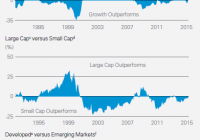
By DailyAlts Staff Core investments are those that anchor the portfolio. Typically, investors pursue exposure to broad-market benchmarks, such as S&P 500 or MSCI indexes for stocks, and the Barclays Aggregate Index for bonds, as part of their core holdings, with the intent of minimizing the unexpected. But rather than passively investing in index funds, Lazard (NYSE: LAZ ) thinks investors should take a systematic approach to implementing core investing strategies, and that is the subject of the firm’s latest Investment Focus white paper: Core Advantage: The Case for a Systematic Approach to Core Investing . The Non-Systematic Approach Managers pursuing non-systematic approaches to providing core exposure suffer from several pitfalls, first among which is the tendency for them to introduce unwanted risks to a portfolio in pursuit of benchmark-beating returns. This can happen from overweighting stocks according to style, market cap, or geographic region. While it might prove rewarding under certain market environments, it can result in outsized losses when trends unexpectedly reverse, and this is not what most investors are looking for from their core holdings. The image below shows how market favor has vacillated over time, shifting between growth and value stocks; large caps and small; and developed and emerging markets: The Systematic Approach The authors of Lazard’s paper believe the systematic approach is the best for core investing, because it allows managers to maintain stricter parameters relative to their benchmark, by ensuring against concentration according to market cap, sector, or country. Additionally, using a rules-based, data-driven, and systematic approach allows managers to analyze hundreds, even thousands of stocks within a given universe, in real-time using a bottom-up process; and to combine “robust risk management” with stock selection. How does it work? Well, according to Lazard, various risk factors have been rewarded by markets over time, including valuation, sentiment, and quality, as depicted in the image below: Valuation compares a company’s price to its peers and its own historical record, and favors companies that are inexpensive and offer long-term value. It’s a contrarian approach, and investors need to be prepared to endure short-term, unrealized losses. Sentiment is gauged by looking at the stock’s price strength, relative to the other stocks in its sector and broader benchmark, as well as analyst upgrades. In Lazard’s approach, liquidity is also taken into account by looking at volume-weighted momentum, and companies with strengthening momentum are favored while those with weakening momentum are disfavored. Quality is assessed by stability of returns and low earnings-volatility. According to Lazard, quality stocks are often those in the process of “migrating” from the realm of growth stocks to that of value. Systematic Evolution Systematic investing avoids concentrating investments in any one area and seeks to maintain a composition similar to that of its benchmark. This requires what Lazard calls an “evolving approach,” wherein investment professionals are constantly researching and testing potential improvements to the investment process. Lazard’s own approach, as implemented by the Lazard Equity Advantage team, is “uniquely positioned to help clients achieve their investment goals,” according to Lazard. “This has proved to be a solid foundation on which to build equity asset class exposure – especially through core approaches – and long-term investment program success.” For more information, download a pdf copy of the white paper .

Duke Energy Should Be On An Income Investor’s List

The company is streamlining its operations and focus on growth should propel its stock price. Increased revenues and cash flows from growth projects should result in increased dividend growth. Current price represents a good entry point for long term investors. Duke Energy (NYSE: DUK ) has had mixed fortunes over the past five quarters. The revenues and earnings of the company have been fluctuating, which is odd for a large utility like Duke. The trend in the stock price has been consistent with the trend in its revenues and earnings over the last twelve months. It touched $90 in January but could not maintain that level and the stock has been on a declining trend over the last six months. This, I believe, has created a good entry point for income investors. Duke Energy has been repositioning its business by selling its competitive business assets. The company has strategic growth plans that involve getting an extended, renewable energy generation asset base; such plans will benefit the company in the long-run, as the company’s revenue and cash flow growth will improve which will reduce shareholder risk and maintain investors’ confidence in the longer term. The company is seeking an opportunity to invest in Green projects worth $4 billion which will further boost its growth. It has also plans for the accelerated investments in solar, biomass and natural gas. Duke also plans to convert its coal field plants to natural gas ones in order to have larger asset base. However, this is a long-term investment, approximately 4 to 5 years horizon should be kept in mind. It will be a joint venture to service more territories with expanded gas generation. As a result, this huge investment will boost growth that in return will increase revenues and maintain stable cash flow base. This will have a significant positive affect on the DUK’s share price. On the other hand, the recent sale of non-regulated Midwest assets and the subsequent buy back of shares will increase the company’s earnings per share. It will also allow DUK to repay debt and make its financial position stronger. Duke Energy also has plans to access some cash, in the form of unremitted international business earnings, in the next 8 years that will have a positive effect on its performance. This will allow the company to grow its profitable operations and expand its natural gas pipelines in North Carolina, as discussed above, to cater for more demand. Furthermore, the cash from international business segments will finance future growth and create value for its shareholders in the longer term. Duke energy is a good investment for income investors – it yields a return of 4.1%, with dividends paid quarterly. All of the above repositioning strategies will accelerate dividend growth for the shareholders. It will also improve the overall business risk of DUK and make investors more confident as it will also lower the shareholders’ risk. However, the company will remain exposed to the risk of sudden changes in regulatory restrictions. In addition, any carelessness exhibited by company’s management during the execution of its planned investment might hinder its future growth potentials. Furthermore, unforeseen negative economic changes, foreign currency volatility and adverse weather conditions are key risks that might restrict its stock price performance in the years ahead. Duke’s long term prospects look good. However, with the demand growth in the US expected to slow in the coming years, Duke Energy might face some difficulties on the revenues front in the domestic market. As a backup plan, it can still generate growth with its international energy business by focusing on overseas operations. Duke has effectively modified its portfolio with wind and solar power projects lined up for the future. Most importantly, this company also remains committed towards enhancing operational efficiency and cutting down costs to further fuel earnings growth. In conclusion, Duke Energy had a successful 2014, is off to another strong one this year, and if all goes according to the plan, it will pass along another dividend increase to shareholders very soon. The company’s share price is currently following a declining trend, but with revenues and earnings expected to rise due to the growth projects, there is a lot of upside to the share price. For income investors looking for a stable, secure, high-yield investment opportunity, Duke Energy should certainly be considered. Disclosure: I am not a registered investment advisor and the views expressed in this article are my own. These views should not be taken as an investment advice or recommendation to buy or sell the shares. Investors should conduct their own due diligence before making an investment decision. Disclosure: I/we have no positions in any stocks mentioned, and no plans to initiate any positions within the next 72 hours. (More…) I wrote this article myself, and it expresses my own opinions. I am not receiving compensation for it (other than from Seeking Alpha). I have no business relationship with any company whose stock is mentioned in this article.

The Joy Of Portfolio Boredom

The word boring is worth exploring further as it is a very important building block of long-term investment success. Getting rich slowly or maybe the more modest goal of getting financially comfortable slowly means some pretty plain vanilla portfolio construction. The more exciting a portfolio is on the way up, the more “exciting’ it will be on the way down. Last week I stumbled across an article that favorably critiqued an alternative-strategy ETF for being boring which is its objective. “Boring” is not the stated objective in the prospectus but terms like market neutral, absolute return, low correlation to equities and some others really are about boredom. You can judge for yourself whether a given fund that is supposed to be boring is indeed boring, as not every fund will deliver on its stated objective. The word boring is worth exploring further as it is a very important building block of long-term investment success. Ten years ago I wrote a post called Getting Rich Slowly and while I have no idea whether the phrase was a Random Roger original, I think it captures the path that most people want to take in terms of realistic participation in capital markets. Getting rich slowly, or maybe the more modest goal of getting financially comfortable slowly, means some pretty plain vanilla portfolio construction. How you get to plain vanilla probably depends on the level of engagement you want to have in markets but from the top down it should start with blending together things like equities, fixed income and a small slice to alternatives (what for years I’ve been referring to as diversifiers) with relatively simple products and/or individual issues in such a way where all three sleeves avoid trading in lockstep, but over a long period of time gives a chance for having enough money when you need it, which presumably is at retirement. As we have discussed many times before, one of the biggest impediments to long-term financial success is succumbing to emotion at the worst possible times, which can mean panic selling your portfolio at a low or repeatedly panic buying hot stocks at their highs after a pundit just extrapolated past returns on stock market television. I had the opportunity to moderate a panel that included Dr. Richard Thaler about behavioral economics/finance, and one thing he talked about as a very common bias is loss aversion, which basically means that pound for pound people feel losses far more than they feel gains. Take that out a little further and it explains why people often react to large declines like they’ve never happened before; the tendency to think this one is different. The more exciting a portfolio is on the way up, the more “exciting’ it will be on the way down. Investors of course don’t mind excitement when it is resulting in gains, but the longer it goes on, the more complacent they become in terms of forgetting the last decline or using hindsight bias to explain away the last decline. Investors don’t want boring until the market peaks out, which of course is plenty guessable but not knowable. If there is no way to know when the market will peak and losses trigger twice the emotion that gains do, then right there is the argument for boring all of the time. Again, the context for boring is not no equities but if you can buy into the idea that an adequate savings rate, proper asset allocation and not panicking are the most important determinants to long-term portfolio success then the focus shifts more in line with the true long-term objective. You are very unlikely to remember what your portfolio did in the 3rd quarter of 2013 or what the market did that quarter, without looking, because it doesn’t matter in the context of your long-term financial plan. An exception would be if that was the quarter you retired. The only other way some random calendar quarter from your past is likely to matter is if you made some sort of catastrophic mistake like selling out in the first quarter of 2009. The conclusion for me is a diversified portfolio of equities that at the very least offers decent upside participation, fixed income exposure that offers some ballast to normal equity volatility and a little exposure to diversifiers, as I said above, that hopefully allows for managing volatility and correlation such that the potential for panic is at least partially mitigated. Disclosure: I/we have no positions in any stocks mentioned, and no plans to initiate any positions within the next 72 hours. (More…) I wrote this article myself, and it expresses my own opinions. I am not receiving compensation for it. I have no business relationship with any company whose stock is mentioned in this article. Additional disclosure: To the extent that this content includes references to securities, those references do not constitute an offer or solicitation to buy, sell or hold such security. AdvisorShares is a sponsor of actively managed exchange-traded funds (ETFs) and holds positions in all of its ETFs. This document should not be considered investment advice and the information contain within should not be relied upon in assessing whether or not to invest in any products mentioned. Investment in securities carries a high degree of risk which may result in investors losing all of their invested capital. Please keep in mind that a company’s past financial performance, including the performance of its share price, does not guarantee future results. To learn more about the risks with actively managed ETFs visit our website AdvisorShares.com .