Tag Archives: etf-hub

Capitalize On Rising Interest Rates With KRE

ETF investing, portfolio strategy, special situations “}); $$(‘#article_top_info .info_content div’)[0].insert({bottom: $(‘mover’)}); } $(‘article_top_info’).addClassName(test_version); } SeekingAlpha.Initializer.onDOMLoad(function(){ setEvents();}); Summary Interest Rates Are Going to Rise. Regional Banks Perform Well When Interest Rates Rise. Invest In KRE To Avoid Overexposure To Individual Stocks. Introduction I have harped on and on and on about the inevitability of rising interest rates, so I’ve determined that this will be my last article forewarning investors to prepare their portfolios for the day, or drawn out period (Remember ” Be Patient “) that interest rates rise. Capital appreciation is a daunting task when industry experts believe a sudden rise in interest rates could lead to a market correction of 20 percent . I find it prudent for investors to find an equity that will inherently perform better under projected future market conditions. Like credit default swaps in 2008 or corporate lawyers after the BP oil spill, I believe the SPDR S&P Regional Banking ETF (NYSEARCA: KRE ) will perform exceptionally when rates finally go up. Why Regional Banks? Regional banks tend to be less widespread and more reliant on net interest margins than their larger corporate adversaries. The theory is that regional banks focus more on lending and less on areas like capital markets and treasury services. A diversified large cap bank such as Bank of America (NYSE: BAC ) will have around 48 percent of its income broken into net interest income. While 48% is clearly significant, many regional banks have an average net interest income around 55%. Other regional banks have net interest incomes as high as 60-65%. Five such stocks are Comerica (NYSE: CMA ), SunTrust Banks (NYSE: STI ), MB Financial (NASDAQ: MBFI ), M&T Bank Corporation (NYSE: MTB ), and Huntington Bancshares (NASDAQ: HBAN ). A more comprehensive list of regional banks for the inquisitive investor include can be found on the bull sector . Due to a prolonged low interest rate environment, many banks are relying on fees and low margins from loans to maintain profitability. Gradually rising rates will benefit regional banks. Why KRE? Choosing a good ETF is a remarkably efficient way to spread risk across an industry. By reducing exposure, one can avoid the pitfalls associated with the poor performance of an individual equity. For any ETF, the three metrics that I place the most value on are: diversification, dividends, and its expense ratio. KRE is well diversified with 94 holdings (none weighted over 1.3%). KRE has an annualized dividend yield of 1.54%, and finally KRE has a very low expense ratio at .35% compared to an industry average .5%. It should also be noted that KRE has returned 9.30% YTD and it is by far the most actively traded ETF with an average volume of 4,051,374. The second most traded regional banking ETF is the iShares U.S. Regional Banks ETF (NYSEARCA: IAT ) with a measly 218,517 average volume. I believe the voice of the market has spoken loudly in favor of KRE. In addition, investing in KRE over another ETF helps one avoid the risks associated with low volume (illiquidity, volatility, etc.). For aesthetic purposes, I included a three year chart that compares 10 year treasury yields to KRE’s year to year performance. I included the chart to drive home the point that interest rates and the regional banks are correlated and interconnected. Conclusion Interest rates are going to rise. Regional banks perform well when interest rates rise. Avoid the pitfalls associated with investing in individual stocks by investing in an ETF. The best regional banking ETF, in my opinion, is KRE. Disclosure: I/we have no positions in any stocks mentioned, and no plans to initiate any positions within the next 72 hours. (More…) I wrote this article myself, and it expresses my own opinions. I am not receiving compensation for it (other than from Seeking Alpha). I have no business relationship with any company whose stock is mentioned in this article. Share this article with a colleague

I Would Avoid DNP Select Income Fund At The Present Time

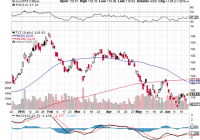
Summary DNP is a close-ended utilities fund in disguise. The interest rate spike of 2015 has hurt utilities, but DNP’s performance has remained strong. The current premium of DNP is at its highest level in the past two years. Introduction The start of 2015 has witnessed a mini “taper tantrum,” with treasury yields surging and bond funds such as the iShares 20+ Year Treasury Bond ETF (NYSEARCA: TLT ) falling over 10% from their highs. (click to enlarge) Equities considered to be interest-rate sensitive, such as REITs and utilities, have also been hit, with declines of -8.0% and -10.7% for Vanguard REIT ETF (NYSEARCA: VNQ ) and Utilities SPDR ETF (NYSEARCA: XLU ), respectively, since Feb. 1st, 2015. TLT Total Return Price data by YCharts Utilities CEFs Close-ended funds [CEFs] have a fixed amount of shares, meaning that their market prices can deviate significantly from their net asset values [NAVs]. This means that the market price of a CEF can exhibit periods of premium or discount to the NAV. Popular CEFs can display hefty premiums (e.g. PIMCO High Income Fund (NYSE: PHK )), while funds out of favor can exhibit tremendous discounts. An excellent summary of both domestic and global utilities CEFs can be found in Left Banker’s article here . The following chart shows the total return performance of four domestic utilities CEFs (defined as funds with > 85% North American exposure as viewed on Morningstar ) since Feb. 1st, 2015. ERH Total Return Price data by YCharts The three domestic utilities CEFs mentioned in Left Banker’s article have declined between -2.77% and -11.70% in price since Feb. 1st, 2015, with Gabelli Utility Trust (NYSE: GUT ) faring the best, Reaves Utility Income Fund (NYSEMKT: UTG ) in the middle, and Wells Fargo Advantage Utilities and High Income Fund (NYSEMKT: ERH ) performing the worst. Note that I have also included DNP Select Income Fund (NYSE: DNP ) in the chart. DNP has performed much better than the other three funds, with a total return performance of +2.98%. DNP Select Income Fund The DNP Select Income Fund, ticker symbol DNP, is a utilities CEF in disguise. DNP does not show up in a search for utilities CEFs on CEFConnect , instead, it is listed in the category of “US Equity-Growth & Income.” Moroever, there is nothing in the name of the fund to suggest that it is in fact a utilities fund. However, the mandate of DNP is clearly stated on the fund website : The Fund seeks to achieve its investment objectives by investing primarily in a diversified portfolio of equity and fixed income securities of companies in the public utilities industry. The Fund’s investment strategies have been developed to take advantage of the income and growth characteristics, and historical performances of securities of companies in the public utilities industry. Under normal conditions, more than 65% of the Fund’s total assets will be invested in securities of public utility companies engaged in the production, transmission or distribution of electric energy, gas or telephone services. The following chart shows the sector breakdown of DNP. As can be seen from the chart, the majority of the fund (72%) is invested in electric, gas and water utilities. Communications, and oil & gas storage, transportation and production both make up 13% of the fund each. 1% is in REITs and 1% is allocated to “other.” Therefore, it is my opinion that DNP is, for all intents and purposes, a utilities fund. It is currently unknown why DNP does not show up as a utilities fund on CEFConnect. It does own 15% in bonds, but so does ERH, which allocates nearly half of its holdings to bonds, preferred shares, and short-term debt. Finally, although the fund’s mandate allows it to invest up to 20% in foreign securities, its current international exposure is less than 2%. Increasing premium Was it the due to the lack of a “utilities” label that allowed DNP to escape the recent decline of utilities funds? That I cannot tell. However, what I can tell you is that since the start of the interest rate spike in February 2015, the NAV of DNP has been in decline while the market price has actually increased, as shown in the chart below. All of the following charts are from CEFConnect , unless stated otherwise. The consequence of this is the premium of DNP has soared to its present value of around 15%, its highest in a year. (click to enlarge) To be fair, DNP has reached even higher levels of premium in the past, with values of 40% being observed as recently as 2012. Still, the recent surge has produced a premium that is the highest over the past two years. (click to enlarge) The situation being observed for DNP, where the NAV declines but the market price remains steady, is reminiscent of what occurred for the Pioneer High Income Trust (NYSE: PHT ). I warned about PHT’s premium in a Jan. 23, 2015 article entitled ” I Would Avoid Pioneer High Income Trust At The Present Time “. While I did suggest the possibility of a distribution cut, I had no idea that it would happen so soon after my article. Unfortunately for PHT holders, the dividend cut caused a massive collapse in the share of PHT, even though the act of cutting the dividend theoretically has no impact on the value of the fund. This illustrates how incredibly sensitive premia and discount values can be to investors’ perception of the fund. (click to enlarge) The following table shows the Z-scores for DNP compared to the three other domestic utilities CEFs. The Z-score is a measure of the difference between the currently premium/discount relative to the historical premium/discount, normalized for standard deviation. We can see that DNP shows the largest Z-scores out of the four domestic utilities CEFs out of all five time periods. The 1-year Z-score of 2.55 indicates that statistically speaking, this deviation would be expected to occur less than 1% of the time. Z-Score (z D ) 3M 6M 1Y 2Y 4Y DNP 1.47 1.77 2.55 2.21 0.03 ERH -1.99 -2.25 -2.12 -2.17 -2.12 GUT -0.68 0.23 0.77 1.29 -0.15 UTG 0.53 -0.00 0.49 0.80 -0.51 The Z-scores for the funds are also presented graphically. While a distribution cut for DNP is probably not on the cards, it should still be noted that paid out small amounts of return-of-capital [ROC] for 6 of its last 12 distributions as shown on CEFConnect, and it also has a negative UNII of -$0.1663. GUT has made 12 out of 12 ROC distributions and also has a negative UNII of $-0.0019. ERH has no ROC distributions over the past 12 months and has a negative UNII of -$0.0727, while UTG also has no ROC distributions but has a positive UNII of $0.0079. Relevant data about the four funds are shown in the table below. Data are from CEFConnect . Fund Current premium/discount Yield Leverage Expense ratio DNP 14.3% 7.38% 26% 1.60% ERH -9.9% 7.75% 15% 1.08% GUT 25.0% 8.70% 17% 1.54% UTG 4.4% 6.14% 23% 1.71% Conclusion Like PHT, DNP is not a bad fund. It has a very long performance track record and has paid remarkably consistent distributions since inception in 1995. However, the market value of DNP has recently become disconnected from the fundamentals of the CEF, with share price increasing even though the NAV has declined by nearly 15% since the onset of the interest rate spike. Notably, DNP currently exhibits significantly larger Z-scores than the three other domestic utilities CEFs, indicating that it has become more expensive both relative to itself as well as relative to its peers. If I was a current holder of DNP, I would either hold or reduce my holdings, and I would certainly not add. More adventurous individuals may consider a pairs trading strategy by shorting DNP and going long XLU or another utilities fund (see my previous articles on examples of CEF pair trades that have returned over 20% annualized). Those with a bearish outlook on utilities might consider shorting DNP outright. The major risks of these strategies are that premium of DNP might continue to increase. Furthermore, those shorting DNP will have to pay both borrow costs and the cost of the covering the distribution. Disclosure: I am/we are short DNP. (More…) I wrote this article myself, and it expresses my own opinions. I am not receiving compensation for it (other than from Seeking Alpha). I have no business relationship with any company whose stock is mentioned in this article.

25 Things I Wish I Learned Before I Opened My First Brokerage Account

Portfolio strategy, ETF investing, foreign companies “}); $$(‘#article_top_info .info_content div’)[0].insert({bottom: $(‘mover’)}); } $(‘article_top_info’).addClassName(test_version); } SeekingAlpha.Initializer.onDOMLoad(function(){ setEvents();}); Brett Arends had a great post about what he wished he’d learned before graduating high school. With a nod to Arends; things people should know about finance and investing before they start and should be reminded of every so often as they go along. When someone wants to give you free money, like your employer in your 401k, take it. Brett Arends had a great post about what he wished he’d learned before graduating high school . It was a great mix of financial nuggets, points about not wasting time or money and some other generally sound ideas. With a nod to Arends; here is my list of things people should know about finance and investing before they start and should be reminded of every so often as they go along. Don’t rack up credit card debt but if you do, make a priority of getting out quickly and then staying out. Have an emergency fund that will tide you over X number of months but don’t put it into something that can go down a lot (or at all) in value. X should equal your comfort level. When someone wants to give you free money, take it… like your employer in your 401k. Put in enough to at least max out the match. If a 10% contribution from you is matched by your employer with an additional 3% that is like getting a 30% return. Fund your Roth IRA every year in addition to a 401k or similar workplace plan. Start saving when you are young, the older you will be grateful. The more you save the more options you will have later, you have no idea what the future you might want to do so give him some flexibility. Make an extra mortgage payment every year, the future you will be grateful. Live below your means. Have respect for whatever you did to accumulate however much you have saved. Your savings is one of hopefully several byproducts of your career, don’t disrespect that effort by speculating carelessly. A great advisor will absolutely have your best interests at heart but it is not possible for that advisor to care about your money more than you. If you are going to be a do-it-yourselfer, care enough to have at least some regular engagement with markets, investment products and your portfolio. Occasionally the stock market goes down a lot and scares the hell out of a lot of people. It has happened many times before and I promise will happen again. After it goes down a lot it will then make a new high, the only variable is how long it will take. Your ability to control your emotions when others have had the hell scared out of them will be a huge determinant to your long term investing success or lack thereof. (see number 12) You don’t need to beat the market. You need an adequate savings rate, you need to avoid panic selling (see number 12) and your investments just need to be relatively close to the performance of the indexes. Proper asset allocation is crucial. Finding out you had too much in the “wrong” asset class after it just blew up is a bad place to be. Avoid investment dogma, you don’t need to take up the shield to staunchly defend an investment strategy, a diversified portfolio probably means having several different strategies. If you come to realize you are too afraid of the stock market to invest in it then you need to be prepared to save a lot more or work a lot longer. Never confuse luck with skill. It is human nature to forget what large declines feel like and then conclude “this one is different.” Have some sort of financial plan, even if it is just a spreadsheet with projections and check it regularly. Be prepared to adapt if your financial plan doesn’t end up where you expect it to. Take the time to learn how Social Security works, it is far more complicated than you realize. Take the time to learn about the 4% rule and then remember it is only a guideline. If you have retirement assets in different types of accounts then tax efficiency may dictate depleting one account and then moving on to another and that will be uncomfortable. You may think you don’t need insurance products, and maybe you don’t, but take the time to learn about them so you make an informed decision. Don’t drink soda, get a dog and then get a dog for your dog. Bonus #1 Learn as many handyman skills as you can. Bonus #2 Never underestimate the utility of duct tape. Disclosure: I/we have no positions in any stocks mentioned, and no plans to initiate any positions within the next 72 hours. (More…) I wrote this article myself, and it expresses my own opinions. I am not receiving compensation for it. I have no business relationship with any company whose stock is mentioned in this article. Additional disclosure: To the extent that this content includes references to securities, those references do not constitute an offer or solicitation to buy, sell or hold such security. AdvisorShares is a sponsor of actively managed exchange-traded funds (ETFs) and holds positions in all of its ETFs. This document should not be considered investment advice and the information contain within should not be relied upon in assessing whether or not to invest in any products mentioned. Investment in securities carries a high degree of risk which may result in investors losing all of their invested capital. Please keep in mind that a company’s past financial performance, including the performance of its share price, does not guarantee future results. To learn more about the risks with actively managed ETFs visit our website AdvisorShares.com . AdvisorShares is an SEC registered RIA, which advises to actively managed exchange traded funds (Active ETFs). The article has been written by Roger Nusbaum, AdvisorShares ETF Strategist. We are not receiving compensation for this article, and have no business relationship with any company whose stock is mentioned in this article. Share this article with a colleague