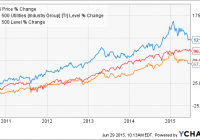
Summary Natural gas and electric utility CMS Energy’s share price has underperformed YTD after several years of outperforming both the utilities sector average and the S&P 500. The company possesses multiple long-term earnings drivers such as a favorable regulatory structure, a rebounding service area economy, and the presence of low energy prices. In the short-term, however, the company is faced with the combination of a heavy debt load and the prospect of rising interest rates. While I believe the company’s long-term drivers outweigh short-term hurdles for investors with lengthy investment horizons, its shares will likely be available for still less in the coming year. The share price of utility holding company CMS Energy (NYSE: CMS ) has been one of the top performers in the utility sector since the beginning of FY 2010, solidly beating both the sector as well as the S&P 500 (see figure). Value investors haven’t been provided with many opportunities in recent years to invest in the firm, however, due to the relative lack of undervaluation resulting from price downturns. The company’s share price has taken its largest tumble since the 2008 financial crisis in recent months, potentially making the company an attractive option for value investors. This article evaluates CMS Energy as a potential value investment in light of its recent earnings performance and current outlook. CMS data by YCharts CMS Energy at a glance CMS Energy is a Michigan-based public utility that provides electricity, nuclear power, uranium, and natural gas to customers throughout the state, including the Detroit metro. Its primary business segment is Consumers Energy, which as a regulated utility provides natural gas and electricity to more than 6 million customers, with coverage including the Upper Peninsula, via 6,000 MW of electricity generation capacity and 2,600 MW of power purchase agreements. The majority of its electric customers are residential, with the combination of residential and commercial customers contributing 84% of its electric gross margin in FY 2014. The utility generates electricity from a variety of fossil and renewable sources. In FY 2014 its portfolio consisted of 34% coal, 32% natural gas, 11% pumped storage, 9% renewables, 8% nuclear, and 6% oil. Recent state and federal regulations discourage the use of coal to generate electricity on environmental and human health grounds have caused CMS Energy to move away from the fuel, and by 2017 it expects Consumers Energy’s portfolio to be comprised of 37% gas, 24% coal, 12% pumped storage, 10% renewables, 8% nuclear, 6% oil, and 3% purchased. CMS Energy also conducts business via CMS Enterprises, which engages in independent power production and natural gas transmission. Consumers Energy generates the overwhelming majority of its parent company’s earnings, or 97% in Q1 2015. CMS Energy suspended its dividend during the financial crisis but reinstated it during the subsequent recovery and has become a reliable dividend generator in recent years, increasing its quarterly amount from $0.15 in FY 2010 to $0.29 today. The most recent increase from $0.27 of 7% was declared at the beginning of this year, bringing its forward yield at the time of writing to 3.6%. The company expects to maintain annual dividend growth of 5% over the next several years which, given its past record, is a feasible goal barring another major economic meltdown in Michigan. Q1 earnings report CMS Energy reported its Q1 earnings report in late April, missing on the top line and beating on the bottom. Revenue came in at $2.1 billion, down 16.3% from $2.5 billion (see table) and missing the consensus analyst estimate by $250 million. The decline was mostly due to the presence of much lower natural gas prices in Q1 2015 than in Q1 2014, which drove the average price charged to customers down by 60% compared to Q1 2005. Operating income fell by only 2.7% YoY to $397 million, however, due to a 19% operating expense decline YoY (again the result of low natural gas prices) almost entirely offsetting the revenue reduction. Q1 net income remained virtually unchanged, declining very slightly from $204 million to $202 million. This resulted in a diluted EPS number of $0.73, down slightly from $0.75 YoY but beating the consensus by $0.05. While the adoption of new mortality tables and a lower discount rate resulted in a hit to EPS of $0.08, the impact of these adjustments was more than offset by a $0.14 gain resulting from a very cold winter, with record natural gas and electricity sales recorded in February, and $0.04 from cost-cutting efforts. The YoY reductions to net income and EPS were largely the result of even colder weather being present in Q1 2014 and its most recent earnings were actually up 7% on a weather-normalized basis; overall Q1 2015 was the company’s 2nd-best result in at least a decade. CMS Energy Financials (non-adjusted) Q1 2015 Q4 2014 Q3 2014 Q2 2014 Q1 2014 Revenue ($MM) 2,111.0 1,758.0 1,430.0 1,468.0 2,523.0 Gross income ($MM) 983.0 852.0 775.0 746.0 948.0 Net income ($MM) 202.0 96.0 94.0 83.0 204.0 Diluted EPS ($) 0.73 0.35 0.34 0.30 0.75 EBITDA ($MM) 626.0 438.0 396.0 380.0 610.0 Source: Morningstar (2015). CMS Energy’s management reaffirmed its FY 2015 EPS guidance of $1.86-$1.89 in the wake of the earnings report’s release given the strength of the quarter. The company ended Q1 with $522 million in cash (see table), less than in Q1 2014 but still substantial in light of its asset growth and dividend increase. Its current ratio remained unchanged YoY at 1.6 while its interest coverage ratio remained solid at 2.8. Its balance sheet remains a concern, however, due to the large amount of long-term debt in the liabilities column. This increased by another $600 million over the previous four quarters to $8.1 billion at the end of Q1. While the debt is rated well, with S&P giving its secured and unsecured debt ‘A’ and ‘BBB’ ratings, respectively, its sheer size alone generated interest expenses in Q1 equal to 20% of the company’s operating income. CMS Energy Balance Sheet (restated) Q1 2015 Q4 2014 Q3 2014 Q2 2014 Q1 2014 Total cash ($MM) 522.0 207.0 493.0 358.0 758.0 Total assets ($MM) 19,198.0 19,185.0 18,381.0 17,719.0 17,924.0 Current liabilities ($MM) 1,599.0 2,014.0 1,648.0 1,563.0 1,801.0 Total liabilities ($MM) 15,396.0 15,515.0 14,711.0 14,074.0 14,306.0 Source: Morningstar (2015). Outlook CMS Energy’s outlook is a mixed bag, with positive long-term drivers being offset by negative short-term hurdles. The first of the positive drivers is the economic rebound that the state of Michigan is currently undergoing following Detroit’s bankruptcy. The state’s unemployment has fallen at a faster pace than the U.S. average rate (see figure) and the two are now equal. Furthermore, Michigan’s construction industry is bouncing back and construction payrolls have grown at twice the rate over the last five years of the U.S. average, signifying new buildings and therefore new utilities customers. The combination of increased electricity demand in particular and restrictions on coal-fired facilities has created a capacity shortfall within the state that is only expected to increase with time. Recognizing that this problem can only be solved via additional capacity, the company is moving forward with regulatory approval for the acquisition of a new natural gas-fired facility, which will in turn strengthen the company’s argument for future rate increases as compensation. There is a risk, of course, that regulators will instead opt to use power purchase agreements from 3rd-party generators, on which CMS Energy recognizes no profit, to cover the shortfall. This is mitigated by the second short-term driver: Michigan’s energy policy. Michigan Unemployment Rate data by YCharts Michigan’s legislature joined many other states earlier in the century by implementing a renewable portfolio standard that, among other things, required the state’s utilities to achieve a retail supply portfolio of 10% renewable electricity by 2015. That year has arrived, however, and Michigan has not extended and increased its RPS target. Instead its legislature is in the process of implementing a new energy policy that will instead utilize Integrated Resource Plans. Under these IRPs utilities propose multi-year forecasts of supply and demand alongside the most cost-effective means of meeting the forecasts. Utilities frequently prefer IRPs to RPSs since the latter are imposed on them whereas the former are largely directed by them. Some regulatory uncertainty can be expected to occur since IRPs don’t have the multi-decade horizons of RPSs, but CMS Energy’s recent investor presentations have supported the former despite this downside. IRPs are important from the perspective of capacity shortfalls since they allow traditional utilities to meet the shortfall via the types of capacity that they are most familiar with, such as natural gas-fired facilities, rather than via less established pathways such as renewables. Michigan already operates under a favorable regulatory system, with regulators recently permitting CMS Energy a ROE of 10.3% (which was admittedly less than the company had requested) and the replacement of Michigan’s RPS with an IRP framework could make this system still more favorable. The continued presence of low natural gas and coal prices can be expected to benefit CMS Energy further still (see figure). The company has already begun to pass its cost savings for both onto its customers in the form of lower retail prices, and regulators will likely view its future rate increase requests more favorably than they otherwise would as a result. Furthermore, low natural gas prices will encourage increased consumption, supporting its transmission and distribution operations. The company already intends to add another 170,000 natural gas customers in coming years via transmission capacity investments, and increased consumption per customer due to low prices will support this further still. The company also intends to increase its owned electricity generating capacity to 8,820 MW over the coming decade as its existing power purchase agreements expire, providing its electricity operations with additional income. CMS Energy should have little difficulty achieving 5% annual EPS growth over the next several years (management hopes to achieve an annual growth rate of up to 7%) based on these investments so long as Michigan’s economy remains steady. Michigan Natural Gas Citygate Price data by YCharts The short-term hurdle that worries me the most, however, is CMS Energy’s heavy long-term debt load and relatively high interest expenses even in the current low interest rate environment. This burden has the potential to grow even heavier in the next few quarters due to the likelihood that the Federal Reserve will increase interest rates for the first time in almost a decade. Shares of dividend stocks, utilities included, have moved broadly lower this year (see figure) in anticipation of higher interest rates as investors prepare to move into government and corporate bonds. While CMS Energy’s share price has underperformed the Dow Jones Utility Average since both peaked in late January, the difference is slight enough to suggest that the second affect of higher interest rates – larger interest payments for firms such as CMS Energy with heavy debt loads – isn’t entirely being factored in yet. The company intends to incur at least 50% more capital expenditures in the coming decade than in the last ten years, suggesting that its debt load will remain large for the foreseeable future. I expect that its share price will fall further when interest rates finally rise. CMS data by YCharts Valuation Analyst estimates for CMS Energy’s diluted EPS in FY 2015 and FY 2016 have remained unchanged over the last 90 days as the company’s management reaffirmed its EPS guidance. The FY 2015 consensus estimate is $1.88 while the FY 2016 consensus estimate is $2.01. Both results would, if achieved, represent the company’s best performance since at least FY 2000, indicating that analysts currently assume the presence of very favorable operating conditions over the next six quarters. Based on the company’s share price at the time of writing of $31.59, it has a trailing P/E ratio of 18.1x. Its FY 2015 and FY 2016 consensus estimates yield forward P/E ratios of 16.8x and 15.7x, respectively. While off of their January highs, all of these ratios are still well above their lows since 2012 (see figure). The company’s shares appear to be fairly-valued, if not slightly overvalued, based on their historical valuation range. CMS PE Ratio (NYSE: TTM ) data by YCharts Conclusion CMS Energy has much to offer to those investors looking for safe, dividend-bearing investments: an impressive share price track record, several years of sustained dividend and EPS increases, and a large presence in a rebounding economy that is overseen by a favorable regulatory system. Those investors with a multi-year investment horizon could certainly do worse than to initiate a long investment in the company at its current share price. I recommend waiting, however, until the first interest rate increase occurs later this year, as I believe that this will cause the company’s share price to decline still further in light of its large debt load and planned capex in the coming years. I expect that patient investors will be able to initiate long positions at 15x the firm’s estimated FY 2016 earnings, or $30.15 based on current forecasts, which would compensate them for the risk borne by the company’s debt load. Disclosure: I/we have no positions in any stocks mentioned, and no plans to initiate any positions within the next 72 hours. (More…) I wrote this article myself, and it expresses my own opinions. I am not receiving compensation for it (other than from Seeking Alpha). I have no business relationship with any company whose stock is mentioned in this article.