Tag Archives: earnings-center

2015: How To Make Money In This Lousy Year

It is turning out to be a tough 2015 for stock market investors. The U.S. S&P 500 is trading where it was back on March 31. Fundstrat’s Thomas Lee recently noted that this has been only the second time since 1904 (!) that the S&P 500 has closed the first two quarters of the year with 0% gains. The one strategy that has made diversification look bad over the past five years – staying “dumb and long” in the U.S. stock market – has also run out of steam. There seem to be few other alternatives. After all, the Chinese market crashed, just as I predicted . And who knows how low it would really be if most of the stocks on the Shanghai exchange were actually trading. And back in the United States, even formerly red-hot bullish sectors like biotechnology and cybersecurity have petered out. So What’s Worked in this Market? I follow a lot of different investment strategies, often through various “smart beta” strategies I invest in both personally and on behalf of my clients. Among these strategies, only a few have generated satisfying returns. The First Trust IPOX Index ETF (NYSEARCA: FPX ) is up 9.34% in 2015. And that’s thanks largely to the strong performance of Facebook (NASDAQ: FB ), up 20.7% this year, in which FPX has an 11.86% weighting. The AlphaClone Alternative Alpha ETF (NYSEARCA: ALFA ) has also performed reasonably well, up 6.47%. Among asset classes, private equity is having a solid year, with PowerShares Global Listed Private Equity ETF (NYSEARCA: PSP ) up by 10.28%, boosted by its 8.56% yield. Tough Time for Hedge Funds The smart money across the globe is faring no better. As an average, hedge funds aren’t having a terrible year. But it’s nothing to write home about. The average hedge fund has been up 3.36%, according to Barclay Hedge, while the S&P 500 was up 3.25% over the same time period. But that average hides a multitude of poor performances among the biggest names in the business. Although not technically managing a hedge fund, Carl Icahn, hailed in 2013 as Wall Street’s richest investor, has seen shares in Icahn Enterprises (NASDAQ: IEP ) tumble 12.7% this year. Hedge funds in my neighborhood of Mayfair in London are having a tough time, as well. Odey Asset Management, one of the few remaining “old style” non-institutionalized hedge funds, is down 14.8% after a handful of concentrated bets in small-cap stocks have gone south. The dirty little secret of hedge funds is that most of today’s trading is done by computer. The algorithms of the rocket scientists have squeezed out every last bit of alpha, or superior risk-adjusted returns, in the market. You see that in the performance of trend-following hedge funds, also known as managed futures or commodity-trading advisors, which just suffered their worst month since July 2008 by falling 2.4%. In my view, the only way to make money in this market is “the old fashioned way”: bet big, swing for the fences and hit the lottery (to mix not just two but three metaphors). And that recalls one of my favorite quotes about old style hedge fund investors: “Some people are born smart. Some people are born lucky. Some are born smart enough to be lucky.” And in today’s market, it’s better to be lucky than smart. Buffett’s Lousy Year While the latest round of articles predicting Berkshire Hathaway’s (NYSE: BRK.A ) (NYSE: BRK.B ) imminent demise have yet to appear, Warren Buffett is having a lousy year, with Berkshire shares down 6.28% in 2015. That trails the Standard & Poor’s 500 index, which has gained a mere 1.55%. All of this has analysts scratching their heads. After all, Berkshire trades for less than 1.5x its book value. Barclays has a price target of $259,500 on the stock – 22% above current levels. And after all, Buffett has a reported $16 billion profit on the Heinz and Kraft private equity deals during the last two years. So why the lack of love for the stock? Well, Berkshire’s four largest and highest-profile publicly traded stocks aren’t doing too well. Among American Express (NYSE: AXP ), Coca-Cola (NYSE: KO ), IBM (NYSE: IBM ) and Wells Fargo (NYSE: WFC ), only Wells Fargo has beaten the S&P 500 over the past three- and five-year periods. IBM is worth less than Berkshire paid for it and has lagged behind the S&P by 60%. Coke is still below its 1998 peak. Here’s another irony. My top Buffett clone – Markel Corporation (NYSE: MKL ) – a recommendation in my Alpha Investor Letter newsletter, is hitting the ball out of the park with an investment strategy closely modeled on Buffett’s. And Markel is up a remarkable 28.33% in an otherwise ho-hum 2015, outperforming its model by close to 35% over a mere six months. So how is that for confusing? Psychology: The Small Investor’s Only Real Edge Truth be told, times like these are my favorite times to invest. With CNN’s Fear and Greed Indicator standing in single digits at a mere 7 , this is as close to an ideal time to put my own money to work as I am likely to find (though the index did hit “0” last October). In the absence of infinite gobs of computer power, and with a strong personal aversion to risking too much on any single idea, my only sustainable edge on this market is psychology. That’s why over the years, I’ve trained myself to gain distinct pleasure from investing against Mr. Market’s mood swings. And having had a chunk of cash just waiting on the sidelines, I just invested in several of the worst performing and technically oversold investment strategies in my own 401(k). Will I have caught the bottom of the market? Maybe… or maybe not. But I’m expecting the bets I placed yesterday to be profitable by the end of 2015. Disclosure: I hold FPX, ALFA, PSP, IEP, BRK.B and MKL.
Value Or Momentum? Try Both

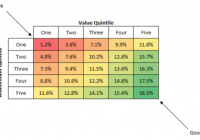
Let’s go back in time 30 years. Remember those “Taste great/less filling” Miller Lite beer commercials from the mid-1980s? You could roughly divide the world’s beer-drinking population into two rival factions: Those that insisted that Miller Lite tasted great… and those that insisted it was less filling. I believe many men lost their lives fighting over this in bars. And I suppose as far as causes go, it’s as good of a cause as any to die for. I consider Miller Lite to neither taste particularly great nor be particularly easy on my stomach. As a native Texan, my heart will always belong to Shiner Bock. But I digress. We’re not here today to discuss beer dogmatism but the far more practical world of investing. As with Miller Lite fans, you can roughly divide the investing world into two camps: Those who favor value strategies and those that favor momentum strategies. Both camps will insist that the academic research – and real world experience – prove that “their way” beats the market over time. And both camps are absolutely right. Simple value screens like Joel Greenblatt ‘s ” Magic Formula ” have beaten the market by a wide margin, and research has shown that a strategy of screening stocks based on simple momentum criteria also beats the market over time. So if value works… and momentum works… what would it look like if we combined the two? Pretty good, actually. Quant guru Patrick O’Shaughnessy wrote an excellent piece last year in which he parses the universe of stocks into value and momentum buckets. Take a look at the following table, taken from O’Shaughnessy’s article. (click to enlarge) The bottom row of the table represents the top 20% of all stocks by momentum. The returns get gradually better as you move down the value scale. In other words, momentum stocks that are cheap outperform momentum stocks that are expensive. And it’s not by a small margin. The cheapest high-momentum stocks returned 18.5% per year, whereas the most expensive high-momentum stocks returned 11.6%. And viewing it through a value lens tells the same story. The right-most column represents the cheapest stocks in the sample using a composite of value metrics. All value-stock buckets performed well. But as you move down the column, the returns get a lot better. In other words, cheap stocks that have recently shown momentum perform better than cheap stocks that don’t. This is a fancier way of repeating the old trader’s maxim to never try and catch a falling knife. Cheap stocks can always get cheaper. What should we take away from this? Value investing works. Momentum investing works. And combining value and momentum works best of all. This article first appeared on Sizemore Insights as Value or Momentum? Try Both. Disclaimer: This site is for informational purposes only and should not be considered specific investment advice or as a solicitation to buy or sell any securities. Sizemore Capital personnel and clients will often have an interest in the securities mentioned. There is risk in any investment in traded securities, and all Sizemore Capital investment strategies have the possibility of loss. Past performance is no guarantee of future results. Original Post

It Is Not Possible That Valuations Matter Only At The Margins

By Rob Bennett You will often hear people say that valuations matter only at the margins. That is, valuations matter when prices are very high and when they are very low. Outside of that, it is okay to ignore the effect of valuations. I see this as dangerous thinking. My view is that either valuations matter or they do not. If they matter, they always matter. If they don’t matter, they never do. I am not able to make sense of the idea that valuations matter in some circumstances, but not in others. The first point that needs to be made is that there is a practical sense in which the claim that valuations only matter at the margins is true. Stocks generally offer a significantly better long-term value proposition than other asset classes. So, when stocks are priced at only a bit more than their fair value price, they remain a good investing choice. In a practical sense, then, a high stock allocation makes sense until the overvaluation reaches such a point that the mispricing is extreme. The problem is that there is no one valuation level at which stocks are transformed from a good choice to a bad one. Stocks are a little less appealing when the P/E10 level is 18 than they are when the P/E10 level is 15. And they are, of course, even less appealing when the P/E10 level is 21. And then even less appealing when the P/E10 level is 24. And even less appealing when the P/E10 level is 27. What is the investor to do? When does he lower his stock allocation, and by how much? It’s tricky. Stocks became a bit less appealing when the P/E10 level rose from 15 to 18, and then again when it moved from 18 to 21, and from 21 to 24, and from 24 to 27. But as the PE10 level moved from 15 to 27, the feedback being received by the investor was all positive. The risk of owning stocks was becoming greater. The investor should have been lowering his stock allocation in an effort to keep his risk profile constant. But at the moment when the P/E10 value reached the insane level of 27, the investor who failed to lower his stock allocation as the P/E10 value moved to 18, and then to 21, and then to 24, and then to 27 was feeling good about those decisions. So he was left disinclined to changing it much, even when prices had gone to “the margins” of 27 and above. What Jack Bogle says about this is that investors should not change their stock allocations in response to price increases. But if they feel that they absolutely must change their allocation at the margins, they should not lower them by more than 15 percent. Bogle has never explained how he came up with the 15 percent figure. I use the historical return data as my guide. The data shows that stocks are likely to offer an amazing long-term return when prices are at low levels or at fair value levels, and then the long-term return drops and drops as prices continue to rise. The data shows that most investors should have been going with a stock allocation of about 80 percent in the early 1990s and about 20 percent in the late 1990s and early 2000s. That’s a change not of 15 percentage points, but of 60 percentage points. Bogle’s recommendation is off by 400 percent, according to the 145 years of historical data available to us today. How many people know that? People don’t know how dangerous it is to own stocks when they are selling at high valuation levels, because most advisors buy into the idea that valuations matter only at the margins. If you only consider valuations at the margins, you are missing out on most of the story of how the mispricing of stocks derails investor retirement plans. Stocks don’t suddenly become dangerous when the P/E10 value hits 27. They are virtually risk-free when the P/E10 value is 15. Then, they become more risky at 18. And more risky at 21. And more risky at 24. And more risky at 27. Unfortunately, the growing risk is a silent one. Stocks are far more risky when the P/E10 value is 21 than they are when it is 15. But years can go by before that risk evidences itself in portfolio destruction. Valuation risk plays out the way that cancer risk plays out for people who smoke three packs of cigarettes each day. Heavy smokers often “get away” with their behavior for decades before they contract a disease that kills them. However, the deep reality is different from the surface one. Someone who smokes three packs of cigarettes each day from age 16 to age 66 and then dies at age 67 from lung cancer was not avoiding the risk of smoking for 50 years; he was avoiding only the practical consequences of taking on a risk that would one day cause him to pay a terrible price. Disclosure: None.