Tag Archives: earnings-center
Let Them Eat Spreadsheets
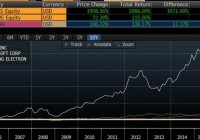
Summary Numbers by themselves don’t tell us very much. Put another way, a text without a context can become a pretext. Because we don’t let sports teams make up their own rules as they play, we have certain standards that companies are supposed to go by when they report their earnings. Accounting isn’t “Calvinball.” By looking carefully at supporting ratios, and how they change over time, a careful analyst can sometimes sniff out whether a company’s earnings are real, or whether they’ve been enhanced by questionable accounting practices. Because financials are like a bathing suit: what they reveal is interesting, but what they conceal may be even more interesting. What good are financial statements? Most of us have a vague idea that Apple (NASDAQ: AAPL ) makes iPhones, that Panera (NASDAQ: PNRA ) runs restaurants, and that Wal-Mart (NYSE: WMT ) sells stuff. But how well do they do these things? Reports that Amazon (NASDAQ: AMZN ) earned 19 cents last quarter or that IBM (NYSE: IBM ) had sales of $20.8 billion leave us cold. Numbers by themselves don’t tell us very much. Put another way, a text without a context can become a pretext. Financial statements are intended to tell us what a company has (the balance sheet) and what the firm did with what it has (the income statement). They also disclose what management has done with its cash (the statement of cash flows). We need to know these things because ultimately any investment’s value is determined by how much cash it can generate for its investors, and how predictable (or unpredictable) this cash stream is. Because we don’t let sports teams make up their own rules as they play, we have certain standards that companies are supposed to go by when they report their earnings. Accounting isn’t ” Calvinball .” But electric utilities are different than banks, which differ from defense contractors. So management is allowed a little leeway as they apply the rules. Those choices, however, have to be reflected in the footnotes – usually “Footnote 1.” In order to make sense of the raw numbers, equity analysts use ratios to compare companies with each other. It’s notable that Apple had a 40% profit margin the last year, but that’s even more remarkable when you see that Microsoft’s (NASDAQ: MSFT ) margin was only 23%, and that Samsung’s ( OTC:SSNLF ) was just 10%. That may be one reason why Apple seems to be taking over the world. Source: Bloomberg Every year public companies have to hire outside accountants to examine their financial statements and verify that they’ve been playing by the rules. Although the financial news tends to report just one or two numbers each quarter – earnings per share and sales – there are lots and lots (and lots) of supporting statements that go into those. Businesses can be complicated, and disclosing their activities properly takes a lot of time and effort. Last year, GE’s (NYSE: GE ) annual financial statement was 247 pages long! By looking carefully at these supporting ratios, and how they change over time, a careful analyst can sometimes sniff out whether a company’s earnings are real, or whether they’ve been enhanced by questionable accounting practices. Because financials are like a bathing suit: what they reveal is interesting, but what they conceal may be even more interesting. Editor’s Note: This article discusses one or more securities that do not trade on a major U.S. exchange. Please be aware of the risks associated with these stocks. Share this article with a colleague
Bulls Weigh On Gold As Losses Mount In NUGT
The Direxion Daily Gold Miners Bull 3x Shares ETF (NYSEARCA: NUGT ) shares were down yet again on Friday morning after a day of huge losses on Thursday. Most of Wall Street has turned its back on gold as the U.S. heads toward a rate rise later on in 2015, and the risk of both inflation and deflation melt away. We’ve seen a wide range of negative outlooks on gold since the fall in the price of the metal began earlier in July. The bulls have, for the most part, stayed out of the limelight. There’s good reason for that. Most of those who are bulls now were bulls three months ago, and they’ve been proven wrong. Right now most are trying to rework their models or abandon gold altogether. Here’s what some of them are saying. Stepping back, doubling down, and staying quiet An old adage says to buy into gold as soon as the last bull has left town. We’re not sure if that’s true just yet, but it’s clear that many former gold bugs have left their positions and are trying to recover losses in the market. Jonathan Barratt, chief investment officer at Ayers Alliance has long been happy to put money in gold, but he’s turning against the metal right now. “From a technical perspective,” he told CNBC, “it doesn’t look hot.” He said that the price of the metal has “broken through some very critical areas.” On the other hand, some observers are doubling down on the metal. In a report published on July 3, Bank of America Merril Lynch forecasted that gold prices would rise to $1,300 in 2016 . “We are on the cusp of a bull market,” reads the report. The investment house says that “gold can be supported even if the U.S. central bank turns less accommodative, as long as the Fed just normalizes monetary policy.” John Paulson and David Einhorn, two hedge fund managers known for their bets on gold , will have to disclose their positions in ETFs and miners of the metal next month. The final date for 13F filings is on August 14. Then, or perhaps the day before, we’ll be able to see if gold’s big hedge fund fans are still backing the metal. Gold ETFs remain a danger Leveraged ETFs carry risks that don’t exist in pure metal trading. That’s why NUGT has lost more than 70 percent of its value in the last three months. There are very few outspoken Wall Street voices who will advise a bet on the ETF as a result. Leverage is dangerous, and it’s not for the faint of heart. The NUGT ETF tracks an index of gold mining shares and seeks to deliver returns of three times those on the index. The price of NUGT has become very separate from the price of gold as a metal in recent weeks as a result. Even gold bulls aren’t likely to advise a bet on the ETF. The risks are simply too great for all but the most thrill-seeking of traders. There’s no outspoken bulls of the index in the limelight, and there isn’t likely to be, at least until the price of gold turns around.