Tag Archives: author

How I Earned 17% Compound Annual Return For 6 Years

Summary Using a carefully crafted portfolio of 18 stocks, I have beat the S&P 500 for the past six years. My portfolio consists of Consumer Stocks, Utilities and Railroads. I buy stocks in small increments on pullbacks to reduce risk and increase profit. Using a carefully crafted portfolio of 18 stocks, I have achieved 17.17% compound annual return since Jan. 1, 2009. I have been investing money for 21 years, and achieved my best years from 2009 to 2014. This article will discuss why I purchased these stocks and my outlook for 2015. My strategy is first and foremost not to lose money. Cash is king. Much of the gains in recent years were from decisions that I made five and 10 years ago. I invested in consumer, utility and railroad stocks that have durability, decent profit margins and a solid future. Over the years, I tended to sell the losers and buy more of the winners. Own the best and sell the rest. Nearly all my gains were from stocks. I only added bonds to the portfolio in early 2014. My brokerage accounts at Charles Schwab have achieved 17.17% compound annual returns from Jan. 1, 2009, to Dec. 24, 2014, compared with 14.41% compound annual return for the S&P 500 over the same time period. If you look at the this chart on my personal blog, you will see my portfolio risk and return are better than a typical aggressive portfolio. Schwab says the risk or standard deviation for an Aggressive Portfolio is 15.40 and the return 15.07. My risk was lower at 11.79, and my 17.17% return was 2.1% better than an Aggressive Portfolio. Below are the securities in our largest brokerage account, which was up 17% in 2014. Name Purchase Price Price on Dec. 28, 2014 % of Portfolio My % Return YTD Return to 12/28/14 Berkshire Hathaway (NYSE: BRK.B ) 117.43 151.35 12.63 28.88% 27.66 Boston Beer Co. (NYSE: SAM ) 218.67 295.74 10.86 35.25 22.31 Canadian National Railway (NYSE: CNI ) 57.32 68.69 1.15 19.84 20.47 Church & Dwight (NYSE: CHD ) 62.14 80.18 6.96 29.03 20.97 Coca Cola (NYSE: KO ) 28.31 42.96 2.72 51.77 3.99 Colgate-Palmolive (NYSE: CL ) 63.90 70.88 0.3 10.93 8.69 ConAgra Foods (NYSE: CAG ) 23.80 36.86 0.26 54.86 9.38 Dominion Resources (NYSE: D ) 58.17 79.28 4.23 36.29 22.56 DuPont (NYSE: DD ) 45.51 75.13 0.21 65.08 15.64 Hershey (NYSE: HSY ) 97.91 106.41 1.78 8.69 9.44 JM Smucker (NYSE: SJM ) 83.77 103.39 0.86 23.41 -0.22 Johnson & Johnson (NYSE: JNJ ) 66.45 105.06 1.31 58.11 14.71 McDonalds (NYSE: MCD ) 75.50 94.78 0.24 25.54 -2.32 Norfolk Southern (NYSE: NSC ) 94.62 111.54 0.28 17.88 20.16 PepsiCo (NYSE: PEP ) 78.70 97.05 2.27 23.32 17.01 Reynolds American (NYSE: RAI ) 37.28 65.71 0.38 76.27 31.45 Union Pacific (NYSE: UNP ) 78.71 120.39 32.14 52.96 43.32 Westar Energy (NYSE: WR ) 36.10 41.87 0.7 15.98 30.15 Burlington Northern Santa Fe 3.05% Due 03/15/22 0.97 100.6348 4.2 3.35 + 3.05% coupon =6.4% N/A Burlington Northern Santa Fe 3.05% Due 09/01/22 0.99 99.9219 4.17 1.90+3.05% coupon = 4.95% N/A Union Pacific 2.75% Due 04/15/23 0.95 98.6744 4.12 4.27+2.75% coupon=7% N/A Union Pacific 2.95% Due 01/15/23 0.96 100.3483 4.19 4.32+2.95% Coupon = 7.27% N/A Cash 1.00 1.00 4.04 You can see that 16.67% of the portfolio is invested in railroad bonds. I bought my Investment Grade bonds on Feb. 3, 2014. U.S. interest rates actually fell in 2014, so my bonds appreciated. My total return on my bonds in 2014 — appreciation plus coupon — was 6.4%. Going forward, I believe my bonds will lose value, because I expect interest rates to rise in 2015. However, I am prepared for these bonds to lose up to 10%, even 20% of market value. I like the income. I plan to hold the bonds to term, so I will not lose anything. From the chart, you can see that my largest holding is Union Pacific ( UNP ) at 32.14% of my portfolio. There is some risk involved with owning so much stock in one company, but the outlook for Union Pacific, and railroads in general, is outstanding. Until that changes, I plan to hold my railroad stocks. When I was a reporter working for a local newspaper, a banker used to come up to me at public meetings and ask me to bring my car loans to him. I would always tell him that I have no car loans, my cars are paid off. One day, he came up to me at a black tie event where he interrupted me while I was talking with some friends. Like an aggressive car salesman, the banker said, “Hey Mike we just dropped our interest rates on home loans. Why don’t you bring your home loan to my bank?” I became incensed. I said, “Mr. Banker my house is paid off. I don’t have any debt. I would be happy to lend you some money if you need it.” He sheepishly walked away and never came up to me again asking for my business. The above story illustrates a point. Bankers are eager to lend money. Many people accept the easy credit and never get out of debt. They don’t benefit from America’s pro-capitalist system that favors ownership of property and businesses. If you want to get ahead in life, stop working for bankers. Make them work for you. Pay off your debts, put your money in the bank and earn interest. Become a capitalist. Own property that appreciates in value. Buy stock in companies that are going to benefit from consumers’ daily spending habits. I own several consumer stocks. My favorite is Church & Dwight ( CHD ), a consumer household products company that owns Arm & Hammer Baking Soda and Trojan condoms — stuff people need regardless of the economy. I also own Colgate-Palmolive ( CL ) , seller of pet food and toothpaste, and Reynolds American ( RAI ), a tobacco company with a history of increasing dividends. I own no biotech stocks. In 2008, I lost about 7% of my investment in Dendreon ( OTCPK:DNDNQ ) after holding it for about four months. I sold it. I also lost money on a pain management company. After these mistakes, I vowed to stay away from biotech and most health care stocks. I own Johnson & Johnson ( JNJ ) because it is so diversified, owning a lot of personal care products as well as medical supplies. I own no mutual funds in our brokerage account. I don’t want to give money to mutual fund managers, who take 1% or even 2% management fees. Cut out the management fees, and there is more money available to invest and compound over time. We own some Vanguard 500 Index Fund (MUTF: VFINX ) in an individual retirement account. Money managers have a tough time trying to beat the Index, so why not just own the index? I buy stock in increments on pullbacks to reduce risk and increase profitability. This really paid off in buying stock in Boston Beer ( SAM ), another great consumer stock. I bought SAM shares in the first nine months of 2014 at an average price of $218; the stock recently hit $288 per share, a 32% gain. My stocks and bonds provide steady income. I do not participate in dividend reinvestment plans. Cash dividends go into my accounts, where they sit in a money market fund until I can find the next deal. I have some regrets. I bought Apple (NASDAQ: AAPL ) at $14 per share in 2000 when it had $12 per share in cash. I sold it at $18 per share when iTunes was introduced. That was a huge mistake. Part of the reason I sold it was to get out of tech and stay focused on my consumer stocks, utilities and railroad stocks. Money managers can find much to criticize with my account. I have too much exposure to railroads. However, I have written about railroads for 20 years. I understand their business models. I believe there is a renaissance taking place in rail today. Railroads are four times more efficient than trucking, especially over long distances. In 2014, railroads experienced their best year since 2007. Conclusion My portfolio is not for everybody. I can handle the risk associated with my overweight positions. I expect 2015 to be a tough year to make money. If low oil prices drag down other asset classes, we could see a bear market. However, consumers are loving the 30% gas price cut. The extra money saved at the pump will likely not sit idly in their bank accounts. I expect consumers to spend more money in 2015 than they did in 2014. The U.S. economy is growing, and this bodes well for the stock market. I am prepared for a 10%, or even 20% correction. If that happens, I will not sell stocks, I will look for opportunities to buy quality assets on the cheap. Editor’s Note: This article covers one or more stocks trading at less than $1 per share and/or with less than a $100 million market cap. Please be aware of the risks associated with these stocks.
Portfolio Strategy For Someone Just Starting Out

Summary This article is meant for folks who are just starting out in stock investing. It focuses on how to make a beginner’s portfolio, which is well diversified, relatively safe, but at the same time offers flexibility, a learning curve and room for growth. There are other simpler and passive alternatives, like buying a few diversified ETFs, but if you like to invest in individual stocks, please read on. This article is not for everyone. I know a vast majority of Seeking Alpha readers are by and large mature investors, considering how often we see a healthy debate in the comments section. But then there are others who are just starting out and not sure how to approach investing. It could be someone fresh out of college who just started working, or someone in their early 30s (or even later) who never thought of investing until now. The first-time investor often does not know where to start. Should they invest all of their capital at once, or should they invest over time? How much do they really need to save to have a diversified portfolio and how many stocks should they invest in? Most folks, who are just starting out, will buy few random stocks based on some article or tip, without a plan. Once they have bought a few stocks, they have no long-term or exit strategy either. This article will focus on the importance of a strategy, even when you are starting out with a relatively small amount of capital and how to form a starter portfolio. Where to start: First things first. a) Determine how much money you want to invest: How much do you want to start with and how much you are going to contribute on going-forward basis? I always prefer a staggered approach to investing. – Initial Capital – Monthly contribution b) Determine your risk profile: It will depend on your age, type of job/ employment you are in, your emergency funds situation and most importantly, your risk-tolerance (% of investment capital you can afford to lose in a worst case scenario). Based on all these factors, put yourself into one of these categories – High-risk, above-average risk, moderate risk, low-risk or extreme conservative. For the last category, though, investing in individual stocks is not advised. c) Decide on a brokerage company: There are several to choose from in terms of deposit requirements, features, trading commissions and fees. Some examples are Fidelity, TD Ameritrade, E*Trade, TradeKing, Interactive Brokers, Scottrade etc. If your account size is small (less than $10,000), you would probably be better off with an ultra-low commission broker like Interactive Brokers. d) What kind of account you would want to open: This depends on your overall goals and factors like, how long can you afford to keep this money locked in? The account-types can be a simple individual taxable brokerage account, or a retirement type account like an IRA or Roth-IRA. The IRA or Roth-IRA accounts come with certain restrictions like yearly contribution limits and income limits. Also, there are restrictions as to when and under what circumstances you can withdraw from an IRA account without penalty prior to the age of 59½. Most brokerage firms list them when you attempt to open an account. Be sure you are aware of them or read them carefully. e) Write your investment goals: Yes, write them. You can choose whichever medium you would like, paper or electronic. But please, write your short-term and long-term goals for the investment portfolio you are about to start. If you are still with me, let’s begin: We will assume that you are starting out with at least $5000 (or more) and then will add some money every month to bring your first year total investment capital to $10,000. Divide your money in four buckets of 25% each. – We will call the first bucket as “Core.” – The 2nd bucket will be “Income” bucket. – The 3rd will be “Growth.” – Lastly the 4th bucket will simply be called “Cash.” This will be the money sitting in cash most of the time. 1. “CORE” Bucket: Depending upon the size of your bucket, this money should be invested in “Dividend Champions” or “Dividend Aristocrats.” The best place to start is the list called Dividend Champions maintained by SA contributor “David Fish.” This list consists of over 100 well known companies who have paid and increased dividends for at least 25 years. Some well known examples are Coca-Cola (NYSE: KO ), ExxonMobil (NYSE: XOM ), Johnson & Johnson (NYSE: JNJ ), Procter & Gamble (NYSE: PG ) etc. You could also look at the Dividend Aristocrats that are S&P500 constituents and have paid growing dividends for 25 consecutive years. If your investment money in this bucket is only $2,500, you could still buy 4 or 5 individual stocks ($500 or $600 each), provided your trading commission is minimal (say $1 per trade). If your brokerage charges $5 or more, you will be restricted to fewer companies to keep your trading costs low. 2. Income Bucket: Why income? Some might argue, “Why should someone who is just starting out care for income from the investment portfolio?” There are a couple of important reasons why I am suggesting this. First, this will allow us to diversify into alternative assets like REITs, MLPs, Bonds and Munis etc., which typically offer higher yields than the ordinary stocks, including the dividend paying stocks like JNJ, KO, PG etc. Second, the income stream can either be reinvested in the same securities to compound or accumulated to invest into new stocks. Thirdly, it adds more stability (less volatility) to the portfolio. Lastly, let’s face it – everyone likes income; it simply adds to the motivation. Below are just some examples for further research. These are not recommendations, but just a place to start your own research. REITs (Real Estate Investment Trust): Realty Income (NYSE: O ), HCP, Inc. (NYSE: HCP ), Cohen & Steers Total Return Reality (NYSE: RFI ) MLPs: Kayne Anderson MLP Investment (NYSE: KYN ), Duff & Phelps Select Energy MLP fund (NYSE: DSE ) One can choose individual MLPs, but one should be aware of the tax implications. Bond/Utility/Munis/ Preferred funds: PIMCO Dynamic Credit (NYSE: PCI ), PIMCO Dynamic Income (NYSE: PDI ), Nuveen Muni High Inc (NYSEMKT: NMZ ), Cohen & Steers Infrastructure (NYSE: UTF ), iShares US Preferred Stock (NYSEARCA: PFF ) High Yield Div Stocks: AT&T (NYSE: T ) Verizon (NYSE: VZ ) It may be best to choose one name from each of the categories above. 3. Growth Bucket: This is your money to invest in “growth,” or even somewhat speculative names, based on your individual experience, age, comfort level and risk profile. Just make sure your position sizes are small. For example, if the bucket size was $2500, do not invest more than $500 in any one stock. Basically, this is the money you can use to develop your learning curve. This is not the “buy and hold” bucket, so don’t be afraid to trade a little more frequently. Don’t be shy to sell when you can realize substantial profits. However, before you invest, always keep in mind your risk-profile, small position-sizing and due diligence. Below is one rather relatively safe strategy that you can deploy in a Bull Market. However, this will not work very well in a prolonged downturn. This is also called “momentum” trading. Every 4 to 6 months, pick the 3 most favored sectors (ETFs) of the market during the previous 3 months, and invest equal amounts in each of them. Repeat the process every 3 to 6 months. For example, in the last 3 months, the most favored sectors have been Consumer Staples, Healthcare and Technology. 4. CASH Bucket: This is your 25% cash position. In practical terms, this will vary between 15 to 20% of the total portfolio. Ideally, in a late Bull Market like we have today, this bucket should be overflowing, whereas in a downturn it can be used selectively to make good use of the opportunities that the market may offer (this means loaning money to other 3 buckets). As soon as it falls below 10-15%, a conscious effort should be made to bring it back to 20-25% level by way of diverting dividends/income or by adding fresh money. Now let’s see how well this portfolio will fare based on certain parameters: Safety: Investing can never be risk-free. However, we can manage the risk, by diversifying into different type of assets. Our (above) portfolio will have almost 50% of the capital in Cash and Core stocks. Another 25% is in alternative assets to some degree. This will provide the relative safety and low volatility during a down market. Growth: For anyone who is just starting out, “growth” is very important. Some would argue that for early stage investing (especially younger folks), 90-100% of the money should be invested in growth stocks. Theoretically this may be true, but it is easier said than done. Most folks do not have tolerance for high volatility and large drawdowns (the kind we saw in 2008) and they often end up exiting the market at just the wrong time. In contrast, this portfolio strategy is focused on investing discipline and asset diversification. The 25% cash position will provide the confidence to face any serious downturn, as it will provide opportunities to buy good companies at discounted prices. In addition, the CORE bucket should provide significant growth over a long period of time, assuming the dividends are re-invested. The 25% growth-bucket will provide better growth with time as the investor gets over the learning curve and becomes more experienced. Risks: The first risk is of course the market risk, which is true with any investment. Secondly, if you happen to invest at the tail end of the Bull Market, you are likely to face some headwinds. But one can only know this in hindsight. One way to mitigate this risk is to stagger your investments over a period of time. If you plan to contribute a regular amount on a monthly basis, this will automatically stagger your purchases. The third risk is that this portfolio is likely to underperform in a raging Bull Market (like we saw in 1990s or even in 2013), but at the same time, this will outperform in a down or sideways market. Concluding Remarks: For some, this strategy may look a little complicated for a small portfolio. However if your plan is long term and you would like to grow this into a large portfolio with regular contributions and portfolio growth, I believe this is the right approach. There are, of course, simpler and passive alternatives like buying a few diversified ETFs and these would be perfectly fine for someone who has no time or interest to study and research individual stocks. However, if you want to be an active investor, you need to have a strategy. I believe any strategy is better than none at all, since investing based on a well-defined strategy forces the investor to be more disciplined. The strategy outlined above is not perfect or complete by any means. Over time, as you develop your skills, you can make improvements and make it perform better to suit your individual temperament and needs. Full Disclaimer: The information presented in this article is for informational purposes only and in no way should be construed as financial advice or recommendation to buy or sell any stock. Every effort has been made to present the data/information accurately; however, the author does not claim 100% accuracy.

Entergy Corporation: A Derivative Play For The Gulf Coast Petchem Boom

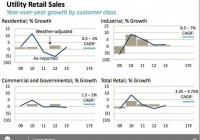
Summary Entergy is building a new power plant and has plans to build new transmission infrastructure. Load demand, not price hikes, is driving earnings growth. Shares are up considerably but I believe they still have a ways to run. It’s difficult to like utilities these days. With interest rates so low, utilities typically yield under 4%. To make matters worse, most states now have ‘renewable energy mandates,’ which means that utility companies are effectively mandated to invest in new energy infrastructure even when load demand is static. This leaves utilities with little choice but to raise rates in the coming years merely to recoup the cost of investment. On August 15th I wrote an article on Entergy Corporation (NYSE: ETR ), a Louisiana-based utility which I thought was the best alternative to the renewable energy hurdle facing US utilities today. Unlike most other states, Louisiana has opted out of renewable energy mandates. Louisiana’s economy is also benefitting greatly from an unprecedented boom in the petrochemicals industry along the gulf coast. This building boom includes everything from chemical plants, NGL crackers, steel mills and LNG export facilities. Since August 15th, Entergy has soared along with the rest of the space. Entergy has leapt from $72 per share to $91, thanks largely to falling interest rates. Right now, most US utilities are trading somewhere above their average P/E multiples, Entergy included. Does that mean it’s time to sell the stock and call it a day? That is what this article will try to answer. Load growth (click to enlarge) Courtesy of Entergy Corp Investor Relations This graphic pretty well sums up what Entergy expects in the coming three years. Residential use is expected to rise modestly, but industrial use will increase by around 6.75% per year, which will drive overall retail load growth by around 3.5% year on year. Utilities love industrial load growth, because it often begets residential load growth, which in turn brings commercial and governmental load growth. The petrochemical boom along the Gulf Coast could bring a decade of good times for utilities such as Entergy, which has business all throughout Louisiana and also in the Texas Gulf Coast. Utility companies must always consider replacing old generation and transmission infrastructure, but it’s easiest to do so when load growth is increasing, because the costs to build more capacity can be spread out on a larger customer base. Entergy is constructing another plant in Louisiana, one which the company believes will support economic growth in the region with low energy prices for years to come. The new power plant, named Ninemile 6, is a gas turbine. Ninemile 6 is scheduled to be ready by the first of next year, and it is the earliest of a very robust construction plan from Amite Parish in southern Louisiana to the Texas Gulf Coast around Houston. Through 2021, Entergy will build transmission lines for the new Cameron LNG plant and a new steel plant. New transmission lines will go up along the Gulf Coast, and eventually the company will upgrade its southeast Louisiana terminal equipment too. Next year, Entergy will spend $665 million. All the while, load demand increases and a focus on the most economical generation sources will keep rates down. With a kilowatt per hour cost of just 7.7 cents, Louisiana has the fourth lowest electricity cost in the nation (behind Kentucky, West Virginia and Washington state). A list of industrial projects underway on the Gulf Coast. Projects range from steel mills to LNG export terminals, and include several world-class companies. Courtesy of Entergy Corporation Investor Relations Valuation As I mentioned earlier, shares of Entergy have jumped up with the rest of the sector. Shares were somewhat below fair value back in August, but they are now just slightly above. Let’s take a look at FAST Graphs for a bigger picture. Courtesy of FAST Graphs In August, shares were well below their fair value and average P/E ratio. Now, however, shares are 13.4% above average P/E and just about at the Graham-Dodd ‘Fair Value’ number. (FAST Graphs measures this by trailing twelve-month earnings.) While Entergy may not be a great deal right here, I would also say that it is way too early to sell shares. Entergy’s 3%-4% retail electricity demand growth makes the company a better choice than most other utility names. Entergy is a multi-year play and I believe this stock has way more room to run. At twenty times trailing earnings Entergy would trade at $120. Given the company’s solid growth prospects, I think twenty times earnings would be a place to consider hopping off. For now, however, I believe that Entergy should be allowed to run for awhile. Conclusion Entergy is in the right place at the right time, and it is one of the only utilities I would consider owning right now. (In fact, it is the only utility which I currently own shares in.) Unlike most other utilities, Entergy is largely unburdened with the need to supply more expensive renewable energy to its customers. The petrochemical boom is fueled by a supply of cheap input costs in natural gas and natural gas liquids. This gives US petrochemical companies an advantage over the rest of the world, and this input cost advantage does not look to be going away anytime soon. Entergy is a relatively low-risk ‘derivative play’ for the petrochemical boom, and I believe shares have a good bit more ways to run before an investor should even consider taking anything off the table.