Tag Archives: author

Is It Time To Move Wealth Outside Of The Financial System?

How negative interest rates change the game. How one safely stores and insures cash privately. How safely stored cash can be a better investment than negative interest rate bonds. We are experiencing an unusual phenomenon in the financial world at present, that being negative interest rates. Professors in economics and finance were teaching students as late as 2007 that the absolute bottom for interest rates would be 0%. Yet at the height of the 2008 financial crisis, interest rates on 1-month T-bills fell below 0% for the first time in history. Now, negative interest rates are becoming more common. The extreme case as of the time of this writing is the 10-year Swiss bond, which peaked at -0.28%. Some bond investors are comfortable with these negative rates because they feel interest rates will go even lower, enabling them to sell the bonds at a higher price. However, an average investor seeking no risk is unlikely to accept a bond with a negative interest rate. With safe haven investment now costing the investor, options outside the conventional financial system become a viable option. When people think of storing cash outside of the financial system, it brings to mind images of storing cash in a mattress, cookie jar or other home hiding places. Having known someone who left a large amount of silver in an attic after selling a house, I’m not advocating this approach. Assuming an investor exhausts the $250,000 FDIC insurance deposit limit (or mistrusts the FDIC’s ability to pay), one alternative worth considering is a safe deposit box. A box large enough to hold $1 million in $100 bills can be rented for about $200/yr. While banks themselves will not insure the contents of a safe deposit box, insurance on a box’s contents can be purchased for up to $1 million in valuables. This $1 million in insurance can be purchased for as little as $2,000/yr. Hence, having a fully insured $1 million in a safety deposit box costs about $2,200, the equivalent of an interest rate of -0.22%. This cost compares favorably to the 10-year Swiss bond at -0.28% mentioned earlier. And unlike this Swiss bond, whose principal is locked away for 10 years, the assets in a safe deposit box are only locked away until the time the box holder decides to remove them. Today’s unique financial environment of negative interest rates creates both the temptation and the opportunity for cash hoarding outside of the conventional financial system. Admittedly, in just about any other time in history, this would be an unwise financial strategy. Even now, this approach best fits those who need to protect amounts that are insurable by private insurance but not the FDIC. However, if these negative interest rates are the indicator of a bond bubble, and some of the more dire predictions about the world’s financial state come to pass, cash in a safe deposit box protected by private insurance might prove to be a critical and secure asset. Disclosure: The author has no positions in any stocks mentioned, and no plans to initiate any positions within the next 72 hours. (More…) The author wrote this article themselves, and it expresses their own opinions. The author is not receiving compensation for it (other than from Seeking Alpha). The author has no business relationship with any company whose stock is mentioned in this article. Share this article with a colleague
NRG Energy: Bolstering Solar Infrastructure With Partial Acquisition Of Verengo

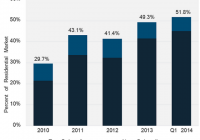
Summary NRG Energy recently acquired Verengo Solar’s Northeast U.S. sales and operations teams, adding on to a list of recent solar acquisitions. The sale of the previous residential solar standout Verengo has been a golden opportunity for NRG Energy to bolster its infrastructure. The addition of Verengo’s sales and operations teams will significantly strengthen NRG Energy’s Northeast residential solar segments. The acquisition-heavy strategy of NRG Energy’s solar segment is in keeping with the vertical integration and consolidations taking place within the distributed solar industry. While NRG Energy’s highly ambitious residential solar strategy is fraught with risks, the potential payoff is enormous. NRG Energy (NYSE: NRG ) has accelerated its move into the distributed solar industry over the past few months. With wild ambitions of overtaking SolarCity (NASDAQ: SCTY ) as the top residential solar company in a few years time, NRG Energy is wise to move into the distributed solar space as fast as possible. The company has already set up a huge distributed solar infrastructure, with its CEO even claiming that the company has “an embedded SolarCity within it. ” In fact, the company is already proclaiming that it will beat out Vivint Solar (NYSE: VSLR ) for the number 2 spot by the end of 2015, which is a tall order considering the companies’ currently huge market share disparity, and Vivint Solar’s rapid growth. NRG Energy has recently announced that it had bought out Verengo Solar’s Northeast U.S. sales and operations planning teams, which marks the latest in a series of ambitious acquisitions. Over the span of a year, the company has acquired the likes of Roof Diagnostics and Solar Pure Energies Group, clearly showing NRG Energy’s intentions of making a big entrance into the residential solar arena. The company’s most recent buyout of Verengo’s NorthEast S&O teams highlights its almost frenzied approach towards residential solar. Verengo Advantage Verengo Solar was the #3 distributed residential solar company before the company’s baffling decision to put itself up for sale. Verengo Solar already has a strong presence in the NorthEast, which was the primary reason for its NorthEast sales and operations teams’s acquisition by NRG Energy. Kelcy Pegler Jr., who is the head of NRG Energy’s solar segment, stated that the acquisition “solidifies some advantages we have, and we have a ton of momentum in the Northeast.” While the reasons behind Verengo’s sale are somewhat confusing (especially in light of the fact that its sale occurred right after the company reached the number 3 spot ), it represents a golden opportunity for NRG Energy to snatch up some of Verengo’s talent. Given NRG Energy’s relative lack of experience in the distributed solar arena, Verengo’s employees complement NRG Energy perfectly. The company’s addition of Verengo’s Northeast sales and operations teams will certainly make the NRG Energy’s rapid transition into residential solar a much smoother one. Trend of Vertical Integration Given NRG Energy’s relatively late start and aspirations for solar dominance, it is only logical for the company to pick up whatever advantages they can through acquisitions. Thus far, NRG Energy has wisely acquired companies that already have infrastructures in place to augment its own, rather than wasting time by building its entire distributed solar infrastructure from scratch. The frequency of such acquisitions are not surprising given the fact that intense consolidations are still occurring among top residential solar companies. The distributed solar industry has gone through a rapid trend of vertical integration and market share consolidation over the past few years. The larger corporations like SolarCity and Vivint Solar have increasingly pushed out more regional competition, implying that vertical integration is not only beneficial, but also essential for success in the distributed solar arena. Vertical integration reduces logistics costs and more importantly, allows for unified system cost-reductions. Such unified cost reductions would be impossible if different segments of distributed solar, such as financing, installations, inverters, etc, were operating under separate entities with varying goals. Bringing all these elements under one roof allows for a more focused, and cohesive approach. This graph depicts the residential solar market share consolidation that has occurred over the past few years. This consolidation has largely been a result of the vertical integration taking place among the top companies, which has pushed out weaker and more regional competition. Note that this graph only captures up to quarter 1 of 2014. As of quarter 2 of 2014, SolarCity and Vivint Solar (the #1 and #2 installers) already have a combined market share of more than 50% . Amazingly, this means that consolidation is actually accelerating, despite the already top-heavy dominance of the solar industry. (click to enlarge) Source: GTM Research NRG Energy has clearly studied these distributed solar market trends, and is applying such knowledge to its own residential solar business model. The company emphasized the important of vertical integration by stating that “it’s an ever-consolidating space in residential solar” and that “with the corporate sophistication of NRG as a Fortune 250 company… it really puts us in an advantaged position to bring on team members, like Verengo, and leverage our position in the space to become the ultimate winner.” Risks Making such an ambitious entrance into a new industry comes with massive risks. NRG Energy has taken the decidedly riskier route of acquiring numerous companies/teams in order to bolster its distributed residential solar infrastructure, rather than growing in a completely organic fashion. While the company has indeed grown many parts of its solar infrastructure organically, such ambitious goals cannot be achieved through organic growth alone. This could very well be the primary motivating factor for the company’s heavy acquisitions strategy. Of course, if NRG Energy’s plans do not pan out, the company would have essentially wasted hundred of millions, and perhaps billions of dollars acquiring and building out its massive residential solar infrastructure. Despite such risks, the rewards are almost certainly worth it, as distributed solar is a potentially transformative industry. If NRG Energy can manage to grab a foothold of this market in its early stages, the company should be rewarded its initial investment many times over. Conclusion While companies like SolarCity and Vivint Solar have already cemented themselves as leading distributed residential solar companies, large portions of the industry’s market share are effectively still up for grabs. The industry is, after all, still in relatively in its infant stages, which means that sufficiently motivated new industry players could muscle their way in. If NRG Energy manages to succeed at even a fraction of its ambitions, the company is set to gain immensely. Given potential market size of distributed generation, and the exponential growth path of solar power, NRG Energy is making an incredibly smart move by moving into the distributed residential solar arena. If NRG Energy keeps up its distributed solar ambitions, the company is set to gain immensely. Disclosure: The author is long SCTY. (More…) The author wrote this article themselves, and it expresses their own opinions. The author is not receiving compensation for it (other than from Seeking Alpha). The author has no business relationship with any company whose stock is mentioned in this article.

Franklin Universal Trust: An Interesting Mix In This CEF

Summary FT’s goal is current income and capital preservation. FT takes a unique approach to that, mixing risky assets with more stable ones. It’s not a fund I’d rush to own, but it could have a place with the right investor. Franklin Universal Trust (NYSE: FT ) is an odd beast in some ways and yet logically built in other ways. At the end of the day, however, if you are buying it as a long-term investor you need to understand that it’s playing in two allocation sectors and that may not fit well within your broader portfolio. What it does Franklin Universal Trust’s primary objective is income and preservation of capital. Its secondary objective is growth of income. That said, it has a funny way of going about reaching these three goals since it invests in a combination of high-yield bonds and utility stocks. The split is around two-thirds bonds and one-third utilities. There are some other things in the mix, like preferred shares and resource stocks, but they are relatively minor positions. FT also makes use of leverage to enhance performance. According to the Closed-End Fund Association , leverage recently stood at around 23% of assets. Essentially, FT is mixing a relatively conservative investment category, utilities, with a riskier one, junk bonds. That’s not an outlandish proposition at all, but it makes this fund something of a difficult fit if you have your own portfolio allocation goals. For example, you’ll need to go down another level, looking at the fund’s portfolio allocations, to truly ensure your portfolio weightings are what you want them to be if you own FT. That wouldn’t be needed for pure-play offerings. There’s not much information available about what the fund actually does to pick its stocks and bonds, except that it uses fundamental research on the bond side and looks for attractive dividend yields and a history of dividend increases in the utility space. That’s not much to work with if you want to really understand what your managers are doing. In fact, it’s utility portfolio is comprised of some of the largest and best-known utilities in the country, a portfolio which you could arguably create yourself if you wanted to. How’s it done? Because of the odd mix of assets, it’s kind of hard to benchmark this fund. That said, it’s 10-year trailing annualized return through January comes in at about 8.5% according to Morningstar (this figure includes dividend reinvestment). That ranks in the top percentile of Morningstar’s “Tactical Allocation” category, but I’m not sure that’s exactly the right place to put this fund-though, to be fair, I have no better suggestion as to where it belongs. For comparison, Vanguard 500 Index Fund (MUTF: VFINX ) turned in a trailing 10 year return of just under 8% annualized. It’s standard deviation over the trailing ten year period was around 13. That’s not much lower than the S&P 500 Index, so FT isn’t exactly a low volatility offering. To bring that point home even more keenly, the standard deviation of Vanguard High-Yield Corporate Fund (MUTF: VWEHX ) over that span was around 9 and Vanguard Utilities Index Fund’s (MUTF: VUIAX ) was about 13. These two funds produced annualized returns of around 6.5% and 9.5%, respectively, over the trailing ten years. So in some ways FT is getting a higher return than you might achieve in other investments, including pure play high-yield funds and an S&P 500 Index fund, but it’s taking on more risk to do it-though not quite as much as an S&P 500 Index fund. And it’s worth noting that the fund’s net asset value, or NAV, fell nearly 37% in 2008. It’s share price fell nearly 41%. Clearly that was a disastrous year for investing, but it’s a real-world reminder that mixing high-yield with utilities isn’t going to save you from market volatility. To be fair, the NAV rose nearly 55% in 2009 (the share price advanced 70%), so what went down hard came back with a vengeance. You just have to be prepared for that kind of price movement should the market get volatile again. And, overall, don’t expect the fund to be a low risk offering. It isn’t. The fund’s distribution, meanwhile, has been fairly steady year in and year out. The current yield is around 6.6%. That’s nothing to write home about but it is an achievable distribution that has allowed for the NAV to increase from $5.85 a share in August of 2010 to a recent figure of around $8.15. And all of its distributions of late have been funded with dividend income, interest, and capital gains. So, as far as it goes, it appears to have lived up to its income objective, though not so much the income growth goal. Expenses are a tad high, but that’s largely related to the fund’s use of leverage. In fact, according to the Closed-End Fund Association, the management fee is less than 1% of assets, which is pretty reasonable. However, total expenses come in at close to 2% and have been as high as 2.6% in recent years. The cost of leverage adds a lot to this relatively small fund’s expenses. You gotta know what you own At the end of the day, FT is an unusual combination of investments, similar in some ways to Cohen & Steers REIT and Preferred Income Fund (NYSE: RNP ) another closed-end fund I’ve reviewed that invests in both real estate investment trusts and preferred shares. If you are trying to build a portfolio based on an asset allocation model, FT and RNP probably aren’t the right fund for you. You’ll have to dig into their portfolios to make sure you don’t over- or under-weight key asset classes. You’d likely be better off just buying pure play funds to keep your life simple That said, if you are looking for a decent fund with a solid yield, RF isn’t a bad option. It’s done reasonably well over time, though not spectacularly, while paying a consistent distribution. That’s hard to argue with, as long as you understand that you’re buying an odd hybrid fund. Disclosure: The author has no positions in any stocks mentioned, and no plans to initiate any positions within the next 72 hours. (More…) The author wrote this article themselves, and it expresses their own opinions. The author is not receiving compensation for it (other than from Seeking Alpha). The author has no business relationship with any company whose stock is mentioned in this article.