Tag Archives: author

Here Is Why The S&P 500 Should Not Be The Barometer Of Investor Success
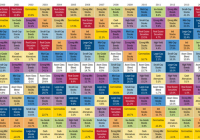
Summary The S&P 500 and the Dow are often quoted on TV and by various media outlets when providing updates on the stock market. By doing this, the media is implicitly suggesting to investors that these indexes represent how the market is actually performing. Trouble is that not everyone has the same definition of “the market” and not every investor has a portfolio that is structured like “the market” – and probably for good. Benchmarks to gauge the performance should be consistent with actual portfolio strategies as opposed to using a widely recognized stock market index, such as the S&P 500 index. Far too often, individual investors measure the success of their investment portfolios, or the effectiveness of their financial advisors, relative to the performance of a well-known stock market index such as the S&P 500 Index (“S&P 500”) or the Dow Jones Industrial Average Index (“Dow”). While it is important for investors to have a tool to measure the success of an investment strategy against, it can be very misleading, and often misguided, if an investor chooses an index as their tool that is not consistent with their risk tolerance or investment objectives. For example, the S&P 500 and the Dow are often quoted on TV and by various media outlets when providing updates on the stock market. By doing this, the media is implicitly suggesting to investors that these indexes represent how the market is actually performing. Trouble is that not everyone has the same definition of “the market” and not every investor has a portfolio that is structured like “the market” – and probably for good reason . In an Investment News article entitled, ” When underperforming the S&P 500 is a good thing ” (sign-up required), author Jeff Benjamin claims that investors have become programmed to dwell on the performance of a few high-profile benchmarks. Benjamin goes on to state that, “…a truly diversified investment portfolio should have returned less than 5% in 2014. It was that kind of year. Any advisor who generated returns close to the S&P was taking on way too much risk, and should probably be fired.” The suggestion of having the financial advisor fired may be extreme, especially if an investor has instructed their advisor to build a portfolio to try and provide performance consistent with, or superior to, the S&P 500 ( or the Dow ) and recognizes the potential risk associated with that type of strategy. However, most investors do not have this large of a risk appetite and appreciate the benefits of diversification to help deal with market volatility if and when it occurs. To this end, many of the growth-oriented investors that we speak with at Hennion & Walsh are interested in portfolios that are managed to help deliver a reasonable return while also providing for some downside protection. As a result, investors generally do not have that large of a percentage of their portfolio assets allocated to the one asset class associated with these two stock market indexes. This asset class is U.S. Large Cap. To this end, Michael Baker of Vertex Capital Advisors stated in the same previously mentioned article that, “The S&P 500 really just represents one asset class – large cap stocks…and most investors only have about 15% allocated to large cap stocks.” Having all of their investment portfolios allocated to one single asset class, such as U.S. large cap, would have rewarded investors well since the last major market crash hit bottom in March of 2009. However, this does not mean that this will always be the case going forward nor has it been the case historically. The chart below from First Clearing shows the annual returns of several asset classes from 2000 to 2014. A quick review of this chart will show how well U.S. large cap stocks have performed since 2009. Since the media focuses on U.S. large cap indexes, investors have thus been constantly reminded of how well “the market,” or more specifically U.S. large cap stocks, has done for the past 5 years. By further reviewing this chart, however, investors are also reminded that this is not always the case. U.S. large cap stocks suffered significant losses in 2008 and 2002 and additional losses in 2000 and 2001. Additionally, while large cap stocks finished in the top half of asset class performance in each of the past four years, they have only achieved this ranking once over the eleven years prior to 2011. Asset Class Returns (2000 – 2014) (click to enlarge) Source: First Clearing, LLC, 2015. Asset allocation cannot eliminate the risk of fluctuating prices and uncertain returns. Past performance is not indicative of future results. This chart is provided for illustrative purposes only and is not indicative of any specific investment. Asset class performance data based on representative indexes. You cannot invest directly in an index. Individual investment results will vary. The data assumes the reinvestment of all income and dividends and does not account for taxes and transaction costs. On the other hand, this chart attempts to illustrate the value of asset allocation with the asset class box named “Asset Class Blend” which is simply an equal weighting of all of the asset class indexes included on the chart. While I am not suggesting that such a blend is appropriate for all investors or all market environments and would likely include more asset classes and sectors to make the chart more comprehensive, the results shown in this chart still certainly demonstrate the potential benefits of diversification in down and/or volatile markets. Not inclusive of the potential fees for the implementation of each respective strategy or associated tax implications, $1,000,000 invested in large cap stocks in 2000 would have been worth $1,866,218 at the end of 2014. Conversely, the same $1,000,000 invested in this particular asset class blend strategy in 2000 would have been worth $2,831,257 at the end of 2014 based upon the annual returns listed in this Asset Class Returns table. $1,000,000 Investment Comparison from 2000 – 2014 (click to enlarge) Data source: Asset Class Returns (2000 – 2014) chart shown above in this post . Chart source: First Clearing, LLC, 2015. Asset allocation cannot eliminate the risk of fluctuating prices and uncertain returns. Past performance is not indicative of future results. This chart is provided for illustrative purposes only and is not indicative of any specific investment. Asset class performance data based on representative indexes. You cannot invest directly in an index. Individual investment results will vary. The data assumes the reinvestment of all income and dividends and does not account for taxes and transaction costs. As a result, it is imperative that investors are honest with themselves about their true tolerance for risk. If they are truthful to themselves, their risk appetite should not change based upon the current directional performance of “the market.” If an investor is not comfortable assuming the risk of “the market” or a single asset class, such as U.S. large cap, in all market environments, then they should consider the following: 1. Building ( or maintaining ) a diversified portfolio, incorporating a variety of asset classes and sectors, consistent with their tolerance for risk, investment timeframe and financial goals. 2. Utilize a benchmark to gauge the performance of their investment strategy that is consistent with (1) above as opposed to using a widely recognized stock market index, such as the S&P 500, that may not be relevant, and is likely very unhelpful, to them. 3. Try to not make critical portfolio decisions based on short term performance results but rather consider longer term performance results relative to their own overall financial goals. 4. Avoid the temptation of being influenced by media reports on general market performance to measure the success of their own investment portfolios, or the effectiveness of their respective financial advisors. Disclosure: The author has no positions in any stocks mentioned, and no plans to initiate any positions within the next 72 hours. (More…) The author wrote this article themselves, and it expresses their own opinions. The author is not receiving compensation for it. The author has no business relationship with any company whose stock is mentioned in this article.

A More Tempered Global Equity Fund

By Patricia Oey Low-volatility strategies, such as the iShares minimum volatility family of exchange-traded funds, can be attractive options for long-term investors. This is because these ETFs’ underlying MSCI indexes generally exhibit less-dramatic declines in bear markets . Over the long term, these muted drawdowns explain much of the strategy’s outperformance versus its cap-weighted benchmark. iShares MSCI All Country World Minimum Volatility (NYSEARCA: ACWV ) tracks an index that is designed to be less volatile than its market-cap-weighted parent index–the MSCI All Country World Index (MSCI ACWI). Low-volatility strategies seek to exploit the observed phenomenon that portfolios with smaller price fluctuations tend to outperform portfolios with larger price fluctuations over the long term. This strategy has had a good track record–as measured by the back-tested performance of this fund’s benchmark index (the index’s live performance commenced in November 2009). Over the trailing 15 and 10 years through Dec. 31, 2014, this fund’s underlying index beat the cap-weighted MSCI ACWI by 393 and 202 basis points annualized, respectively. The risk-adjusted returns were also relatively strong, with 15-year Sortino ratios of 0.73 for the minimum-volatility index and 0.22 for the cap-weighted index. However, low-volatility strategies can underperform for long periods of time and tend to lag in bull markets. This fund is suitable for use as a core holding for long-term investors. Typically, global-equity funds are more volatile than U.S. equity funds, as the former have exposure to both international equities and the associated foreign currency fluctuations. But because global equities are a heterogeneous asset class, there is greater diversity (as evidenced by lower correlations) among its constituents, which allows for greater reduction in overall volatility in a fund that employs a minimum-variance strategy such as ACWV. In fact, the trailing five-year standard deviation of returns for this fund’s index of 9% was significantly lower than the S&P 500’s 13% during that same span. Part of this is due to the benchmark’s lower drawdowns during bear markets. For example, in 2008, when the MSCI ACWI fell 42%, this fund’s benchmark declined 25%. This fund does not hedge its currency exposure, so its returns reflect both asset-price changes and changes in exchange rates between the U.S. dollar and other currencies. In the 10-year period through December 2012, a rising euro, followed by a rising yen (against the U.S. dollar), helped boost the performance of this fund. However, more recently, the rising dollar has hurt the fund’s performance. Fundamental View Historically, low-volatility stocks have outperformed high-volatility stocks over the long term. This “volatility anomaly” was first discovered in 1968 by Bob Haugen, who theorized that behavioral factors were behind this phenomenon. More specifically, investors tend to chase risky stocks, expecting these companies to deliver higher returns. This drives up stock prices of riskier names, which ultimately results in weaker future returns, relative to less-volatile names. Generally, this fund had been heavy in less-volatile sectors including consumer staples, health care, telecoms, and utilities, and light in cyclical sectors including financials, technology, energy, and materials, relative to its parent index (MSCI ACWI). In 2013, the fund’s greater exposure to less-volatile names in the United States and Japan weighed on its performance (relative to the MSCI ACWI), as higher-beta names outperformed in those markets. However, in 2014, the fund’s underweighting in the energy sector boosted this fund’s performance (relative to MSCI ACWI). At this time, dividend-oriented sectors such as consumer staples and utilities have been bid up in the recent low-rate environment, and sectors such as materials and energy are trading at low valuations. This fund’s tilt toward more-expensive sectors and tilt away from cheaper sectors may weigh on future performance. About 50% of this fund’s assets are invested in U.S. equities. As of the first quarter of 2015, the U.S. economy appears to be on stable footing. However, now that the U.S. Federal Reserve’s quantitative-easing program has ended, there is uncertainty on how monetary policy will be managed and how it might ultimately affect asset prices–especially considering that valuations across most major asset classes appear to be somewhat stretched. This fund’s second-largest country allocation is Japan, at 12%. After two “lost decades,” Japan’s equity markets responded very enthusiastically to Prime Minister Shinzo Abe’s programs to jump-start the Japanese economy. At the start of 2013, Japan’s Central Bank unleashed an aggressive monetary easing program. This move provided the foundation for improving macroeconomic fundamentals and corporate earnings growth. Japanese equities may also benefit as Japan’s $1.2 trillion public pension raises allocations in domestic equities and away from low-yielding government bonds. However, any sustainable growth in Japan will require difficult-to-implement structural reforms to address Japan’s inefficient labor market and protected private sector. In addition, Japan’s aging population and massive 200% debt/gross domestic product ratio are two issues that likely will weigh on Japan’s growth in the years to come. European equities comprise 10% of this fund’s portfolio. Many European large caps are high-quality, multinational corporations that have benefited from improving productivity, cheap financing, and exposure to faster-growing emerging markets during the past few years. Most of these firms are in good financial shape. This fund’s largest European country allocations are Switzerland and the United Kingdom, and it has an underweighting (relative to the cap-weighted benchmark) in eurozone countries, such as France and Germany. Portfolio Construction This fund employs full replication to track the MSCI ACWI Minimum Volatility Index, which attempts to create a minimum-variance (or lowest-volatility) portfolio of 350 holdings selected from its parent index, MSCI All Country World Index. It does this using an estimated security covariance matrix (the Barra Global Equity Model) and a number of constraints to limit turnover, ensure investability, and maintain sector and country diversification. This index methodology is somewhat of a black box, as data are not available regarding the estimated risk inputs used for the covariance matrix. The index (and fund) is rebalanced twice a year in May and November. ACWV’s portfolio represents about 20% of its parent index, which includes about 2,400 securities. During the past decade, this minimum-volatility index had a correlation of 0.92 to its parent index. But during the past three years, this correlation was lower, at 0.79. This index was launched in November 2009, so data prior to the initial calculation date reflect hypothetical historical performance. Fees This fund charges an annual expense ratio of 0.20%, which is composed of a management fee of 0.33% and a fee waiver of 0.13%. According to iShares, the fee waiver may be reduced or discontinued at any time without notice. During the past three years, the fund outperformed its benchmark by 16 basis points annualized. This is partly due to the fact that the fund’s benchmark incorporates aggressive foreign tax withholding assumptions. In practice, the fund has had lower foreign tax withholding relative to the estimates incorporated in its benchmark. Dividends are paid out quarterly, and in 2013 and 2012, 86% and 71% of this fund’s dividends were classified as qualified by the Internal Revenue Service, respectively (dividends from companies in certain countries are not considered qualified). Investors should note that some of the dividends paid by stocks in the fund are subject to foreign tax withholding. Investors can claim their portion of the withheld taxes as a tax credit, but only if they hold this fund in a taxable account. Alternatives One similar option is Vanguard Global Minimum Volatility (MUTF: VMNVX ) . Similar to the iShares fund, this Vanguard fund employs quant models to construct a low-volatility portfolio. Key differences are: The Vanguard fund hedges out foreign-currency exposure and has a mid-cap tilt, whereas the iShares fund does not hedge out foreign-currency exposure and has a large-cap tilt. This Vanguard fund is relatively new; its inception was in December 2013. The Admiral share class carries an annual expense ratio of 0.20%. IShares has a suite of low-volatility strategies that cover the different segments of the global equity universe. These ETFs include iShares MSCI USA Minimum Volatility (NYSEARCA: USMV ) , iShares MSCI Emerging Markets Minimum Volatility (NYSEARCA: EEMV ) , iShares MSCI EAFE Minimum Volatility (NYSEARCA: EFAV ) , iShares MSCI Japan Minimum Volatility (NYSEARCA: JPMV ) , iShares MSCI Asia ex Japan Minimum Volatility (NYSEARCA: AXJV ) , and iShares MSCI Europe Minimum Volatility (NYSEARCA: EUMV ) . A solid core allocation option is Vanguard Total World Stock ETF (NYSEARCA: VT ) . This fund tracks the FTSE Global All Cap Index, which seeks to cover 98% of the world’s total investable stock market capitalization and includes approximately 7,500 securities. It has an expense ratio of 0.18%. Disclosure: Morningstar, Inc. licenses its indexes to institutions for a variety of reasons, including the creation of investment products and the benchmarking of existing products. When licensing indexes for the creation or benchmarking of investment products, Morningstar receives fees that are mainly based on fund assets under management. As of Sept. 30, 2012, AlphaPro Management, BlackRock Asset Management, First Asset, First Trust, Invesco, Merrill Lynch, Northern Trust, Nuveen, and Van Eck license one or more Morningstar indexes for this purpose. These investment products are not sponsored, issued, marketed, or sold by Morningstar. Morningstar does not make any representation regarding the advisability of investing in any investment product based on or benchmarked against a Morningstar index.

Columbia Management Shutters 3 Alternative Mutual Funds

By DailyAlts Staff Just last week, Columbia Management announced the launch of a new alternative mutual fund, the Columbia Adaptive Alternatives Fund (MUTF: CLAAX ), in partnership with Blackstone Alternative Investment Advisors. The same day that partnership was announced, Columbia also filed paperwork with the SEC to shutter four of its own mutual funds, three of which are alternative funds: The Columbia Absolute Return Emerging Markets Macro Fund; The Columbia Absolute Return Enhanced Multi-Strategy Fund; and The Columbia Absolute Return Multi-Strategy Fund. The Emerging Markets Macro Fund The Columbia Absolute Return Emerging Markets Macro Fund (MUTF: CMMAX ) had $72.6 million in assets under management (AUM) as of February 1. The long/short emerging market debt fund had a 3-year return as of 12/31/14 of 0.15%, ranking it in the 88th percentile in Morningstar’s non-traditional bond fund category and trailing the category average by 3.13%. The Enhanced Multi-Strategy Fund The Columbia Absolute Return Enhanced Multi-Strategy Fund (MUTF: CEMAX ), an alternative multi-asset fund, had $99 million in AUM as of February 1, and generated a 1.21% return for the 3-year period ending 12/31/14 versus a return of 4.16% for Morningstar’s multi-alternative category for the same period. The Multi-Strategy Fund The Columbia Absolute Return Multi-Strategy Fund (MUTF: CMSAX ) is also an alternative multi-asset fund, and had just $15.9 million in AUM as of February 1. Through 12/31/14, the fund generated a 3-year return of 0.60%, ranking it in the 86 percentile of Morningstar’s multi-alternative category. Conclusion The non-alternative Columbia Masters International Equity Portfolio (MUTF: CMTAX ) is also being liquidated. The fund’s 3-year return of 9.25% trailed the foreign large-blend category by 0.97% and outperformed the MSCI All Country World (ex-US) Index by 0.25%. Effective February 2, the four funds stopped accepting new investors. The SEC filing announcing the fund closures said the liquidations are expected to be complete by March 6. Are you Bullish or Bearish on ? Bullish Bearish Neutral Results for ( ) Thanks for sharing your thoughts. Submit & View Results Skip to results » Share this article with a colleague