Tag Archives: alternative

Time To Bet Against Japan?
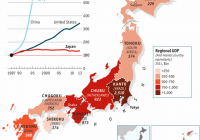
Summary Japan is struggling with economic decline, debt, and demographics. Abenomics has yet to show promised and needed progress. We see opportunity investing in a rising Dollar against a falling Yen. Global Context The world is presently full of economic and financial concern. Central banks in nations around the globe are trying to work their magic in order to increase economic growth and financial returns. A primary method of choice is currency devaluation. This simply means that countries are creating more currency with the goal of watering down its value. When this happens, it is easier to stimulate the economy and to sell and export goods and services to other countries. Why is that? Because your goods and services in your weakening currency are now cheaper for outsiders to buy in their stronger currency. The problem is that other countries also want to sell and export their goods. This is how we end up in what is known as a “currency war.” This means countries are fighting to have the weakest currency to boost exports and economic growth. We have seen this actively done in the U.S., Japan, China, and now Europe. Those also happen to be the four major economies in the world. In spite of the efforts of the U.S. Federal Reserve, the U.S. Dollar has been gaining strength since July 2014; gaining around 17% in that time frame. In contrast, since the beginning of 2013, the Japanese Yen has lost nearly 50% of its value compared to the U.S. Dollar. Since May of 2014, the Euro has lost around 18% of its value compared to the U.S. Dollar. Japan’s Three Struggles All of this information begs the question, is there still an opportunity to make money on these trends? We have been watching the falling value of the Euro and the Yen for a few months now. As we have waited, it appears we missed a pretty great opportunity to buy put options on the Euro via the CurrencyShares Euro Trust (NYSEARCA: FXE ). Unfortunately, that is the reality of investing sometimes. While there is still the potential for further downside in the Euro, the trade carries more uncertainty than when FXE was sitting around $125 as opposed to around $115 now. Unless someone expects the Euro to collapse or fail, shorting FXE has less certainty from here. What about the Yen and a short position on the CurrencyShares Japanese Yen Trust (NYSEARCA: FXY )? Japan currently faces three major problems: economic growth, debt, and demographics. Economic Growth (click to enlarge) As you can see from the chart, Japan has experienced either flat or negative economic growth over the last 25 years. Even so, it is still the third largest economy in the world behind the U.S. and China. After these “lost decades,” in hopes of reviving the economy, the Japanese people elected Shinzo Abe. Abe campaigned on the premise that he would enact a bold three-part plan of stimulus spending, monetary easing, and structural reforms that would turn things around. Together these are known as the “three arrows” of “Abenomics.” Debt So far, Abenomics has done much to boost the Japanese stock market, but little to boost the overall economy. In the process, Japanese debt has soared to nearly 250% of GDP, the highest debt to GDP ratio in the world. (click to enlarge) As spending and debt grow, the theory has been that taxes would also increase to help balance the equation. One tax increase has gone into effect, but future increases have been postponed because of economic weakness. To further complicate the issue, Japan is facing a losing battle of demographics. Demographics (click to enlarge) The population of Japan is shrinking, rather quickly. The current population of 127 million is expected to fall to 100 million by 2050. This means less people to work to provide economic growth and to pay taxes, and more elderly people dependent on government healthcare. In summary, Japan has a shrinking economy, shrinking population, and ballooning debt. That all sounds pretty bleak, but none of this is entirely new information. People have written of gloom for Japan for years, expecting decline and even collapse as the Japanese economy has marched on free of catastrophe. Japanese Desperation So, what makes this time potentially different? Two primary factors: By electing Abe the Japanese people have shown they are ready for change, even if it means drastic measures. Japan is no longer alone. Europe, China, and the U.S. are also fighting something between economic stagnation (U.S., China) and outright decline (Euro). Re-Election of Abe By electing and re-electing Abe, the Japanese people appear ready to do whatever is necessary to revive their economy. So far, their efforts have lead to a 50% decrease in the value of the Yen compared to the U.S. Dollar and there has been little to show for it on the economic front. Abe and Bank of Japan governor, Haruhiko Kuroda have made the eradication of deflation their chief gauge of success. They have concluded that inflation of 2% is what is needed to jump start Japan out of deflation. What is one of the prime means of fighting deflation? Boosting inflation. Creating more currency and thereby devaluing the Yen is among the preferred methods for creating inflation. Currency War To add even more challenge to Japan’s situation, they are now competing with other major economies to devalue their currencies in an attempt to stimulate growth and exports. This presents a scenario of competing desperation, commonly referred to as a currency war. So far, Abe has been true to his word with the first two arrows of Abenomics, but the third arrow of structural reform seems to still be in question. Corporate tax cuts are the latest announced move to help bring about the structural reform promised in the third arrow. Shooting Blanks not Arrows None of these measures can compensate for the major demographic problem that Japan is facing. How can an economy continue to grow when the population is shrinking? How can a shrinking population manage a ballooning debt that is already the largest in the world? Japan is in a desperate place, and the Japanese people have finally acknowledged it through their election and re-election of Abe. The primary methods of developed economies to stimulate growth have been stimulus spending and monetary easing. It seems to be a reasonable conclusion that a desperate Abe, with the backing of the Bank of Japan and the Japanese people, will only add more fuel to the fire in order to heat up their frozen economy. This means that the value of the Yen is very likely to continue to fall, particularly in relation to the strengthening U.S. Dollar. In addition, there is the possibility of an outright monetary or financial collapse in Japan. For the sake of the Japanese people, we hope it doesn’t come to that. As investors, it would be wise to consider and prepare for the possibility. Potential Opportunity How can investors respond to a declining Yen and a strengthening U.S. Dollar? We have chosen to invest simultaneously in the strengthening U.S. Dollar and a weakening Yen by buying put options on the CurrencyShares Japanese Yen Trust. One writer has put a target of around $70 on FXY by year-end; roughly a 15% drop from when I began writing this article. That level of decline could offer a nice gain and the potential of a significant one if the Yen experiences a major loss of confidence. Conversely, the likelihood of the Yen gaining much on the U.S. Dollar seems pretty low. That makes for a relatively low risk investment that offers a potentially high reward. Let us know if we have missed anything or if you have any questions. Note: All charts are from The Economist, 12/15/14, ” Japan in Graphics: Falling Blossom “. Disclaimer : This article is for information purposes only. There are risks involved with investing including loss of principal. All readers must be responsible for and make their own investing decisions. Each reader bears the full responsibility for any decision to buy, sell, or hold any securities, precious metals, real estate, or other asset class as well as any decision regarding the starting or running of a business. Nothing in this newsletter is to be considered investment advice, a formal recommendation, or solicitation to buy or sell any security. Investor in the Family LLC makes no explicit or implicit guarantee with respect to performance or the outcome of any investment or projections made. There is no guarantee that the goals of the strategies discussed by Investor in the Family LLC will be met. Investor in the Family LLC may receive payment for promoting some products found in this article. Even so, Investor in the Family LLC aims to promote products that it has tested and believes will add value to readers. Please see full Disclaimer . Disclosure: The author is long JAN 16 FXY PUTS. (More…) The author wrote this article themselves, and it expresses their own opinions. The author is not receiving compensation for it. The author has no business relationship with any company whose stock is mentioned in this article.

‘The Wisdom Of Insecurity’ In The Stock Market

Over the past few years, the idea of “passive investing” has increasingly resonated with the general public. Money has rushed out of actively-managed mutual funds and into index funds at a rapid rate. Most recently, the passive investing ethos has grown so strong it now reminds me of some hard-core religions that take an unwaveringly literal interpretation of their founding texts. In the case of passive investing, these founding texts are the “efficient-market hypothesis” (EMH) and “modern portfolio theory” (MPT). Created and developed by ingenious men with noble intentions, these theories put forth wonderful arguments for the wisdom of the crowd and the incredible value of diversification, among others. Like most religious texts, however, the main problems arise in their interpretation and implementation. As Alan W. Watts explains in The Wisdom Of Insecurity , “the common error of ordinary religious practice is to mistake the symbol for reality, to look at the finger pointing the way and then to suck it for comfort rather than follow it.” Investors, too, must think critically about the effectiveness of these theories when it comes to practical application rather than take them literally on blind faith. It pays to remember that blind faith in these sorts of mathematical models leads even nobel prize winners to disastrous results. As my friend Todd Harrison likes to say, ” respect the price action but never defer to it .” Clearly, there is value in understanding and incorporating the ideals of these theories. There is also danger in simply deferring to them because the costs of their shortcomings can, at times, overwhelm the benefits of their wisdom. Like the Long-Term Capital boys learned, as soon as you really need to lean on them they vanish like a cheap magic trick. Where these theories go wrong in their practical application is that they both assume there are only rational participants in the markets. While the crowd may be right most of the time, there are clearly times when the crowd is not rational (note the preponderance of manias throughout the history of finance). In fact, the proprietors of these models have acknowledged this Achilles’ heel themselves. The most successful professional investors like Warren Buffett, Paul Tudor Jones, John Templeton, George Soros and Jim Rogers, know this well. Their methodologies are even built upon the idea that an intelligent investor can get ahead by taking advantage of those times the crowd becomes irrational, the antithesis of the EMH and MPT. So saying you believe in passive investing is fine and, in fact, I’ll grant it’s better than most of the alternatives. It will work great most of the time. But know that, just like some fanatics deny evidence that disproves the idea that cavemen and dinosaurs coexisted, you are denying the overwhelming evidence that suggests its foundations are simply not to be relied upon during those rare times when market participants abandon rational thought for panic or euphoria. Make no mistake, those selling this idea of passive investing are selling a very good product. I firmly believe it’s a large step above most of the alternatives out there, more so in the case of those selling it at a minimal cost . But I fear investors are also being sold a false sense of security today. I believe investors passively buying equities today are doing so under one of two false assumptions. They either believe that future returns will look something like they have over the past 40 years or that because the market is totally efficient it’s currently priced to deliver risk-adjusted returns that are acceptable given the current low-yield environment. The first assumption is something I have called the ” single greatest mistake investors make ” and it’s a trap even the Federal Reserve admits it regularly falls into. The second assumption runs into the problem of the evidence which suggests there is a very good likelihood returns from current prices will be sub-par , if not sub-zero over the next decade. And the reason returns are likely to be poor going forward is investors have pushed prices to levels that nearly guarantee it. In my view, passive investors have irrationally relied upon the idea that the market is rational, and therefore attractively priced, in pouring money into equity index funds, sending equity values to heights never before seen (on median valuations) virtually guaranteeing themselves they’ll be disappointed. Just because the future of the stock market is bleak doesn’t mean investors should ignore these facts or have them withheld from them. Ignorance may be bliss but it is not a valid investment methodology. Those with a religious sort of belief in passive investing and its main tenets need not abandon it to acknowledge its limitations. In fact, a little insecurity would go a long way for the growing hoard of passive investors in today’s market.

Policy Easing Puts China ETFs In Focus

Bad economic news continue to flow out of China, with the GDP growth rate falling to 24-year low in 2014, credit crunch concerns, a property market slump, persistently lagging manufacturing sector which contracted for the first time in two years in January 2015. Faltering demand from key export markets like Europe adds to the worries. The issues that plagued the economy in 2012 have actually resurfaced since the start of 2014. To lift the cloud over the economy, the People’s Bank of China (PBOC) surprised the global markets on February 4 with a cut in reserves requirement ratio (RRR) by 50 bps. The latest cut was the first comprehensive one in the Chinese economy after May 2012. Moreover, to boost smaller companies, the PBOC announced an additional RRR cut of 0.5 percentage point for city commercial banks and rural banks. Agricultural Development Bank of China receives a further reduction of 4 percentage points. Australia & New Zealand Banking Group Ltd. economists expect the step to add about 600 billion yuan ($96 billion) to the Chinese banking system. Prior to this, in November, PBOC had slashed one-year lending rate, for the first time in more than two years, by 40 bps to 5.6% and the deposit rate by 25 bps to 2.75%. The PBOC also gave Chinese banks more flexibility in setting the interest rates on deposits in November. Last year, China also took some easing measures including a mini-stimulus package mainly targeted at railways and other construction investment and a tax relief for small enterprises. Moreover, China slashed the RRR for rural banks and focused on innovative rural financial products hinting at the transition to domestic growth from exports. However, all its policy measures were small in scale then and appear not to have contributed significantly to the GDP picture so far. Market Reaction Several market participants expect a few more RRR and interest rate cuts this year with more evidence testifying to the fact that Chinese growth will take time to pick up due to global growth concerns. After all, solid monetary easing becomes essential for China given the sagging inflation which fell to five-year low in November. The sudden move by the People’s Bank of China, which echoes the easy policy era in China in the coming days, offered modest gains in the Chinese stocks. Several Asian markets have benefitted from this decision. In the large cap sphere, the iShares China Large-Cap ETF (NYSEARCA: FXI ) , the iShares MSCI China ETF (NYSEARCA: MCHI ) and the SPDR S&P China ETF (NYSEARCA: GXC ) all added about 1% in the key trading session. The more local China A-Shares ETFs the Deutsche X-trackers Harvest CSI 300 China A-Shares ETF (NYSEARCA: ASHR ) , the Market Vectors ChinaAMC A-Share ETF (NYSEARCA: PEK ) and the PowerShares China A-Share Portfolio ETF (NYSEARCA: CHNA ) have tacked on better gains in the range of 1% to 2.4%. Turnaround Possible in New Year? Those hoping for a turnaround might look forward to the Chinese New Year in late February this year against last year’s late January. This should boost Chinese spending, especially with the greater availability of cash following the latest rate cut. However, over the long run, the situation might moderate. We would like to take a wait and see approach for the broader China ETFs space given a sluggish global economy, though the U.S. demand looks strong. There are a number of headwinds still facing the Chinese economy, including shadow-banking activities and money laundering from mainland China to other peripheral destinations like Macau. A group of economists believe that the government’s excessive focus on anti-corruption activities may in fact hold back GDP growth. Whatever the case, we expect a host of small easing measures now and then from the PBOC as we progress along the year and as the economy comes up with downbeat readings. And whenever this happens, the market should warm up. Chinese equity ETFs are undervalued at the current level with the biggest ETF FXI trading at a P/E (ttm) multiple of 10 against the broader emerging market ETF, the iShares MSCI Emerging Markets ETF (NYSEARCA: EEM ) P/E (ttm) multiple of 12. So investors might have a short-term bet on the aforementioned ETFs to cash in on twin opportunities – the RRR cut and the other New Year spending spree.