Tag Archives: utilities

Calpine Corp.: A Different Kind Of Utility
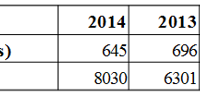
Summary Operates diversified, modern natural gas-fired power plants. Company pays no dividend yield, only share repurchases. Management exercises prudent control of debt and input costs. Calpine Corp. (NYSE: CPN ) has a portfolio (including partnership interest) of over 88 power plants generating in excess of 26,000 megawatts of power in North America, primarily in California, Texas, and the Eastern seaboard. As an added benefit, these are modern, clean energy plants using natural gas and geothermal to produce power, resulting in lower carbon emissions – 95% of the company’s power generation was done with natural gas. This marks it as an industry leader going forward as natural gas is expected to be a leading generator of power in the United States in the coming years, as coal continues its decline and natural gas is discovered in shale plays. While the company consumed 793 billion cubic feet of natural gas in 2014 (10% of all natural gas used for power generation), the EIA estimates the US has over 350 trillion cubic feet of proven natural gas reserves at the end of 2013. Prior Bankruptcy, Current Cost Control In 2005, Calpine filed for bankruptcy protection in one of the largest bankruptcies in US history as natural gas prices had soared, a new glut of competing power plants came online, and the company’s debt load of $22B became unmanageable due to poor structure. Calpine’s prior leadership team was poor and mismanaged the company in its debt and hedging practices. The company emerged from bankruptcy to begin trading again in 2008. I think it is important to note that the market today is much different than it was then – Calpine’s current outstanding debt is half of what it was, has been financed at lower interest rates, and the natural gas market has fundamentally changed. (click to enlarge) As noted, the company has done a great job in recent years of paying down and refinancing debt. Total interest expense has fallen from $813M in 2010 to $645M in 2014, a decrease of 20%, as total revenue has grown 22% in that same time frame. Long-Term Outlook, Coal to Gas Switching Depending on the fluctuating spot prices of coal and natural gas, power plants using one or the other frequently set the price of wholesale energy. Most often in the past decade, but as natural gas prices have fallen it has become more commonplace that natural gas sets the price. When this switching occurs, demand and total generation volumes increase for Calpine. If you look back to 2012 when this occurred often, you’ll find elevated levels of operating income. Forward markets for natural gas prices suggest this may happen again in 2015. Fundamentally, in the intermediate/long term, coal to gas switching may become even more prevalent as environmental regulations and political pressures force coal-fired power generation to reduce levels of pollutants like sulfur dioxide and nitrogen monoxide through expensive retrofits. Costs will increase for these market participants and natural gas power plants may overtake coal as the primary form of energy generation in the United States. Wait, No Dividend? Utilities are known for and sought out by income investors for the income that their dividend payouts provide. Retail investors frequently screen stocks by dividend yield and history to choose stocks. CPN does not pay one – but not for lack of profitability or cash flow. Thad Hill, CEO, stated in the Q4 2014 Earnings Release , 2014 wrapped up in a fine year for Calpine, we are proud to report adjusted EBITDA of $1.949 billion, adjusted free cash flow of $830 million and adjusted free cash flow per share of $2.03. So what gives? CPN provides returns to shareholders in the form of share buybacks solely. Thad Hill further states, Finally, we have continued to return money to our shareholders by completing $277 million of buyback since the last quarterly call in November. As our stock price moved down with the recent commodity price sell off, we took advantage of it and stepped up our share repurchase program. Since beginning the program in 2011, we have repurchased approximately 25% of our outstanding shares for $2.4 billion. $1.1B of those share repurchases have been done in the last year. Operating using a model of only share repurchases gives management added flexibility in deploying capital. Who better to know when the shares are undervalued than management? Or when that capital may best be used to fund a timely acquisition that has a greater expected NPV than through shareholder returns? Ownership/Short Interest CPN also has high institutional ownership (95%). This ratio is one of the highest I could find among utilities – only El Paso Electric (NYSE: EE ) and ITC Holdings (NYSE: ITC ) have higher rates, at 98.9% and 95.1%, respectively. Institutional ownership here is key – considering the vast amount of resources, talent, and research that these institutions provide their researchers, their investment decisions generally carry great weight with retail investors. In this case, retail investors have not followed, most likely due to the earlier highlighted issues of the lack of a dividend and prior bankruptcy. Analysts have a similar opinion to institutions. 75% of analysts rate the stock a strong buy/buy, with none rating it as underperform/sell. The average target price is $25.00 – nearly 20% upside from current prices. *Sourced from Yahoo! Finance Short interest in CPN (4% shares held short) is within the top quintile of utilities. Its short interest is similar to utilities that have no free cash flow or those with higher P/E ratios and lower growth prospects. Having no dividend is a double edged sword – no short wants to get stuck covering a dividend over ex-date, so short interest in the sector is usually mild even when the sector trades overvalued. The company’s lack of a dividend yield gives shorts the advantage of not being forced to cover at high prices before ex-date or feeling the sting of that negative dividend payment hit their account. 2015 Guidance (click to enlarge) The company guides $2.10-$2.60 a share in free cash flow/share – 3.5% increase over 2014 on the low end and 28% on the high end. This is forecast to be a record year in cash flow availability for the company, with plenty of available cash for repurchases and acquisitions. As of the February earnings release, the company had already repurchased $125M in shares in 2015 – on pace for another year of over $1B in repurchases – which would retire 12% of the float at the current share price. As the current share price sits below the average share price of repurchases in 2014, so I expect these buybacks to continue as management continues to believe current prices are an excellent investment opportunity. Conclusion A purchase in Calpine is a purchase of a company with a historical stigma and no steady income stream to shareholders. But it is also a purchase in a company that analysts and institutions have committed big to and one that is set to benefit strongly from a coming shift in energy production from coal to natural gas on the heels of the American resurgence of power in oil and natural gas production. I see fair value today at $26.00/share – more than 20% upside from current prices. Disclosure: The author is long CPN. (More…) The author wrote this article themselves, and it expresses their own opinions. The author is not receiving compensation for it (other than from Seeking Alpha). The author has no business relationship with any company whose stock is mentioned in this article.
How Much More Compelling Is The Southern Company Today?

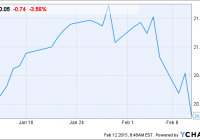
Recently I provided an update on the Southern Company, suggesting that 5% intermediate-term return expectations might be a reasonable baseline. Since that time, the share price has declined dramatically. This article looks at “how much more compelling” the company is today. On February 4th I published an article regarding the Southern Company’s (NYSE: SO ) fourth quarter and full year earning results. Within this update I indicated that 5% annual total returns over the intermediate-term might serve as a reasonable expectation moving forward. This was based on a growth assumption around 3% coupled with a future earnings multiple around 16 — both of which were in-line with the company’s history. At the time, shares were trading around $51. Today, less than two weeks later, the share price for the Southern Company is closer to $46.50 — a 9% decrease in a very short amount of time. Which naturally brings about a question: “are shares now more compelling? And if so, to what degree?” Barring any extraordinary events, and given that one’s assumptions probably haven’t changed, a lower share price necessitates that the investment proposition has become more attractive. You would still expect the same growth and future valuation as you might have two weeks ago — so a lower price means more value. However, figuring out the quantity by which the value proposal has changed is the important part. It doesn’t really mean much if 5% expected returns turn into 5.1% yearly returns. So let’s work through an illustration to determine a reasonable investment baseline based on today’s price. As indicated in the previous article the Southern Company had adjusted earnings per share of $2.80, while paying out nearly $2.10 in dividends per share. At the time, as is the case now, analysts are expecting growth of just over 3% , which we’ll assume to be an even 3%. That’s 3% growth in earnings alongside 3% growth in the dividends per share. Finally, we’ll use a future earnings multiple of 16 — quite close to the historical mark of the past decades. All of the assumptions stay the same — after all it’s been less than two weeks. What changed is the share price. Here’s a look at what the dividends per share might look over the next five years: 2015 = $2.15 2016 = $2.21 2017 = $2.28 2018 = $2.35 2019 = $2.42 At $51, the “current” dividend represented a 4.1% yield and you might have expected to receive 23% of your original investment back in the form of dividend payments over the next half-decade. With a share price of $46.50, this represents a “current” yield closer to 4.5% along with the expectation of receiving nearly 25% of your initial capital back during the next five years. Already you can see a difference. If earnings were to grow by 3% annually, this would lead to adjusted earnings around $3.25 five years later. A 16 multiple translates to a future price of roughly $52. Incidentally, given an adjusted payout ratio around 75%, this also equates to a future anticipated dividend yield of about 4.7%. As previously mentioned, these assumptions would have lead to expected total returns near 5% (actually 4.6%, but rounded up). With today’s price, this equates to expected annual returns of about 6.4%. In other words, the 9% decrease in share price has increased the baseline expected total return by roughly 1.8% per annum. How much of a difference does that make? Well over a five-year period, investing say $10,000, this would be the difference between an end value of $12,500 versus roughly $13,600, for the higher annual return (the difference is nearly $10,000 over 20 years). The amount of expected dividends and future share price remain, but you can now purchase these same expectations at a lower price. No different than buying milk at the grocery store — the calories and nutrients don’t change, but the price (and thus value received) can fluctuate. Of course you can’t continue to do this analysis everyday. Well, you can — but I can’t write an article on the Southern Company every time the price changes. In lieu of that, I thought it might be useful to provide a range of total return assumptions based on the aforementioned assumptions and a varying share price. $40 = 9.6% annual expected returns $42 = 8.6% $44 = 7.6% $46 = 6.6% $48 = 5.7% $50 = 4.8% $52 = 4% $54 = 3.2% Granted you could have different assumptions for the company. To this point you could adjust the above numbers or else develop “valuation shortcuts” as I have previously demonstrated . The idea is to have a general notion of how the current share price of a security fits in with your underlying expectations. At $50+ you’re basically collecting the dividend payment without much anticipation for capital appreciation — sans a higher earnings multiple in the future. At today’s share price you might expect to receive the 4.5%+ dividend along with slight share price growth over the intermediate term. And once you hit $42 or so, the returns are roughly half dividends and half expected capital gains. As time goes on, with the Southern Company or any one of your contemplated holdings, expectations will change and you can adjust for that. Yet I would contend that your assumptions don’t change all that much (or at all) from day to day. The share price can fluctuate widely, especially in comparison to the longer-tem business results. The best you can do is create a baseline and judge a security in comparison to your alternatives through time. Disclosure: The author is long SO. (More…) The author wrote this article themselves, and it expresses their own opinions. The author is not receiving compensation for it (other than from Seeking Alpha). The author has no business relationship with any company whose stock is mentioned in this article.

TECO Energy: Exiting TECO Coal To Drive The Stock Significantly Higher

Summary TECO Energy is strategically exiting its TECO Coal business in order to boost earnings. We believe the stock should trade at a premium valuation compared to its peers post TECO Coal divestiture. Investors should buy the stock at the current price in order to maximize gains. The shares of TECO Energy (NYSE: TE ), an energy-related holding company with regulated electric and gas utilities in Florida and New Mexico, have fallen significantly post its unimpressive fourth-quarter 2014 earnings few days ago. Furthermore, reduction in sale price of its TECO Coal subsidiary to Cambrian Coal by $30 million was also responsible for the correction in the stock. However, we believe the correction offers a decent entry point to long-term investors as TECO Energy is expected to be an interesting growth story post the TECO Coal divestiture. TE data by YCharts Investment Thesis The investment thesis is primarily based on TECO Energy’s future growth in net income following the divestiture of TECO Coal that is seeing operating losses with coal markets continuing to weaken. The company’s other three subsidiaries, such as Tampa Electric, Peoples Gas System and New Mexico Gas Co. or NMGC, are growing impressively. Exiting TECO Coal will boost the company’s overall bottom-line significantly. TECO Energy’s electricity sales for 2015 by Tampa Electric, one of its key subsidiaries, should rise modestly as a result of thriving Florida economy, particularly the Hillsborough County, Tampa Electric’s primary service territory. The electricity sales pattern in the Tampa area is bouncing back to the pre-economic downturn level, which is positive for TECO shareholders since most of the company’s earnings come from Tampa Electric. In addition to the electricity business, the stronger Florida economy is also responsible for sales growth of TECO’s Peoples Gas System unit by around 2-3% yearly driven by stronger commercial and industrial customer growth. Further, TECO Energy’s acquisition of NMGC in September is also expected to drive earnings due to healthy customer growth supported by large presence of oil and gas industries in New Mexico. Fundamental Analysis We believe TECO should trade at a premium in terms of EV/EBITDA compared to its peers, such as Southern Company (NYSE: SO ), American Electric Power (NYSE: AEP ), Exelon (NYSE: EXC ), and Edison International (NYSE: EIX ) as a result of favorable economic conditions in the states it operates. Dominion Resources (NYSE: D ), which operates in Virginia and North Carolina, is trading at a significant premium compared to the peer group due to its favorable jurisdiction, and TECO can also trade closer to such valuation post its TECO Coal exit. TE EV to EBITDA (Forward) data by YCharts Assuming normal weather in 2015, TECO’s 2015 EBITDA is expected to see around 15% year-over-year growth, and should be around $1 billion. As a result, enterprise value should be around 13 billion at 13x forward EV/EBITDA, the valuation at which Dominion Resources is trading. However, 13x forward EV/EBITDA might be too optimistic and we feel 10x is a more reasonable valuation, at which TECO’s enterprise value should be around 10 billion, and market cap should be close to $6.5 billion. We believe the stock is heading toward $27.70 based on 10x forward EV/EBITDA. Potential Risks If Florida’s economic conditions and housing markets see any weakening going ahead, Tampa Electric’s or Peoples Gas System’s earnings could be negatively impacted, resulting in negative returns for TECO shareholders. Since Florida is exposed to extreme weather conditions including hurricanes, investors should be prepared for volatility in the share price due to temporary reduction in the company’s earnings as a result of any damage to the company’s facilities. Since the company operates in a highly regulated environment, if it earns return on equity above allowed ranges, earnings could be subject to regulatory review and eventually might be reduced. Conclusion The current year is going to be TECO’s first full-year of ownership of NMGC, and the company expects it to be EPS-accretive in the first full-year. However, we believe NMGC will be a sustainable growth driver for the company. NMGC’s bottom-line growth coupled with TECO’s strategic exiting of the TECO Coal business should be considered long-term positive for the stock. Investors are advised to buy the stock at the current price. Business relationship disclosure: The article has been written by a BB Research stock analyst. BB Research is not receiving compensation for it (other than from Seeking Alpha). BB Research has no business relationship with any company whose stock is mentioned in this article. Disclosure: The author has no positions in any stocks mentioned, and no plans to initiate any positions within the next 72 hours. (More…) The author wrote this article themselves, and it expresses their own opinions. The author is not receiving compensation for it (other than from Seeking Alpha). The author has no business relationship with any company whose stock is mentioned in this article.