Tag Archives: utilities

E.ON – Strategically Positioning Itself For A Green Future
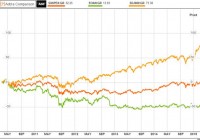
Positioning themselves strategically; inflection point in stock price. Geographical exposure to accelerating green energy trends. Preferred pick amongst large-cap European utilities. E.ON ( OTCQX:EONGY ) reported a record annual loss for 2014 as it took impairment charges associated with writing off its Italian and Spanish businesses as discontinued assets in its FY14 results on 11th March. These divestments are part of a refocusing its core businesses and portfolio optimization. E.ON’s announced in Dec 2014 that it will divest carbon interests and look to refocus business on renewables, smart grids and energy efficiency in a bold move to reposition itself in an industry strongly influenced by green energy trends. The European Union has set a target of 20% for the share of energy consumption to come from renewable energy sources by 2020, with each member state agreeing to a national target outlined in the 2009 EU Renewables Directive. Initial doubters of the credibility of the commitment have been proved wrong with the steady progress made by member nations. By 2012 the EU achieved 11.0% share of energy consumption generated from renewables . E.ON is particularly exposed to these trends as its home market is Germany which has undergone a transformation since the 2011 Fukushima crisis. It has set itself a target of generating 80% of electricity from clean sources by 2050 . Furthermore, technological advances in renewables have seen the costs of generating renewable energy falling, particularly for solar energy. This the shift towards renewable energies looks set to continue and we believe E.ON’s recently announced new strategic positioning will bring long term benefits to the company and its shares. Within Europe, E.ON has exposure to the regions that appear to be most affected by trends towards green energy. The company’s earnings are mainly generated from Germany with the UK and Sweden the other largest sources of earnings within the EU. Germany and Sweden generated ~24% and 60% of their electricity consumption from renewables in 2012. Furthermore, the UK government has been supportive of new green energy projects approving a number of projects in recent years as it tries to meet EU targets for 2020. In 2014, E.ON grew EBITDA by 20% in wind and solar and overall 18% of EON s EBITDA came from renewables . This looks set to continue as they stated they would pursue disciplined capex with > 70% of 2015 capex in Wind, Solar, Distribution Networks & Customer Solutions. The recent new refocused strategy and its exposure to countries in Europe that provide more favorable conditions for renewable energy growth should benefit the company in the medium to long term. E.ON has stated its preference towards wind and solar energy. Positioning towards renewables not only aligns it to wider energy regulation but also to technological trends. UBS stated in a report published in 2014 it believes solar and smart grid technologies will be at the forefront of wider change in power generation . It emphasizes “Solar is at the edge of being a competitive power generation technology” and that “power is no longer something that is exclusively produce by huge, centralized units owned by large utilities”. The falling cost of renewables technologies has coincided with the expected rise of the electric car and improvements in battery technologies. UBS predict a 50% reduction in the cost of batteries by 2020. This will allow homeowners to own battery packs to store energy and power their electric vehicles. Michael Liebrich of Bloomberg New Energy Finance stated that renewable energies have become “fully competitive with fossil fuels in the right circumstances” and their competitiveness looks set to strengthen in coming years as technological advances continue. Therefore, the positioning of the business towards renewables looks smart and it should help E.ON trade on higher valuation multiples, such as P/E. Renewables trade on higher multiples compared to traditional energy business due to stagnation in these traditional businesses and the potential for growth in renewable energy along with higher profit margins. Risks during the strategic overhaul should be taken into account as there is degree of uncertainty over divestments and the valuation of the new company that will be spun-off in 2016. Divestments have continued into 2015 with the sale of its Italian coal and gas power plants and reports suggesting it is looking to sell its North Sea exploration and production assets for around $2bn. Other business risks include its exposure to Russia which generated 7.4% of EBITDA in 2013. Furthermore, gas prices which continue to stay low or trend downwards will affect company earnings as E.ON repositions its business model. Analysts appear divided on whether EON’s transformation is too radical and whether the strategy will be successful. The stock has underperformed the wider European market and Stoxx 600 Utilities index over the last 5 years due to its poor performance, see graph below. It is valued attractively given this underperformance and current poor ROA at 0.96x P/B (cf sector 3.2x) with EV/EBITDA of 4.2x . Its dividend yield is 3.9%, slightly higher than the sector with a pay-out ratio of 60% which is easily defendable given a reasonable net debt to EBITDA ratio of 2.4x. It has also announced it will keep a fixed dividend to bridge the transition to its spin-off. (click to enlarge) The big question is can a traditional utility reinvent itself as a green energy services power house. We believe they can and implementing the strategy earlier than its competitors will allow E.ON to position itself competitively within a transforming industry. Its aims to decarbonise its services at a faster rate should be attractive to investors and raise it from current low stock valuation multiples. Furthermore, the less capital intensive its business becomes the greater the cash flows it will generate and the more it will be able to boost investment and shareholder returns in the future. Renewable energy is shaping the utilities sector and we believe E.ON’s recent strategic overhaul positions it perfectly to benefit. Editor’s Note: This article discusses one or more securities that do not trade on a major U.S. exchange. Please be aware of the risks associated with these stocks. Disclosure: The author has no positions in any stocks mentioned, and no plans to initiate any positions within the next 72 hours. (More…) The author wrote this article themselves, and it expresses their own opinions. The author is not receiving compensation for it (other than from Seeking Alpha). The author has no business relationship with any company whose stock is mentioned in this article.
3 Utility ETFs Suffering From Rate Hike Worries

Banking on strong recovery in the U.S. economy, analysts are expecting a possible rate hike in September or October this year. Meanwhile, rate hike worries have been weighing on the major benchmarks. Recently released economic data including construction spending, auto sales and job number all came in on the strong side. These have elevated the rate hike possibility further. Strong Economic Recovery After having a dull first quarter, the economy rebounded strongly in the second as indicated by several economic data. The Fed also remained optimistic about a recovery in the second quarter based on strong labor and housing data. According to the U.S. Labor Department, the U.S. economy created a total of 280,000 jobs in May, witnessing the largest job addition since December 2014. Though the unemployment rate marginally rose to 5.5% in May, the rate is expected to decline gradually to Fed’s target this year. The average hourly wages also witnessed a strong year-on-year gain of 2.3%. Among other major economic data, the U.S. Department of Commerce reported that construction spending surged 2.2% in April, its fastest pace since May 2012. Also, most of the major housing data showed that the housing market recovered strongly in April. Meanwhile, U.S. light-vehicle sales gained 1.6% year over year to 1.63 million units last month, witnessing its best May ever in terms of light vehicle sales. Rate Hike Worries Strong economic data indicates that the economy is back on track in the second quarter, leaving behind the first-quarter contraction. This raises the possibility of a rise in interest rates, which have been near zero since the 2008 financial crisis. Before deciding on a rate hike, the Fed will closely watch the labor market situation and the inflation rate. However, the Fed remained “reasonably confident that inflation will move back to its 2% objective over the medium term”. The evolving macro environment points toward a possible rate hike in the not-too-distant future. Stock market investors are finding this prospect somewhat discouraging, which has been showing up in the market’s daily activity in recent sessions. Higher interest rates can make stocks less appealing and especially so in the dividend space. In this scenario, sectors including utilities that are expected to be affected by a rate hike have suffered heavily in recent times. 3 Utility ETFs Suffering The Utility sector is one of the most rate-sensitive sectors due to its high level of debt. Utilities are capital-intensive businesses and the funds generated from internal sources are not always sufficient for meeting their requirements. As a result, the companies have to approach the capital markets for raising funds. As a result, a rising rate environment may have a negative impact on this sector. Here, we highlight 3 utility ETFs that have suffered in recent times on rate hike worries. PowerShares DWA Utilities Momentum Portfolio (NYSEARCA: PUI ) This fund provides exposure across 40 securities by tracking the DWA Utilities Technical Leaders Index. Nearly 40% of total assets are allocated to the top 10 holdings. Sector-wise, multi-utilities take the top spot at 37.7%, while electric utilities and gas utilities take the next two positions. PUI has amassed $31.9 million in its asset base while it sees light volume of around 9,000 shares a day. The ETF has 0.60% in expense ratio and has declined 3.7% over the past one month. Guggenheim S&P 500 Equal Weight Utilities ETF (NYSEARCA: RYU ) This fund follows the S&P 500 Equal Weight Index Telecommunication Services & Utilities, holding 36 stocks in its portfolio. It is well diversified across its holdings with none of the companies accounting for more than 3.2% of the total assets. The ETF has been able to manage $128.3 million in its asset base and is moderately traded with more than 58,000 shares per day. It charges 40 bps in annual fees and expenses. The product has declined 3.2% in the trailing one-month period. iShares U.S. Utilities ETF (NYSEARCA: IDU ) This ETF provides exposure to 61 firms by tracking the Dow Jones U.S. Utilities Index. The fund has amassed $583.3 million in its asset base while it sees a moderate volume of around 417,000 shares a day. The product is largely concentrated in the top 10 firms that collectively make up for half of the basket. About 52% of its assets are allocated to electric utilities. The ETF charges a fee of 43 bps annually and has lost more than 2.9% in the past one month. Original Post

Clean Energy Fuels – 2 Reasons And 4 Charts Show Why It’s A ‘Buy On The Dip’ Opportunity

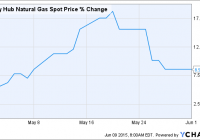
Summary CLNE will benefit from the increasing usage of natural gas in electricity generation in the long run as this will push up the price of the commodity. Though natural gas trucks cost $50,000 more than diesel trucks, they can deliver annual fuel savings of around $25,000, creating a tailwind for CLNE as this will increase NGV adoption. The drop in diesel prices hasn’t discouraged fleet operators from buying more natural gas trucks, and this will allow CLNE to maintain its volumes even in adverse circumstances. CLNE is gradually building up fueling infrastructure that will help it increase its addressable market and land more customers for fueling services in the long run. Clean Energy Fuels (NASDAQ: CLNE ) has appreciated over 50% in 2015, but the stock has lost momentum ever since it posted weak Q1 results around a month ago. In the past one month, Clean Energy shares have dropped over 13% since the company missed consensus estimates owing to slower adoption of natural gas vehicles and the decline in natural gas prices. As a result, despite an increase in volumes of natural gas delivered, Clean Energy’s financial performance contracted and its revenue was affected to the tune of $3.7 million due to weak natural gas pricing. But, in my opinion, the drop in Clean Energy’s stock price over the past one month has given investors an opportunity to buy the stock on the dip. If we look at the long run, Clean Energy will benefit from two key factors — an increase in natural gas prices and the increasing adoption of natural gas fleets. In this article, we will take a closer look at these points and see why Clean Energy is a good buy-on-the-dip opportunity. Natural gas prices have started recovering Natural gas prices have recovered slightly since the end of April as shown in the chart below: Henry Hub Natural Gas Spot Price data by YCharts The recent recovery in natural gas prices is being driven by the injection season, as demand for the fuel has increased due to low pricing and the hot weather. In fact, the latest injection season has seen strong refill activity that has exceeded the five-year average injections by a comfortable margin, according to the EIA. Additionally, the hot summer season has led to an increase in the usage of air conditioners, which has again pushed up demand for natural gas. Now, it should be noted that natural gas is increasingly replacing coal as a source of electricity generation as shown below: The basic point that I am trying to put across over here is that demand for natural gas is increasing, and this will help decrease the oversupply in the U.S. natural gas market. In fact, over the long run, usage of natural gas in electric generation will continue increasing at a steady pace as more power plants switch from coal to gas. This is because the conversion rate of natural gas into electricity stands at 90% as compared to only 30% in case of conventional fuels. Thus, as the demand-supply situation in the natural gas market improves, prices will get better. This will act as a tailwind for Clean Energy as the company suffered last quarter due to a drop in prices. In fact, over the long run the EIA expects natural gas prices to recover strongly as pointed out in its latest Annual Energy Outlook as shown below: (click to enlarge) Source Thus, investors should not worry much regarding the short-term concern around natural gas prices as the future of the commodity looks robust in the long run. Corporations are switching to natural gas vehicles despite the decline in oil prices The massive decline in oil prices over the past year has made diesel cheaper. As a result, there is not much incentive for fleet operators to convert to natural gas, as each natural gas truck costs around $50,000 more than a diesel truck. However, fleet operators are still buying natural gas-powered trucks. This is not surprising as natural gas engines can deliver identical power and acceleration as compared to diesel engines, but at the same time, natural gas is around 50% cheaper than gasoline or diesel. This will help fleet operators record major savings in the long run. For instance, a class 8 truck in the U.S. runs around 67,000 miles a year as per the Federal Highway Administration , and has a mileage of 5.2 miles per gallon of gasoline. Now, considering a conversion cost of around $50,000 per truck, a fleet operator will be a able to record strong savings as shown below: (click to enlarge) Source Hence, fleet owners will continue converting into natural gas, and this will be a tailwind for Clean Energy. As a result, it is not surprising to see that the company has signed new agreements with Potelco and Dean Foods (NYSE: DF ) to refuel their natural gas fleets. The Potelco agreement will enable Clean Energy to fuel 75 heavy-duty LNG trucks. In fact, the company has opened two truck-friendly fuel stations in Arizona and Kansas City that will support 58 CNG trucks for seaboard transport. On the other hand, the agreement with Dean Foods will allow Clean Energy to build a private CNG fueling station to fuel 64 trucks at Dean Foods’ Oak Farms Dairy plant in Houston, Texas. More importantly, Clean Energy is investing in infrastructure in order to improve the adoption of natural gas vehicles. It has opened 16 fueling stations since the beginning of the year as a part of its plan to build around 35 stations for its customers this year. As a result, Clean Energy will benefit from investments by truck makers, engine manufacturers, and other component OEMs that are increasingly focusing on natural gas vehicles. Conclusion The two key points discussed in the article clearly indicate that Clean Energy Fuels’ weak performance is temporary. The advantages of natural gas over diesel will help it get better going forward, and the increase in pricing will be another key catalyst. Thus, it makes sense for investors to buy the drop in Clean Energy’s stock price as it can be a good long-term investment. Disclosure: The author has no positions in any stocks mentioned, and no plans to initiate any positions within the next 72 hours. (More…) The author wrote this article themselves, and it expresses their own opinions. The author is not receiving compensation for it (other than from Seeking Alpha). The author has no business relationship with any company whose stock is mentioned in this article.