Tag Archives: utilities

Pepco-Exelon Merger: OPC-DC’s Position Raises Questions As To Agency’s Effectiveness, Relevancy
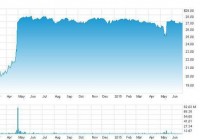
Summary The D.C. Public Service Commission is reviewing the Pepco-Exelon merger; regulatory approval is the final step in the process and if granted, the transaction should close shortly thereafter. Pepco shareholders will receive $27.25 per share in cash plus a pro-rata dividend; the D.C. AG and the Office of People’s Counsel D.C. have voiced opposition to the proposed merger. A closer look at the OPC-DC’s brief in opposition to merger reveals flawed reasoning and a motive of preserving the agency’s existence and relevancy to the detriment of D.C. consumers. We are approaching the conclusion of the regulatory review of the Pepco-Exelon merger which was announced on April 30, 2014. Pepco Holdings Inc.’s (NYSE: POM ) stock now trades ex-dividend (from June dividend) but there remains upside at its current price of $26.75 per share. At closing shareholders will receive $27.25 per share in all cash and a pro-rata dividend of $0.002967 per share per day after June 10th and until the merger closes as we discussed in early-June . We continue to hold our position in Pepco and expect that Exelon (NYSE: EXC ) will close the transaction in July with the expectation that the Public Service Commission of D.C. will grant its approval of merger. (click to enlarge) (Source: Nasdaq.com) The Office of the People’s Counsel of D.C. Is Taking the Wrong Approach to the Merger In anticipation of the Public Service Commission of D.C. vote to approve the proposed transaction, the Office of the People’s Counsel of D.C. filed a brief outlining their views and opposition to the merger. We are surprised that the OPC is taking strong stance against a sound merger that will result in a more efficient company with greater resources to provide reliable and low cost service to the people of D.C. Even more surprising is that their arguments against the proposed transaction are inconsistent and in many instances directly contradict past statements made by and official views of the OPC. We believe if Pepco continued as a standalone company over the long-term, Pepco’s already attenuated financial position may worsen due to the company’s substantial indebtedness, and capital expenditure requirements for further investments in infrastructure improvements. OPC has even agreed that this was true prior to the Exelon-Pepco merger. In Mayor Vincent Gray’s annual letter for OPC in 2013 he starts off by discussing how Pepco has struggled significantly with service reliability and minimizing power outages: (click to enlarge) (Source: OPC-DC 2013 Annual Report; opc-dc.gov) With such an unfortunate experience in service reliability, we would think the OPC would like to a see a service provider with greater financial strength, greater resources to invest in improved infrastructure, and an experienced and talented management team. This does not appear to be the case. In fact, OPC would like the opposite. We look to OPC’s brief on the merger and surprisingly the office now claims that “PHI/Pepco do not need Exelon” and “Direct Benefits to Ratepayers are Inadequate, Overstated, and Will Be Fully Realized (if at all) Only After Many Years.” Suddenly and inexplicably (actually we will get to our explanation below), Sandra Mattavous-Frye, the head of the OPC, in the brief put her full support behind Pepco CEO Joseph Rigby’s statement of service reliability: (click to enlarge) What could possibly explain this sudden shift in the OPC’s view toward Pepco? The OPC-DC relies upon power outages, unreliable service to its consumers and over-billing among other issues in order to litigate and justify its existence within the D.C. government. A standalone Pepco will allow OPC to continue to pursue litigation against Pepco and take advantage of power outages and poor service for political gain. For example, Sandra Mattavous-Frye states that in response to several consumer complaints against Pepco and other energy suppliers: “We took a novel approach to a traditional problem. We petitioned the Commission to investigate the matter, educated and informed consumers about their rights, and negotiated a global settlement with the provider. The end-result was an unprecedented settlement that addressed the needs of some 500 aggrieved customers and led to the creation of a $100,000 low income energy grant fund.” Apparently suing Pepco is a “novel approach.” But this is what the agency relies on and the agency continues to pursue litigation against Pepco and others when the opportunity arises. Any improvement in the underlying problems by more efficient and low cost service providers would disrupt the agency’s mission. Therefore, in an effort to maintain the status quo, the OPC has come out against the merger with populist views of how the merger is driven by greedy management and shareholders at the Illinois-based Exelon. Politically, this stance grabs headlines and gets strong support from a solid segment of the population but in the end, we think it is bad public policy for D.C. consumers and will not withstand the objective review of the D.C. Public Service Commission. We expect the D.C. Public Service Commission to approve the merger. (click to enlarge) (Source: Exelon Presentation April 30, 2014) In Our View, the Transaction Would Undoubtedly Be an Overall Positive for D.C. Consumers We believe the OPC’s vocal stance against the merger is driven by the agency’s self-interest as the merger will in effect render this inefficient, bureaucratic agency irrelevant. Consumer complaints will almost certainly decline and overall service reliability will improve post-transaction. (Source: OPC-DC.gov; 2013 Annual Report) Exelon’s establishment of a Customer Investment Fund and a commitment for enhanced reliability will improve the service for D.C. consumers over the status quo. Post-transaction, the agency’s role in advocating consumers will be greatly diminished and the D.C. government may take a close look at this agency to determine if it is even necessary to continue to spend significant and valued taxpayer dollars on such basic tasks when consumers are receiving low cost and reliable service from the new Exelon-Pepco entity. Will History Repeat Itself? In our view and final analysis, the Office of People’s Counsel DC provides very little, if any, substantive value to DC consumers. The agency represents government bureaucracy at its worst despite its claim that its overall budget is revenue neutral. (click to enlarge) (Source: OPC-DC.gov) We find that the agency is over-staffed and under-delivering on its mission to educate, advocate, and protect consumers because the agency is squandering its resources in pursuing misguided political activism at the expense of DC consumers. The office which was eliminated once before in 1952. After being reestablished in 1975, we think now in 2015 the agency’s effectiveness and relevancy has passed it by. Disclosure: I am/we are long POM. (More…) I wrote this article myself, and it expresses my own opinions. I am not receiving compensation for it (other than from Seeking Alpha). I have no business relationship with any company whose stock is mentioned in this article.
PPL Remains On Track Despite Spin-Off

When a company spins off part of its business, it may look like shareholders lost money, but in most cases, it’s just a technical adjustment. PPL’s stock hasn’t “fallen,” per se, but instead PPL shareholders now own a portion of newly-created Talen Energy, a stake of which they can do with what they want. After the spinoff, PPL management reaffirmed its 2015 ongoing EPS guidance of $2.05-$2.25, as well as its expected earnings CAGR of 4%-6% through at least 2017. Certainly there’s been a lot of share-price noise at PPL as of late, but the firm continues to execute, and we still like the utility. By Kris Rosemann PPL Corp’s (NYSE: PPL ) shares have been adjusted lower recently, as the firm officially completed the spinoff of its energy supply business June 1. The move finalizes PPL’s transition to a focus on regulated utilities in the US and UK. PPL’s spinoff, now trading under the name Talen Energy Corporation (Pending: TLN ), also includes the addition of RJS Power of Riverstone Holdings. As previously announced , all of the common stock of Talen Energy will be distributed pro rata to PPL shareholders. PPL shareholders received ~.1249 shares of Talen Energy common stock for each share of PPL owned as of May 20. Fractional shares were not issued; instead they were aggregated and sold in the open market, with the cash proceeds distributed pro rata to PPL shareholders. The affiliates of Riverstone Holdings will receive common shares of Talen Energy in compensation for RJS Power, resulting in their owning 35% of Talen Energy. PPL shareholders will own 65%. After the spinoff, PPL management reaffirmed its 2015 EPS from ongoing operations guidance of $2.05-$2.25, as well as its expected compound annual earnings growth rate of 4%-6% through at least 2017. The firm expects substantial rate base growth in the coming years, projecting a CAGR of 7% through 2019, though we note currency headwinds from its UK operations will continue to negatively impact earnings in the near term. Management also stated as recently as February of this year that it expects dividend growth potential to become realizable following the spinoff. The dividend potential of Talen Energy remains to be seen, but the assets that make up the company generated $4.3 billion in revenue in 2014. The newly-created firm will boast a competitive cost structure and the financial agility to pursue additional growth options. At its inception, Talen’s generation capacity of about 15,000 megawatts will be primarily located in the Mid-Atlantic and Texas, two of the largest and most competitive energy markets in the US. Its generation mix is approximately 43% natural gas or oil, 40% coal, 15% nuclear, and 2% hydroelectric. The energy-generating plants will continue to be operated and maintained by the same employees before the spin off, and the firm’s leadership team is partially comprised of former PPL leadership. The drop in PPL’s share price should not come as a surprise, and intuitively, it makes sense. Though at face value it appears that PPL shareholders suffered a decline in the value of their position, the spinoff is a net-neutral one in the sense that the value lost by PPL shareholders in the market will be realized by the receipt of new Talen stock and cash distributions. Our opinion of PPL is relatively unchanged following the spinoff, and we maintain the company is still one of the best-performing utility companies available. We see no need to adjust our holding of PPL in the Dividend Growth Portfolio, though we may view the new shares of Talen Energy as a source of cash. Our fair value estimate already reflects the anticipated spinoff. We value shares of PPL at $30 each at the time of this writing. Disclosure: I/we have no positions in any stocks mentioned, and no plans to initiate any positions within the next 72 hours. (More…) I wrote this article myself, and it expresses my own opinions. I am not receiving compensation for it (other than from Seeking Alpha). I have no business relationship with any company whose stock is mentioned in this article. Additional disclosure: PPL is included in the Dividend Growth Newsletter portfolio.

AES Corporation – A Long-Term Bet

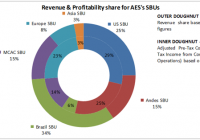
Summary AES is well-diversified Fortune 200 global power company. An early mover in the energy storage business, AES appears to have a good strategic focus. The company’s stock appears to be undervalued relative to its peers. Headquartered in Arlington, Virginia, AES Corporation (NYSE: AES ) is a $17b global power company, which makes it a Fortune 200 company. It owns and operates a diverse portfolio of electricity generation and distribution businesses. I think the company is a good long-term pick because of the following 3 reasons: Global Diversification The company’s electricity generation and distribution operations are spread globally across 18 countries. In terms of power generation capacity, only 12GW out of a total of 36GW is generated by the company in the US. The company’s operations in emerging economies should help the company achieve higher growth rates over the next few years. Its operations in US and Europe should provide relatively lower but stable growth for the company. Such global diversification helps the company mitigate risk. Overall, I would argue that this geographical diversification is a good strategy, though some would argue otherwise citing the foreign exchange risk and the political risk that comes inherent with such strategies. Looking at the last quarter revenues and profitability measure of the company’s different Strategic Business Units (NYSEARCA: SBUS ), two observations stand out – First, while Brazil contributed the highest revenues (34%) amongst all SBUs, its profitability share was only 6%. A major contributing factor to the low profit margins from Brazil was the unfavourable foreign exchange impact. Second, Europe is contributing disproportionately higher profits to the company compared to its revenues. Combined, these individual inconsistencies a part and parcel of the company’s strategy of global diversification. Strong Strategic Focus The company has a reasonably good corporate and business strategy in place. In the last few areas, the company has exited some “non-core” markets and recycled the sell-off proceeds. Since September 2011, the company has exited 10 countries and raised $3b in equity proceeds. In the markets where the company believes it has a competitive advantage, $7 billion worth of projects are in the pipeline. These are expected to be completed in the period from 2015 to 2018. (Source: AES Investor Presentation, May 2015, www.aes.com/investors/presentations-and-… ) AES has been an early mover in the battery-based energy storage business. With distributed energy gaining prominence, this augurs well for the company. Tesla (NASDAQ: TSLA ) was in the news recently for introducing batteries to manage energy needs. However, AES already has batteries operating in big battery farms on the grid (86 MW), some projects under construction (50 MW) and other projects in the late stage of construction (210 MW). AES also recently acquired Main Street Solar, which gives AES the capabilities to enter the distributed solar market, a future growth market. Undervalued Stock AES appears to be undervalued when we look at its P/E ratio and Price-to-sales ratio relative to some of its peers. If we were to base our judgment of the company based on these two ratios alone, AES should have been a strong buy. These two ratios for the company are amongst the lowest in the industry. However, another ratio the Price-to-book (P/B) ratio is amongst the highest in the industry, indicating the company is overvalued. Price-to-book ratio is definitely a good ratio to look at, especially when looking at capital-intensive businesses like AES. The reason for the high P/B ratio is the high levels of debt that the company has. The company had a debt-to-equity ratio of close to 5, which is relatively high, in March 2015. With high debt, its interest coverage ratio at that time was a not-so-healthy 1.83. So, although this would be an area of concern for some, I believe the company has the ability to navigate safely through this. This is based on the fact that these ratios have been in a similar range for AES before and the company has a sound business plan going forward. The company appears to be well-positioned for a decent growth in the next few years, according to the company guidance. The company has estimated the following for the future – the period from 2015 to 2018 – 10-15% annual free cash flow growth – 5% average EPS growth from – 10% annual growth in dividends – 8% average annual total return Disclosure: I/we have no positions in any stocks mentioned, and no plans to initiate any positions within the next 72 hours. (More…) I wrote this article myself, and it expresses my own opinions. I am not receiving compensation for it (other than from Seeking Alpha). I have no business relationship with any company whose stock is mentioned in this article.