Tag Archives: utilities

AusNet Should Not Be Bought By Conservative Investors
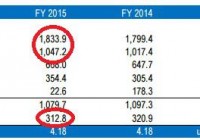
Summary AusNet has been a steady dividend payer but it actually cannot afford the dividend as in the past two financial years it had to borrow cash to cover the dividend. Despite considering half of the capex as ‘growth’ capex, there won’t be a clear revenue increase further down the road. I consider my investment profile to be a bit too conservative to invest in AusNet right now as it isn’t self-funding the dividend (if you include growth capex). Introduction AusNet Services ( OTCPK:SAUNF ) operates a gas and electricity distribution network in Melbourne and Victoria (Australia) as well as high voltage power lines supplying Victoria. The company is known for its relatively generous dividend payments, but in this article I will discuss whether or not these dividends are sustainable. AusNet is an Australian company and you should trade in AusNet shares on the Australian Stock Exchange for liquidity reasons as the average daily dollar volume is almost $4M. The stock’s ticker symbol in Australia is AST . Is AusNet spending too much cash on dividends? In order to answer this question, we obviously need to have a closer look at the company’s financial situation, so we will focus on the results of its financial year 2015 (the most recent numbers available to the general public). Source: press release At first sight, AusNet had a pretty decent year as its revenue increased by 1.9%, resulting in a 2.9% increase in its EBITDA to just over A$1B. You immediately notice the strong EBITDA conversion as in FY 2015, no less than 57% of the company’s revenue was converted into EBITDA, which is pretty strong! However, this trend was discontinued at the bottom line as AusNet’s (adjusted) net profit decreased by approximately 2.5%. But of course, net profits and net losses don’t have any importance when you’re trying to find out whether or not a company can afford its dividend policy and that’s why I will switch to the company’s cash flow statements. AusNet generated an operating cash flow of A$768M (a very nice increase compared to the A$730M last year), but unfortunately the company had to spend A$800M in capital expenditures resulting in a negative free cash flow of almost A$40M (US$30M). So there wasn’t any free cash flow, but AusNet decided to spend A$180M (US$135M) in dividend distributions anyway. That’s not a good sign. Source: financial statements But okay, maybe this was a one-time bump in the road, so let’s pull the 2014 numbers as well. In the previous financial year, AusNet generated A$730M in operating cash flow but spent A$925M on capital expenditures, so AusNet hasn’t had a positive free cash flow in two financial years, but nevertheless decided to reward its stakeholders by paying out cash dividends to the tune of US$330M (keep in mind this does NOT include the additional dilution caused by shareholders accepting their dividend in new shares. If everybody would have elected a cash payment, the cash outflow would even be $100M higher!). This cash shortfall was compensated by issuing more debt. Why I’m not interested in buying AusNet at the current valuation I’m obviously not narrow-minded nor short-sighted (at least, I try not to be), and it does look like AusNet’s future will improve a bit as its capital expenditures are coming down. This should be the last year of heavy capex investments (estimated at A$900M), but from FY 2017 on the capital expenditures should be reduced to A$725M per year. Taking an expanding operating cash flow into consideration, this means I would expect AusNet to generate a positive free cash flow but his will be insufficient to cover the current 6% dividend yield. There’s an additional reason why I’m not very keen on adding AusNet to my portfolio. It’s quite common for utilities companies to have a lot of debt on its balance sheet and AusNet isn’t any different. As of at the end of March it had A$5.8B in net debt. That shouldn’t be a huge problem given the strong operating cash flows and EBITDA (and as said, it’s very normal for a company in this segment to have an above-average net debt). However, if you’d look at the cost of this debt, you’d be surprised at how this leverage could kill this company. AusNet paid A$326M in finance costs, so let’s now assume its average interest rate it has to pay is approximately 5%. If the average cost of debt would increase by 1%, AusNet’s bill would increase by A$50M and this will have a further negative impact on its ability to generate a positive free cash flow. But I don’t want to be too negative I always get a little bit nervous when I see a company telling its shareholders ‘the dividend is fully backed by the operating cash flow’. Whilst this is essentially true, I prefer to look at the free cash flow/dividend ratio. Whilst this is ratio is negative in AusNet’s case, there is also something working in its favor. (click to enlarge) Source: company presentation Of the A$800M it spent on capex in FY 2015, only A$380M was maintenance capex whilst the remaining A$420M capex was spent on projects to ensure further growth. However, looking at the average analyst estimates , there’s no clearly visible increase in the revenue expected within the next few years so even though A$420M is being spent on ‘growth’, I’m cautious until I indeed see a revenue increase. Investment thesis AusNet is paying a handsome dividend – which it promises to increase once again this year – but it’s only able to afford the dividend by raising additional cash through issuing more debt and that’s a dangerous game to play. I’m fine with AusNet spending A$420M on ‘growth’, but it’s a bit disappointing the company hasn’t released updated revenue growth targets for the next few years so it’s difficult to check if the ‘growth capex’ is really paying off. Don’t get me wrong, I’m not saying AusNet is a bad company, not at all. But I personally wouldn’t feel comfortable with a continuously increasing net debt profile which has the potential to erode the majority of the future free cash flow should the interest rates increase (which isn’t really unlikely). Editor’s Note: This article discusses one or more securities that do not trade on a major U.S. exchange. Please be aware of the risks associated with these stocks. Disclosure: I/we have no positions in any stocks mentioned, and no plans to initiate any positions within the next 72 hours. (More…) I wrote this article myself, and it expresses my own opinions. I am not receiving compensation for it (other than from Seeking Alpha). I have no business relationship with any company whose stock is mentioned in this article.

Utilities Sector and Stocks Analysis from Seeking Alpha

Utilities Sector and Stocks Analysis from Seeking Alpha © seekingalpha.com. Use of this feed is limited to personal, non-commercial use and is governed by Seeking Alpha’s Terms of Use (http://seekingalpha.com/page/terms-of-use). Publishing this feed for public or commercial use and/or misrepresentation by a third party is prohibited. SeekingAlpha.com http://seekingalpha.com NRG Energy Is Ready For A Turnaround http://seekingalpha.com/article/3288025-nrg-energy-is-ready-for-a-turnaround?source=feed_sector_utilities 3288025 Sun, 28 Jun 2015 02:25:13 -0400 SCTY VSLR NRG Simple Investment Ideas PNM Resources: Potential Headwinds Diminish A Compelling Value Argument http://seekingalpha.com/article/3285845-pnm-resources-potential-headwinds-diminish-a-compelling-value-argument?source=feed_sector_utilities 3285845 Sat, 27 Jun 2015 08:45:43 -0400 PNM Tristan R. Brown Duke Energy: Dividend Increase Coming – What Investors Should Expect http://seekingalpha.com/article/3287375-duke-energy-dividend-increase-coming-what-investors-should-expect?source=feed_sector_utilities 3287375 Fri, 26 Jun 2015 19:40:14 -0400 DUK Bob Ciura Pepco-Exelon Merger: OPC-DC’s Position Raises Questions As To Agency’s Effectiveness, Relevancy http://seekingalpha.com/article/3287225-pepco-exelon-merger-opc-dcs-position-raises-questions-as-to-agencys-effectiveness-relevancy?source=feed_sector_utilities 3287225 Fri, 26 Jun 2015 16:51:06 -0400 EXC POM Transcend Event Driven Research PPL Remains On Track Despite Spin-Off http://seekingalpha.com/article/3287185-ppl-remains-on-track-despite-spin-off?source=feed_sector_utilities 3287185 Fri, 26 Jun 2015 16:35:55 -0400 TLN PPL Valuentum AES Corporation – A Long-Term Bet http://seekingalpha.com/article/3287175-aes-corporation-a-long-term-bet?source=feed_sector_utilities 3287175 Fri, 26 Jun 2015 16:34:41 -0400 AES Himanshu Gupta Xcel Energy Is Entering A Bear Cycle http://seekingalpha.com/article/3287135-xcel-energy-is-entering-a-bear-cycle?source=feed_sector_utilities 3287135 Fri, 26 Jun 2015 16:05:09 -0400 XEL Calder H. Lamb NiSource Is Overvalued And Speculative http://seekingalpha.com/article/3286025-nisource-is-overvalued-and-speculative?source=feed_sector_utilities 3286025 Fri, 26 Jun 2015 09:24:36 -0400 NI Benjamin Clark DTE Energy: Bearish Sentiment And Solid Earnings Potential Make This Utility Look Undervalued http://seekingalpha.com/article/3283005-dte-energy-bearish-sentiment-and-solid-earnings-potential-make-this-utility-look-undervalued?source=feed_sector_utilities 3283005 Fri, 26 Jun 2015 08:04:21 -0400 DTE Tristan R. Brown What’s The Matter With Utilities Stocks? http://seekingalpha.com/article/3284665-whats-the-matter-with-utilities-stocks?source=feed_sector_utilities 3284665 Thu, 25 Jun 2015 16:18:21 -0400 XLU Adam Freedman Duke Energy – Repositioning Business http://seekingalpha.com/article/3284365-duke-energy-repositioning-business?source=feed_sector_utilities 3284365 Thu, 25 Jun 2015 14:57:01 -0400 DUK Equity Watch Ameren Corporation: Creating Stable Income Streams At Less Risk Than The Market http://seekingalpha.com/article/3284145-ameren-corporation-creating-stable-income-streams-at-less-risk-than-the-market?source=feed_sector_utilities 3284145 Thu, 25 Jun 2015 14:33:48 -0400 AEE Calder H. Lamb Southern Co. And Exelon – ‘Why Don’t You Try Me’ http://seekingalpha.com/article/3283915-southern-co-and-exelon-why-dont-you-try-me?source=feed_sector_utilities 3283915 Thu, 25 Jun 2015 13:35:02 -0400 EXC SO George Fisher German Government Provides Relief For RWE- But That Won’t Turn The Share Price http://seekingalpha.com/article/3283305-german-government-provides-relief-for-rwe-but-that-wont-turn-the-share-price?source=feed_sector_utilities 3283305 Thu, 25 Jun 2015 09:37:42 -0400 EONGY RWEOY Catharina Hillenbrand-Saponar Brookfield Infrastructure Partners: World Class Infrastructure Assets And Undervalued With Solid Growth Prospects http://seekingalpha.com/article/3283105-brookfield-infrastructure-partners-world-class-infrastructure-assets-and-undervalued-with-solid-growth-prospects?source=feed_sector_utilities 3283105 Thu, 25 Jun 2015 08:35:20 -0400 BAM BIP Caiman Valores Warm Weather In Q1 Didn’t Diminish Portland General Electric’s Long-Term Outlook http://seekingalpha.com/article/3278635-warm-weather-in-q1-didnt-diminish-portland-general-electrics-long-term-outlook?source=feed_sector_utilities 3278635 Wed, 24 Jun 2015 14:39:04 -0400 POR Tristan R. Brown NRG Could Be The Green Victim Of Green Energy http://seekingalpha.com/article/3275575-nrg-could-be-the-green-victim-of-green-energy?source=feed_sector_utilities 3275575 Tue, 23 Jun 2015 16:03:51 -0400 ENB NEE NRG Dana Blankenhorn In A Rising Natural Gas Market Dynegy Is Worth Considering http://seekingalpha.com/article/3278015-in-a-rising-natural-gas-market-dynegy-is-worth-considering?source=feed_sector_utilities 3278015 Tue, 23 Jun 2015 11:28:50 -0400 DYN Calder H. Lamb Growth And Upside Potential Highlight American Electric Power’s Bullish Credentials Going Forward http://seekingalpha.com/article/3277855-growth-and-upside-potential-highlight-american-electric-powers-bullish-credentials-going-forward?source=feed_sector_utilities 3277855 Tue, 23 Jun 2015 10:58:36 -0400 AEP Equity Watch Wisconsin Energy’s 3.93% Yield: A 5-Year High http://seekingalpha.com/article/3273675-wisconsin-energys-3_93-percent-yield-a-5-year-high?source=feed_sector_utilities 3273675 Tue, 23 Jun 2015 04:31:32 -0400 TEG WEC Dividend Sleuth

Duke Energy: Dividend Increase Coming – What Investors Should Expect

Summary Income investors flock to utilities for stable, high dividend yields. One of the most popular utility stocks is Duke Energy, which has paid dividends for 89 consecutive years. Duke should announce a dividend increase within the next few weeks. Management has a stated dividend policy relating to the company’s payout ratio, which can guide investor expectations. This article will outline what investors can reasonably expect when Duke Energy increases its dividend. Investors who buy utility stocks presumably do so for their strong dividend payments. Indeed, well-run utility stocks displayed a tremendous ability to pay dividends quarterly like clockwork, and even raise those dividends over time. They can do this because of their steady business models. After all, people will always need to heat their homes and keep the lights on, regardless of what the broader economy is doing. This results in a very reliable and consistent stream of profits, year after year. Within the next several days, it’s likely Duke Energy (NYSE: DUK ) will raise its dividend for shareholders. After yet another successful year, it’s that time once again for Duke to bump up its cash payout. The company typically increases its dividend in late June or early July, meaning another increase is coming soon. With all this in mind, here’s what Duke Energy investors should expect to receive in terms of a dividend increase. Slow And Steady Wins The Race Duke Energy fits the mold of a classic “widows-and-orphans” utility. It produces steady, albeit unspectacular, earnings growth, which then fuels modest dividend growth from year to year. Last year , Duke grew adjusted earnings by 4.3% year over year, to $4.55 per share. One reason for Duke’s earnings growth is that it is aggressively cutting costs in the aftermath of its acquisition of Progress Energy in 2012. Since then, Duke has realized approximately $550 million in operating and maintenance cost savings. Another key factor behind Duke’s success is that it operates a large regulated business. Among utilities, I favor the regulated operators, because regulated utilities frequently achieve favorable rate outcomes. This provides them with steady rate increases from year to year, which virtually ensures rising revenue. In fact, Duke’s regulated business was the major reason for its very strong performance in the first quarter . Duke grew adjusted EPS by 6% in the first quarter 2015, year over year, which represented a meaningful acceleration from its earnings growth in 2014. Duke’s regulated utility business led the way, with 5% earnings growth. This is a significant driver for Duke since its regulated business represents 85% of its total profits. Going forward, Duke expects to have another successful year in 2015. Management forecasts full-year adjusted earnings to reach $4.55 per share-$4.75 per share. This would represent as much as 4.3% earnings growth year over year. Last year, Duke Energy raised its dividend on July 1. The year before, the increase was announced on June 25. Therefore, investors should expect the company to increase its dividend very soon. Reasonable Expectations For A Dividend Increase Duke Energy has a long history of paying and raising its dividend. It has paid a dividend for 89 consecutive years and has increased its dividend for seven years in a row, since the spinoff of Spectra Energy in 2007. Duke Energy seeks to keep its dividend payout ratio at between 65%-70% of its adjusted diluted earnings per share. In 2014, Duke Energy raised its payout by 2%. The company projects a similar level of earnings growth this year as last year, so investors should reasonably expect a similar dividend increase as well. With all this in mind, I would expect Duke Energy to increase its quarterly dividend by 2% to $0.81 per share. Annualized, Duke’s dividend would reach $3.24 per share. This would represent 69% of Duke’s adjusted earnings per share expectations for 2015, at the midpoint of its forecast, and would fall right in-line with management’s stated dividend payout ratio policy. Duke Energy: Attractive Sector Pick Another 2% dividend raise this year, to $3.24 per share, would send Duke’s dividend yield up to 4.6% based on its recent $70 stock price. That’s a very attractive yield, both on an absolute basis, as well as in relation to many of Duke’s industry peers. For example, American Electric Power (NYSE: AEP ) yields 4%, while another close competitor, Exelon Corporation (NYSE: EXC ), yields just 3.8%. This makes Duke a very attractive pick within the utility sector. It’s true that Duke Energy’s payout still wouldn’t match up with all of its industry peers. However. Southern Company (NYSE: SO ) yields 5.2% right now. But I’ve written previously about why I believe investors should avoid Southern Company as it is encountering some significant fundamental business challenges. In conclusion, Duke Energy had a successful 2014, is off to another strong start this year, and if all goes according to plan, should pass along another dividend increase to shareholders very soon. For income investors looking for a stable, secure high-yield investment opportunity, Duke Energy should be on your radar. Disclosure: I/we have no positions in any stocks mentioned, and no plans to initiate any positions within the next 72 hours. (More…) I wrote this article myself, and it expresses my own opinions. I am not receiving compensation for it (other than from Seeking Alpha). I have no business relationship with any company whose stock is mentioned in this article.