Tag Archives: utilities

Norsk Hydro’s (NHYDY) CEO Svein Richard Brandtzaeg on Q2 2015 Results – Earnings Call Transcript

Executives Pal Kildemo – Head, IR Svein Richard Brandtzaeg – CEO Eivind Kallevik – CFO Analysts Danielle Chigumira – UBS Menno Sanderse – Morgan Stanley James Gurry – Credit Suisse Jatinder Goel – Citigroup Hjalmar Ahlberg – Kepler Cheuvreux Norsk Hydro ASA ADR ( OTCQX:NHYDY ) Q2 2015 Earnings Conference Call July 21, 2015 10:00 AM ET Operator Good day. And welcome to the Norsk Hydro ASA Q2 conference call. Today’s conference is being recorded. At this time, I would like to turn the conference over to Pal Kildemo. Please go ahead sir. Pal Kildemo Thank you. Good afternoon. And welcome to Hydro’s second quarter 2015 conference call. We will today start with a short introduction by President and CEO, Svein Richard Brandtzaeg followed by a Q&A session where also CFO, Eivind Kallevik will join. For those that did not see this morning’s webcast of the results presentation these are available on hydro.com. And with that, I leave the word to you Svein Richard. A – Svein Richard Brandtzaeg Thank you Pal. And good afternoon everybody. I will just make a brief summary of the second quarter results before we open up for questions. Underlying EBIT for the second quarter of 2015 was NOK2.7 billion down from — down by NOK0.5 billion from first quarter and up NOK2.1 billion from the second quarter last year. There are several elements which influenced the results this quarter throughout the value chain. And if we start with the bauxite and alumina the results are down on lower LME linked prices as well declining index prices for alumina. However, we are happy to observe that the May/June production at Paragominas has recovered well following the ball-mill maintenance that we had in April. And we are now operating at Paragominas at the impressive speed of here 10.4 million tons, which is the ball-mill net capacity. In primary metal the falling LME prices influenced earnings negatively. However, the biggest contributor was the lower realized premium that was down $100 in the quarter. I’m happy to see the effects of improvement programs and portfolio optimization paying off as we report record-high downstream research on seasonally stronger sales in the quarter. This includes both the joint venture Sapa and the rolled products business. And in energy we experienced lower production on late snowmelt and seasonally also affecting the price level. I am satisfied to announce that following the expiry of the previous ICMS deferral in [indiscernible]. We have now secured a 15 year ICMS framework for our operations in Brazil. I’m very happy to announce that we have secured part of the long-term sourcing framework required for Rhienwerk after the current solutions expires in 2017 at the very effective price level, bringing the rolled products smelters further down the cost curve. If we finish off with markets then the challenging markets we started to experience in the previous quarter have continued with the growth in the estimated level of global over-production. Chinese exports are still at high levels. And the global dynamic seems to have [halted] somewhat in the short to medium-term, making us more cautious about the outlook for demand I this period. And we expect the global demand to be around 5% this year. If we then end with the priorities going forward we see that in the third quarter we will continue to deliver on the NOK1.5 billion improvement program that was promised for 2015 and 2016. At the same time we are looking for additional measures to expand the efforts which are already part of the scope. As a part of the improvement work we continue our high focus on operating capital and work on reducing inventories to release capital. We reduced inventories to the tune of NOK800 million in the second quarter, and we seek to continue this positive development in the coming quarter. The ICMS discussion is now settled, but we still have many targets to deliver in Brazil. Their organization’s biggest area to focus in this region is to lift production in Alunorte. We see great volumetric potential there, and we will move across in a stable and controlled manner. We are [high upgrading] our portfolio through some very interesting downstream growth projects, including the automotive body in white line in Grevenbroich, as well as the UBC recycling facility in Rheinwerk. These will be delivered on time and on budget and they [could contribute] towards the high upgrading of our portfolio in the current market which can be described as challenging. Prices are now at levels where an increasing share of the industry is moving into cash neutral or cash negative territory. But as we have worked upon improving our [value] cost positions through the improvement programs as well as portfolio optimization we are in a much better shape to take on these markets than we were five years ago. And as we know, there are still some more to deliver. Pal Kildemo Thank you Svein Richard. Operator, we are now ready for questions. Question-and-Answer Session Operator And we will take our first question from Danielle Chigumira from UBS. Please go ahead. Your line is open. Danielle Chigumira Hi there, good afternoon. So a couple of questions from me, first of all you highlighted the potential for — and the nameplate Alunorte to get up to 6.6 million tons. Can you give us some color in terms of what timeframe you’d expect to achieve those production levels given we aren’t quite at the — yet at the current nameplate of 6.26. And in rolled products you obviously had a much stronger margin than consensus was perhaps expecting. How much of the margin strength that you realized there was due to the positive impact of declining premiums? And could you give some color, how much was the mix? And if there is also some underlying strength in those end markets. Svein Richard Brandtzaeg Okay, thank you very much Danielle. With regards to Alunorte [indiscernible] up to 6.6 million tons this is the potential going forward, and we see that towards 2018 that could be realized. So that is the sort of timeframe we are working with in this respect. And again this is the additional capacity where we are utilizing the existing infrastructure in an even better way with some minor investment. That can take the refinery up to 6.6 million tons yearly alumina capacity. With regard to rolled products the stronger margin is absolutely affected by the declining premiums, but we also see improvement in some of the rolled products market but in, as I mentioned also earlier today, in general engineering market. We have seen that there is higher demand. We have increased volumes significantly during the quarter, also not only from [of course] auto this year, to the second quarter this year but also comparing with the second quarter last year. And in general engineering there we have in fact also observed higher margin. Operator And we will now take our next question from Menno Sanderse from Morgan Stanley. Please go ahead, your line is open. Menno Sanderse Good afternoon. Two very brief ones, first on Brazil clearly an interesting and long-term tech settlement has been agreed. But could you give us some more clarity on — if this led to any change in the degrees of freedom that Norsk Hydro has with respect to the timing of all these compelling projects? I the past you said we will only do this [or they are] compelling and the market demands it. Is that still the case? Or have you now committed yourself to timetables that may not correspond with market demands? That’s the first one. And the second question is the reservoir levels clearly in zone two are going up, are still far below 2014. Nevertheless, prices are also far below 2014 which is just that’s due to over-capacity. Do you see any way out of this very big over-capacity and very weak energy price situation in Norway? Svein Richard Brandtzaeg Okay, thank you Menno. With regards to Brazil and the price [invest] that has now been decided on for the coming 15 years. We have in the agreement with the authorities promised to look into different projects that we have already been talking about with you also previously like the [cup] product, the expansion of Paragominas. But, of course, and this is — we can only do that provided that we have the right market conditions, that the market needs the volumes and that we also have profitable projects. So we are not committed or decided on anything beyond what we have talked about previously. The fact that we have discovered the potential of debottlenecking in Alunorte to 6.6 million tons is something we will do anyway. And that is something we will target to do towards 2018. So, again, we are not dealing from the market with regard the potential projects in Brazil. One element into this is for example that we will invest in — it is minor investment in primary foundry alloy facility in [Costos, in existing Costos] in Albras, which will be for the domestic market which is definitely a good business opportunity for us. So again there are some opportunities that we will do. But that way also we will take anyway. So I think the ICMS settlement is something we are quite happy with. With regard to the reservoir level in Norway we are in a very special situation this year, because of a very cold spring and early summer in Norway. If you come and visit us in Norway and drive your car across the mountains you will see that there are extremely high levels of snow in several areas, especially in areas where Hydro has the main power production. We have in the NO2 area, for example, we have two-thirds of our power production. And in this area there are in some of the precipitation areas for us two — there are 300% more snow than in normal level at this time of the year. So there has been no incentive to hold back power production because we have to give space for this water in our [vessel loss]. So there has been not incentive to hold back production even by — their prices has come down. And we are now trading around [NOK85] [indiscernible] of megawatt hour which is I would say extremely low prices. But we are also waiting for quite a big amount of water coming from the mountains now, so to have space for that we need the reservoir level to be quite empty. Menno Sanderse Okay. And when that reservoir fills up again then I presume producers will go back to a more normalized production rate which is more in line with market demand rather than –? Svein Richard Brandtzaeg Exactly that is what has not been done up till now because the possibility for flooding has been at a quite critical level. I think we are beyond the critical level now but we will still have to make room for a lot of water that is coming from melting of snow going forward. Operator And we will now take our next question from James Gurry from Credit Suisse. Please go ahead your line is open. James Gurry Thanks very much. Just want to ask, we seem to be back in sort of a 2012 situation where the industry is clearly, the capacity we seem to be waiting around for your peer group to potential curtail production to restore some balance in the market but China seems to progress unabated. Can you tell us in your view what might break this viscous chain or cycle that we are in at the moment for the industry? Svein Richard Brandtzaeg Thank you James for a good and important question. Of course, we are in a situation now where we have faced, we are facing global over-capacity. And as you probably know Hydro took out 26% of over-capacity during the finance crisis, and we closed down finally the Kurri Kurri smelter which was another 180,000 tons in 2013. So that means that with regard to our company we have taken out all the high cost smelters. And at the same time we improved the cost position for the smelters that we are operating quite significantly through a $300 program that we have delivered on and also the $180 program that is for the joint ventures. So we are in a much better cost position. We know that there are a bigger and bigger share of the global capacity that is now moving into — due to the low cash negative situation. And some of these smelters are located in China. So it depends very much on the financing going forward if these smelters will be able to operate at full speed or if something will happen. And it is too early to say what will be the outcome there. But I think the fact that there are some, I would say some US dollar exposed smelter capacity that is also negative territory. But I don’t know what the competitors is going to do with that. But with regard to old capacity we don’t have any plans to curtail any volumes as the situation looks now. James Gurry Okay, thanks. Sounds like a challenging situation. Svein Richard Brandtzaeg Yes, absolutely it is still a challenging situation that developed there. Operator And we will now take our next question from Jatinder Goel from Citigroup. Please go ahead your line is open. Jatinder Goel Hi, good afternoon. Just two questions from my side. Firstly on value added premiums. You mentioned a continuous decline there as well. Do you have a sense of where these might stabilize as a percentage of either LME or standard ingot premiums or in absolute terms where the historical number has been somewhere between $150 and $400 per ton. And secondly, just a financial question, you have laid out a couple of financial ratios free — sorry funds from operation to net debt and net debt to equity. At what point do you believe that your balance sheet will get lazy in terms of either these ratios or anything else which you measure internally? And for how long will you continue with a lazy balance sheet given the difficult market dynamic? Thank you. Svein Richard Brandtzaeg Thank you Jatinder. I will start with the premiums and the decline that we have seen. Of course, if you look at the level we have today it is more or less on the historical normal level. It was a quite unusual observing $525 per ton in premiums in the European and US markets. That was reflecting very tight physical markets. And what we see now is that we are back to normal. The adjustments have partly been as a result of export from China into our markets. And it is difficult to predict what is going to happen going forward now. But if the premiums is going to weaken further is one possibility, or if it will be stabilized or –. Again, the development is very much a correlation or a function of the tightness we see in the marketplace there. So with regards to Chinese export that is influencing this we saw a very high level in June, 450,000 tons. Probably these volumes were booked in a situation where the premiums were higher than what we see now. I showed in my presentation earlier today that the incentive now for China to export downstream material is close to [CRO], so they get [the gap] closed after a period of time where the incentives were quite significant. So I think we need still some months to go before we see what, is now the result of the closed gap with regard to incentives or exports, which I think is a major factor that will influence on the premium level going forward. Jatinder Goel My question was more about value-added premiums which are on slide 9 of your presentation. So do you have a sense of the product premiums over and above LME stabilizing at a particular level which has been in a volatile range as well historically? Svein Richard Brandtzaeg As you see on this slide we have observed a reduction of the value-added premiums. Not only on back of the standard ingot premiums but also the developing difference between the value-added premium and the ingot premiums has been reduced, and we see that there is a softening in this market. We still see that the markets where we are operating, where we have our main exposure is still moving positively. US market is strong and also in Europe we see still a positive development. But it’s again a bit early. We have seen I would say a significant production during the last couple of months. But it’s too early to say if that is going to continue in negative direction or not. So, of course, we also know in the seasonally strong period the third quarter could change this, as there will be at least some seasonal effect in Europe. We expect that US could continue at a similar rate as we have seen. But in the fourth quarter we expect both the US market and the European markets to be weaker than what we have now. With regards to the balance sheet you are right we have a very strong balance sheet. And we have seen that this has been also an advantage for us to have a strong balance sheet. But you can always argue that this balance is too strong, and what should we do with that. And, of course, this is something we are discussing also with the Board of Directors on the corporate level. And we will come back to more information about that at a later stage. Operator We will now take the next call from Menno Sanderse from Morgan Stanley. Please go ahead. Your line is open. Menno Sanderse Yes, sorry gentlemen I don’t want to drag this out, but while you’re there. Just on the CapEx ramp, obviously you answered it partly this morning but you did NOK2 billion in the first half, NOK6.5 billion is the target for the full year. That suggests a pretty big ramp-up of spending in the second half. What are the projects in particular that will be spent on in the second half? Is it body in white? Is it [Carmoys] test smelter? Can you give us a bit more insight there? Eivind Kallevik Sure Menno. It’s very little. Let me start with it’s very little on the [Carmoys] project this year. It’s mostly related in terms of growth projects it’s related to the body in white line in Germany. That’s the UBC line in Germany. And then there are minor there’s normally a seasonality when it comes to maintenance projects in our line of industry, meaning that you spend more capital in the second half of the year than what you spend in the first half of the year. Operator And we will now take our next question from Hjalmar Ahlberg from Kepler Cheuvreux. Please go ahead, your line is open. Hjalmar Ahlberg Yes, thanks. Just a question on alumina cash cost. You were down at $225 per ton in Q1 and up to $233 in Q2. Will you be able to get this down again in Q3 and onwards when volumes ramp up and maybe due to some positive currency benefits? Eivind Kallevik Hi Hjalmar. I think obviously we are working hard to get the cash cost down again. Then I think you have to look at the big — the particular challenges or the particular issues that hit Q2. Part of the reason for the cost increase is the Reintegra tax refund that was reduced from 3% to 1%. And that is the level that we will expect it to continue throughout the year, so that’s not going to come back. Another part that impacted of course adversely was the energy consumption in Alunorte, and of course we are working quite hard to get that back down to the levels we also saw in Q1. The third part impacting the cost was also higher bauxite costs for the period and that has to do with the pricing mechanism for the bauxite that we buy. And you should not expect that to come down at least not before — towards the end of the year into 2016. Hjalmar Ahlberg Okay thanks. And just a question on Qatalum it seemed to hold up margins very well. Was that, that premiums lagged even more there compared to the main primary metals division or anything else impacting? Eivind Kallevik Well this is pretty much a volume-driven effect in Q2. We have higher sales volumes in [Q] compared to Q1, the premiums and the alumina impacted Qatalum negatively in the quarter. Operator There are no further questions coming into the queue at this time. Pal Kildemo Okay, then with that I thank you very much for calling in. Have a nice day. Operator Thank you. That will conclude today’s conference call. Thank you for your participation. You may now disconnect. Copyright policy: All transcripts on this site are the copyright of Seeking Alpha. However, we view them as an important resource for bloggers and journalists, and are excited to contribute to the democratization of financial information on the Internet. (Until now investors have had to pay thousands of dollars in subscription fees for transcripts.) So our reproduction policy is as follows: You may quote up to 400 words of any transcript on the condition that you attribute the transcript to Seeking Alpha and either link to the original transcript or to www.SeekingAlpha.com. All other use is prohibited. THE INFORMATION CONTAINED HERE IS A TEXTUAL REPRESENTATION OF THE APPLICABLE COMPANY’S CONFERENCE CALL, CONFERENCE PRESENTATION OR OTHER AUDIO PRESENTATION, AND WHILE EFFORTS ARE MADE TO PROVIDE AN ACCURATE TRANSCRIPTION, THERE MAY BE MATERIAL ERRORS, OMISSIONS, OR INACCURACIES IN THE REPORTING OF THE SUBSTANCE OF THE AUDIO PRESENTATIONS. IN NO WAY DOES SEEKING ALPHA ASSUME ANY RESPONSIBILITY FOR ANY INVESTMENT OR OTHER DECISIONS MADE BASED UPON THE INFORMATION PROVIDED ON THIS WEB SITE OR IN ANY TRANSCRIPT. USERS ARE ADVISED TO REVIEW THE APPLICABLE COMPANY’S AUDIO PRESENTATION ITSELF AND THE APPLICABLE COMPANY’S SEC FILINGS BEFORE MAKING ANY INVESTMENT OR OTHER DECISIONS. If you have any additional questions about our online transcripts, please contact us at: transcripts@seekingalpha.com . Thank you!
Avista Corporation: Solid, But Price Not Spectacular

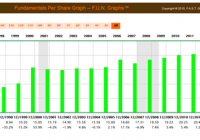
Summary Avista Corp has demonstrated a history of solid fundamental performance. There are currently a couple positive factors – mostly favorable rate case settlements – which should support earnings estimates going forward. Shares seem fairly priced at current levels – not a spectacular discount, but not overpriced, either. The Thesis The thesis here is that Avista (NYSE: AVA ) is a solid company in the utilities space with a history of solid fundamentals. While there are several specific company challenges, there are also some positive trends which should make earnings estimates realistic. At current share price levels (about $32), shares seem priced close to valuation. While not a screaming discount at the moment, this company may fill a need in a portfolio looking for dividend income and long-term growth. This article will review historical performance of company fundamentals, including past trend per-share results for book value, earnings, revenue, and debt. Several company-specific positive trends and challenges will be presented, and a suggested company valuation will be provided. Lastly, two specific strategies will be offered for consideration. Avista Corp: History of Fundamental Performance As usual I find my F.A.S.T. Graphs subscription to be very valuable to study a company’s fundamentals. Using the “F.U.N. Graphs” feature allows a visual of each company fundamental. To assess the trend of fundamentals for AVA, I chose to review metrics going back 20 years. This historical view gives evidence of management success or struggles in growing these particular fundamentals over time. Book Value Per Share Trends The ideal for this metric is a trend of steadily rising book value per share. Why? This number is difficult to manipulate and a rising metric suggests management has made decisions to add value over time. In my view, AVA demonstrates very effective growth of this metric, as demonstrated by the growing green bars over time. (click to enlarge) source: fastgraphs.com Earnings History In order to conduct a reasonable valuation analysis, earnings are a key metric to consider. Historical earnings are worthy of review, in my opinion, because a person gets data on consistency over time and several cycles. Of course the idea is for the company to generate consistent earnings growth over time. As the graph below seems to illustrate, AVA has delivered earnings over time. My read of this graph is that earnings are generally predictable, but not spectacularly so. Overall, given this space and how the company performs relative to peers, in my view AVA demonstrates a reasonable earnings growth historical track record. (click to enlarge) source: fastgraphs.com Revenue History As would be expected in this industry, revenue (not considering the anomaly in 1999) has been quite consistent. And given the company’s recent success with rate settlements, there is no reason to believe these trends will not remain supported for the foreseeable future. (click to enlarge) source: fastgraphs.com Debt The idea here is to review debt to gain a perspective on use of debt over time to finance company obligations. In my opinion, AVA has utilized debt as one would expect in this industry and management has delivered results which position the company well for the future. (click to enlarge) source: fastgraphs.com In my humble opinion, based on the data Avista Corp management has delivered a solid foundation of fundamental metrics over time. This suggests a level of predictability and offers balance sheet strength to build upon in the future. Company-Specific Trends This article suggests that AVA is about fairly priced right now – neither excessively overvalued or extremely undervalued. As one considers trends or issues that may impact earnings going forward, the following seem relevant: (sources include the company web-site, earnings calls and 10-k) Positive Trends The company is getting the benefit of the Alaska Electric Light & Power acquisition last summer Rate case settlements suggest earnings will increase for this year and 2016 Management continues guidance for consolidated earnings to be in the range of $1.86 to $2.06 per diluted share The board of directors raised the dividend for the first quarter Challenges AVA operates in a highly regulated environment – this tends to add costs and time to various initiatives Weather and costs are always a bit unpredictable; the weather affects sales as well as the cost of natural gas and supply power Energy resource risk management can affect earnings – the company hedges some commodity pricing costs and this can cause variability based on fluctuations All things considered, in my opinion AVA is well aware of the challenges of the environment and is doing an effective job to address those challenges going forward. The results are in the past fundamental performance and estimated results for the future. But what about the price to value relationship? This article suggests AVA is priced about to value. Let’s have a look at some data to substantiate this view. A Valuation Method When valuing a company, I like to compare that company against its own historical valuation. Again a F.A.S.T. Graphs subscription is an excellent tool to visually demonstrate the history of a company’s own valuation past record. In the chart below, the orange line represents earnings history and what could be considered “fair valuation” at a price/earnings multiple of 15X. The blue line represents an historic normalized average PE. Finally, the black line is the market price of AVA. Note that a normal PE for AVA over the past 20 years has been 15.7X earnings. When considering just the past 8 years since the Great Recession, the normal PE ratio has been about 15X earnings. Today AVA is priced at 16.5X earnings. Visually, the graph demonstrates this data well: first, notice how historically the market price (black line) follows the valuation line (blue PE line). And notice how today the black line (market price) is very near historical valuation lines. (click to enlarge) source: fastgraphs.com What Might Be A Strategy to Consider? AVA seems to present a potential opportunity for a person seeking dividend, but not expecting excessive upward price movement. If an individual desired to take a position, it may be reasonable to begin a position (albeit not 100% of the entire allocation to this company) at these levels. Alternatively, a person could consider selling puts (at a strike price below the current market price) as a possible way to either a)keep the premium if AVA rises or b)purchase shares at a discount from the price today. All of the above in my opinion offered for your consideration. Thank you very much for your time. Disclosure: I/we have no positions in any stocks mentioned, and no plans to initiate any positions within the next 72 hours. (More…) I wrote this article myself, and it expresses my own opinions. I am not receiving compensation for it (other than from Seeking Alpha). I have no business relationship with any company whose stock is mentioned in this article.

Capital Power Corp.: Weak Market Sentiment But Strong Investment Case

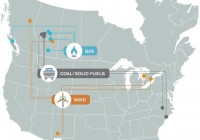
Summary Strong hedges help protect Capital Power from temporary power price weakness in their key market. Strong future growth is expected as new production comes on line, and older coal assets in the province are retired. The market is penalizing Capital Power due to weak electricity prices, weakness in the oil-centric Alberta and political party changes, but all represent temporary issues. New course issuer bid, recent DRIP suspension, coming dissolution of EPCOR’s ownership and low energy prices allow purchase of a solid Canadian Independent Power Producer at a discount. Capital Power Corporation ( OTC:CPXWF ) is an independent power producer (IPP) based in Edmonton, Alberta, Canada. With more than 3,100 MW of power generation capacity through 16 facilities, 371 MW via a Purchase Power Agreement (PPA) and 620 MW of owned generation in development (mostly in Alberta and Ontario) Capital Power is one of the largest IPP’s in Canada, with one of the lowest payout ratios in the industry. Its operations and type of generational facilities are listed in the graphic below: (click to enlarge) Source: Capital Power IR Business Model Capital Power generates electricity and sells that production to local utilities, generally based on contracts with local utilities (Purchase Power Agreements, or PPAs) to lower the operating risks of the business model, and can hedge the production that is sensitive to local market conditions. They also generate and sell non-contracted electricity to drive cash flow and allow it an avenue for growth after entering contracts to cover capital costs and their dividend. Due to weaker than expected demand, warmer weather and a recent increase in supply, the market has been generally weak, allowing Capital Power to trade at levels not seen in some time. With approximately 50% of its 2016 power production hedged at relatively attractive prices, and long-term power agreements for up to 20 years for most of the required capital and dividend costs, Capital Power is suffering under the weight of headline issues, rather than in line with its impressive business fundamentals. With strong operating availability (98% in Q1) and minimal unplanned outages they have been firing on all cylinders lately. Their strong hedges have largely negated the impact of temporarily low Alberta power prices, allowing them to continue towards their FFO guidance of $365-415M. They also recently announced a 5 million share course issuer bid approval by the Toronto Stock Exchange (TSE) and cancellation of their DRIP (eliminating dilution at these low prices). So what is going on with the share price? New Democratic Party (NDP) As a resident of the neighboring province, and closet environmentalist, my siblings and I had a lively discussion regarding this recent development. The provincial NDP, a left-of-center political party, managed to win a majority in the Alberta election. This was to the dismay of almost every major Alberta-based company (and almost every rural resident), as it had long been the friendliest province in Canada (or State in all of North America) to develop oil properties. With low tax rates, strong inflows of qualified workers and lax environmental rules, it was the nearly perfect place to set up shop. This all changed on Election Day. The NDP immediately changed the game with overdue (in the author’s opinion) changes to environmental rules (increase carbon emission taxation), higher taxes on the highest income tax brackets, and a “review” of the royalty policies in Alberta. This has raised some questions regarding the future of business development in Alberta, but I feel these are overblown for a few reasons: Oil is Alberta’s bread and butter – The NDP is excited to finally begin to enact proper environmental regulations in Alberta, but even if they make aggressive moves, they are still playing catch-up to every major state in North America. They will need to push the envelope to an extreme degree to stop being the premier place in Canada (and the Americas) to do business. Taxation Changes are reasonable – The next place in Canada to do business in oil is Saskatchewan, and the effective tax rates are nowhere comparable. There is little fear of businesses relocating anytime soon. A few folks mention relocating to Texas, but Canadian corporate taxes are still very low, and Calgary remains one of the main hubs for oil companies in the Americas. Carbon Tax Fears Overblown – Capital Power, for example, is welcoming the new environmental regulations. The party line is that this is due to their being forward thinking, but when it comes down to it these regulations are going to happen sooner or later. Even the increases announced are almost comically below what is required. Capital Power is actively selling carbon tax offsets from its renewable generating plants. Using these offsets for the Alberta increases (which phase in slowly over time) is not a major business issue for the amount of cash generated by their business, allowing them to postpone any FFO impact until 2020. Perception Change is an Overreaction and Temporary – Arguably the biggest effect was the worry that the change in provincial leadership would result in a massive perception switch within the province. This might be a concern, but Alberta was growing quickly not only because it was business friendly but also because it houses all of the resources. Alberta is holding all the cards. If you want to develop, you follow the rules, and even the changes made so far are well below the required amounts to start actually affecting business decisions. EPCOR relationship EPCOR is a utility company owned by the City of Edmonton, which previously owned Capital Power and spun it off to become its own independent power company. As EPCOR has committed to reducing its stake in the power company to focus on its own operations, it has been actively lowering its ownership in Capital Power since the IPO. Recently, they issued $225M in a secondary offering that lowered EPCOR’s stake in the company to 9% (from 18%). The entire ownership stake is now common shares. Capital Power is also no longer obligated to assist EPCOR in making secondary offerings. With the elimination of the agreement (Registered Rights Agreement) EPCOR plans on selling the remaining interest as market conditions and capital requirements apply. This eliminates a large and ongoing weight on the stock, as they have been slowly unraveling their position through selling and secondary offerings. Source: Q1 Presentation By eliminating this overhang, the public float is now maximized and there is no large third party encouraging equity issuances or selling off their position. Once this ownership is completely done, the stock will lose that unnecessary selling pressure. I feel the time to capitalize is at this moment, rather than awaiting completion, due to weakness from temporary overhangs on the stock from other areas and that the final announcement of EPCOR’s ownership stake going to zero could be a small boon for the company share price in the future, but investors need to be playing the stock first to see that benefit. Power Prices Power prices are very low at the moment, coming in below expectations in Alberta specifically. US power prices have been strong lately, but with so much of its production in Alberta this has an outsized impact on Capital Power. Power prices are being pushed from two sides. Temporarily Lower Demand Alberta has been suffering from lower oil prices, which has been reducing industrial demand. There was a stall in internal load growth in April, but that has reversed as of May, and is expected to continue growing, estimated at approximately 4.4% for the next 5 years: (click to enlarge) Source: Capital Power June Investor Meeting Temporarily High Supply With their newest power plant facility coming online, Capital Power influenced power prices with its incremental power production, though they largely hedged that production for this year. Due to the temporarily lower demand, the 1200MW of generation projects for 2015 are influencing the supply picture. However, there are legislated retirement dates for coal fired plants that will begin to ramp up over the coming years. This is detailed in the graphic produced by Capital Power: (click to enlarge) Source: Capital Power April Investor Meeting This gives a reprieve to the existing suppliers and will remove a supply overhang. The continual construction is in preparation for this eventual decrease in supply, and will result in temporary, and expected, pressures on prices. Valuation To complete this analysis I used data from YCharts and the company’s reported financials. There is a discrepancy between the reported Enterprise Value between the two. In the comparative analysis I utilized their reported values, whereas in the evaluation of Capital Power to its historical prices, I utilized YCharts (as we can assume they calculate it the same way each year). Relative to Competitors Capital Power is currently trading at an EV/EBITDA ratio of 9.98, 84% of its production locked into PPAs for 2016, and 50% of its production hedged at stronger rates and a MW growth rate of 20%. This compares to its competitors rather interestingly. Atlantic Power (NYSE: AT ), a “clean energy” producer (mostly natural gas, no coal) trades at 8.87, has 69% of 2016 production in PPAs, no active price hedging and MW growth of about 3%. Northland Power ( OTCPK:NPIFF ), a relatively clean energy producer (much heavier weight to renewables, no coal) trades at 15.83, has 100% of its production in PP’s, and a MW growth rate of an impressive 48%. Transalta (NYSE: TAC ), a relatively dirty producer (lots of renewable like Capital Power, but higher coal production of 56% versus Capital Power’s 47%) trades at 8.86, has 80% of production in PPAs in 2016, and a MW growth rate of 24%. We can presume that Capital Power should trade at some higher multiple than its low growth, highly leveraged competitor Atlantic Power, and the dirtier cousin Transalta, but is a 12% premium all that’s called for? With its better hedged production, strong growth profile and clean energy credits (allowing it to avoid negative FCF implications of NDP policy changes to 2020) there seems to be little reason to value Capital Power so closely to the listed competition. To see how much we should value Capital Power, we go to historical valuations. Relative to History Utilizing YCharts for the data, we get an average Enterprise Value (EV) of approximately 3773M (for 2015, it is 3085M, compared to a 4182M reported by Capital Power itself). We can then use the Funds from Operation (FFO) generated by the business over the last 5 years to arrive at an EV/FFO multiple of 9.76 that Capital Power historically trades at. Compare this to the existing EV/FFO multiple for 2015 of 7.36 and we arrive at a price target of approximately $29.12, or a return of 32.6%. With a 6% dividend policy, we arrive at a 38.8% total return to year end. Note we assume that increases in the EV will translate into a proportionate increase in share price, as all other values stay constant. To evaluate possible downside, we will use a close comparable. Transalta is the closest of the comparable competitors with similar growth rates, Alberta-heavy assets, large dividend policies, large proportion of “dirty” production and they generally trade in relation to each other. Utilizing the same method of valuing Transalta, we arrive at a five-year average EV/FFO of 11.39. Currently trading at 9.10, we can see that Capital Power trades at a discount to this 5-year relationship by approximately 5%. This brings us a worst-case 5% return as Capital Power approaches parity with this relationship with Transalta. With a 6% dividend we arrive at an 11% return by year end. Again, this is assuming only matching the very low price that Transalta trades at currently, while keeping the historical relationship intact. Risk & Mitigating Factors Hedges Drop Before Prices Recover – Strong hedges are protecting earnings, but they are temporary in nature. A continued downturn in Alberta will begin to affect FFO materially in 2017. To mitigate this risk, Capital Power does have hedges out to 2017 but they believe (and I agree) that prices should show improvement as we approach the end of 2016. A strong improvement in the underlying economy of Alberta is vital to improvement of energy prices. Oil Price Weakness – Collapse in oil prices will affect Capital Power more than most energy producers due to its reliance on the province of Alberta for the majority of its revenue. Alberta is handling the crises better than most expected, but continued low oil prices will put a damper on growth in the region. Capital Power has tremendous financial resources to continue to expand to additional markets, and the capital flexibility to weather low energy prices for some time while awaiting a recovery. NDP Royalty Review – Should the political party change the oil revenue policies to something closer to market, it may further shift investor sentiment against Alberta based companies. In the author’s opinion, it is an increase that is long overdue, but even a marginal change will have an outsized impact on market sentiment. I believe it is unlikely the review results in material changes at this time, due to the extreme circumstances related to oil price weakness, but there is always the risk. Potential Catalysts EPCOR’s Ownership Stake Reduction – As their stake reduces to zero, it will remove a significant overhang on the stock as it removes a major, continual seller/diluter of stock prices. The announcement of EPCOR’s stake reducing to zero should be a boon to the equity price. NDP Policy Shift – As the NDP continue to adapt to their new role they may reduce the pressure on oil and gas companies, allowing investors and executives time to adapt to their new leadership style. There is likely to be a significant decrease in announcements related to oil and gas as most of the policy changes influencing them are currently in progress. Less noise will go a long way in easing investor anxiety regarding this new political change. Market Begins to Put Changes in Perspective – As I have mentioned in the article, there is little reason to fret about the changes made to Alberta’s energy policy changes. They are relatively weak and will do little to influence business practices. Capital Power will only begin to feel the changes in 2020, once their carbon credit offsets finally do not cover the new policies. Oil Price Recovery – Recovery in oil prices are a boon to any Alberta-based stock, regardless of their activity in the oil sands. Capital Power sells a lot of energy to the industrials within the province, so any increase or stabilization of oil prices will help boost demand in the region, strengthening current power prices. Conclusion Trading at historically low multiples, with strong PPAs, well-timed hedges, and a well-covered 6.19% dividend yield, Capital Power is sitting at a very interesting entry point. As investor sentiment overreacts to the latest news and the temporary overhangs on the industry, Capital Power gives investors access to one of the best-regulated power jurisdictions in North America. Investor sentiment may temporarily wreak havoc on the price of Capital Power, it does not influence the underlying value of the company. With solid downside protection, strong potential upside and an impressive dividend, Mr. Market is granting investors a significant margin of safety in a conservative asset class. This may represent a solid opportunity to add exposure to the Alberta energy market at a significant savings for the high-yield portion of an investor’s portfolio. Editor’s Note: This article discusses one or more securities that do not trade on a major U.S. exchange. Please be aware of the risks associated with these stocks. Disclosure: I/we have no positions in any stocks mentioned, but may initiate a long position in CPX over the next 72 hours. (More…) I wrote this article myself, and it expresses my own opinions. I am not receiving compensation for it (other than from Seeking Alpha). I have no business relationship with any company whose stock is mentioned in this article. Additional disclosure: This stock trades with narrower spreads on the Toronto Stock Exchange (TSE) those considering purchase should consider this option, if available through your broker. The author is not a financial advisor, please conduct your own due diligence and consult a trusted financial advisor before making any financial decision.